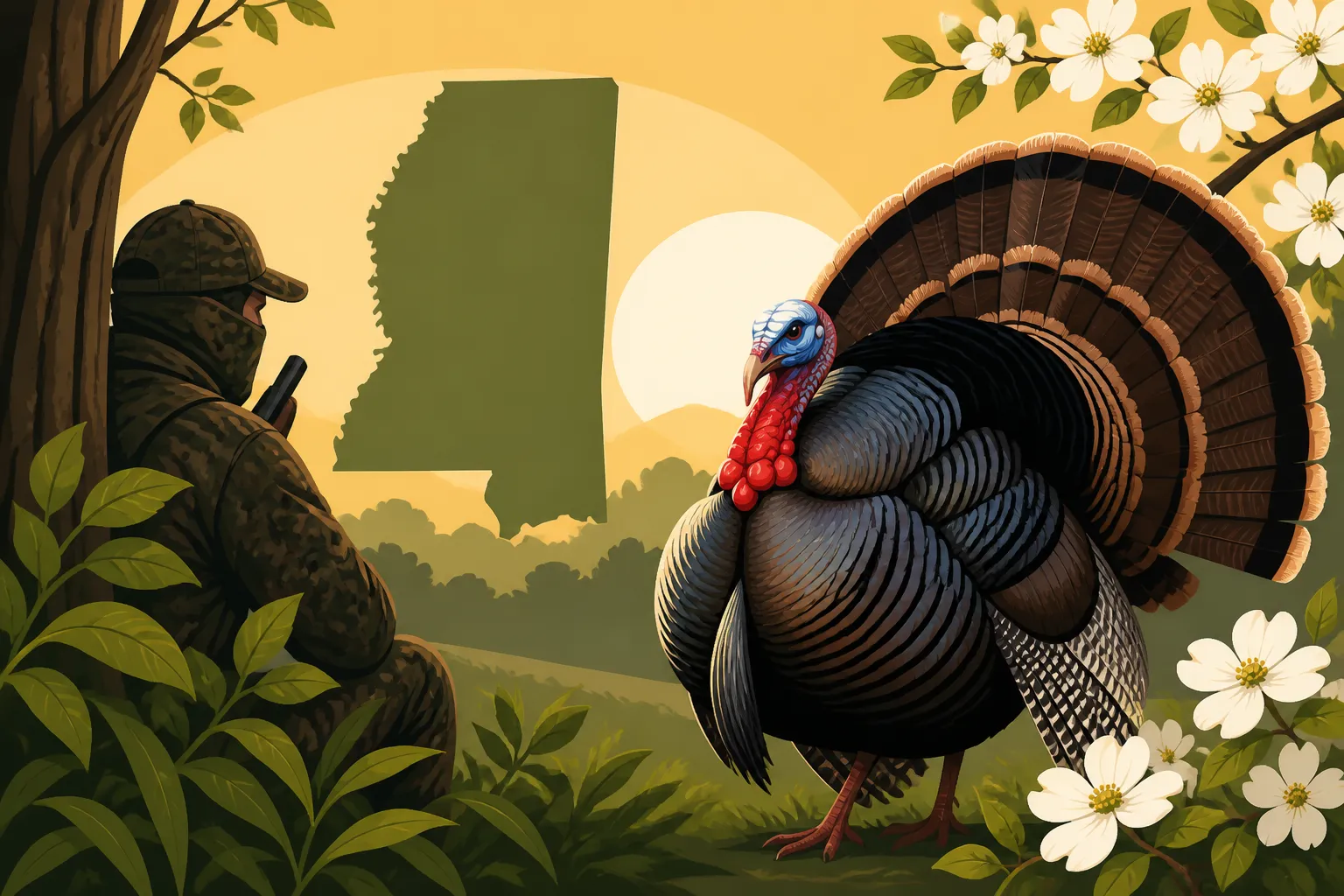
Spring Turkey Hunting in Mississippi
The sound of a distant gobble echoing through the humid Mississippi timber as the sun cracks the horizon—there's nothing quite like it. But for all the magic, spring turkey hunting in our state can be incredibly frustrating. Those wily birds can be here one minute, gone the next, leaving you scratching your head, wondering if you misread the sign or blew the call. This guide is here to unravel those mysteries, offering deep insights and actionable strategies to help you fill your tag and make those cherished memories in the Mississippi turkey woods.
Understanding Mississippi's Spring Turkey Season
Mississippi’s spring turkey season is a cherished tradition, but navigating the nuances of dates, bag limits, and licensing can sometimes feel like trying to decipher an old map without a compass. It’s not just about knowing when to go; it’s about understanding the specific rules that apply to your hunt, ensuring you’re legal and ethical every step of the way. This foundational knowledge is crucial for a successful and worry-free season.
Key Dates and Zones
Our spring turkey season across Mississippi is generally pretty uniform, but there are always little exceptions or adjustments that the Mississippi Department of Wildlife, Fisheries, and Parks (MDWFP) might throw in, so it’s critical to check the latest regulations each year. Historically, the season typically kicks off in mid-March and runs through early to mid-May, offering a generous window for hunters to chase gobblers. However, sometimes there are youth-only weekends that precede the general opener, giving our younger hunters a fantastic head start and a less pressured experience. This early window is a perfect opportunity for mentors to pass on their knowledge and passion for the outdoors. You can often find the most up-to-date schedule and any special dates or youth weekends in the annual MDWFP hunting guide or on their website. For example, knowing the exact opening day of the main season, like the often-anticipated Hunting the Statewide Turkey Opener in March, is vital for planning your first foray into the woods.
The good news is that unlike deer, which have distinct management units, Mississippi’s turkey season generally operates statewide with unified dates. This simplifies planning considerably, as you don’t have to worry about crossing an invisible county line and suddenly being out of season. However, always be mindful of specific Wildlife Management Areas (WMAs) or federal lands like national forests (Delta National Forest, Homochitto National Forest, Bienville National Forest) which might have their own unique draw hunts, limited access periods, or modified season dates. These areas are often highly sought after, and their regulations can differ from the statewide rules, requiring a bit more homework and potentially an application process. Always double-check WMA-specific rules before planning a trip to one of these spots.
Bag Limits and Legal Gobbler Definition
When you’re out in the field, the last thing you want is to second-guess if the bird you’re looking at is a legal take. In Mississippi, the statewide spring turkey bag limit is quite specific, designed to manage the population responsibly while still providing ample opportunity for hunters. Typically, hunters are allowed to harvest a certain number of gobblers per season, often capped at three adult gobblers. However, there might be further restrictions, such as only being able to harvest one gobbler per day, or a cumulative limit for both state and federal lands. These limits are in place for a reason, helping to ensure healthy turkey populations for years to come. Checking the Mississippi Spring Turkey Bag Limit Rules will provide the precise numbers for the current season.
Defining a "legal gobbler" is also critical. In Mississippi, this usually means a bird with a visible beard. This helps distinguish adult males from hens or jakes (young males) that may not yet have developed a prominent beard or spurs. While you might occasionally see a bearded hen, they are far less common, and for all practical purposes, if it has a beard, it’s generally considered a legal bird. Always be sure of your target and confirm the presence of a beard before taking a shot. For youth hunters, there might be slightly different regulations regarding jakes. For instance, sometimes during youth-only seasons, a jake might be permissible, but it's always worth checking the specific Mississippi Youth Turkey Bag Limit Rules to be certain. These regulations are designed to introduce young hunters to the sport, allowing them to gain experience without the strict trophy expectations of adult seasons.
Required Licenses and Stamps
Just like any other hunting endeavor in Mississippi, chasing spring gobblers requires the appropriate licenses and permits. It's not just a formality; these fees directly fund wildlife conservation efforts across our great state, helping manage habitats and ensure healthy game populations. For residents, a basic hunting license is typically needed, often combined with a Sportsman's License or an All-Game License if you plan on pursuing other species throughout the year. If you're coming from out of state, a non-resident hunting license is required, which can be purchased for different durations, such as a 3-day, 7-day, or annual option, depending on the length of your trip. These can sometimes feel pricey, but they are a critical part of supporting our wildlife agencies.
Beyond the general hunting license, there's a specific requirement for turkey hunters: the Mississippi Wild Turkey Stamp. This stamp is an additional permit that directly funds turkey research and habitat improvement projects, ensuring the future of our wild turkey populations. It's a small investment that makes a big difference. Many hunters, myself included, used to overlook this, thinking a general license was enough, only to realize at the last minute they needed the stamp. Don't make that mistake! Always make sure you have it before you hit the woods. You can purchase these licenses and stamps online through the MDWFP website, at various retail locations that sell hunting and fishing licenses, or even over the phone. For more details on this specific requirement, check out information on The New Mississippi Wild Turkey Stamp to ensure you're fully compliant and ready to hunt. Carrying a physical copy or having proof on your phone is always a good idea in case a game warden checks your credentials in the field.
Scouting for Spring Gobblers
Scouting isn't just a pre-season activity; it's an ongoing process that starts long before opening day and continues right up until you punch your tag. It’s what separates the consistently successful hunters from those who just get lucky once in a while. Understanding how turkeys use the land, where they feed, roost, and strut, will give you an immense advantage in the spring woods. Without dedicated scouting, you're essentially walking into a blind date with nature, hoping for the best, and that's not a recipe for consistency.
Pre-Season Reconnaissance Tactics
Long before the season even opens, you should be out in the woods, not necessarily with a shotgun, but with your boots, binoculars, and a good mapping app. Early season scouting, often in late winter or very early spring, allows you to observe turkey behavior without disturbing them during the hunting season. Focus on finding droppings, feather piles, tracks, and scratch marks in leaf litter. These are clear indicators of recent turkey activity. Look for areas where they might be feeding, such as open hardwood bottoms with acorns (even if they’re just remnants) or freshly disturbed agricultural fields. Ridge tops in the Hills Unit, for instance, are classic strutting zones where gobblers love to show off.
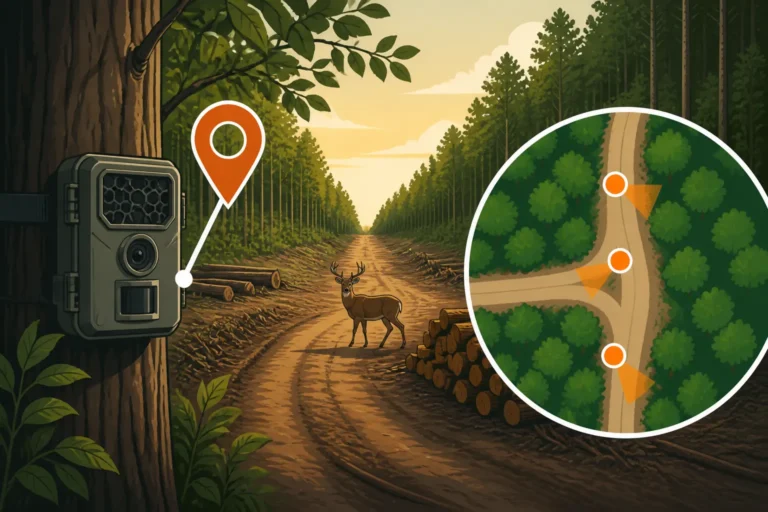
Using aerial maps, satellite imagery, and topographic maps is invaluable for this phase. Tools like GoHunt can be incredibly helpful here, allowing you to mark potential roosting sites, travel corridors, and strut zones from the comfort of your home. Look for isolated stands of tall timber near open fields, creek bottoms, or ridges, as these are prime roosting locations. Identify potential pinch points, saddles, or creek crossings that could funnel birds. During this time, you're not trying to find a specific bird, but rather understand the lay of the land and how turkeys are generally using it. This initial legwork lays the groundwork for more detailed in-season scouting.
Locating Roosting Areas
Finding where turkeys roost is one of the most effective scouting tactics for spring gobblers. Turkeys typically roost in tall, mature trees, often over water or on high ground, giving them a sense of security from ground predators. They'll fly up to roost before dark and fly down shortly after first light. Knowing a general roosting area allows you to set up well before dawn, positioning yourself to intercept a gobbler as he descends from his nighttime perch. The trick is to be close enough to hear him gobble off the limb, but not so close that you spook him when you move in the dark.
The best way to locate roosts is to be in the woods at dusk or dawn, listening for gobbling. Drive logging roads or walk trails at last light, stopping every few hundred yards to listen for "shock gobbles" in response to an owl hoot, crow call, or even a slammed car door. Once you pinpoint a general direction, return before first light the next morning and listen again. A gobbler will often sound off several times from the roost before flying down. Once you've located a roost, back out quietly. You want to keep this spot a secret. Don't go straight to the tree; instead, plan a setup about 100-200 yards away, positioning yourself between the roost and a likely strutting or feeding area. This strategic placement is key for Calling a Mississippi Gobbler Off the Roost effectively.
Reading Sign and Identifying Strut Zones
Once you're in the woods, whether pre-season or in-season, learning to "read the mail" that turkeys leave behind is crucial. Tracks, droppings, and scratch marks tell a story of where birds have been and what they're doing. Gobbler tracks are typically larger than hens', and often one toe on a gobbler track will be significantly longer and more splayed. Droppings are also a good indicator: gobbler droppings are J-shaped or elongated, while hen droppings are more blob-like. Fresh scratch marks in the leaf litter, often in a fan-like pattern, show where turkeys have been foraging. Look for areas with heavy scratching, indicating a consistent food source.
Strut zones are particular areas where gobblers like to display for hens, and finding them is like hitting a goldmine. These are typically open, relatively flat areas with good visibility, such as field edges, logging road clearings, ridge tops, or even open pine flats. Look for distinct "drag marks" in the dirt or dust, left by the gobbler’s primary wing feathers as he struts, along with plenty of gobbler droppings. These areas often have visible "strut marks" in the dust or soft soil, showing where a gobbler has been spinning around. If you find a well-used strut zone, it's a prime location for a setup, especially during the mid-morning lull when gobblers are often looking for hens. Setting up a decoy spread near a known strut zone can be incredibly effective, as it capitalizes on the gobbler's natural behavior.
Effective Calling Strategies
Calling is undoubtedly one of the most thrilling and challenging aspects of spring turkey hunting. It's a delicate dance of imitation, patience, and knowing when to say what. There's no single magic call, and every situation is different, which is why having a diverse repertoire and understanding the psychology behind the sounds is paramount. Many a hunt has been won or lost not by the ability to call, but by the ability to not call, or by calling at the wrong time.
Mastering Different Calls and Their Uses
There's a whole symphony of turkey calls out there, and each has its place. The most common types include slate calls, box calls, and diaphragm calls, each producing unique tones and requiring different skill sets. Slate calls (also known as pot calls) are incredibly versatile, capable of producing a wide range of yelps, clucks, purrs, and cutts with varying pitches and volumes, depending on the striker and surface. They're excellent for realistic, subtle sounds. Box calls, on the other hand, are great for loud, far-reaching yelps and cutts, perfect for locating birds or getting a distant gobbler's attention. They're also relatively easy to learn, making them a favorite for many beginners.
Diaphragm calls, or mouth calls, are arguably the most challenging to master but offer hands-free operation, which is a huge advantage when a gobbler is in close. They can replicate almost any turkey sound, from soft purrs to aggressive cutts and gobbling. For specific scenarios, a gobble call can be used to elicit a shock gobble from a distant bird or challenge a dominant tom, but use it sparingly as it can also attract other hunters. Lastly, locator calls like owl hoots, crow calls, and coyote howlers are invaluable for getting a shock gobble from a silent bird, helping you pinpoint his location without giving away your presence as a turkey. Remember, the goal isn't just to make turkey sounds, but to sound like a real turkey in distress, happy, or curious. Practice at home, get comfortable with at least two different types of calls, and learn their strengths and weaknesses.
Here’s a quick rundown of common calls and their primary uses:
| Call Type | Primary Use | Best Scenario | Skill Level |
|---|---|---|---|
| Slate Call | Versatile yelps, clucks, purrs, cutts | Close-range, subtle communication, soft purrs for wary birds | Intermediate |
| Box Call | Loud yelps, cutts, locating calls | Reaching distant birds, getting attention, loud and aggressive calling | Beginner |
| Diaphragm Call | All turkey sounds, hands-free | Close-range, when a gobbler is in sight, soft finishing calls, aggressive gobbling | Advanced |
| Gobble Call | Eliciting shock gobbles, challenging toms | Locating silent birds, provoking a response (use with caution) | Intermediate |
| Locator Call | Owl hoot, crow call, coyote howl | Getting shock gobbles from roosted or silent birds, pinpointing location | Beginner |
Situational Calling for Different Scenarios
The key to successful calling isn't just making the right sound, but making the right sound at the right time. A subtle tree yelp at dawn is perfect, but a series of aggressive cutts might spook a wary gobbler that’s still on the roost. Conversely, loud, aggressive calling might be exactly what’s needed to pull a hesitant bird across an open field mid-morning. If a gobbler is on the roost, start with soft tree yelps and clucks, mimicking a hen waking up. Once he flies down, escalate your calling slightly, moving to a series of yelps and clucks, letting him know a "hen" is in the area.
If a gobbler is hung up at a distance, perhaps on the other side of a fence or a creek, try cutting him off. Call aggressively, then go silent. If he gobbles again, try moving slightly to his side, then call softly, making him think you're leaving. This can often push a hesitant gobbler to commit. If a bird is coming in fast, tone down your calling. Less is often more. A few soft clucks or purrs might be all you need to seal the deal when he's within 100 yards. If he goes silent, he's likely looking for you, so be still, call softly once or twice, and be ready. For pressured birds on public land, subtle, infrequent calling is often more effective than aggressive yelping. Remember, you’re trying to sound like a hen that wants to be bred, not a desperate one. This approach can be particularly useful when you're trying to fool birds that have already heard every trick in the book.
Decoy Setups and Placement
Turkey decoys can be game-changers, especially when hunting open areas or when trying to pull a gobbler those last few crucial yards. They provide a visual focal point for the gobbler, often distracting him from your position and allowing you to reposition for a shot. The most common setup involves a hen decoy or two, sometimes paired with a jake or even a full-strut gobbler decoy. A lone hen decoy is often effective early in the season, simply telling a gobbler "here's a receptive hen." As the season progresses and gobblers become more dominant, adding a jake or full-strut gobbler decoy can be incredibly provocative, often bringing in a jealous tom looking for a fight.
Placement is critical. Always set your decoys where a gobbler will see them from a distance, usually in an open area like a field edge, logging road, or food plot. Position them so the gobbler will approach from a direction that gives you a clear, unobstructed shot. For a hen/jake setup, place the jake decoy facing you, with the hen decoy slightly in front, facing away from you. This mimics a jake trying to breed a hen, which infuriates a dominant gobbler, causing him to approach from behind the jake, giving you a frontal shot. Always set your decoys upwind or crosswind from your position, so the gobbler is looking into the wind as he approaches. This means he'll likely be facing away from you, presenting a better target. Be extremely careful when using full-strut gobbler decoys on public land, as they can sometimes attract other hunters. Always ensure you are on private land or in a very secluded spot if you choose this aggressive tactic. For more detailed advice on decoy usage, consider how to optimize Decoy Placement for Pressured Mississippi Birds.
Hunting Public and Private Land
Hunting turkeys in Mississippi offers a mix of opportunities, from vast public lands managed by state and federal agencies to countless acres of private timber and farmland. Each presents its own unique challenges and rewards. Understanding the nuances of hunting these different landscapes is crucial for maximizing your chances and respecting both regulations and property owners. Whether you're a public land warrior or have access to a honey hole, the approach can differ significantly.
Navigating Mississippi's Wildlife Management Areas
Mississippi is blessed with numerous Wildlife Management Areas (WMAs) and national forests that offer fantastic public hunting opportunities. These lands, such as the Delta National Forest (home to Sunflower WMA), Homochitto National Forest, Bienville National Forest, and countless other state-managed WMAs, are critical for public access hunters. However, hunting these areas often comes with specific rules and regulations that can differ from statewide laws. It’s imperative to check the MDWFP website or the specific WMA regulations pamphlet before heading out. Common WMA rules might include specific hunting hours, mandatory check-in/check-out procedures (which can sometimes be done through an app like GoHunt), restrictions on vehicle use, and limitations on scouting or stand placement. Some WMAs even have quota hunts, requiring you to apply and be drawn to hunt during certain periods.
Hunting public land often means dealing with more hunting pressure. You’ll need to be prepared to walk further, get in earlier, and maybe even adjust your calling tactics to be more subtle than you would on private land. Look for areas away from roads and main trails; the harder it is to get to, the less pressure it generally sees. Focus on scouting remote ridges in the Hills Unit or deep bottomland sloughs in the Delta for birds that might not have heard a call in days. Identifying overlooked pockets, like a small block of timber tucked away behind a clear-cut or a hard-to-access river bend, can make all the difference. Remember, early morning is prime, but mid-day can be incredibly productive on public land as many hunters head out after a few hours, leaving the woods quieter for those who stick it out. Don't forget to pack lighter and think about Run-and-Gun Turkey Tactics on Public Land if you encounter pressured birds.
Gaining Access to Private Timber and Farmland
While public land offers great opportunities, many Mississippi hunters dream of access to private land, often due to lower pressure and potentially higher turkey densities. Gaining permission on private timber and farmland can be a challenge, but it’s definitely possible with the right approach. Start by knocking on doors in rural areas, politely introducing yourself, and explaining your interest in ethical hunting. Farmers and landowners are often more receptive if you offer to help with chores, such as mending fences, clearing brush, or even offering to help control feral hog populations, which are a major nuisance across the state. Building a relationship based on respect and trust is key.
When you do get permission, treat the land as if it were your own, or better. Be meticulous about closing gates, staying away from livestock, and respecting property lines. Always re-confirm permission each year and keep the landowner informed of your hunting plans. Offering a portion of your harvest, whether it's some venison from a deer you get later in the year or a cleaned turkey breast, can go a long way in maintaining a good relationship. Remember that good etiquette and respect are paramount. Never hunt without explicit permission, and always carry proof of that permission if possible, especially if you’re hunting on land that borders other properties.
Understanding Hunting Pressure and Its Impact
Hunting pressure is a reality in Mississippi, especially during opening weekend and on easily accessible public lands. It’s not necessarily a bad thing, but it changes how turkeys behave and how you need to hunt them. Heavily pressured birds become "call-shy," meaning they are much warier of traditional calling sequences and can be quick to shut down or run off if they detect human presence. They'll often gobble less, especially from the ground, and be much more hesitant to commit to a call, preferring to hang up just out of range.
To counter hunting pressure, you need to adapt. First, get in earlier and go deeper than other hunters. Utilize mapping apps like GoHunt to identify remote access points and areas that are a good distance from popular parking spots or roads. Second, use lighter, more subtle calling, perhaps focusing more on clucks and purrs rather than loud yelps and cutts. Sometimes, silence is the best call. Third, be incredibly patient and still. Pressured gobblers have learned to pick out the slightest movement. Fourth, consider hunting during weekdays rather than weekends, or during the mid-day hours when many other hunters have left. Lastly, focus on areas with natural barriers like dense thickets, creek drainages, or steep terrain that deter most hunters. Finding these hidden gems can make all the difference when everybody else is chasing the same birds on the easy-to-access spots.
Essential Gear for Mississippi Turkey Hunters
Success in the turkey woods isn't solely about skill; having the right gear can make or break a hunt, especially in Mississippi's diverse and often unpredictable environment. From your choice of firearm to the clothes on your back, each item plays a crucial role in comfort, concealment, and ultimately, your ability to harvest a bird. Investing in reliable, well-suited gear will ensure you're prepared for whatever the Mississippi wilderness throws your way.
Shotguns, Chokes, and Ammunition
Your shotgun is arguably the most critical piece of equipment for turkey hunting. While any 12-gauge or 20-gauge shotgun can be effective, certain features and setups will significantly improve your chances. A 12-gauge is the most popular choice, offering a wide range of loads and excellent knockdown power, but modern 20-gauges with high-density loads are also incredibly effective and lighter to carry. The key is to pattern your shotgun with your chosen ammunition before the season. This means shooting at a turkey target at various distances (20, 30, 40, and even 50 yards) to see how your gun, choke, and load perform together. You want a dense, even pattern in the head and neck region of the turkey target.
For chokes, a "full" or "extra full" constriction is almost always recommended for turkey hunting to ensure a tight pattern. Many hunters opt for specialized "turkey chokes" from brands like Primos, Carlson's, or TruGlo, which are designed to produce even tighter patterns with specific high-density loads. As for ammunition, modern tungsten-based shotshells, such as Winchester Longbeard XR or Federal Grand Slam, have revolutionized turkey hunting, extending effective ranges and delivering incredible pattern density. While more expensive, they can be well worth the investment. Always match your ammunition to your choke and pattern your gun; don't just assume a new box of shells will perform the same as your last. Knowing your effective range is paramount to making a clean, ethical kill. For a comprehensive look at legal firearms, see Mississippi Legal Firearms for Deer Hunting, though some regulations may differ slightly for turkey.
Camouflage, Blinds, and Comfort Items
Concealment is non-negotiable when hunting turkeys. Their eyesight is legendary, and they will pick you out if you're not perfectly camouflaged and still. A full head-to-toe camouflage pattern that blends with the dominant vegetation of your hunting area is essential. Greens and browns are perfect for our Mississippi hardwoods and piney woods. Don't forget face paint or a face mask, and gloves to cover any exposed skin. The sun glinting off a shiny watch or a pale hand is often enough to spook a bird.
While many hunters prefer to "run and gun," setting up against a wide tree for concealment, a ground blind can offer significant advantages, especially for less mobile hunters, youth hunters, or when hunting open areas. A good pop-up blind provides total concealment and allows for slight movements without spooking birds. Brands like Primos or Ameristep offer durable, portable blinds perfect for the Mississippi woods. When choosing a setup, whether natural cover or a blind, think about Setting Up Against a Big Oak to break up your silhouette. Beyond concealment, comfort items are important for those long, still sits. A comfortable cushion or a small, lightweight hunting stool can make a huge difference in your ability to remain motionless and patient. Bug spray, especially for mosquitoes and ticks that can be relentless in the Mississippi spring, is also a must-have.
Mapping and Navigation Tools
In today's hunting world, digital mapping and navigation tools are just as essential as your calls and shotgun. Gone are the days of relying solely on paper maps, though it's always wise to have a physical map as a backup. Smartphone apps like GoHunt (which offers detailed satellite imagery, property boundaries, and GPS tracking) have become invaluable for scouting, navigating, and identifying key hunting features. These apps allow you to mark potential roost sites, strut zones, and natural funnels from your couch, then accurately navigate to them in the field, even without cell service (by downloading maps beforehand). They also help identify public versus private land boundaries, preventing accidental trespassing, which is a common concern in Mississippi.
Beyond GPS apps, a good compass and knowing how to use it are critical. Batteries die, phones can get wet, and technology isn't infallible. Knowing basic land navigation can get you out of a bind. A rangefinder is also extremely useful for accurately gauging distances to gobblers or landmarks, helping you set up decoys correctly and ensuring ethical shot placement. Binoculars, even a small 8×42 pair, are invaluable for spotting distant birds or identifying subtle movements without having to stand up or move unnecessarily. Investing in these tools, and more importantly, learning how to use them effectively, will greatly enhance your safety and success in the diverse Mississippi hunting landscape. For public land, using the Scouting Mississippi Public Land Before Season information with a mapping app can be a powerful combination.
Safety and Ethics in the Turkey Woods
Hunting is a privilege, and with that privilege comes a profound responsibility to hunt safely and ethically. This isn't just about following the law; it's about respecting the game, the land, and your fellow hunters. In the heat of the moment, with adrenaline pumping, it’s easy to make mistakes, which is why having a clear understanding of safety protocols and ethical considerations is paramount before you ever step foot in the spring turkey woods.
Hunter Orange and Visibility Considerations
One of the most critical safety considerations in turkey hunting, particularly on public land or in areas with multiple hunters, is visibility. While hunter orange is mandatory during Mississippi’s gun deer season, it is generally not required when actively turkey hunting, as turkeys have excellent color vision. This lack of orange can make turkey hunters harder to spot for others. However, many experienced turkey hunters still carry a blaze orange vest or hat to wear when walking in or out of their hunting spot, especially in low light conditions or when moving through areas where other hunters might be present. Once you've set up, the orange comes off. This simple practice can significantly reduce the risk of being mistaken for a turkey, which tragically happens every year across the country.
Always assume there are other hunters in the woods, even if you haven't seen any vehicles. Never stalk a gobbling bird blindly. If you hear a gobble, assume it's a real turkey, but also consider that it could be another hunter calling. If you see movement or hear sounds, positively identify your target before raising your gun or making a sound. Never wave your hands or use a gobble call if you suspect another hunter is close. If you must move, make noise and speak loudly to identify yourself as a human. Practicing these cautious habits can prevent accidents and ensure everyone returns home safely.
Shot Placement and Recovery Ethics
Ethical shot placement is the cornerstone of responsible hunting. For turkeys, the target zone is the head and neck. A well-placed shot to this area causes immediate incapacitation, resulting in a quick, humane kill. A body shot, while potentially lethal, often allows the bird to run or fly a significant distance, leading to difficult or impossible recovery and unnecessary suffering. This is why patterning your shotgun and knowing your effective range is so crucial. If a gobbler is beyond your effective range (typically 40-50 yards, depending on your setup), resist the urge to take the shot. Wait for him to come closer, or try to reposition. Patience here is absolutely vital.
Once you’ve taken a shot, approach the downed bird cautiously. A "dead" turkey can sometimes floppingly regain its composure and run off. Keep your gun shouldered and be ready for a follow-up shot if necessary. Once you confirm the bird is expired, take a moment to appreciate the harvest. Then, immediately attach your tag as required by MDWFP regulations. Recovery doesn't end with the shot. If a bird runs or flies after the shot, mark the exact spot where you last saw it, and begin a thorough search. Look for feathers, blood, or disturbed ground. Having a hunting partner to help with tracking can be invaluable. Even if you only find a few feathers, keep looking. Persistence is key to ethical recovery.
Respecting Landowners and Fellow Hunters
Hunting is a shared experience, and respecting others in the field is paramount. This applies whether you're on public land or have been granted access to private property. When hunting private land, always remember that you are a guest. Follow all rules set by the landowner, leave no trace, and consider offering to share some of your harvest. Your actions reflect not only on you but on all hunters. A single irresponsible hunter can spoil access for many. Be a good ambassador for our sport.
On public land, this means being mindful of other hunters. If you arrive at a popular spot and see other vehicles, consider moving to a different area to reduce pressure. If you encounter another hunter in the woods, a simple nod or quiet greeting is appropriate. Never interfere with another hunter's setup or try to "cut off" a bird they are working. If you hear another hunter calling, give them space and move in a different direction. Communication, even if it's just waving your hands and speaking in a normal voice if you get too close to another setup, can prevent dangerous situations. These practices, combined with adherence to legal requirements like Mississippi Hunter Education Requirements, ensure that everyone can enjoy their time in the field safely and respectfully.
Adapting to Weather and Terrain Challenges
Mississippi's spring weather can be a wild card, and the terrain varies dramatically across the state, from the flat, flooded timber of the Delta to the rolling hills and piney woods further east. A successful turkey hunter isn't just skilled with a call; they're adept at adapting their strategy to whatever Mother Nature and the landscape throw their way. Ignoring these factors can quickly turn a promising hunt into a frustrating bushwhack.
Hunting After Rain or Cold Fronts
Spring in Mississippi often brings unpredictable weather, including warm, humid days punctuated by sudden cold fronts or heavy rain. These changes can significantly impact turkey behavior. After a heavy rain, gobblers might be less vocal, preferring to stay on the roost longer or focusing on feeding in more open, drier areas. Creek bottoms might become impassable, forcing birds to higher ground. When hunting after rain, focus on areas that dry out quickly, like logging roads, ridge tops, or field edges. Turkeys will often dust themselves in these drier spots. Their hearing is also enhanced after a rain, so calling might need to be softer and more subtle.
A sudden cold front can also put birds off their game. Gobbling activity might decrease, and birds might move less, conserving energy. In these conditions, focusing on food sources becomes even more critical. Look for areas where early spring insects or vegetation might be emerging. Patience is paramount after a cold front; a gobbler might eventually respond to soft calling, but it could take longer. Conversely, a warm, sunny day after a cold snap can often trigger a burst of gobbling activity, making it a prime time to be in the woods. Pay attention to how birds respond in these changing conditions and be ready to switch tactics. For information on how cold fronts affect other game, see Hunting Deer After a Cold Front.
Dealing with Different Habitat Types
Mississippi is a mosaic of different habitats, each requiring a slightly different turkey hunting approach.
- The Mississippi Delta: Here, you'll find vast tracts of bottomland hardwoods, agriculture fields, and cypress swamps. Turkeys in the Delta often roost in large hardwoods near sloughs or flooded timber. Hunting these areas requires navigating thick brush, sometimes standing water, and focusing on the edges of fields or the higher ground within the bottoms. Calling can be challenging in dense cover, so loud, far-reaching calls are often needed to cut through the timber. Learning Turkey Tactics for Delta Field Edges can be a huge advantage.
- The Hills Unit (Central and North Mississippi): Characterized by rolling hills, hardwood ridges, and pine plantations. Turkeys here often utilize ridge tops for strutting and roost in mature timber along creek drainages. Hunting these areas involves a lot of walking up and down hills. Understanding thermals (how air currents move up and down hills with temperature changes) can be crucial, as turkeys use them to hear better and detect predators. Strategic setups in saddles or along ridge lines can be highly effective.
- The Piney Woods (Southeast Mississippi): Dominated by pine plantations, interspersed with hardwood drains and agricultural fields. Turkeys here often frequent the edges of clear-cuts, mature pine stands, and transition zones between different timber types. Hunting in pines requires different camo patterns (more brown and tan) and knowing how to navigate the thick undergrowth. Look for areas where prescribed burns have opened up the understory, as these can be prime feeding grounds.
Adapting your calling, setup, and movement to these diverse habitats is key. A tactic that works wonders in the open fields of the Delta might fall flat in the dense pine thickets of the Southeast Unit.
Staying Concealed in Varied Cover
Turkeys have eyes like a hawk, literally, and will pick up on the slightest movement or unnatural outline. Regardless of the habitat you're in, staying absolutely still and perfectly concealed is paramount. In thick bottomland hardwoods or dense pine thickets, finding a wide, mature tree to break up your silhouette is often easy. Position yourself with your back against the tree, facing the direction you expect the turkey to approach from. Blend into the shadows and avoid any background that highlights your outline.
In more open terrain, like field edges or sparse pine stands, concealment becomes trickier. If a ground blind isn't feasible, you might need to use natural cover more creatively. Look for fallen logs, brush piles, or even tall grasses to hide behind. Even a small dip in the terrain can offer enough concealment. The key is to eliminate your "human" shape. Wear gloves and a face mask to cover all exposed skin. Resist the urge to fidget, check your phone, or make any sudden movements, especially when you know a gobbler is close. Even a slow, deliberate movement to reposition your gun can be enough to send a wary tom flying. Remember, Using a Ground Blind on Mississippi Public Land can provide excellent concealment, especially in areas where natural cover is sparse.
Post-Hunt Care and Reporting
The moment of truth—when that gobbler is on the ground—is exhilarating, but the hunt isn't truly over until you've properly cared for your bird and fulfilled your legal obligations. Respecting your harvest by field dressing it correctly and adhering to reporting requirements ensures the meat is good, the trophy is preserved, and you're contributing to sound wildlife management.
Field Dressing Your Gobbler
Once you’ve tagged your gobbler, the clock starts ticking, especially on a warm Mississippi spring day. Heat can quickly degrade the quality of the meat. The first step in field dressing a turkey is to remove the entrails. Lay the bird on its back and make an incision from the breastbone down to the vent. Carefully reach inside and pull out all the organs. Many hunters choose to leave the heart and liver, which are delicious table fare, so set those aside if you plan to keep them. This process helps the carcass cool down much faster.
Next, if you plan to keep the spurs and beard as a trophy, you'll need to know how to remove them properly. The beard is attached to the breast, and you can usually cut a square of skin around its base to preserve it. Spurs are part of the leg bone, and many hunters cut the lower leg just above the spur and then either clean the bone or have a taxidermist handle it. Some hunters also prefer to "fan out" the tail feathers, which involves carefully cutting the skin around the tail fan to remove it as a single piece. After field dressing, get the bird on ice as quickly as possible, especially if you have a long drive home. A cooler full of ice is your best friend. For more general advice on handling game in warm weather, consider tips on Field Dressing a Deer in Warm Weather, which can be adapted for turkeys.
Mandatory Harvest Reporting
Mississippi, like many states, requires hunters to report their turkey harvests. This isn't just a bureaucratic hurdle; it's a vital component of wildlife management. The data collected from harvest reports helps the MDWFP monitor turkey populations, assess harvest rates, and make informed decisions about future season structures and bag limits. It's how they ensure healthy, sustainable turkey hunting for generations to come. Failing to report your harvest is a violation of state law and can result in fines.
Reporting is typically quick and easy, often done through the MDWFP's mobile app or their online portal. You'll need to provide information such as the date of harvest, county, and whether the bird was an adult gobbler or a jake. Make sure you do this as soon as possible after the kill, before you even leave the field if you have cell service, or certainly within a day or so. Don't put it off, because it's easy to forget later. Always keep your confirmation number for proof of reporting. This simple act of compliance contributes directly to the conservation efforts that make our Mississippi hunting experiences so rich. For more details on reporting requirements, you can check out information on Mississippi Turkey Checking Requirements.
Preserving Your Trophy
For many hunters, a turkey isn't just meat for the table; it's a magnificent trophy, a reminder of a challenging hunt and a successful moment in the woods. Preserving the beard, spurs, and fan requires a bit of care. After removing the beard with a patch of skin, clean any flesh from the base and rub it thoroughly with non-iodized salt. Hang it in a dry, airy place for several weeks to cure. Once dry, you can mount it on a plaque. For spurs, after removing the lower leg, clean the bone of any meat and membrane. Again, salt thoroughly and let it dry. Many hunters cap the spur end with a spent shell casing or a decorative band.
The tail fan is a bit more involved. Carefully separate the skin from the meat, keeping the fan intact. Scrape off any remaining flesh and fat from the quill bases. Then, liberally apply borax or non-iodized salt to all the fleshy areas, making sure it gets into every crevice. Pin the fan spread open on a piece of cardboard, shaping it to your desired display. Let it dry in a cool, dry, well-ventilated area for several weeks, reapplying borax if needed. Once fully dry, you can mount it on a plaque or display it as a standalone piece. Taking the time to properly preserve these trophies adds another layer of satisfaction to your spring turkey hunting experience in Mississippi.
Disclaimer
The information provided in this guide is for general informational purposes only and is not intended as legal advice. Hunting regulations, license requirements, and season dates are subject to change. Always consult the official Mississippi Department of Wildlife, Fisheries, and Parks (MDWFP) regulations, laws, and proclamations for the current year before engaging in any hunting activities. It is the hunter's responsibility to know and obey all applicable federal, state, and local hunting laws.