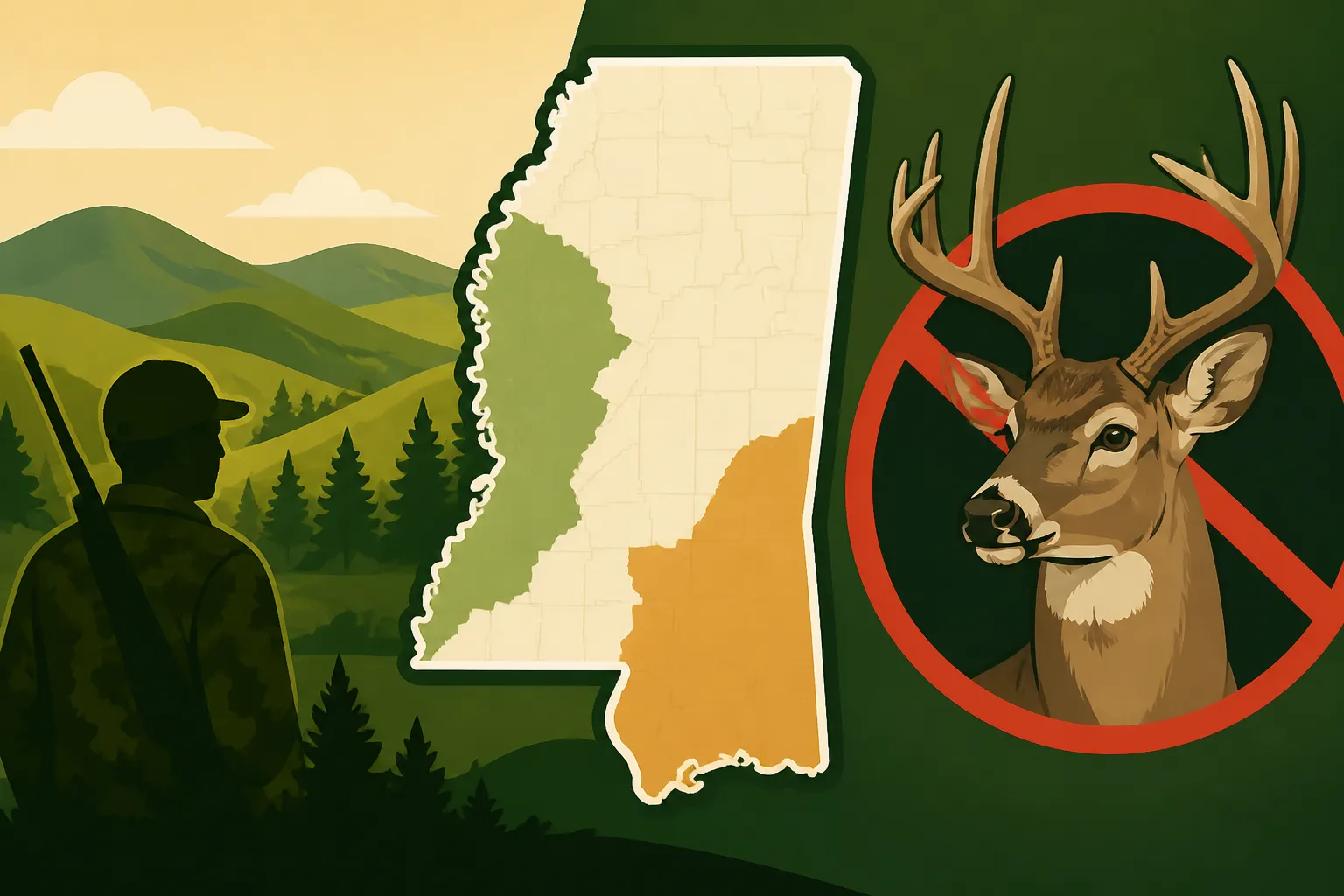
Hills and Southeast Unit Antler Restriction Rules
It can be incredibly frustrating to spend countless hours in the stand, finally have a magnificent buck step out, and then wrestle with the agonizing question: "Is he legal?" Mississippi's antler restriction rules can feel like a complex puzzle, especially when you're dealing with the specific requirements in the Hills and Southeast Deer Management Units. This guide is here to untangle those rules, offer practical advice, and help you hunt confidently, ensuring you stay within the bounds of the Mississippi Department of Wildlife, Fisheries, and Parks (MDWFP) regulations.
Understanding Mississippi's Deer Management Philosophy
Before we dive deep into the nitty-gritty of antler restrictions, it helps to understand why these rules are in place. The MDWFP doesn't just pull numbers out of a hat; these regulations are part of a broader strategy aimed at improving the overall health, age structure, and quality of Mississippi's deer herd. It's a long game, focusing on sustainable hunting and better hunting experiences for everyone.
Why Antler Restrictions Exist
The primary goal of antler restrictions is simple: let young bucks grow. Historically, many areas saw heavy hunting pressure on younger, easily identifiable bucks, often leading to a disproportionate number of does and very few mature bucks. By setting minimum antler requirements, hunters are encouraged to pass on younger deer, giving them a chance to mature for another season or two. This practice helps ensure a more balanced buck-to-doe ratio and allows bucks to reach their full antler potential, which is often tied to their age and nutrition. It's about protecting the future of the herd while still providing ample hunting opportunities.
The Goal of Quality Deer Management
Antler restrictions are a cornerstone of what's known as Quality Deer Management (QDM). QDM isn't just about growing big antlers; it's a holistic approach to managing deer populations. It encompasses factors like habitat improvement, herd health, and maintaining a healthy sex ratio. In Mississippi, particularly in units like the Hills and Southeast, the aim is to produce older, healthier deer with more robust body weights and larger antlers, all while keeping the population in balance with its habitat. When you're in the woods, remember that passing on a young buck isn't just following a rule; it's an investment in the future of the deer hunting experience in our state. For a complete picture of how the MDWFP approaches deer season, you might find it helpful to look into Mississippi Deer Season Structure Explained.
How Units Are Determined
Mississippi is a diverse state, from the fertile Delta bottomlands to the rolling hills and pine forests of the south. Because of these distinct ecological differences and varying deer populations, the MDWFP has carved the state into four specific deer management units: Delta, Hills, Southeast, and North Central. Each unit has its own unique regulations tailored to the specific challenges and opportunities presented by that region's habitat and deer herd dynamics. The Hills and Southeast Units, our focus today, have similar but distinct antler restrictions designed to fit their specific environments. Understanding which unit you're hunting in is paramount; a buck that's legal in one unit might be completely illegal just across a county line. You can easily find out Finding Which Deer Unit Your County Sits In to be sure.
Decoding Hills Unit Antler Restrictions
The Hills Unit, covering much of central and northern Mississippi, presents a unique landscape of mixed pine and hardwood forests, agricultural fields, and rolling terrain. The deer in this unit are known for their resilience, but the habitat generally produces bucks with slightly smaller average body and antler size compared to the rich Delta. Thus, the antler restrictions here are set to encourage growth without being overly prohibitive.
The "Ten-Inch Spread" Rule Explained
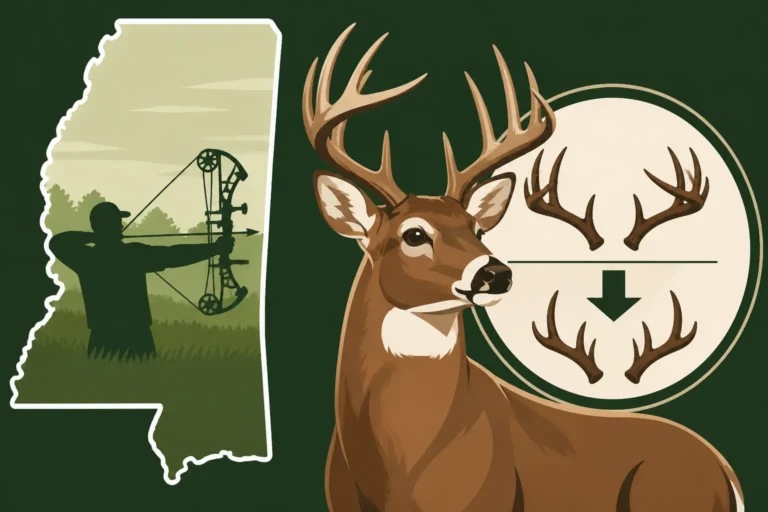
For many hunters in the Hills Unit, the "10-inch outside spread" rule is the most critical benchmark. To be a legal buck, its main beams must extend to an outside spread of at least 10 inches. This means measuring the greatest width between the outside edges of the main beams. It's not a point restriction, nor is it about beam length directly, but rather the width of the rack. This rule is designed to let younger bucks with narrower racks walk, while allowing more mature bucks to be harvested.
Imagine a young 1.5-year-old buck; his antlers might be spikes or small forks, often with an outside spread much less than 10 inches. A 2.5-year-old buck, however, might just be starting to hit that 10-inch mark, or be slightly over. It takes practice to accurately judge this in the field, especially when a deer is quartering away or moving quickly. It's a rule that forces you to pause, observe, and make a careful decision, which can be tough in the heat of the moment. Many hunters carry a small reference card or even a tape measure to compare against their binoculars or scope view during the off-season to build a mental reference for Measuring a Ten-Inch Hills Spread by Eye.
Counting Antler Points and Beam Length
While the 10-inch outside spread is the primary hurdle in the Hills Unit, it's also important to understand the broader definition of a legal buck. In addition to the spread, a legal buck must have one main beam at least 13 inches long, or an unbranched antler (spike) at least 7 inches long. So, a true spike buck with one antler at least 7 inches long is legal, regardless of spread. However, if a buck has branched antlers, then the 10-inch spread and 13-inch main beam length rules kick in.
This nuanced approach allows for the harvest of some younger, longer spikes that might otherwise be protected, while ensuring that branched-antler bucks have reached a certain level of maturity. It really highlights the importance of observing a buck's entire rack, not just focusing on one aspect. You could see a buck with a 10-inch spread, but if his beams are short, he might still be illegal. It adds another layer of complexity to field judging that requires keen observation and patience.
Visual Cues in the Field
Judging antler width and length on a moving deer, especially at dawn or dusk, is challenging. Seasoned hunters often rely on visual cues beyond just trying to eyeball a tape measure in the field. For the 10-inch spread in the Hills Unit, a good rule of thumb is to compare the width of the antlers to the width of the deer's ears when they are relaxed and pointing outwards. A typical whitetail's ears, from tip to tip when relaxed, are usually around 12-14 inches wide. So, if the outside of the main beams appear significantly narrower than the ear tips, that buck likely doesn't make the 10-inch spread. If they reach or exceed the ear tips, you're likely in the clear for the spread rule.
For beam length, it's tougher. You're looking for one beam that extends beyond the deer's eye and ideally past the nose, roughly approximating 13 inches. Body size can also be a significant indicator. A very young buck will have a slimmer body, shorter legs, and an overall more "juvenile" look. Older bucks tend to have a thicker neck, a deeper chest, and a more robust, mature appearance, often signaling a rack that is more likely to meet the regulations. Using a powerful scouting tool like GoHunt can help you understand the terrain and potential bedding areas where these mature bucks might frequent, allowing for better pre-hunt planning.
Navigating Southeast Unit Antler Restrictions
The Southeast Unit, characterized by extensive pine forests, managed timberland, and some agricultural areas, also has specific antler restrictions tailored to its unique deer population. While similar in principle to the Hills Unit, there are some key differences that hunters need to be aware of.
Minimum Outside Spread for Legal Bucks
Just like the Hills Unit, the Southeast Unit requires a minimum outside spread for legal bucks. Here, too, a buck must have an outside spread of at least 10 inches between the main beams. The definition is the same: the greatest width from the outside edge of one main beam to the outside edge of the other. The reasoning behind this is identical to the Hills Unit – to protect younger bucks and allow them to reach older age classes.
The challenging habitat of the Southeast Unit, with its dense pine plantations and thick undergrowth, can make field judging even more difficult. Deer can appear and disappear quickly, offering only fleeting glimpses. This makes quick and accurate assessment crucial. If you're not absolutely sure, the safest bet is always to pass. It’s better to let a potential legal buck walk than to accidentally harvest an illegal one and face penalties. Many hunters find that a good pair of binoculars is their best friend in this environment, helping to distinguish antler characteristics at a distance before the deer gets too close.
Point and Beam Length Requirements
The Southeast Unit rules also incorporate point and beam length criteria. A legal buck must have at least one unbranched antler (spike) that is at least 7 inches long, or one main beam that is at least 13 inches long, or an outside antler spread of at least 10 inches. This is where it gets a little different from the Hills Unit. In the Hills, if it has branched antlers, it needs the 10-inch spread and the 13-inch beam. In the Southeast, meeting any one of these three criteria makes a buck legal. This offers a bit more flexibility while still ensuring a degree of buck protection.
For example, a young buck in the Southeast Unit with a narrow 8-inch spread but one long spike that measures 8 inches would be legal. Conversely, a buck with a 12-inch spread but short 10-inch beams would also be legal. This subtle but important difference aims to manage the herd effectively within the specific biological and ecological conditions of the Southeast, where growth rates and antler development might vary slightly from other regions. Always double-check the current MDWFP regulations for the specific year you are hunting, as these rules can occasionally be adjusted.
The Southeast Unit's Unique Challenges
Hunting in the Southeast Unit brings its own set of challenges, especially for those trying to judge bucks under antler restrictions. The dense pine forests often limit visibility, making it hard to get a clear, unobstructed view of a deer's rack. Many bucks here are harvested in thickets or clear-cuts, where the action happens fast and precise judgment is tough. The deer in the Southeast also tend to have smaller body sizes on average compared to the Delta, which can sometimes make antlers appear larger relative to the body than they actually are.
The presence of hunters pursuing Hunting Mississippi's Year-Round Feral Hogs can also influence deer movement, making them more wary and challenging to get a good look at. To overcome these obstacles, thorough pre-season scouting is vital. Understanding the travel corridors, bedding areas, and food sources will give you a better chance to observe deer and make accurate judgments. Utilizing mapping tools, perhaps even a mobile app from GoHunt, can help you navigate these dense areas and mark points of interest where you've seen buck sign or potential legal deer.
Here's a quick comparison of the antler rules for the different units, for clarity:
| Unit | Legal Buck Criteria (Any one of these) | Primary "Spread" Rule | Notes |
|---|---|---|---|
| Delta | Outside spread of at least 12 inches | 12-inch minimum | Strict rule to promote older bucks in fertile habitat. |
| Hills | Outside spread of at least 10 inches | 10-inch minimum | AND 13-inch main beam OR 7-inch unbranched antler. |
| Southeast | Outside spread of at least 10 inches | 10-inch minimum | OR 13-inch main beam OR 7-inch unbranched antler. |
| North Central | No antler restrictions | N/A | Focus on overall harvest, not antler size. |
Note: Always refer to the current MDWFP Hunting Guide for the most up-to-date and complete regulations.
Common Misconceptions and How to Avoid Them
Even with clear rules, misconceptions abound, leading to confusion and sometimes, illegal harvests. Understanding these common pitfalls can save you a lot of headache and ensure a more ethical hunt.
Age vs. Antler Size Misunderstanding
One of the biggest misconceptions is equating antler size solely with age. While older bucks generally grow larger antlers, a young deer in an area with excellent nutrition can sometimes outgrow an older deer in a poor habitat. It's not uncommon to see a 2.5-year-old buck with a 10-inch spread, and conversely, a 3.5-year-old buck that just barely makes the mark due to genetics, nutrition, or injury.
The antler restrictions are designed to protect bucks until they reach a certain minimum level of maturity, but they don't guarantee that every legal buck will be a giant. The rules provide a baseline, not an absolute measure of age or trophy potential. Focusing purely on antler size without considering other indicators like body condition or jawline can lead to misjudgments. The MDWFP's goal is to increase the average age of harvested bucks, which naturally leads to better antler quality over time, but it's not a perfect science for every individual deer. Learn more about Mississippi Buck Age Structure to better understand the herd.
The "Spike Buck" Dilemma
The rules regarding spike bucks can be particularly confusing for new hunters. In both the Hills and Southeast Units, a buck with an unbranched antler (a spike) must have at least one spike that is 7 inches long to be legal. This means that a buck with two short spikes, say 4 or 5 inches long, would be illegal. This rule is specifically designed to protect yearling bucks (1.5 years old) that often grow short spikes. The idea is that these young deer, given another year, will likely develop a much more substantial rack.
It's tempting to think "a spike is a spike," but the length requirement is crucial. This is a deliberate effort to manage yearling bucks effectively. So, if you see a spike, take a moment to carefully judge its length. If you can't confidently determine that at least one spike is 7 inches or longer, it's best to let that deer walk. Remember, an illegal harvest, even accidental, carries penalties and impacts the overall management goals.
Using Technology for Field Identification
In today's hunting world, technology can be a powerful ally in avoiding misidentification. While you can't use your phone to measure antlers in real-time, apps and scouting tools like GoHunt can be invaluable in pre-season preparation and understanding your hunting area. These apps allow you to mark boundaries, identify food sources, and understand the terrain, which helps you predict where deer might move and where you might get a clear shot for judging.
Some hunters even use rangefinders with inclinometers to help gauge distances and angles, which can indirectly aid in antler assessment by giving a more stable view. Furthermore, setting up trail cameras before the season, where permitted, allows you to get clear images of individual bucks using your area. This "pre-scouting" with cameras gives you time to study racks and decide which bucks meet the legal criteria, reducing the pressure of a split-second decision in the field. This proactive approach significantly reduces the risk of making a mistake when the season opens.
Practical Tips for Hunting Under These Rules
Hunting effectively under antler restrictions requires more than just knowing the rules; it demands careful planning, keen observation, and disciplined decision-making. These practical tips can help you increase your success and confidence in the field.
Pre-Season Scouting for Legal Bucks
The work for a successful season really begins long before opening day. Pre-season scouting is perhaps the most critical component when hunting under antler restrictions. You need to identify areas where mature bucks are present and where you'll have good visibility to judge them. This means walking your hunting property or public lands, looking for rubs, scrapes, and tracks that indicate bigger deer. Pay close attention to transition areas, bottlenecks, and established travel corridors where bucks are likely to move.
Using aerial maps and topographic features from tools like GoHunt can help you pinpoint these potential hotspots even before you set foot in the woods. Look for thick cover adjacent to food sources, creek bottoms, or ridge lines where older bucks might feel secure. Placing trail cameras in these areas can give you invaluable intelligence on the specific bucks using your property, their movement patterns, and their antler development. This allows you to "pattern" legal bucks and even identify individual deer you're targeting, making your in-season judgment much easier. For more in-depth scouting strategies, consider reading Scouting Mississippi Public Land Before Season.
In-Season Field Judging Techniques
When a buck steps out, the moment can be exhilarating and nerve-wracking. Developing solid field-judging techniques is essential. First and foremost, resist the urge to immediately raise your rifle or bow. Instead, grab your binoculars. Use them to calmly assess the deer's body size first – a thicker neck, deeper chest, and saggy belly usually indicate an older, more mature animal. Then, systematically examine the antlers.
For the 10-inch spread rule in the Hills and Southeast Units, compare the antler width to the deer's ears. If they appear wider or even with the ear tips, it's likely legal. For beam length, try to follow one main beam from the base to the tip. Does it extend past the eye? Past the nose? If it's a spike, is it clearly 7 inches or longer? If you have any doubt, err on the side of caution and pass. The deer will likely be there next season, bigger and better. Remember, it's always better to tag out on an illegal buck than to regret a hasty decision. In some areas, such as the Hills Unit, knowing Reading Aerial Photos for Hills Unit Deer can reveal subtle terrain features that influence deer movement and offer better judging opportunities.
Knowing Your Hunting Spot's Unit
It might sound obvious, but ensuring you know exactly which deer management unit your hunting spot falls into is absolutely critical. County lines often dictate unit boundaries, but sometimes a single county might be split between two units. The rules for the Delta Unit, for instance, are even more stringent with a 12-inch outside spread requirement, making it imperative to understand your specific location.
Before every hunt, take a moment to confirm your unit using the MDWFP's official maps or the GoHunt app. Don't rely on general knowledge if you're hunting near a boundary. A buck that is perfectly legal in the Hills Unit might be illegal if it crosses into the Delta Unit, or vice versa. This small step can prevent a significant headache and potential legal trouble. Always carry a copy of the current regulations or have the MDWFP app handy on your phone, so you can reference it if there's any confusion while you're afield. This due diligence ensures you're always hunting within the correct guidelines.
The Impact of Antler Restrictions on Deer Herds
Antler restrictions are more than just rules for hunters; they are a vital tool for wildlife managers. Over the years, these regulations have demonstrably shaped Mississippi's deer herds, leading to positive changes for both the animals and the hunters who pursue them.
Increased Buck Age Structure
The most direct and intended consequence of antler restrictions is an increase in the average age of bucks harvested. By protecting younger bucks that don't meet the minimum spread or length requirements, these deer are allowed to survive another year, sometimes two or three. This means more 2.5, 3.5, and even 4.5+ year-old bucks are roaming the landscape. Older bucks often exhibit more complex behaviors, are more challenging to hunt, and of course, tend to grow larger antlers.
This shift in age structure also means that the overall gene pool is improved, as more mature bucks are available to breed, potentially passing on desirable traits for antler growth and overall health. For hunters, this translates to seeing and harvesting older, more impressive deer, fulfilling the "quality" aspect of Quality Deer Management. While it might mean passing on more deer initially, the long-term rewards are significant. We're seeing more and more reports of impressive bucks across the state, a testament to these management strategies. This contributes to the overall Mississippi Deer Herd Size and health.
Improved Doe-to-Buck Ratios
Another significant benefit of antler restrictions is the improvement in the buck-to-doe ratio. In areas without these restrictions, heavy hunting pressure on young bucks can lead to a heavily skewed ratio, with many more does than bucks. This can cause issues like delayed breeding in does, a prolonged and less intense rut, and overpopulation of does, which can in turn lead to habitat degradation.
By allowing more bucks to mature, antler restrictions help to normalize this ratio. A more balanced sex ratio means a healthier, more efficient breeding season. The rut becomes more concentrated and intense, as there are more mature bucks to compete for breeding opportunities. For hunters, this means a more exciting and predictable rut, with bucks actively searching for and chasing does, increasing the chances of encountering a mature deer during daylight hours. This is a subtle but powerful change that impacts the entire deer ecosystem.
Hunter Experience and Future Outlook
Ultimately, the goal of all these regulations is to enhance the hunter's experience while ensuring the long-term sustainability of Mississippi's deer resource. While initial adjustments to antler restrictions can be challenging, many hunters come to appreciate the benefits. The thrill of encountering an older, wiser buck that has made it through several seasons is unmatched. It shifts the focus from simply "getting a deer" to "getting a quality deer" that truly tests your skills as a hunter.
Looking ahead, the MDWFP continues to monitor deer populations, habitat conditions, and hunter feedback to refine these regulations. The aim is to create a dynamic system that adapts to the needs of the herd and the desires of the hunting community. For those willing to embrace the challenge and respect the rules, Mississippi offers some incredible deer hunting opportunities, and the future looks bright for quality whitetails across the Hills and Southeast Units. Understanding rules like Mississippi Deer Reporting Requirements is also key to contributing to this data collection effort that helps shape future seasons.
Disclaimer
The information provided in this guide is for general informational purposes only and is based on current understanding of Mississippi's hunting regulations. Hunting regulations can change annually or seasonally. It is the hunter's sole responsibility to consult the official Mississippi Department of Wildlife, Fisheries, and Parks (MDWFP) hunting guide and website for the most current and accurate regulations before engaging in any hunting activities. Always confirm specific dates, rules, and licensing requirements directly with the MDWFP.