Blaze Pink Options Under Mississippi Law
For years, hunters across Mississippi have faced a pretty limited choice when it came to fulfilling safety clothing requirements: hunter orange, and well, more hunter orange. It’s a color that works, no doubt, but sometimes you just want another option, or perhaps you're looking for gear that truly speaks to you. If you've ever felt that frustration, wondering if there was any legal alternative that offered the same level of safety, you're in luck! This guide is going to walk you through everything you need to know about blaze pink and how it fits into Mississippi's hunting laws, offering a fresh perspective on staying visible in the woods.
The Journey to Blaze Pink: Safety, Science, and Style in the Woods
It's easy to take hunter orange for granted these days, a ubiquitous sight in the woods during gun seasons. But its adoption wasn't always a given, and the recent inclusion of blaze pink into Mississippi law speaks volumes about evolving safety science and the growing diversity within our hunting community.
The Enduring Legacy of Hunter Orange: Why It Became Law
Think back a few decades, and you'll find a time when hunting accidents related to mistaken identity were far more common. Before hunter orange became mandatory, folks often wore drab colors, camouflage, or simply whatever they had on hand. This led to tragic incidents where hunters were mistaken for game animals, or even worse, for another hunter in low light or thick cover. The hunting community recognized this as a serious problem, and states across the country began to look for solutions.
The solution came in the form of "hunter orange," or "blaze orange" as it's often called. The science behind its effectiveness is quite fascinating. Deer and other common game animals like hogs are dichromatic, meaning they see a more limited color spectrum than humans do. They struggle to differentiate between red and green, seeing them primarily as shades of gray. This means that while we might see a vibrant red or orange, a deer sees it as dull gray. Humans, however, are trichromatic and possess cones in our eyes that are highly sensitive to orange and yellow wavelengths. This makes blaze orange incredibly conspicuous to human eyes, even in low light, against the natural backdrop of the woods. It contrasts sharply with greens, browns, and grays, making a hunter stand out like a beacon. Mandating hunter orange was a groundbreaking step in hunter safety, dramatically reducing accidental shootings and saving countless lives. It provided a simple, effective visual signal: "This is a human, not an animal."
Challenging the Norm: The Emergence of Blaze Pink
Despite the undeniable success of blaze orange, a quiet movement began to gather steam, particularly among women hunters, but also supported by many men. This movement questioned whether there could be another highly visible, equally safe option that offered more choice. The sentiment wasn't about replacing orange, but about providing an alternative. For some, it was about personal preference; for others, it was about encouraging more women and young people to participate in hunting by offering gear that might feel more appealing or inclusive.
Researchers began to seriously investigate "blaze pink" as a viable alternative. Studies were conducted, examining how different shades of pink performed against various natural backgrounds and under different lighting conditions. What they found was encouraging: specific fluorescent pinks, often referred to as "blaze pink" or "hunter pink," were just as visible to the human eye as blaze orange, and sometimes even more so, particularly in certain environments or for individuals with red-green color blindness. Like orange, blaze pink also appears as a dull gray to deer, ensuring it doesn't give hunters away to their quarry. This scientific backing, combined with a growing demand for options, paved the way for legislative changes. States like Wisconsin led the charge, legalizing blaze pink, and Mississippi followed suit, recognizing the benefits of expanding hunter safety choices. The inclusion of blaze pink wasn't just a nod to personal style; it was a testament to ongoing research into hunter safety and a willingness to embrace new, proven methods for keeping everyone safe in the field.
Mississippi's Official Stance: Understanding Blaze Pink Regulations
When Mississippi officially recognized blaze pink as a legal safety color for hunters, it marked a significant step forward. But like any good hunting regulation, there are specifics you need to understand to ensure you're in compliance and, most importantly, staying safe. It’s not just about wearing any pink, but the right kind, at the right time.
Decoding the Law: When and Where Blaze Pink is Mandatory
Here in Mississippi, the law specifies when and where you need to wear specific safety colors. Generally, these requirements kick in during any open gun season for deer. This includes the regular gun seasons that run by unit, the youth gun weekend, and even during muzzleloader seasons if you're carrying a firearm. The same rules apply if you're hunting small game with a firearm during times when deer gun seasons are also open. For example, if you're out Squirrel and Small Game Hunting in Mississippi in December during the statewide gun season, you'll need to be wearing your blaze orange or pink.
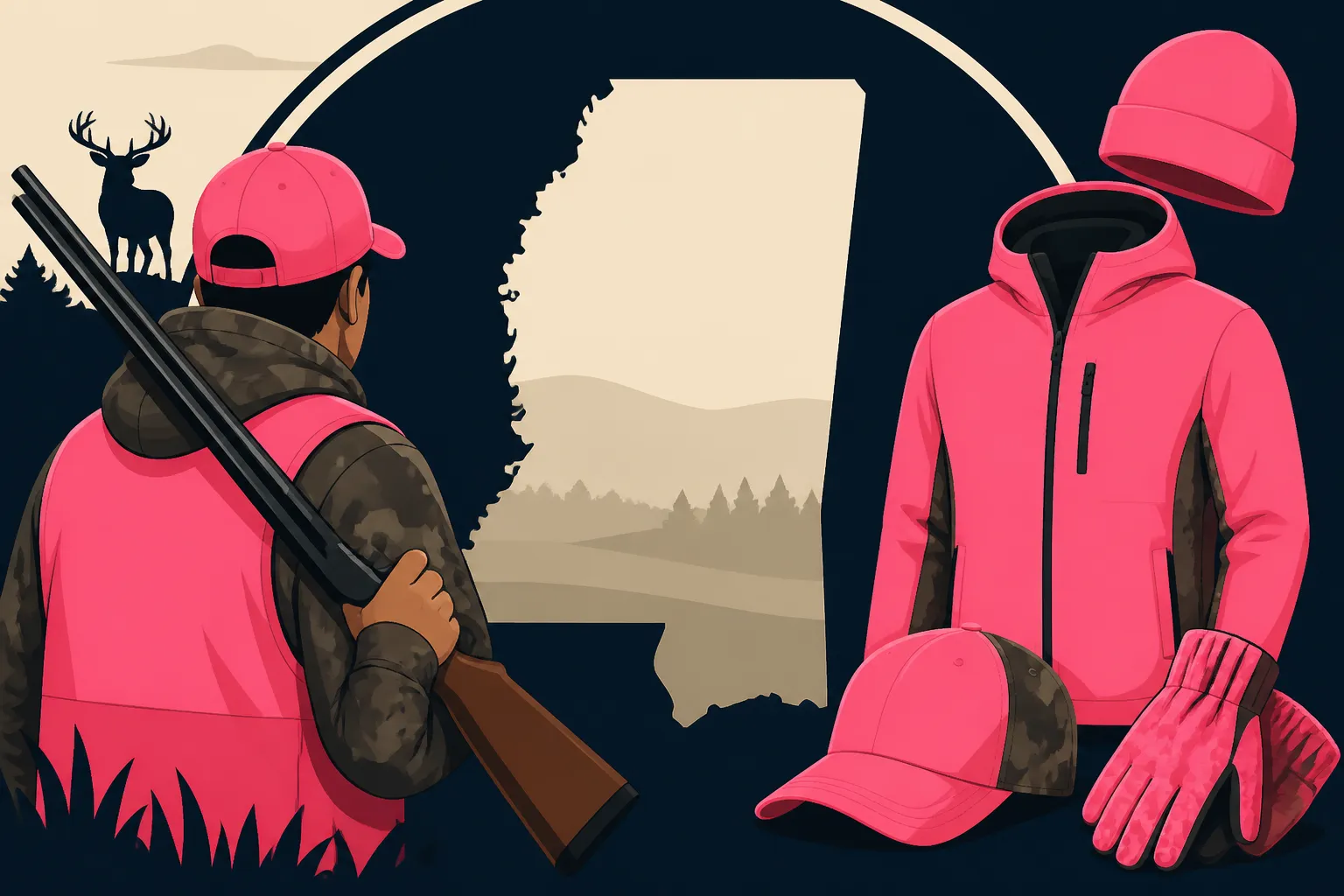
The key stipulation is that you must wear at least 500 square inches of solid exterior material of either blaze orange or blaze pink, visible from all sides (360 degrees). This can be accomplished with a vest, a jacket, or a combination of items. A solid blaze orange or pink hat or cap can count towards this requirement, but usually, a full vest is needed to meet the 500 square inches. The material must be solid – not camouflage patterns that incorporate orange or pink. This ensures maximum visibility against the natural environment.
However, there are important exceptions. If you're strictly Bowhunting Mississippi's Long Archery Season during an archery-only period, these safety color requirements typically do not apply. Similarly, if you're hunting from an enclosed stand, like a box blind, the blaze orange/pink rule is usually relaxed because you're not moving through the woods and are largely concealed. But even in these cases, many seasoned hunters will still keep a blaze orange or pink vest handy, especially for entering or exiting their stand, or if they decide to still-hunt or track an animal. When you're considering your gear, particularly for different seasons, always refer to the latest MDWFP regulations on their website or app. Planning your hunts is crucial, and services like GoHunt can help you quickly reference state regulations right from your phone, making sure you’re always prepared before heading out.
Legal Equivalence to Blaze Orange: What It Means for Hunters
The most important takeaway about blaze pink in Mississippi is this: it's not a secondary or less effective option. When the law states "blaze orange or blaze pink," it means they are considered equally effective and equally legal for meeting the safety requirements. This isn't just a political concession; it's rooted in scientific studies that confirm specific shades of fluorescent pink provide the same, if not superior, visibility to the human eye as traditional blaze orange.
This equivalence provides a welcome flexibility for hunters. It means you can choose the color that you prefer, that fits your gear aesthetic, or perhaps even the one that you find personally more comfortable to wear, without compromising on safety or breaking the law. For many, especially women and youth who might be new to hunting, having blaze pink as an option can make the experience feel more welcoming and personalized. It signifies that the hunting community is evolving, embracing diversity, and prioritizing safety while also acknowledging individual preferences. You no longer have to feel like you're limited to a single choice, which can be a real psychological boost. Whether you're planning to hunt the Delta Unit or the Hills Unit, knowing you have legitimate options for safety gear can simplify your packing list and boost your confidence. Just ensure the gear you choose, be it pink or orange, meets the crucial 500 square inch coverage and is truly blaze in color, designed for high visibility.
Here’s a quick comparison of the two options and what you should keep in mind:
| Feature | Blaze Orange | Blaze Pink |
|---|---|---|
| Legal Status (MS) | Fully compliant, widely accepted | Fully compliant, equally legal as blaze orange |
| Visibility to Humans | Excellent, highly conspicuous | Excellent, highly conspicuous; effective for colorblind |
| Visibility to Deer | Appears as dull gray | Appears as dull gray |
| Coverage Requirement | 500 sq. inches, visible 360 degrees, or a cap/hat | 500 sq. inches, visible 360 degrees, or a cap/hat |
| Enactment in MS | Decades ago | July 1, 2018 |
| Primary Advantage | Proven safety standard, traditional | Alternative choice, appealing to diverse hunters |
| Consideration | Universal recognition | Growing recognition, but still newer |
Beyond the Color: Practicalities and Perceptions of Blaze Pink in the Field
While the legal aspect of blaze pink is straightforward in Mississippi, there are always practical considerations that come into play when you’re out in the actual hunting environment. It’s one thing for a color to be legal, it’s another for it to be practical, comfortable, and accepted by your fellow hunters.
Visibility in Mississippi's Diverse Landscapes
Mississippi's hunting landscapes are incredibly varied, from the dense bottomland hardwoods of the Delta to the rolling pine plantations and oak ridges of the Hills Unit, and the coastal marshes further south. Each environment presents its own visual challenges and opportunities for hunter visibility. Blaze orange has proven its worth across all these terrains, but how does blaze pink stack up?
In reality, very well. The fluorescent nature of both blaze orange and blaze pink means they "pop" against natural colors like greens, browns, grays, and even the muted golds and reds of fall foliage. The specific wavelengths these colors emit are designed to stand out. In the deep shadows of an ancient Delta slough, or under a heavy canopy on a cloudy day, both colors retain their striking visibility much better than natural tones. Some studies even suggest that blaze pink, with its different wavelength, might be more visible than orange for some individuals, particularly those with red-green color blindness, which is more common among men. This makes it an even stronger safety choice for a broader range of hunters. Whether you're Hunting Delta Unit Bottomland Deer or still-hunting ridges in the Hills Unit, the primary goal is to be seen by other human hunters, and blaze pink achieves this with flying colors. It’s always smart to pick a brand that prioritizes true fluorescent pigment, like some of the high-quality options you can find when browsing gear on GoHunt, ensuring maximum effectiveness.
Navigating Personal Choice and Social Acceptance
Let's be real: hunting culture can sometimes be traditional, and new ideas, even good ones, can take a little time to catch on. When blaze pink first started appearing in the woods, there were certainly whispers and maybe a few raised eyebrows in some camps. Some hunters, particularly those who've been around for decades, might view it as "non-traditional" or even "gimmicky." This perception can be frustrating when you're simply trying to make a personal choice that's both legal and safe.
However, the tide is definitely turning. With the growing number of women and younger hunters entering the sport, and with states like Mississippi officially recognizing blaze pink, its acceptance is rapidly expanding. Many hunting families are now seeing youth hunters proudly sporting pink gear, and even some male hunters are choosing it for its unique visibility. The most important thing is that you feel comfortable and confident in your choice. If blaze pink empowers you or makes you feel more connected to the hunting experience, then it's absolutely the right choice for you. True sportsmen understand that safety and ethical hunting practices are paramount, far more so than the specific shade of a safety vest. As long as you're following the law and being safe, your personal gear choices are yours to make. Remember, the woods are for everyone who respects the game and the rules, and a little splash of pink just adds to the vibrant tapestry of our hunting community.
Your Safety Arsenal: Combining Blaze Pink with Smart Hunting Practices
Wearing blaze pink or blaze orange is an absolute non-negotiable during designated seasons, but it’s just one piece of a much larger safety puzzle. No amount of bright color can replace vigilance, common sense, and sound ethical judgment in the field. Think of it as your first line of defense, but not your only one.
Situational Awareness and Shot Zones
The moment you step foot into the woods, your situational awareness needs to be at its peak. This means constantly scanning your surroundings, not just for game, but for other hunters, hikers, or even domestic animals. Your brightly colored clothing serves as a warning to others, but it doesn't mean you can let your guard down. Before you even raise your firearm, the absolute cardinal rule is to positively identify your target. This goes beyond just seeing "a deer" – you need to confirm it's a legal animal for the season, that it's positioned safely, and crucially, what lies beyond it.
Never, ever take a shot until you are absolutely certain of your target and what's in your "zone of fire." This zone extends far beyond the immediate animal. Consider the trajectory of your bullet or arrow. Will it stop cleanly in the ground? Is there a ridge, a thick tree, or perhaps open sky behind your target? If you're on public land, especially in areas with high hunting pressure, the chances of another hunter being in your background are always present. This is why understanding Mississippi Legal Firearms for Deer Hunting and their effective ranges is vital. Always use optics to confirm your target, check your backstop meticulously, and if there's any doubt at all, simply don't take the shot. No trophy is worth risking a human life. This kind of vigilance is something you learn over time, and a good Mississippi Hunter Education Requirements course will emphasize these principles deeply.
Communication and Group Hunting Dynamics
When you're hunting with a group, communication becomes an even more critical component of your safety plan. Whether it’s a small party still-hunting or a larger group participating in Deer Drives With Three or Four Hunters, knowing where everyone is at all times is paramount. Don't assume anything. Before you even leave the truck, establish clear lines of communication, whether that's through two-way radios, cell phones (where service permits), or pre-arranged signals.
Discuss your planned routes, stand locations, and designated shooting lanes. If you're moving through the woods, ensure everyone knows the direction of travel and maintains visual contact or regular vocal contact. If someone moves out of sight, a quick "where are you?" can prevent a dangerous situation. It's especially important to know if anyone is going to be moving from an enclosed blind where they might not be wearing blaze pink or orange to a more exposed position. If you're planning on Hunting Pressure on Mississippi Public Land like a WMA, anticipate more hunters and plan your movements and communication even more carefully. Even something as simple as retrieving a downed animal after the shot requires clear communication – tell your partners where you're going and what you're doing. A useful tool like the GoHunt app can help you map out your hunt, mark each hunter's position, and maintain awareness of everyone's location, adding another layer of safety to your group dynamics. Your bright clothing helps, but your voice and clear plans are your best defense against accidents within your hunting party.
Disclaimer
The information provided in this guide is for general informational purposes only and does not constitute legal advice. Hunting regulations, seasons, and requirements can change frequently. Hunters are solely responsible for understanding and complying with all current Mississippi Department of Wildlife, Fisheries, and Parks (MDWFP) laws and regulations. Always consult the official MDWFP website or publications before engaging in any hunting activities.