Mississippi Muzzleloader Season Rules
The crisp Mississippi air in late fall just hits different, doesn't it? As the leaves start to really turn, many of us start dreaming of whitetails, but sometimes the sheer complexity of our deer seasons can feel like trying to untangle a spool of fishing line after a big backlash. Muzzleloader season, in particular, often throws hunters for a loop with its specific rules, varied dates across different units, and unique equipment requirements. If you've ever felt a bit lost trying to figure out exactly when and how you can hunt with your smoke pole in Mississippi, you're not alone. This comprehensive guide is here to break down all the Mississippi muzzleloader season rules, clarify the dates, equipment, and regulations, so you can head into the woods with confidence.
Navigating Mississippi's Muzzleloader Season Landscape
Muzzleloader season in Mississippi isn't just a random slot on the calendar; it's a strategically placed hunting opportunity designed to offer a unique challenge and help manage our deer herd. For many of us, there's something incredibly satisfying about slowing down, taking a more deliberate approach, and embracing the tradition that comes with hunting a muzzleloader. It forces you to get closer, be more patient, and truly understand the deer's movements.
The Unique Place of Muzzleloaders in Deer Season
Think of muzzleloader season as a special bridge between the intensity of archery season and the high-octane excitement of the general gun season. It typically comes in right after the initial archery dates wrap up, or sometimes even runs concurrently, offering a different kind of challenge. This period often coincides with parts of the rut or pre-rut in various regions of the state, making it a prime time for mature buck encounters for those dedicated to the traditional firearms. It’s not just about the weapon; it’s about the mindset. You have one shot, sometimes two if you're quick and skilled, making every decision in the stand or still-hunting even more critical.
This season provides a fantastic opportunity for hunters who might not want to brave the very early archery challenges, but also prefer a less crowded experience than the main gun opener often brings. It’s a chance to get into the woods with a powerful, effective tool during what can be some of the best deer movement of the year. The traditional aspect of loading a single shot, whether it's an inline or a more classic percussion rifle, connects us to the hunting heritage that runs deep in Mississippi. It truly is a unique segment of the deer season, prized by those who appreciate its distinct characteristics and challenges.
Muzzleloader Season's Purpose and Timing
The Mississippi Department of Wildlife, Fisheries, and Parks (MDWFP) structures the deer seasons with specific management goals in mind. Muzzleloader season plays a crucial role in providing additional harvest opportunity, especially for bucks, while maintaining a degree of primitive weapon challenge. It allows for a more controlled harvest than the widespread gun season, often targeting a more selective group of hunters. The timing is also strategic, often preceding the peak of the general gun pressure, allowing for hunting when deer might still be less wary. This setup aims to distribute hunting pressure throughout the fall and winter, preventing all hunters from converging at once.
The dates for muzzleloader season are carefully set to align with biological factors like the whitetail rut in various regions, but also to provide continuous opportunity without over-pressuring the herd. For example, in some units, you might find an archery-only window, then a muzzleloader window, and then potentially an overlap with the youth gun weekend before the general gun season really kicks off. This intricate dance of dates allows different hunter groups to pursue deer with their preferred methods during opportune times. Understanding this broader framework helps us appreciate why the season is structured the way it is, rather than just seeing it as a series of arbitrary dates. It’s all part of a larger plan to ensure healthy deer populations and sustainable hunting opportunities for everyone in Mississippi. For a detailed look at how all these seasons interweave, check out our guide on Mississippi Deer Season Structure Explained.
Decoding Unit-Specific Muzzleloader Dates and Zones
One of the biggest hurdles for any hunter in Mississippi is keeping track of which rules apply to which unit. Our state is wonderfully diverse in its habitats and deer populations, and the MDWFP manages them accordingly. This means your muzzleloader season dates aren't a one-size-fits-all deal, and understanding your specific unit is paramount.
Key Dates for Each Mississippi Deer Management Unit
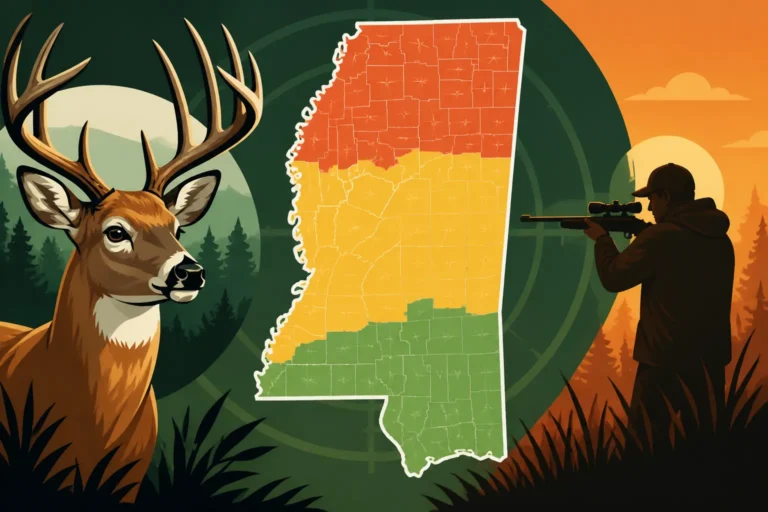
Mississippi is divided into four primary Deer Management Units: Delta, Hills, Southeast, and North Central. Each unit has its own set of regulations, including unique muzzleloader season dates. These dates are generally set to coincide with the estimated peak of the rut and other deer activity patterns specific to that region. For instance, the Delta unit, known for its fertile soil and dense populations, might have slightly different dates than the rolling Hills unit, where the terrain and deer behavior can be quite distinct.
Let's break down the typical structure, though you must always consult the most current MDWFP hunting guide, as dates can shift slightly year to year. Generally, the Hills, Delta, and North Central units often have a muzzleloader season that follows closely on the heels of the early archery season, sometimes even extending into November. The Southeast unit, with its longer overall archery season, might see its muzzleloader dates appear a bit later or in a staggered fashion. Knowing your unit is critical; if you're hunting in Lafayette County, you're in the North Central unit, but if you cross into Yalobusha, you're in the Hills. Many hunters find using a reliable mapping app, or even an old-school paper map with unit lines, indispensable for this. A tool like GoHunt can be incredibly helpful for visualizing these boundaries and season overlays.
Here's a generalized table of typical muzzleloader season windows by unit. Remember to always check the official MDWFP regulations for the precise current year's dates before heading afield.
| Deer Management Unit | Typical Muzzleloader Season Window | Notes |
|---|---|---|
| Delta Unit | Mid-November to Early December | Often follows closely after early archery. |
| Hills Unit | Mid-November to Early December | Similar timing to Delta, targeting pre-rut/early rut. |
| Southeast Unit | Late November to Mid-December | May align with later rut phases due to regional variation. |
| North Central Unit | Mid-November to Early December | Similar timing to Hills and Delta units. |
Disclaimer: These are general approximations. Refer to the current MDWFP Hunting Guide for exact dates.
Overlaps with Other Deer Seasons and What That Means
One of the nuances of Mississippi's deer season is the overlap, or staggered nature, of different weapon types. It's not uncommon for muzzleloader season to run concurrently with portions of the statewide archery season or even the Mississippi Youth Gun Weekend Dates. This means you might be in the woods with your muzzleloader, while a fellow hunter nearby could be using a bow or, if it's the youth weekend, a general firearm. This requires everyone to be extra mindful of safety and hunting methods.
For you, as a muzzleloader hunter, these overlaps often mean a bit more hunting pressure, especially on public lands. If archery season is still open, archers might be in prime spots. If the youth gun season is running, you'll likely see more families and general gun hunters out. The key here is not just knowing when you can hunt with your muzzleloader, but who else might be in the woods and what they're hunting with. This awareness influences everything from your entry and exit routes to how long you plan to stay on stand. You might also find yourself competing for preferred parking spots at certain WMAs. It emphasizes the importance of understanding the bigger picture of Mississippi Deer Season Structure Explained before you commit to a hunt. Be sure to carry your current license and any required permits, and always adhere strictly to the regulations for your chosen weapon type, even if other weapon seasons are open around you.
Legal Muzzleloader Requirements and Gear Considerations
Hunting with a muzzleloader is a distinct experience, and that extends to the specific legal requirements for the firearms themselves. You can't just grab any old rifle and expect it to qualify. The MDWFP has clear definitions to ensure fair chase and safety. Beyond the legalities, having the right gear is crucial for success and enjoyment.
Approved Firearms and Ammunition for Muzzleloader Season
When it comes to legal muzzleloaders in Mississippi, the rules are pretty straightforward. You're generally looking at rifles, shotguns, or pistols that load from the muzzle, meaning the projectile and powder are loaded down the barrel. This includes both traditional flintlock and percussion models, as well as the more modern "inline" muzzleloaders that use 209 primers. The key is that they are single-shot and muzzle-loaded. You can't just put a bullet in the breech; the powder and projectile must go in from the front.
What about ammunition? For deer, you'll typically be using single projectiles like sabots, conical bullets, or round balls. Shotgun shells loaded with shot are not legal for deer. The MDWFP doesn't usually specify a minimum caliber for muzzleloaders, but common calibers for deer include .50 caliber, .45 caliber, and sometimes .54 caliber. You'll need to ensure your powder charge and projectile are appropriate for the game you're pursuing and that your chosen setup is accurate. Pyrodex, Triple Seven, or traditional black powder are the standard propellants. Smokeless powder is a no-go in muzzleloaders designed for black powder substitutes – using it can be incredibly dangerous and cause catastrophic failure of your firearm. For a broader understanding of what firearms are permitted during different deer seasons, refer to Mississippi Legal Firearms for Deer Hunting.
Essential Gear and Safety Practices
Beyond the muzzleloader itself, a few key pieces of gear are absolutely essential. First and foremost, you'll need all your loading components: powder, projectiles, primers (if using an inline), a ramrod (most muzzleloaders come with one, but a good aftermarket one is often better), and a capper or decapper tool if needed. Keeping your powder dry is paramount; waterproof containers for pre-measured charges are a godsend, especially if you're hunting in Mississippi's notoriously humid or rainy conditions. A rangefinder is also incredibly useful, as muzzleloaders typically have a more limited effective range than modern centerfire rifles, making precise distance estimation crucial.
Safety is paramount, especially with muzzleloaders. Always follow the manufacturer's instructions for loading and firing. Wear appropriate eye and ear protection when shooting. During muzzleloader season, if you're out hunting, remember Mississippi's Mississippi Blaze Orange Requirements. Most of the time, this means wearing at least 500 square inches of solid unbroken hunter orange or a hat with at least 250 square inches of hunter orange. This applies to anyone hunting with a firearm during daylight hours. Never load a muzzleloader until you're ready to hunt, and always assume it's loaded once powder and projectile are down the barrel. Clear the barrel before loading if you suspect any obstruction. A missed opportunity is always better than an unsafe shot or an accidental discharge.
Understanding Bag Limits, Tags, and Reporting
Even with a muzzleloader in hand, the fundamental rules of deer hunting in Mississippi regarding harvest limits, tagging, and reporting remain the same. These are crucial steps to ensure proper management of our deer herds and compliance with state law. Failing to follow these steps can lead to unnecessary headaches and potential legal issues, so it's always best to be prepared.
Daily and Seasonal Bag Limits for Muzzleloader Hunters
The state's deer bag limits apply across all weapon seasons, including muzzleloader. Generally, for most of the state, the statewide deer bag limit is one (1) antlered buck per day, not to exceed three (3) per annual season. For antlerless deer, it's typically one (1) antlerless deer per day, with an overall seasonal limit that varies by unit and may depend on specific antlerless tags or permits. These limits are designed to control harvest pressure and help maintain a healthy buck-to-doe ratio.
However, there are critical nuances:
- Antler Restrictions (ARs): Both the Delta and Hills units have specific antler restrictions that dictate what constitutes a legal buck. For example, the Delta Unit requires bucks to have a minimum 12-inch main beam or an inside spread of at least 15 inches. The Hills unit usually requires a 10-inch main beam or a 13-inch inside spread. Make sure you understand and adhere to the ARs for the unit you are hunting in during muzzleloader season, just as you would during gun season. Our guides on Delta Unit Twelve-Inch Spread Rule Explained and Hills Unit Ten-Inch Spread Rule Explained can provide more clarity.
- WMA Specifics: If you're hunting on a Wildlife Management Area (WMA), always double-check the specific WMA regulations. WMAs often have their own, sometimes more restrictive, bag limits and antler restrictions that supersede the statewide or unit-specific rules.
Knowing these limits before you head into the woods is non-negotiable. Don't rely on memory; carry the current MDWFP hunting guide or use their app to confirm your unit's specific regulations for antlered and antlerless deer during the muzzleloader period.
Reporting Your Harvest and CWD Zone Compliance
Once you've successfully harvested a deer with your muzzleloader, your responsibility doesn't end there. Mississippi has mandatory deer reporting requirements, and it's something every hunter needs to take seriously. All harvested deer, regardless of weapon type or location, must be reported to the MDWFP within 24 hours of harvest. This data is critical for wildlife biologists to monitor herd health, track harvest trends, and make informed management decisions.
You can typically report your deer using the MDWFP's mobile app or through their website. You'll need details like the date and time of harvest, county, deer management unit, sex of the deer, and if it was antlered, the number of points. Make sure to have your license information handy. For a step-by-step guide, check out Reporting a Deer Through Mississippi's App.
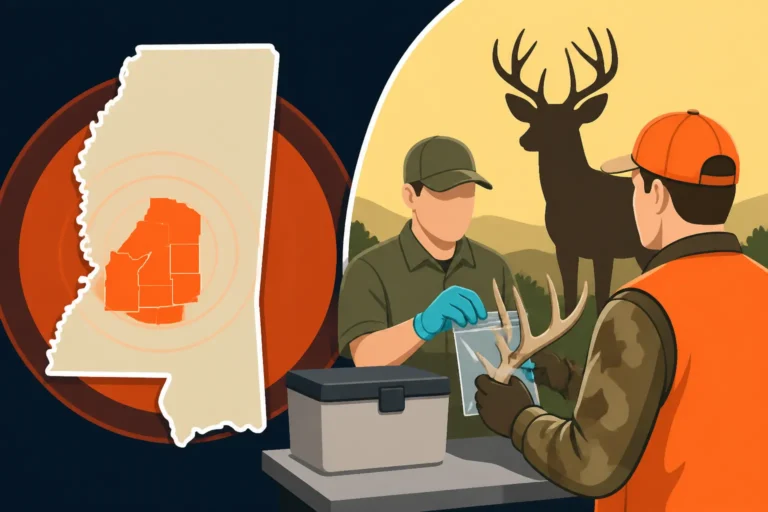
Furthermore, if you are hunting in one of Mississippi's Chronic Wasting Disease (CWD) Management Zones, there are additional requirements and precautions. These zones, like the North CWD Zone or the Warren-Claiborne CWD Zone, have specific rules regarding carcass movement and mandatory CWD testing. For instance, any deer harvested in a CWD zone often requires mandatory testing at a designated drop-off point, and whole carcasses cannot be transported out of these zones (though boned-out meat, cleaned skulls, and antlers are generally permitted). Before hunting in a CWD zone, educate yourself thoroughly on Mississippi's Chronic Wasting Disease Zones and Mississippi CWD Testing for Hunters to prevent the spread of this devastating disease and comply with the law. This responsibility falls squarely on the hunter to understand and follow, helping protect our deer herd for future generations.
Effective Muzzleloader Hunting Strategies in Mississippi
Hunting with a muzzleloader demands a different approach than hunting with a modern rifle or even a bow. The single-shot nature, the shorter effective range, and the need for meticulous loading mean that your strategy needs to be honed. Success isn't just about showing up; it's about being smart and adaptable.
Scouting and Stand Selection for Muzzleloader Success
When you're carrying a muzzleloader, your focus absolutely needs to be on getting within its effective range – typically 100-150 yards for most setups, though some skilled shooters might push it further. This makes scouting even more critical. You need to find those pinch points, funnels, and primary food sources where deer are consistently moving through or feeding within that sweet spot. Start your scouting long before the season by looking for fresh tracks, rub lines, and scrape lines. These signs tell a story of deer movement, especially bucks. A quality pair of binoculars will let you glass distant fields without disturbing animals, and a good mapping app can help you mark sign and plan entry/exit routes. For deeper insights on finding deer, consider our article on Scouting Mississippi Public Land Before Season.
Stand placement is paramount. With a muzzleloader, you don't have the luxury of making a follow-up shot quickly, so your first shot needs to be ethical and clean. This means setting up your stand or ground blind in a way that minimizes detection and maximizes your chances of a close, clear shot. Look for natural cover, position yourself downwind of expected deer travel, and consider the sun's position. Often, finding funnels between bedding and feeding areas, or bottlenecks along creek bottoms, can be highly productive. If you're hunting public land, remember to scout areas that others might overlook, often requiring a bit more walking to get away from the immediate road frontage.
Adapting to Mid-Season Deer Behavior
Muzzleloader season often falls during a transitional period for deer. The early season patterns of bachelor groups feeding in consistent fields might be breaking up, and the pre-rut or early rut activity could be kicking in, especially in the Hills or Delta units. This means deer behavior can be unpredictable. You might catch bucks cruising for does during the day, or does moving more frequently as the rut approaches. Understanding Hunting the Mississippi Rut by Unit can give you an edge in predicting these movements.
The weather also plays a huge role. A sudden cold front can really get deer on their feet, making mid-day hunts with your muzzleloader incredibly productive. Conversely, warm, muggy weather can slow things down, forcing you to hunt tighter to bedding areas or key evening food sources. Don't be afraid to adjust your strategy based on conditions. If it's warm, deer might only move at dawn and dusk. If it's cold, they might be up and feeding throughout the morning. Be patient, stay observant, and be ready to capitalize on those brief opportunities that come your way. The slower pace of muzzleloader hunting sometimes aligns perfectly with observing subtle changes in deer behavior and making the necessary adjustments to be successful.
Disclaimer
The information provided in this guide is for general informational purposes only and is not intended as legal advice. Hunting regulations in Mississippi are subject to change, and it is the hunter's sole responsibility to consult the current Mississippi Department of Wildlife, Fisheries, and Parks (MDWFP) official regulations and statutes before engaging in any hunting activities. Always prioritize safety and ethical hunting practices.