Mississippi Coyote Range and Density
If you’ve spent any time hunting or even just living in Mississippi, you’ve probably seen them or heard their eerie howls cutting through the night. Coyotes are an undeniable presence in our state, and for many, understanding just where they are and how numerous they’ve become is a crucial part of managing wildlife and protecting livestock. This guide is going to deep-dive into the fascinating — and sometimes frustrating — world of Mississippi’s coyote populations, exploring their widespread range and the factors influencing their numbers across our diverse landscapes.
Understanding the Coyote's Arrival and Spread in Mississippi
It’s easy to think coyotes have always been a fixture of the Mississippi landscape, but that’s actually not the case. They’re relatively new arrivals, at least in the widespread numbers we see today, and their journey here is a classic tale of wildlife adaptation and expansion. Understanding this history is key to grasping their current range and density.
Historical Context of Coyote Expansion
Back in the day, coyotes were primarily creatures of the American West. They thrived on the plains and in arid regions, far from the humid, forested ecosystems of the Southeast. However, as human populations expanded and altered landscapes, and as larger predators like wolves were pushed out, a massive ecological void opened up. Coyotes, being incredibly adaptable, began to fill it. Their eastward migration was a slow but steady creep, driven by a combination of factors including deforestation, which created more open habitat, and the decline of apex predators that might have kept them in check.
Many folks remember when coyote sightings were rare occurrences here in Mississippi, often just a fleeting glimpse or a rumor. But over the last few decades, that's changed dramatically. The journey of these resilient canids into Mississippi really picked up steam in the latter half of the 20th century. By the 1970s and 80s, they were becoming more commonplace, particularly in the northern and western parts of the state. This wasn't a sudden invasion, but rather a gradual colonization, with individual coyotes pushing the boundaries of their species' known range, much like pioneers exploring new territories. This expansion meant that by the time many of us truly started paying attention, the coyotes were already here, establishing footholds in various counties. If you're curious about the specifics of this timeline, you might be interested in delving into When Mississippi Coyotes First Arrived.
Factors Driving Their Proliferation
So, what exactly made Mississippi such a welcoming home for a species traditionally associated with wide-open spaces? Several key factors played a significant role. One of the biggest is their incredible adaptability in diet. Coyotes aren't picky eaters; they'll prey on deer fawns, rabbits, rodents, birds, insects, and even fruits and berries. This omnivorous nature allows them to thrive in almost any environment, from dense timber to agricultural fields and even suburban fringes. They are true generalists, which is a huge advantage when colonizing new habitats.
Another critical factor is their reproductive success. Coyotes typically have larger litters than many native predators, and they can breed at a relatively young age. When populations are low, or resources are abundant, they tend to have even larger litters, allowing them to rapidly increase their numbers. Couple this with the relative lack of natural predators in Mississippi – beyond humans, there aren't many animals consistently preying on adult coyotes – and you have a recipe for rapid population growth. Furthermore, human activities inadvertently aid their spread. Road networks provide easy travel corridors, and agricultural practices, while reducing some habitats, create new ones, like expansive fields that draw rodents and deer, which in turn attract coyotes. The patchwork of private land and public forests also provides ample cover and hunting opportunities for these cunning canids, ensuring their continued presence and expansion throughout the state.
Mapping the Coyote's Range Across Mississippi
It’s one thing to know coyotes are here, but understanding precisely where they roam in Mississippi is another challenge entirely. From the flatlands of the Delta to the rolling hills and the sandy Gulf Coast, these clever canids have established themselves in virtually every corner of our state.
Ubiquitous Presence: From Delta to Coast
You’d be hard-pressed to find a county in Mississippi where coyotes haven’t made their mark. Their range is truly ubiquitous, stretching from the fertile agricultural fields of the Mississippi Delta down to the coastal plains bordering the Gulf of Mexico, and everything in between. In the Delta, where vast expanses of soybeans, corn, and cotton dominate the landscape, coyotes find an abundance of small game, rodents, and even deer that frequent field edges. The numerous drainage ditches and sloughs provide both water and travel corridors, making it ideal territory for them. Their presence in the Delta has certainly impacted local wildlife, and landowners often struggle with them.
As you move eastward into the Hills and Piney Woods regions, the habitat changes dramatically, but the coyotes persist. These areas offer a mix of timber, thickets, and smaller agricultural plots, providing ample cover and a diverse prey base. Whether it’s in the dense pine plantations of the Southeast or the hardwood bottoms of the North Central Unit, coyotes have adapted their hunting strategies to fit the terrain. The Gulf Coast, with its unique blend of marshes, pine forests, and suburban development, also hosts a healthy coyote population. They traverse these diverse ecosystems with ease, constantly searching for food and territory. This widespread distribution underscores their incredible resilience and their ability to thrive in vastly different environments.
Regional Variations in Habitat Preference
While coyotes are found everywhere, their preferred habitats and hunting patterns can vary subtly from one region to another. In the open landscapes of the Delta, you'll often find them utilizing drainage ditches, hedgerows, and the edges of large crop fields for cover and travel. They might den in dense thickets along a bayou or in a forgotten patch of timber. Their hunting often involves patrolling these field edges, ambushing rodents or fawns, or even scavenging agricultural waste. This makes scouting crucial, and tools like the GoHunt app can be incredibly useful for pinpointing these transition areas and understanding land contours, even when you're targeting predators.
Contrast that with the rolling, heavily forested terrain of the Hills Unit. Here, coyotes might prefer to stick to creek bottoms, logging roads, and dense clear-cuts, where cover is abundant. They often rely more on scent and sound to locate prey in these thicker environments. Their dens might be tucked away in remote ravines or under fallen timber. Similarly, in the Piney Woods, they adapt to the managed pine plantations, using the rows of trees for cover and frequently moving through the thinned understory. Knowing these regional nuances can significantly improve your chances if you're trying to thin their numbers, whether you're trying Coyote Calling in Mississippi Farm Country or Predator Calling Mississippi Pine Plantations. Understanding these habitat variations is critical for hunters and landowners alike, as it helps in predicting coyote movement and developing more effective management strategies.
Urban and Suburban Coyote Sightings
It might sound surprising, but coyotes aren't just out in the deep woods or expansive fields anymore. They've made their way into urban and suburban areas across Mississippi, becoming an increasingly common, and sometimes unsettling, sight for residents. From the outskirts of Jackson to the neighborhoods of Gulfport and even smaller towns throughout the state, coyote sightings are on the rise. They’re drawn to these areas by readily available food sources – think pet food left outside, unsecured garbage cans, and even an abundance of small mammals like squirrels, rabbits, and rodents that thrive in green spaces like parks and golf courses.
This urban adaptation highlights just how resourceful coyotes are. They’re masters of stealth and can move through neighborhoods largely unnoticed, especially during the nighttime hours. While encounters with humans are generally rare and coyotes usually prefer to avoid us, their presence can be a concern for pet owners, as small dogs and cats can become targets. Learning to recognize their signs – scat, tracks, or their distinctive calls – around your property can help you understand if they are active in your specific neighborhood. It's a stark reminder that even in developed areas, the wild is never too far away, and it reinforces the fact that they are truly everywhere in Mississippi.
Estimating Coyote Density and Population Dynamics
Trying to figure out exactly "how many" coyotes are in Mississippi, or how dense their populations are in specific areas, is a bit like trying to count smoke. They're elusive, nocturnal, and constantly on the move, making accurate assessments incredibly challenging. However, wildlife biologists and researchers use a variety of methods to get a reasonable estimate of their numbers and understand the factors influencing these populations. This is important for understanding their impact on other species like deer, turkeys, and small game.
Challenges in Population Assessment
The biggest hurdle in assessing coyote populations is their inherent stealth and adaptability. Unlike deer, which can often be counted from aerial surveys or spotlight counts with some degree of accuracy, coyotes are masters of remaining hidden. They learn quickly to avoid human presence, making direct observation difficult. Trapping efforts can give some indication of presence, but converting trap success rates into a statewide population number is incredibly complex and often requires significant assumptions.
Furthermore, factors like terrain, vegetation density, and even weather can skew data collected through various methods. For instance, in dense bottomland hardwoods or thick pine plantations, it's much harder to conduct effective call surveys or trail camera studies than in more open agricultural areas. The vastness of Mississippi's diverse habitats also means that methods that work well in one region might be less effective in another. Wildlife agencies often rely on a combination of indirect indicators, such as harvest data from hunters, nuisance complaints, and localized research studies, to piece together a broader picture of coyote distribution and abundance. This patchwork approach is the best we have, but it always comes with a margin of error.
Interpreting Density Estimates
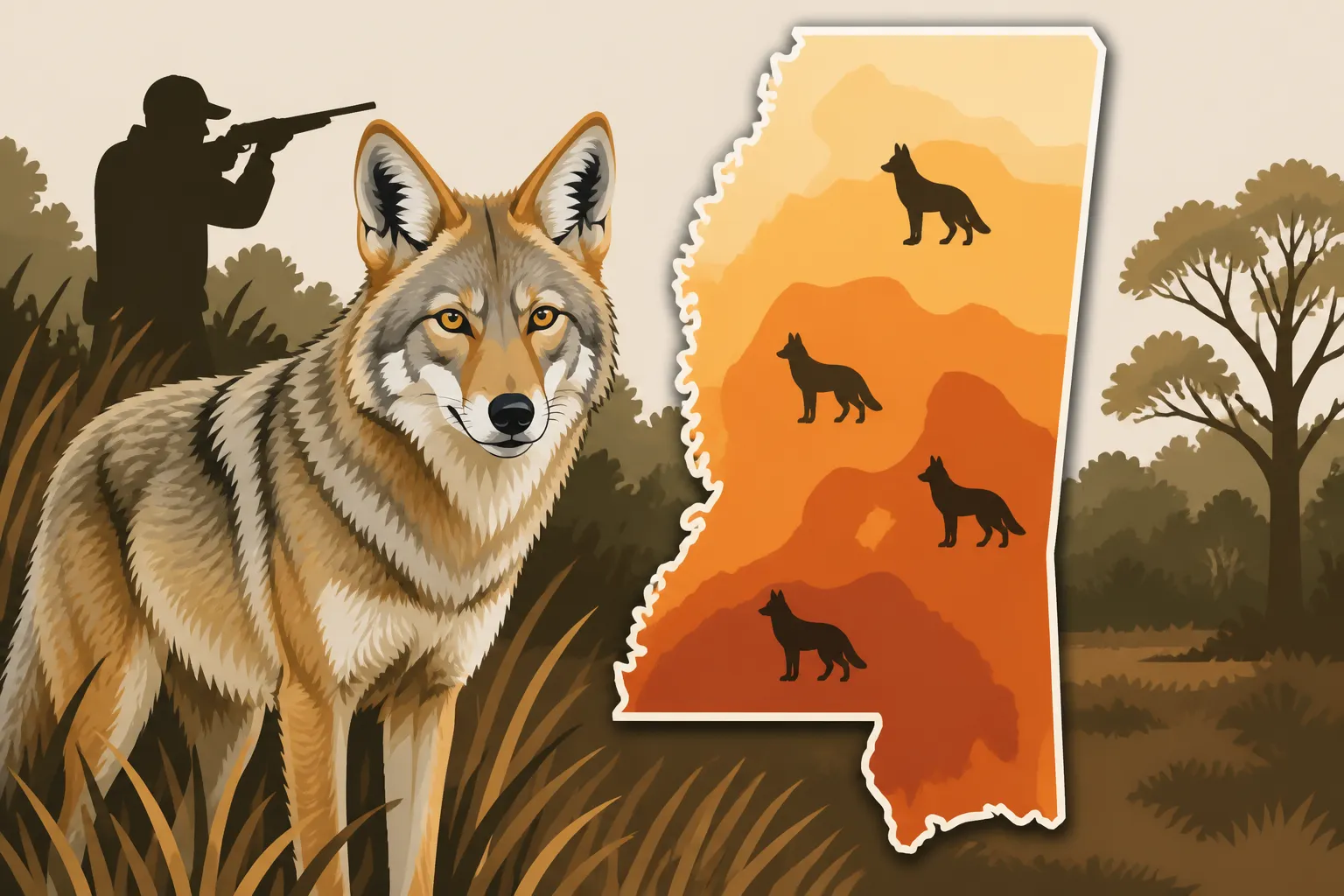
Despite the challenges, biologists do provide estimates and general observations about coyote density across the state. While there isn't a precise, real-time "coyote counter" for Mississippi, most experts agree that populations are robust and widely distributed. Rather than a fixed number, it's often more useful to think in terms of density: how many coyotes per square mile are likely present in a given habitat type. It's generally understood that areas with abundant prey (like agricultural zones with high rodent populations or healthy deer herds) and good cover tend to support higher coyote densities.
For example, a heavily fragmented landscape with a mix of timber, fields, and human development might harbor a higher density of coyotes because it offers a diverse food base and plenty of edge habitat. Conversely, extremely dense, unbroken tracts of mature timber might have slightly lower densities simply because the primary prey might be less abundant, though coyotes will still utilize these areas. The key takeaway is that while exact figures are elusive, the trend points to a healthy and widespread coyote population throughout Mississippi. If you're wondering How Many Coyotes Mississippi Has, the answer is "a lot," and they are well-established.
Factors Influencing Local Densities
Local coyote densities aren't static; they ebb and flow based on a complex interplay of environmental factors, prey availability, and human intervention. One of the primary drivers is the abundance of prey. When deer fawns are plentiful, or rabbit and rodent populations are high, coyotes have a reliable food source, which can lead to larger litters and higher survival rates for pups, thus increasing local density. Conversely, a severe drought or a disease outbreak among prey species could lead to a temporary dip in coyote numbers.
Habitat quality also plays a significant role. Areas with good denning cover (such as thick brush, dense timber, or rocky outcrops), reliable water sources, and diverse food options will naturally support more coyotes than more barren or homogeneous landscapes. Human hunting and trapping efforts can, in some cases, temporarily reduce local densities, especially in response to specific problems like livestock depredation, which we sometimes see reported as Mississippi Coyote Attacks on Livestock. However, coyotes are incredibly resilient; if resources are still available, their populations can quickly rebound through increased reproduction. This compensatory breeding makes it very difficult to achieve long-term, widespread reductions in coyote numbers through hunting alone.
Impact of Coyotes on Mississippi's Ecosystem and Wildlife
The widespread presence and high density of coyotes across Mississippi inevitably lead to a significant impact on the state's natural ecosystems and, particularly, its wildlife populations. Understanding this impact is crucial for wildlife managers and hunters alike, as it influences everything from deer management strategies to small game conservation efforts.
Predation on Deer and Small Game
This is probably one of the most talked-about impacts of coyotes among Mississippi hunters. There's no denying that coyotes prey on deer, particularly fawns. Studies across the Southeast have consistently shown that fawn depredation by coyotes can be a significant factor in deer recruitment, sometimes accounting for a substantial percentage of fawn mortality. While a healthy, robust deer herd can often absorb this predation without long-term damage, it can be more impactful in areas with already struggling deer numbers or where management goals are focused on growing mature bucks. You might wonder about the overall Mississippi Deer Population Estimate and how coyotes factor into it.
Beyond deer, coyotes are also highly effective predators of small game. Rabbits, squirrels, quail, and even wild turkeys (especially poults and nesting hens) are all on a coyote's menu. For species like quail, which are already facing challenges due to habitat loss, coyote predation can add another layer of pressure. Hunters often feel this directly, seeing fewer rabbits or hearing fewer gobblers, and naturally, they look for ways to mitigate this impact. Understanding the coyote's diet, which can be explored in articles like Mississippi Coyote Diet in Farm Country, helps explain why they are so impactful across many game species. It's a complex dynamic, and while coyotes are a natural part of the ecosystem, their relatively recent widespread proliferation means that other species haven't fully evolved strategies to cope with such a consistent and efficient predator.
Interactions with Feral Hogs and Other Predators
It’s not just deer and small game that feel the presence of coyotes; they also interact with other predator species and, notably, with the pervasive issue of feral hogs. In terms of other predators, coyotes can compete with bobcats, foxes, and even black bears for food resources. While bobcats and coyotes often coexist, there can be some territorial overlap and competition for small game. Interestingly, coyotes are generally dominant over foxes, often displacing them from prime territories. This dynamic shifts the local predator balance.
When it comes to feral hogs, the interaction is fascinating. While a lone coyote is unlikely to take down a mature hog, they do prey on piglets. This can be a benefit, as feral hogs are an incredibly destructive invasive species. However, it's important to understand that coyote predation alone is not enough to control or significantly reduce feral hog populations. Hogs reproduce too rapidly and are too numerous for coyotes to make a substantial dent in their overall numbers. Still, it’s one natural check in a system that desperately needs more. If you're interested in strategies to combat the hog problem, you might want to read Hunting Mississippi's Year-Round Feral Hogs. The interplay between these species highlights the intricate web of relationships within Mississippi’s wildlife, where the presence of one species can ripple through the entire food chain.
The Broader Ecological Balance
The introduction and proliferation of coyotes in Mississippi have fundamentally altered the broader ecological balance. While they are now a naturalized component of the ecosystem, their role is still evolving. As opportunistic predators, they play a crucial role in regulating populations of various prey species, from rodents to deer. This can be beneficial in preventing overpopulation of certain species, which could lead to habitat degradation. However, their impact is most keenly felt by species that haven't evolved alongside them, particularly ground-nesting birds and vulnerable fawns.
Their presence also impacts scavengers by quickly cleaning up carrion, which can be both a positive (reducing disease spread) and a negative (reducing food for obligate scavengers like vultures). Wildlife managers are constantly studying these dynamics, trying to understand how coyotes fit into the long-term health of Mississippi's ecosystems. It's not a simple case of "good" or "bad"; it's a recognition that coyotes are a powerful force, and their influence on our wildlife is extensive and ongoing. Monitoring programs, often touching on aspects discussed in Mississippi Wildlife Disease Monitoring, help track these ecological shifts and inform management decisions.
Managing Coyote Populations: Hunter's Role and Strategies
Given the widespread presence and impact of coyotes, many hunters and landowners are actively engaged in managing their populations. It's not about eradication – that's largely impractical and perhaps even undesirable from an ecological perspective – but rather about control, particularly in areas where coyotes are causing significant issues for livestock or game animals.
Year-Round Hunting Opportunities
One of the most appealing aspects of coyote hunting in Mississippi is that it's a year-round endeavor. Unlike deer or turkey seasons, which are strictly regulated with specific dates and bag limits, coyotes can be pursued throughout the year on private land (with landowner permission) and often on public lands, though specific WMA rules should always be checked. This continuous opportunity makes them a prime target for hunters looking to extend their time afield or contribute to local wildlife management.
The constant availability means you can target them during different phases of their life cycle – perhaps focusing on pups in late spring and summer, or adults during the colder months when their pelts are prime. This flexibility allows hunters to experiment with various techniques and learn coyote behavior patterns across all seasons. However, always remember to check regulations for specific public land areas, like WMAs, as they might have different rules for predator hunting, sometimes requiring a Mississippi WMA Permit Requirement even for coyotes. The year-round nature of coyote hunting is a powerful tool in the hands of individuals committed to reducing their local impact. For specific dates and rules, you can consult Mississippi Coyote Hunting Season Rules.
Effective Calling and Trapping Techniques
When it comes to actively managing coyotes, calling and trapping are two of the most effective techniques. Calling can be incredibly exhilarating. It involves mimicking prey animals (like rabbits in distress) or other coyotes (howls, barks) to draw them within shooting range. Electronic callers offer a wide range of sounds and can be very effective, especially in open country or over long distances. Hand calls, while requiring more skill, give hunters a more intimate and responsive way to interact with coyotes. Success with calling often depends on understanding wind direction, camouflage, and choosing the right setup location.
Trapping, while more labor-intensive and requiring specific knowledge and permits, can be highly effective for reducing local populations, especially around areas experiencing depredation problems. Modern foothold traps and snares, when used correctly and humanely, can target specific animals causing issues. This method is often favored by professional trappers or landowners who need consistent control. Both calling and trapping demand patience, a keen understanding of coyote behavior, and a commitment to ethical practices. Combining these methods can yield even better results for those serious about managing coyotes.
Utilizing Technology for Predator Control
In today's hunting world, technology offers some fantastic advantages for predator control, and coyotes are no exception. Thermal optics and night vision, for instance, have revolutionized night hunting for coyotes, allowing hunters to detect animals at great distances even in complete darkness. This is especially useful since coyotes are largely nocturnal. Rules for night hunting vary, so always check Night Hunting Rules for Mississippi Coyotes before heading out with these tools.
Beyond optics, GPS mapping tools like the GoHunt app can be invaluable. They allow hunters to mark sightings, track movements, identify prime ambush locations, and even understand land ownership boundaries on public and private lands. This detailed mapping capability helps to analyze coyote travel corridors, bedding areas, and hunting patterns. Trail cameras are another excellent technological aid, providing intelligence on coyote activity without human presence. By deploying cameras along suspected travel routes or near bait sites, hunters can gain insights into local populations, peak activity times, and even individual coyote habits, informing their calling and trapping efforts. These technological advancements, when combined with traditional hunting skills, empower hunters to be more strategic and effective in their coyote management efforts.
Coyote Presence and Density by Mississippi Region
| Region | Typical Habitat Types | Coyote Presence | Estimated Density (Relative) | Common Hunting Methods Favored | Notable Impacts |
|---|---|---|---|---|---|
| Mississippi Delta | Large agricultural fields, flooded timber, sloughs | High | High | Calling, Night Hunting | Fawn depredation, small game, livestock |
| Hills Unit | Rolling hills, mixed hardwoods, pine plantations | High | Moderate-High | Calling, Still-hunting | Fawn depredation, turkey poults |
| Piney Woods | Pine plantations, clear-cuts, mixed forests | High | Moderate | Calling, Trapping | Small game, turkey poults |
| Gulf Coast | Coastal marshes, pine flatwoods, suburban interfaces | High | Moderate-High | Calling, Night Hunting | Small game, domestic animals |
| North Central | Mixed hardwood forests, small farms | High | Moderate-High | Calling, Trapping | Deer fawns, turkey poults |
| Loess Bluffs | Steep bluffs, dense timber, agricultural valleys | High | Moderate | Calling, Ambushes | Deer fawns, rabbits |
Disclaimer
The information provided in this guide is for general informational purposes only and does not constitute legal advice. Hunting regulations and wildlife management practices can change frequently. Always consult the official Mississippi Department of Wildlife, Fisheries, and Parks (MDWFP) website or current hunting digest for the most up-to-date and accurate regulations before engaging in any hunting activities.