Mississippi’s Delta and Southern Bear Populations
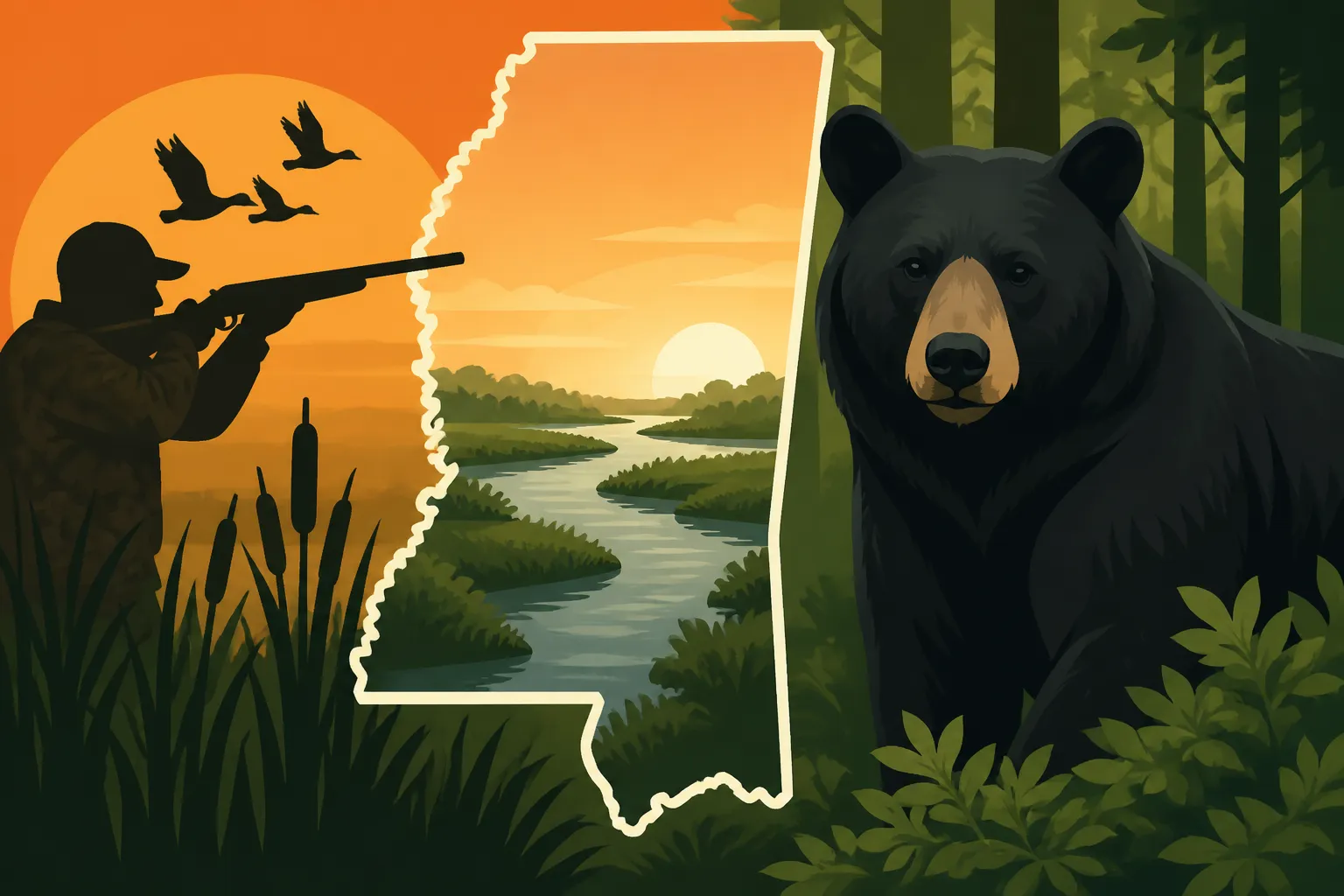
It's easy to forget that just a few decades ago, the sighting of a black bear in Mississippi was almost unheard of, a rare ghost story from the past. But things are changing, and for many of us who cherish the wild spaces of our state, it's a truly exciting development. However, with this resurgence comes curiosity, and sometimes a bit of apprehension, about where these magnificent animals are settling down and how their numbers are growing. This guide is dedicated to shedding light on the two primary black bear populations taking root in Mississippi: the sprawling bottomlands of the Delta and the dense, swampy river systems of the Southern region, exploring their remarkable comeback and what it means for our state's wilderness.
The Remarkable Return of Black Bears to Mississippi
The notion of black bears roaming free in Mississippi might still surprise some, but their presence is a testament to the resilience of nature and dedicated conservation efforts. For generations, they were largely absent, relegated to history books and the collective memory of our grandparents. Now, they're slowly but surely reclaiming their ancestral lands, carving out new territories, and becoming a more frequent, albeit still elusive, sight.
Historical Context and Extirpation
Back in the day, black bears were as much a part of the Mississippi landscape as cypress trees and cane thickets. They roamed nearly every corner of the state, finding abundant food and shelter in the vast, unbroken forests. However, as the 19th and early 20th centuries rolled on, the relentless march of human development, particularly large-scale timber harvesting and the clearing of land for agriculture, began to chip away at their habitat. This, coupled with unregulated hunting, spelled disaster for the state's bear population. By the mid-20th century, black bears were considered functionally extirpated from Mississippi, meaning there were no viable breeding populations left. It was a sad chapter, a stark reminder of how quickly human actions can impact wildlife.
The stories from older hunters about seeing a "bear sign" or hearing tales of an elusive animal felt more like folklore than reality for a long time. The landscape had changed so drastically that it was hard to imagine a creature needing such immense, wild spaces surviving here. Yet, even as the last native bears vanished, the seeds of recovery were being sown, albeit unknowingly, in neighboring states.
Natural Recolonization and Sources
Unlike some other species that have been actively reintroduced by wildlife agencies, Mississippi's black bear comeback is largely a story of natural recolonization. We didn't truck in bears from other states and release them into the wild. Instead, the bears decided to come home on their own, slowly expanding their territories from strongholds in Louisiana and Arkansas. The mighty Mississippi River, with its extensive floodplains and tributary systems, has served as a critical natural corridor for these animals. Bears are surprisingly adept swimmers and travelers, and these river systems offered them a pathway back into our state.
From the west, bears from the healthy populations in Arkansas have crossed the Mississippi River and begun establishing themselves in the rich bottomlands of the Delta. Similarly, bears from the thriving populations in Louisiana, particularly the Louisiana black bear subspecies, have moved eastward into the southern swamp systems of Mississippi. It's a slow process, often taking decades for transient individuals to establish a breeding population, but the results are undeniable. This gradual, natural expansion is often seen as a sign of healthy source populations and suitable, albeit recovering, habitat within Mississippi.
The Delta Region Bear Population
When you think of the Mississippi Delta, vast agricultural fields, rich soil, and maybe even a little bit of the blues come to mind. But beneath the canopy of towering hardwoods, especially in the western part of the region, there's a wilder side that has become a crucial haven for Mississippi's burgeoning black bear population.
Habitat and Key Areas
The Delta provides a surprisingly ideal landscape for black bears, even with its agricultural dominance. We're talking about extensive tracts of bottomland hardwood forests, dense river swamps, and winding oxbow lakes that offer incredible cover and a diverse food pantry. Areas like the Delta National Forest, which stands as the only bottomland hardwood national forest in the United States, are absolute jewels in this regard. Here, along with the Panther Swamp National Wildlife Refuge and Yazoo National Wildlife Refuge, bears find everything they need.
These habitats offer a smorgasbord of natural food sources throughout the year. Think acorns from massive oaks, persimmons, muscadines, and various berries in the understory. In the fall, these areas become prime feeding grounds. The dense vegetation provides perfect bedding areas and escape cover, allowing bears to move relatively unmolested. While much of the surrounding land is farmed, the bears have learned to navigate these edges, sometimes even venturing into cornfields for an easy meal, which, of course, can lead to occasional conflicts. The interconnectedness of these forested areas, often following natural drainages and old river channels, is vital for their movement and genetic exchange.
Population Dynamics and Challenges
The Delta bear population is showing encouraging signs of growth, though obtaining precise numbers for such an elusive animal is always a challenge. Researchers utilize methods like Mississippi Black Bear DNA Tracking Study to get a clearer picture of their numbers and distribution. However, this growth doesn't come without its hurdles. One of the most significant challenges is habitat fragmentation. While there are large tracts of forest, they are often broken up by roads, highways, and agricultural lands. This increases the risk of vehicle collisions, which unfortunately, are becoming a more common cause of bear mortality in the region.
Another challenge is learning to coexist with a species that has been absent for so long. For many residents, seeing a bear is a new experience, and understanding bear behavior and how to minimize conflicts is crucial. Educating the public on securing food sources and managing attractants is a continuous effort by the Mississippi Department of Wildlife, Fisheries, and Parks (MDWFP). Despite these challenges, the Delta region, particularly the western counties like Sharkey, Issaquena, and Yazoo, continues to be a stronghold for the black bear, often serving as the initial point of contact for bears expanding into other parts of the state.
The Southern Mississippi Swamp Bear Population
Moving away from the Delta, another distinct black bear population thrives in the southern reaches of Mississippi, particularly along the state's intricate coastal plain and major river drainages. This region offers a different but equally rich tapestry of habitats that support a growing number of bears.
Coastal Plain and Riverine Habitats
The southern bear population calls a mosaic of habitats home, from the sprawling pine forests and mixed pine-hardwood stands to the incredibly dense, almost impenetrable river bottoms and coastal marshes. Key areas include the vast Pascagoula River Basin, often referred to as "the Amazon of North America" for its incredible biodiversity, the DeSoto National Forest, and the extensive Pearl River swamp systems that straddle the Mississippi-Louisiana border. These river systems are absolutely critical, acting as verdant highways for bear movement.
Unlike the Delta's primarily agricultural periphery, the southern landscape features more contiguous forestland, even within commercial timber operations. Bears find refuge in the thick undergrowth of managed pine plantations, especially those undergoing thinning, which promotes lush ground cover. However, it's the rich, wet bottomlands and swamps of the Pascagoula and Pearl River systems that truly provide the ultimate sanctuary. Here, bears forage for crayfish, tubers, berries, and the occasional piglet from the abundant feral hog population, a constant food source. The sheer inaccessibility of some of these areas also provides them much-needed solitude from human disturbance.
Connectivity and Growth Factors
The bears in southern Mississippi are closely tied genetically to the robust populations in Louisiana, particularly the state's federally protected Louisiana black bear subspecies. This strong connection means that bears are continually moving across the border, reinforcing and expanding the Mississippi population. The sustained growth of the Louisiana population has naturally spilled over into our state, gradually populating areas that were historically prime bear habitat.
Habitat management, even when not directly aimed at bears, plays a role. Efforts to protect and restore critical wetlands, manage timber sustainably, and establish wildlife corridors indirectly benefit bears by ensuring suitable habitat remains available. Private landowners, particularly those with large tracts of undeveloped land along river systems, also contribute significantly by providing undisturbed areas for bears to forage and raise their young. The increasing number of sightings and reported conflicts, though sometimes challenging, is actually a strong indicator that The South Mississippi Swamp Bear Population is robust and expanding. This natural spread means we are seeing bears venture into areas where they haven't been observed in generations.
Managing for Coexistence and Conservation
As Mississippi's black bear populations continue to grow and expand their range, encounters with humans are becoming more frequent. This shift brings with it a critical need for proactive management focused on ensuring that both bears and people can safely share the landscape. The goal isn't just to protect bears, but also to prevent conflicts before they start.
Public Education and Conflict Prevention
One of the biggest challenges for MDWFP and conservationists is managing public perception and educating residents about living alongside bears. For many, a bear sighting is a novel, if not startling, experience. The key to successful coexistence lies in adopting "bear-wise" practices, which essentially boil down to removing attractants that might draw a bear into human-occupied areas. This includes securing garbage in bear-resistant containers, keeping pet food indoors, and cleaning up outdoor grills. Even bird feeders, if left out overnight, can become a tempting treat for a hungry bear. When planning trips into bear country, resources like GoHunt can provide useful insights into potential habitat and animal movement patterns, allowing you to be more prepared.
The MDWFP regularly conducts outreach programs, advising homeowners and campers on how to respond to a bear encounter and what steps to take to avoid problems. The message is clear: a fed bear is a dead bear. When bears associate humans with easy food, they can become habituated, leading to nuisance behavior that often escalates to a dangerous situation for both the bear and humans. Understanding What to Do If You See a Mississippi Black Bear is crucial for both your safety and the bear's well-being. This proactive approach helps to mitigate many of the common fears and misunderstandings surrounding black bears, fostering a more informed and tolerant public.
Monitoring and Research Efforts
Effective conservation isn't possible without robust science, and the MDWFP, often in collaboration with universities and federal partners like the U.S. Fish and Wildlife Service, is deeply involved in monitoring Mississippi's black bear populations. Researchers employ a variety of techniques to track bear numbers, health, and movements. This includes using hair snares to collect genetic samples, which helps identify individual bears and estimate population sizes. GPS collars provide invaluable data on movement patterns, denning habits, and habitat use, shedding light on the critical corridors and areas bears depend on.
These studies are essential for understanding reproductive rates, survival rates, and the overall health of Mississippi's Recovering Black Bear Population. This data then informs management decisions, such as identifying areas needing habitat protection or public outreach. When you look at detailed mapping tools like those offered by GoHunt, you can sometimes see how researchers use similar principles to track and analyze wildlife patterns, even if GoHunt itself is geared towards hunters. The long-term goal of this research is to ensure that as the bear populations grow, they do so in a sustainable and healthy manner, allowing for their continued expansion without undue conflict.
The Future of Mississippi's Bear Populations
The story of black bears in Mississippi is one of hope and recovery. From near extirpation, these magnificent animals are steadily making their way back, thanks to habitat recovery and natural expansion. But what does the future hold for them in the Magnolia State? The trajectory suggests continued growth and a wider distribution, bringing both excitement and new management considerations.
Expansion into Central Mississippi
As both the Delta and Southern bear populations flourish, there's an undeniable trend: bears are slowly but surely pushing into the more central regions of Mississippi. It's not uncommon now to hear reports of bear sightings in counties that haven't seen them in living memory. This expansion is a natural consequence of growing populations seeking new territories, especially younger males dispersing from their natal ranges. However, central Mississippi presents a somewhat different landscape than the deep Delta swamps or the sprawling southern forests.
The central part of the state often features more fragmented woodlands, interspersed with suburban development, smaller farms, and a higher human population density. This creates new challenges for both bears and people, increasing the potential for human-bear conflicts. MDWFP is actively tracking these movements, advising landowners and residents on how to adapt to the presence of bears. The continued spread of Bears Moving Into Central Mississippi underscores the success of current conservation efforts but also highlights the need for ongoing public education and conflict resolution strategies to foster coexistence in these newly colonized areas.
Potential for a Future Hunting Season
The idea of a black bear hunting season in Mississippi is a topic that surfaces occasionally, generating considerable discussion among hunters and conservationists alike. Currently, Mississippi has no bear season, and the species remains fully protected. However, if the state's black bear populations continue their robust growth, particularly in the Delta and Southern regions, the conversation about a carefully managed, limited hunting season will undoubtedly gain traction.
Any decision to implement a bear season would be a complex one, rooted in sound scientific data and thorough population assessments. It would require a demonstration that populations have reached sustainable levels that can withstand hunting pressure, along with strong public support and acceptance. A well-regulated hunting season, often structured with limited tags and specific harvest quotas, can actually be a valuable conservation tool. It can help manage populations, reduce conflicts by controlling nuisance animals, and generate revenue through license sales that directly funds bear research and habitat management. For now, however, the focus remains on facilitating the recovery and expansion of Mississippi's black bears, ensuring that Why Mississippi Bears Stay Fully Protected is understood as a vital step in their long-term comeback story.
A hunting season, if it ever comes to pass, would be a sign of true conservation success, moving the species from a protected status to a managed game animal, much like deer or turkey. This would require careful consideration of Mississippi Deer Season Structure Explained and Mississippi Spring Turkey Season Rules as models for sustainable management.
Comparing Mississippi's Two Primary Black Bear Populations
| Feature | Delta Region Population | Southern Region Population |
|---|---|---|
| Primary Habitat | Vast bottomland hardwoods, river swamps, oxbow lakes, dense canebrakes, agricultural field edges (corn). | Mixed pine-hardwood forests, dense river bottomlands, coastal marshes, extensive swamp systems. |
| Key Strongholds | Delta National Forest, Panther Swamp NWR, Yazoo NWR. | Pascagoula River Basin, Pearl River swamps, DeSoto National Forest. |
| Primary Origin | Natural expansion from Arkansas (crossing the Mississippi River). | Natural expansion from Louisiana (Louisiana black bear subspecies). |
| Primary Food Sources | Acorns, persimmons, muscadines, berries, corn, carrion, insects. | Acorns, berries, roots, crayfish, small mammals, feral hogs, insects. |
| Key Challenges | Habitat fragmentation, vehicle collisions, human-bear conflict in agricultural areas, public education needs. | Human-bear conflict in suburbanizing areas, managing public land for bear habitat, maintaining forest connectivity. |
| Genetic Lineage | Generally American Black Bear ( Ursus americanus americanus ) but with some potential overlap. | Predominantly Louisiana Black Bear ( Ursus americanus luteolus ), a federally recognized subspecies. |
| Growth Status | Robust and expanding, with increasing numbers of confirmed sightings and breeding activity. | Healthy and steadily expanding, strongly linked to Louisiana's growing bear numbers. |
Disclaimer
The information provided in this article is for general informational purposes only and is not intended as legal advice or a substitute for official regulations. Hunting laws and wildlife regulations in Mississippi are subject to change. Always consult the most current regulations published by the Mississippi Department of Wildlife, Fisheries, and Parks (MDWFP) before engaging in any hunting activities or making decisions based on this information.