Mississippi’s Historic Quail Decline
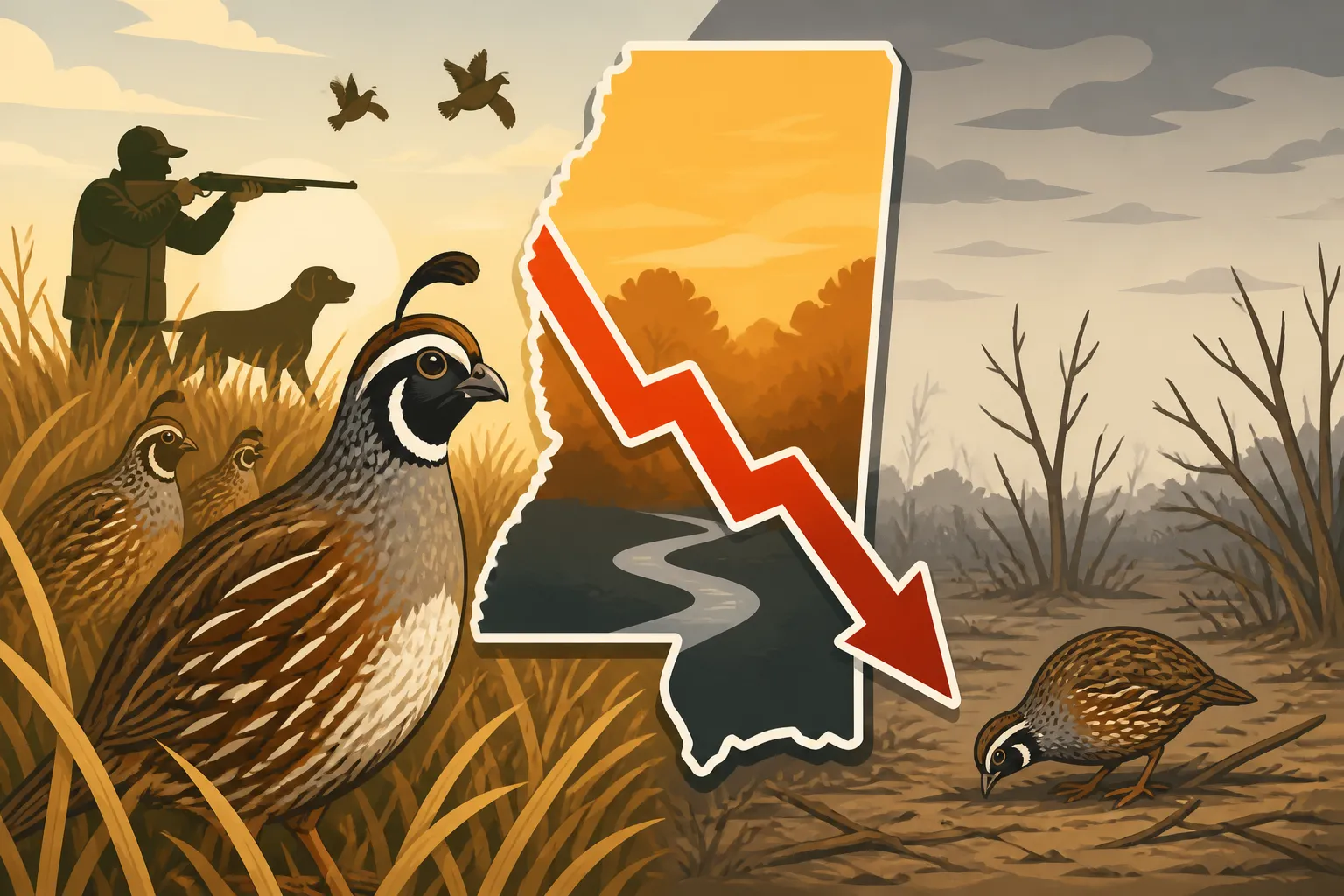
For those of us who grew up hearing tales of coveys bursting from broom sedge fields, the silence of Mississippi's quail woods is a stark reminder of a habitat lost. The bobwhite quail, once an iconic symbol of the Southern landscape and a cherished game bird, has seen a precipitous decline across our state, leaving many hunters and conservationists wondering if the vibrant populations of yesteryear can ever return. This guide will delve into the complex history of their decline, the ecological reasons behind it, and the hopeful, albeit challenging, efforts being made to bring these beloved birds back to Mississippi's fields and forests.
The Ghost of the Southeast: Understanding Mississippi's Quail Decline
For generations, the distinctive "bob-white!" whistle was as much a part of a Mississippi morning as dew on the grass and the smell of pine. Quail hunting wasn't just a pastime; it was a cultural touchstone, a family tradition, and an economic driver in many rural communities. But something changed, and the birds that once seemed innumerable became increasingly rare. Understanding this dramatic shift requires a look back at what once was and how quickly it all faded.
A Bygone Era: What Mississippi Quail Hunting Used to Be
Imagine walking a Mississippi field edge in the 1950s or 60s, your pointer locked on scent, the air crisp with autumn. It wasn't uncommon for a hunting party to flush multiple coveys in a single outing, each explosion of wings a thrill that echoed through the pines and bottomland hardwoods. Quail were so abundant that they were often considered a staple, a readily available source of wild game that supported local economies through guided hunts, dog breeders, and feed suppliers. Grandparents tell stories of fields so thick with quail that you practically had to shoo them out of the way to get your errands done – a far cry from today's reality where encountering a wild covey is a rare, cherished event. This abundance wasn't just good luck; it was a direct reflection of a landscape that naturally supported them, a landscape that has since been dramatically altered.
The culture around quail hunting was also different. It was often a social affair, bringing together neighbors and friends. The excitement of working a good bird dog, the suspense of the flush, and the camaraderie of the hunt were deeply woven into the fabric of rural life. Quail were a gateway game bird for many young hunters, teaching them patience, observation, and the importance of habitat management. The disappearance of these opportunities has left a void, not just in our fields, but in our heritage.
The Sharp Drop: When and How the Decline Accelerated
While the decline of the bobwhite quail has been a gradual process over many decades, many longtime Mississippi hunters and wildlife biologists point to the period from the 1970s through the 1990s as the most significant acceleration of the downturn. It wasn't a sudden catastrophic event but rather a slow, steady erosion driven by broad changes in land use and agricultural practices. Farmers began to plant "fence row to fence row," eliminating the crucial strips of cover and food that quail relied on. Small family farms, with their diverse patchwork of crops, fallow fields, and hedgerows, gave way to larger, more intensive monoculture operations.
The conversion of mixed pine-hardwood forests into dense, single-species pine plantations also played a massive role. These thick stands, managed primarily for timber production, often lack the open understory and diverse groundcover that quail need to nest, forage, and escape predators. The very places that once supported vibrant populations slowly became uninhabitable. This wasn't just a Mississippi phenomenon; it was a regional trend across the Southeast, but the impacts here were particularly severe, transforming once-productive quail habitat into biological deserts for the birds.
The Multifaceted Causes of Quail Population Collapse
Pinpointing a single culprit for the bobwhite quail's decline is like trying to nail smoke to a wall—it's complex, with many interacting factors. However, decades of research have given us a clear picture of the primary drivers, all of which boil down to significant alterations in the landscapes that once defined Mississippi.
Habitat Loss and Fragmentation: The Primary Culprit
Without a doubt, habitat loss and fragmentation stand as the leading cause of the bobwhite's vanishing act. Quail aren't particular about what species are in their habitat, as much as they are about the structure of it. They need a mosaic of different cover types: dense nesting cover, open foraging areas, escape cover from aerial and ground predators, and bare ground for dusting. Historically, the Mississippi landscape naturally provided this through shifting cultivation, frequent natural fires, and less intensive farming.
Modern agriculture, however, has homogenized the landscape. Fields are larger, hedges are gone, and residual crop stubble is often tilled under immediately. Forest management has also moved towards faster-growing, denser pine plantations, which create a canopy that shades out the critical understory plants quail depend on. These dense, monoculture forests offer little in the way of food or nesting cover. When habitat does exist, it's often small, isolated patches, too far apart for coveys to safely move between, leading to fragmented populations that are more vulnerable to local extinction. The absence of diverse, contiguous habitat is the biggest hurdle in the way of any significant quail recovery effort.
Predation and Other Ecological Pressures
While habitat loss is the undeniable foundation of the quail's decline, increased predation certainly plays a compounding role, especially in compromised habitats. Coyotes, raccoons, opossums, and even domestic cats and dogs can exert significant pressure on quail populations, particularly during nesting season when hens are vulnerable and eggs are exposed. In a healthy habitat with abundant, diverse cover, quail have a fighting chance to evade predators. They can nest in dense patches, flush effectively, and find refuge quickly.
However, when habitat is poor and fragmented, quail become easy targets. A covey confined to a small patch of cover has fewer escape routes and is more easily found by a roving predator. The rise in certain predator populations, coupled with the decline in overall quail numbers, creates a difficult feedback loop. It's important to stress that predator control alone isn't a silver bullet; it only becomes truly effective when combined with robust habitat restoration. Predators are always a part of the ecosystem, but they become a significant threat to quail when the quail are already struggling due to lack of proper cover.
Pesticides and Agricultural Intensification
The push for higher yields in modern agriculture has led to a heavy reliance on pesticides and herbicides. While these chemicals effectively control crop pests and weeds, they have unintended consequences for wildlife, including bobwhite quail. Herbicides eliminate native weeds and forbs that provide critical food sources (seeds) and cover for quail. Pesticides, especially insecticides, can drastically reduce insect populations—and insects, particularly high-protein insects, are absolutely vital for young quail chicks in their first few weeks of life. Without this essential protein, chick survival rates plummet.
The intensification of farming also means less fallow ground, fewer buffer strips, and more efficient harvesting, leaving little waste grain for birds to forage on during lean times. This "clean farming" approach, while economically beneficial for producers, has created a sterile environment for quail across vast agricultural landscapes in Mississippi. When you combine this lack of diverse food with the absence of protective cover, you've created a landscape that simply cannot sustain a healthy quail population. It's a double-edged sword: the chemicals remove the food, and the intensive farming removes the cover.
The Critical Role of Habitat: What Quail Need to Survive and Thrive
If you want to understand how to bring quail back, you first have to understand their fundamental needs. Quail are creatures of specific habitat, and their survival hinges on the availability of particular types of cover and food sources. It's not just about having some trees or some grass; it's about the right kind of trees and the right kind of grass, arranged in a way that provides for every stage of their life cycle.
Early Successional Habitat: The Missing Piece
The term "early successional habitat" might sound fancy, but it simply refers to areas where vegetation is young, diverse, and relatively low-growing. Think of old fields, clear-cuts that are a few years into regrowth, powerline rights-of-way, or areas where native grasses and wildflowers have been allowed to flourish. These are not dense, mature forests or perfectly manicured lawns. This type of habitat is absolutely critical for bobwhite quail. It provides the dense, sturdy cover needed for nesting (protecting eggs from predators and the elements), and the open ground beneath the canopy allows chicks to move freely and forage for insects.
Sadly, this is precisely the type of habitat that has largely disappeared from the Mississippi landscape. Modern forestry often manages for dense timber stands, and agriculture either intensively farms every acre or converts it to pasture. Even abandoned fields quickly grow into dense, woody thickets that are too tall and dense for quail to navigate effectively. Without these diverse native grasses and forbs, combined with scattered shrubs and small trees, quail simply cannot find the necessary nesting and brood-rearing cover.
Open Pine Forests: A Quail Paradise
Another vital piece of the bobwhite puzzle in Mississippi is the presence of open pine forests, particularly those dominated by longleaf pine. These aren't the dense, dark pine plantations you often see. Instead, imagine a forest with widely spaced pines, allowing sunlight to reach the forest floor. This sunlight encourages the growth of a rich understory of native grasses, legumes, and forbs—plants that produce abundant seeds for food and create excellent nesting and brooding cover. Fire, historically, played a crucial role in maintaining these open pine savannas. Frequent, low-intensity fires would clear out woody brush and dense undergrowth, promoting the herbaceous plants that quail thrive on.
As detailed in "How Managed Pine Could Restore Mississippi Quail," modern forestry practices often suppress fire, leading to a dense, brushy understory that chokes out beneficial plants and creates impenetrable thickets. Restoring the ecological role of fire, combined with thinning pine stands to create more open conditions, is one of the most effective strategies for bringing back quail to areas that were historically prime habitat. When you walk through a well-managed longleaf pine stand, it feels different—it's open, airy, and full of life, exactly what a quail covey needs.
Food Sources and Cover: More Than Just Seeds
It's a common misconception that quail just eat seeds. While seeds are important, especially in fall and winter, quail require a diverse diet throughout the year. For young chicks, insects are paramount. They need high-protein insects like grasshoppers, beetles, and caterpillars for rapid growth and development. If the habitat lacks these insects due to pesticide use or lack of proper vegetation, chick survival plummets, regardless of how many seeds are available. This is why a healthy, diverse understory with native forbs and grasses is so critical—it supports a thriving insect population.
Beyond food, quail need intricate layers of cover. They need dense, overhead cover for nesting, but with open ground underneath so chicks can move. They need "covey headquarters"—patches of dense briars or shrubs that offer immediate escape from raptors and other predators, but are still accessible. And they need dusting areas—patches of bare soil where they can clean their feathers and deter parasites. It’s a complex, interconnected web of needs. If any one piece of this puzzle is missing, the entire system breaks down, and the quail population struggles. Hunters using tools like the GoHunt app for scouting can identify these key habitat components on maps if they know what to look for, helping them understand why certain areas might hold birds while others remain empty.
Efforts to Turn the Tide: Conservation and Restoration in Mississippi
Despite the daunting challenge, there are dedicated individuals, agencies, and organizations working tirelessly to reverse the bobwhite quail's decline in Mississippi. It's not a quick fix, but a long-term commitment that requires a multifaceted approach, from state-led initiatives to private landowner efforts.
The MDWFP's Role in Quail Recovery
The Mississippi Department of Wildlife, Fisheries, and Parks (MDWFP) plays a crucial role in quail recovery through research, habitat management on public lands, and landowner assistance programs. They conduct studies to better understand quail ecology in Mississippi, tracking population trends and identifying key limiting factors. On Wildlife Management Areas (WMAs) and other public lands, the MDWFP actively implements habitat management techniques designed to benefit quail. This can include prescribed burning, timber thinning, and planting native warm-season grasses and forbs. Understanding "How Mississippi WMAs Are Managed" often reveals specific efforts aimed at restoring early successional habitats beneficial for quail and other small game.
Beyond direct land management, the MDWFP also offers technical assistance to private landowners who are interested in improving their property for quail. They can provide advice on everything from prescribed fire plans to planting guides and funding opportunities. Education and outreach are also critical components, helping to spread awareness about the importance of quail habitat and the steps that can be taken to restore it. While the scale of public land is limited, these efforts serve as important demonstration sites and sources of valuable data.
Private Landowner Initiatives: A Grassroots Movement
Given that the vast majority of land in Mississippi is privately owned, the success of quail recovery hinges heavily on the commitment of individual landowners. Many passionate individuals and hunting clubs recognize the importance of quail and are actively implementing management practices on their properties. These efforts can range from relatively small-scale improvements, like establishing native grass field borders or creating brush piles, to comprehensive landscape-level changes.
Organizations like the National Bobwhite Conservation Initiative (NBCI) and Quail Forever work closely with landowners, offering biological expertise, seed mixes, and sometimes even financial incentives to implement quail-friendly practices. Farmers are increasingly being educated on the benefits of leaving wider field margins, reducing pesticide use in certain areas, and rotating crops in ways that create more habitat. It's a true grassroots movement, recognizing that every acre managed for quail contributes to the larger picture. Many of these landowners utilize mapping tools, perhaps even services like GoHunt, to analyze their property and plan their habitat improvements strategically.
Prescribed Fire and Timber Management for Quail
Two of the most powerful tools in the quail habitat restoration toolbox are prescribed fire and strategic timber management. As we touched on earlier, fire is a natural process in many Southern ecosystems, and its suppression has led to overgrown, unhealthy forests that are poor habitat for quail. Prescribed burning, when conducted safely and professionally, mimics natural fire regimes. It reduces woody brush, controls invasive species, and stimulates the growth of native grasses and forbs that quail depend on for food and cover. If you're wondering "Why Mississippi Foresters Burn Longleaf Pine," it's often precisely for these ecological benefits, which extend beyond timber production to wildlife habitat.
Similarly, timber management isn't just about cutting trees; it's about shaping the forest for specific outcomes. For quail, this means thinning pine stands to increase sunlight on the forest floor, promoting understory growth. It can also involve selective harvesting that creates a patchwork of different age classes of timber, ensuring a continuous supply of early successional habitat as older stands mature. Combined, these two practices can transform dense, unproductive forests into vibrant, quaily ecosystems that benefit a wide array of wildlife, not just quail.
The Future of Bobwhite Quail in Mississippi: Hope on the Horizon?
While the challenges facing Mississippi's bobwhite quail are significant and deeply entrenched, there is a growing sense of hope among conservationists and hunters. The understanding of what went wrong is clearer than ever, and the tools and knowledge to correct it are increasingly available. Recovery won't be easy or quick, but it is possible with sustained effort and commitment.
Challenges and Long-Term Commitments
Let's be realistic: bringing back bobwhite quail to their historic abundance is an enormous undertaking. The scale of habitat loss is vast, and many of the land use practices that led to the decline are still prevalent. Economic pressures on agriculture and forestry often conflict with wildlife habitat goals. Furthermore, quail are sensitive birds, requiring specific conditions, and they don't rebound overnight. It takes years, even decades, for habitat restoration efforts to mature and for quail populations to respond. It demands a long-term commitment from landowners, conservation agencies, and the public.
Another challenge is overcoming the "out of sight, out of mind" mentality. For younger generations who never experienced abundant quail, it's harder to grasp what has been lost. The conservation community must continue to educate and inspire, showing that these efforts are not just about a game bird, but about restoring the health and biodiversity of Mississippi's cherished landscapes. Every decision made on a tract of land, whether for farming, forestry, or development, has implications for these delicate birds.
Citizen Science and Hunter Participation
Hunters and other outdoor enthusiasts have a crucial role to play in the future of Mississippi's bobwhite quail. Beyond engaging in habitat restoration on their own properties or volunteering for projects on public lands, they can contribute through "citizen science." This involves participating in surveys, reporting quail sightings, and documenting covey sizes. Data collected by hunters can provide valuable insights into local population trends and the effectiveness of habitat management efforts, supplementing formal scientific studies. Tools like the GoHunt app often have features for recording wildlife sightings, which can be immensely helpful for tracking local populations over time.
Supporting organizations dedicated to quail conservation through membership or donations is another vital way to contribute. Furthermore, advocating for sound wildlife management policies at the state level ensures that the MDWFP has the resources and mandates to continue its important work. The return of the bobwhite quail to Mississippi will be a testament to the collective will and effort of many, demonstrating that with enough dedication, even a ghost can be called back from the past. For small game enthusiasts who enjoy diverse hunting opportunities, seeing quail return would be a triumph, much like the successful efforts to manage for species highlighted in articles like "Squirrel and Small Game Hunting in Mississippi" or "Rabbit and Upland Hunting in Mississippi." It's about ensuring a rich hunting heritage for future generations.
Disclaimer
This article is for general informational purposes only and does not constitute professional advice. Laws, prices and regulations vary by location and change over time. Consult a qualified professional for guidance on your specific situation.