How Managed Pine Could Restore Mississippi Quail
For many of us who remember the "good old days" of Mississippi hunting, the thought of widespread bobwhite quail coveys seems like a wistful dream. We remember a time when the whirring flush of a dozen birds was a common sound, but today, that sound is a rarity. This guide dives deep into how intelligent, managed pine forestry isn't just about timber production; it's about potentially bringing back those beloved bobwhites and restoring a vital piece of our state's natural heritage.
The Heartbreak of the Bobwhite's Decline in Mississippi
If you've spent any significant time in the Mississippi outdoors over the last few decades, you've likely noticed it – the silence where the bobwhite's distinctive whistle once was. It's a real punch to the gut for those of us who grew up with tales of exploding coveys and lively bird dog work. This isn't just about losing a game bird; it's about the erosion of a tradition and a crucial indicator of healthy upland ecosystems.
Tracing the Historical Abundance of Mississippi Quail
I can still close my eyes and hear the stories my granddaddy told me, sitting on the porch swing after a long day in the woods. He spoke of fields and open pine stands where coveys were so thick, you could hardly walk twenty yards without a flush. Back then, quail hunting wasn't just a pursuit; it was a way of life. Small farms with diverse crops, hedgerows, and regularly burned timberlands provided an endless buffet and perfect cover for these hardy birds. The landscape was a mosaic of agriculture, pasture, and open woodlands, a perfect storm of habitat that supported thriving populations.
This wasn't just local folklore; historical accounts and game surveys confirm that the Mississippi landscape, particularly in the Piney Woods region, once harbored incredible numbers of bobwhites. Fields were smaller, farming practices often left more edge cover, and timber management, if it existed at all, often resembled what we now strive for in quail restoration – open, airy pine stands with a diverse herbaceous understory. It was a simpler time for quail, and their abundance made them a staple for many small game hunters, a tradition passed down through generations.
The Landscape Changes That Led to the Decline
So, what happened? The answer isn't a single culprit but a perfect storm of environmental shifts and land use changes that relentlessly chipped away at ideal quail habitat. First and foremost, agricultural intensification played a huge role. Large-scale farming operations replaced small, diversified farms. Fencerows were ripped out, fields grew bigger, and clean farming practices left no room for the weeds and native grasses quail relied on for food and cover. Every inch of land became productive, but not productive for quail.
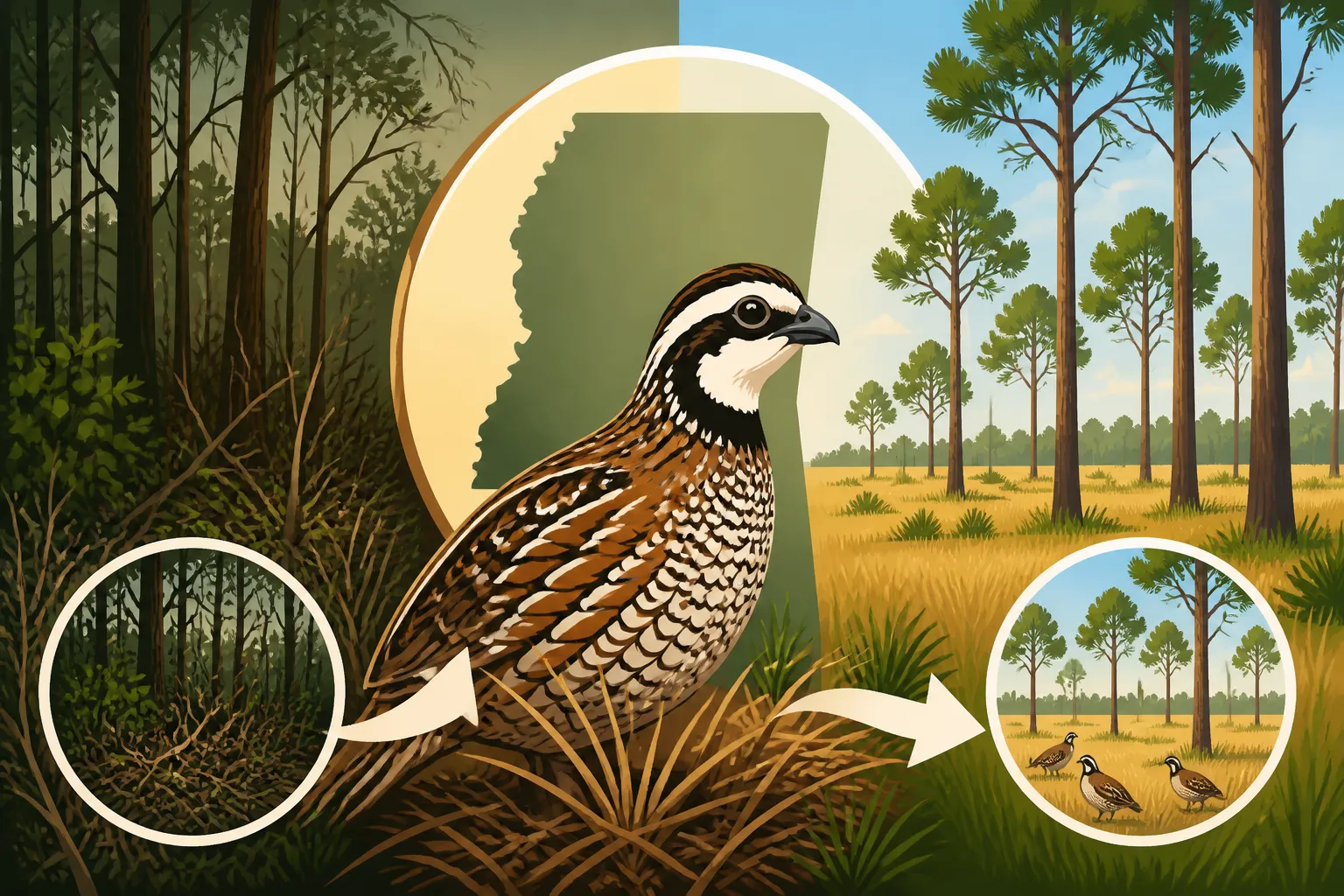
Beyond agriculture, changes in forestry practices devastated quail habitat. Historically, Mississippi's pine forests were shaped by frequent, low-intensity fires, often started naturally or by Native Americans to clear underbrush. These fires created open, park-like pine stands with abundant forbs and grasses beneath. As fire suppression became common practice, pine forests grew dense and choked with hardwoods, creating a dark, sterile understory. This dense canopy blocked sunlight from reaching the forest floor, eliminating the crucial native vegetation that provided food, nesting, and brooding cover for quail. This fundamental shift from open, diverse woodlands to thick, uniform timber stands sounded the death knell for many quail populations. You can learn more about this decline in our post, Mississippi's Historic Quail Decline.
Why Restoring Quail Matters to Hunters and Conservationists Alike
The desire to bring back the bobwhite isn't purely nostalgic, though that certainly plays a part for many of us. For hunters, it's about reviving a challenging and immensely rewarding pursuit. The thrill of a covey rise, the camaraderie of hunting with a good bird dog, and the deep connection to the land are experiences that enrich our lives. Losing quail hunting means losing a piece of our outdoor heritage, something unique to the Deep South.
From a conservation perspective, the bobwhite quail is an "umbrella species." This means that managing land to benefit quail also benefits a host of other ground-nesting birds, pollinators, reptiles, and small mammals. A healthy quail population indicates a healthy, diverse upland ecosystem. Their return signals a win for biodiversity, improved soil health, and a more resilient landscape overall. It’s about more than just one bird; it’s about the health of the entire outdoor world we cherish in Mississippi.
Understanding Managed Pine Forests for Quail Habitat
The good news is that we're learning more and more about how to bring these birds back, and the answer often lies in how we manage our pine forests. It's not about clear-cutting everything, and it's certainly not about letting the woods grow into impenetrable thickets. It's about a nuanced approach that mimics the historical conditions quail thrived in.
The Fundamentals of Pine Plantation Management
When we talk about pine plantation management for quail, we're not talking about the old model of planting pines as densely as possible and letting them grow into a dark, uniform monoculture. Instead, it's about strategic planning from the very beginning. This starts with planting density. For quail, you want to plant pines at a much wider spacing than you would for pure timber production. Think 10×10 or even 12×12 foot spacing, which means fewer trees per acre. This wider spacing allows sunlight to reach the forest floor from day one, giving native grasses and forbs a chance to establish themselves.
This initial spacing sets the stage for future management. It delays the point at which the canopy closes, keeping the understory open and productive for longer. These early years, when the trees are young, are crucial for quail, offering excellent brood-rearing cover and insect-rich foraging opportunities. It's a completely different mindset than traditional timber management, which often prioritizes maximum board-foot production over ecological diversity.
Prescribed Fire: The Unsung Hero of Quail Habitat
If there's one tool that's absolutely non-negotiable for restoring quail in pine habitats, it's prescribed fire. Fire is a natural and necessary component of healthy southern pine ecosystems. Without it, the forest floor quickly becomes choked with leaf litter, undesirable hardwood saplings, and dense, woody undergrowth that quail simply cannot navigate or nest in. Prescribed fire, when applied correctly, clears out this clutter.
What fire does is truly magical for quail. It recycles nutrients back into the soil, encourages the sprouting of beneficial native forbs and legumes (which are critical food sources for quail), and creates open ground for chicks to move through and find insects. It also keeps hardwood encroachment in check, maintaining that desirable open pine woodland structure. The timing and frequency of burns are critical; generally, dormant season burns (winter) are used to reduce fuel loads, while growing season burns (spring/early summer) can be even more effective at stimulating forb growth. This careful application of fire is fundamental to preventing the dense, "dog-hair thicket" conditions that quail abhor. You can learn more about this vital practice in our post, Why Mississippi Foresters Burn Longleaf Pine.
The Crucial Role of Mid-Rotation Thinning
Even with wider initial spacing, pine trees grow. As they mature, their crowns expand, and eventually, the canopy will start to close, reducing the sunlight hitting the forest floor. This is where mid-rotation thinning becomes absolutely vital. Think of it like pruning a crowded garden; you remove some plants to allow others to thrive. In a pine stand managed for quail, thinning removes a significant portion of the trees, opening up the canopy once again.
This re-introduces sunlight, which is the engine for understory growth. It also frees up growing space for the remaining pines, allowing them to put on more timber volume, which can still provide a return for landowners. But for quail, it's a lifeline. The increased sunlight fuels the growth of native grasses, legumes, and wildflowers that provide essential food, cover, and insect populations. Without timely thinning, even a well-spaced initial planting will eventually become too dense for quail. It's a cyclical process: plant, thin, burn, and repeat, always with an eye on maintaining that open, diverse understory.
Crafting the Ideal Quail Habitat within Piney Woods
Creating prime quail habitat isn't just about cutting trees and setting fires; it's an art and a science, a carefully orchestrated dance that transforms a less-than-ideal landscape into a haven for bobwhites. It requires understanding the specific needs of the birds and then implementing management practices to meet them.
From Dense Monoculture to Diverse Ecosystem
The transformation from a dense, dark pine monoculture to a thriving quail ecosystem is often a multi-year project, but the results are incredibly rewarding. A key first step is often an aggressive thinning, sometimes called a "daylighting" cut, to immediately open up the canopy and get sunlight to the forest floor. This might feel counterintuitive if you're used to seeing pines packed in tight, but it's essential. Once the sunlight hits, nature's processes begin.
After thinning, the battle isn't over. You'll likely see a flush of undesirable woody growth – sweetgum, privet, and other hardwoods that thrive in competition. This is where prescribed fire, often conducted every 1-3 years, steps in to knock back these competitors and encourage the more beneficial herbaceous plants. It’s a constant management effort to prevent the forest from reverting to a dense, unproductive state. The goal is to create a dynamic, ever-changing environment, not a static one, where quail can find everything they need in close proximity.
Encouraging Native Understory Plants for Food and Cover
The true heart of quail habitat lies in the understory. We're talking about a rich tapestry of native grasses, forbs (wildflowers), and legumes. These aren't just pretty plants; they provide critical food sources like seeds and insects (especially for young chicks), as well as essential nesting and brooding cover. Think of plants like partridge pea, lespedeza, ragweed, and various native grasses. These are the unsung heroes of a quail's diet and survival.
To encourage these plants, beyond thinning and fire, sometimes light soil disturbance, like disking, can be beneficial to expose bare mineral soil and stimulate seed banks. Additionally, landowners might choose to plant native warm-season grasses and forbs in specific areas if the natural seed bank is depleted. Resources like the MDWFP's guides and local conservation groups are invaluable for understanding which specific plants thrive in your particular soil type and region. Using tools like GoHunt can help you map out these areas on your property, plan your disking, and track your efforts over time to see what's working best.
Creating Interspersed Openings and Edge Habitats
While open pine stands with a diverse understory are excellent, quail also benefit immensely from habitat diversity, especially interspersed small openings and ample edge habitat. These small clearings, perhaps a half-acre to a few acres in size, can be planted with food plots that provide supplemental forage or left to regenerate naturally with early successional vegetation. These areas act as crucial bugging grounds for poults and provide critical nesting and escape cover adjacent to larger foraging areas.
Edge habitat, where one cover type transitions to another (like a pine stand meeting a food plot or a field), is a quail magnet. They use these transitions for everything from loafing cover to travel corridors. Strategically creating irregular edges, rather than perfectly straight lines, increases the amount of beneficial edge. This mosaic of habitat types – open pines, small fields, and varied edges – provides the quail with all their seasonal needs within a small home range, reducing their exposure to predators and increasing their chances of survival. Knowing how to read the landscape for these nuances is something every serious hunter knows, and it can be especially valuable when you're Scouting Mississippi Public Land Before Season.
The Economic and Practical Realities for Landowners
Let's be real, managing land takes time, effort, and often, money. While the idea of bringing back quail is inspiring, landowners also need to consider the practicalities and economic impacts of habitat management. It's not always a simple decision, especially when timber income is part of the equation.
Balancing Timber Production with Wildlife Goals
One of the biggest hurdles for landowners is figuring out how to balance the financial returns from timber with the ecological benefits of quail habitat. Traditional forestry aims for maximum board feet and quick rotations, which often means dense stands and less wildlife benefit. However, a "quail-friendly" forestry model can still be profitable, it just operates on a different timeline and with different parameters. Wider planting spacing and earlier, more aggressive thinnings for quail can actually produce higher-quality sawtimber in the long run, even if the total volume is slightly less. The trees that remain have more room to grow and put on girth.
Think of it as a diversified investment. You're investing in the long-term health of your forest and its wildlife, which can also increase the recreational value of your land. This might mean longer rotations between harvests, but the value of each tree at harvest could be higher. It's a shift in perspective from short-term volume to long-term value and ecological resilience. Tools like GoHunt can assist landowners in visualizing property lines, terrain, and even potential habitat zones to help plan these multi-use strategies.
Accessing Resources and Support for Habitat Management
You don't have to go it alone! There are numerous resources available in Mississippi to help landowners navigate the complexities of quail habitat restoration. The Mississippi Department of Wildlife, Fisheries, and Parks (MDWFP) is an excellent starting point, often providing technical assistance, advice, and sometimes even cost-share programs for practices like prescribed burning or native grass plantings. They have biologists dedicated to private lands assistance.
Beyond state agencies, organizations like the National Wild Turkey Federation (NWTF) or Quail Forever have staff and programs focused on habitat improvements that often benefit quail as well. Private forestry consultants who specialize in wildlife management can also be invaluable, helping you develop a tailored management plan for your specific property. These experts understand both timber markets and wildlife needs, helping you create a plan that works for your wallet and for the bobwhites. Many landowners find that a small upfront investment in professional guidance saves a lot of headaches and maximizes results down the road.
Long-Term Commitment and Adaptive Management
Quail restoration is not a "set it and forget it" endeavor. It requires a long-term commitment and a willingness to engage in adaptive management. This means you need to be prepared to monitor your results, observe how the quail (or other wildlife) respond to your efforts, and be ready to adjust your plan based on what you learn. Maybe one burn prescription wasn't as effective as another, or perhaps certain plantings aren't taking hold. Nature is dynamic, and our management must be too.
This continuous learning and adaptation are part of the joy of it. Walking your property, observing the changes, and seeing the return of diverse flora and fauna is incredibly rewarding. It means understanding that one year's management might look different from the next, depending on weather, timber growth, and wildlife response. It's an ongoing conversation with your land, shaping it year after year to create the best possible conditions for the birds we hope to bring back.
The Promise of Restoration: Hope for Mississippi's Bobwhites
Despite the challenges, there is genuine hope for the bobwhite quail in Mississippi. The science is clear, the methods are proven, and dedicated individuals and organizations are making real progress. The return of that iconic whistle is within our grasp if we commit to these proven management strategies.
Successful Quail Restoration Projects in the Southeast
Mississippi isn't alone in facing quail declines, and thankfully, we don't have to reinvent the wheel. Across the Southeast, there are numerous success stories where landowners and conservation groups have worked tirelessly to bring back bobwhites. Places like Tall Timbers Research Station in Florida and Georgia, and various large private landholdings, have demonstrated that intensive, holistic habitat management can indeed lead to robust quail populations. These projects emphasize frequent prescribed fire, proper timber thinning, and the promotion of native groundcover – exactly the principles we're discussing here.
These examples provide invaluable lessons, demonstrating the importance of scale (managing larger blocks of habitat), the critical role of fire, and the need for patience. They show that even in areas where quail were thought to be gone for good, dedicated efforts can turn the tide. These success stories serve as beacons of hope and provide a blueprint for what can be achieved right here in Mississippi.
What Hunters Can Do to Support Quail Efforts
Hunters, we have a crucial role to play in this restoration effort! First, become informed. Understand what good quail habitat looks like and advocate for those practices on public lands you hunt, like those within Mississippi Wildlife Management Areas. Join and support organizations like Quail Forever or the National Wild Turkey Federation, whose missions directly benefit quail and other upland game. Your membership fees and donations directly fund habitat work on the ground.
If you're a landowner, consider implementing quail-friendly management practices yourself, even on a small scale. Every acre counts. If you lease land or are part of a hunting club, discuss these ideas with your fellow members and land managers. Even small changes, like leaving brushy field edges or not mowing certain areas until late summer, can make a difference. Encourage others to learn about Mississippi Small Game Season Rules and promote ethical hunting practices that prioritize conservation. We need to be the voice for these birds, not just on the opening weekend, but year-round.
A Future Where Coveys Whistle Again
Imagine, if you will, walking through an open pine stand on a crisp fall morning. Sunlight filters through widely spaced trees, illuminating a diverse understory of native grasses and wildflowers. Your dog stiffens, then locks up on point. With a burst of adrenaline, a covey explodes from the cover, their wings beating a familiar rhythm against the cool air. That sound, that sight, that experience – it's what we're working towards.
Restoring quail isn't just about the bird itself; it's about restoring a richer, more vibrant ecosystem that benefits countless other species and enriches the outdoor experience for all of us. It's about preserving a cherished part of Mississippi's hunting heritage for future generations. It will take effort, collaboration, and a deep commitment to the land, but the promise of hearing those coveys whistle again is a powerful motivator, one that I believe is worth every bit of the work.
| Feature | Traditional Pine Management | Quail-Friendly Pine Management |
|---|---|---|
| Planting Density | Very dense (e.g., 6×8 ft spacing) | Wider spacing (e.g., 10×10 or 12×12 ft) |
| Thinning | Fewer, later thinnings | More frequent, earlier thinnings |
| Understory | Dense, dark, little native growth | Open, diverse, abundant native forbs/grasses |
| Fire Regime | Infrequent or absent | Frequent prescribed fire (1-3 year intervals) |
| Hardwood Control | Limited | Aggressive suppression via fire/herbicides |
| Timber Quality | High volume, often smaller diameter | High quality, larger diameter |
| Quail Habitat | Poor to non-existent | Excellent, diverse, sustainable |
Disclaimer
This article is for general informational purposes only and does not constitute professional advice. Laws, prices and regulations vary by location and change over time. Consult a qualified professional for guidance on your specific situation.