Mississippi Squirrel and Rabbit Populations
For many hunters, the pursuit of deer and turkey often overshadows the simpler, yet incredibly rewarding, chase for small game. But if you've ever felt the frustration of finding fewer squirrels chattering in your favorite oak bottoms or rabbit tracks scarce along the old fencerows, you're not alone. Understanding the health and distribution of Mississippi's squirrel and rabbit populations is key to rediscovering these classic hunts, and this guide will break down exactly what's happening with these vital small game species across our state.
Understanding Mississippi's Small Game Landscape
Small game hunting, particularly for squirrels and rabbits, holds a special place in the hearts of many Mississippi hunters. It’s often the entry point for youngsters, a way to learn basic woodcraft, gun safety, and the thrill of the chase without the intense pressure or long waits associated with larger game. The joy of a crisp fall morning spent still-hunting a timber stand for squirrels or pushing a briar patch with a couple of beagles for cottontails is a timeless tradition that defines a significant part of our state's outdoor heritage.
The Enduring Appeal of Squirrel and Rabbit Hunting
There’s something uniquely fulfilling about a successful small game hunt. Perhaps it's the sheer number of opportunities you might get in a single outing, or the fact that success often relies more on observation, stealth, and a keen understanding of habitat than on elaborate setups or high-tech gear. You don't need a sprawling private lease or expensive food plots to find good small game; often, public lands, creek bottoms, and even neglected field edges can hold plenty of critters. This accessibility makes squirrel and rabbit hunting a fantastic option for new hunters, families, or anyone looking to simply enjoy a day in the woods. Plus, let's be honest, the reward of a squirrel and gravy supper or fried rabbit is hard to beat!
The democratic nature of these hunts means that many different types of hunters can find success. Whether you prefer still-hunting with a .22 rifle, running dogs, or stalking with a shotgun, there's a method that fits your style. For more on the various approaches, you might find our guide on Squirrel and Small Game Hunting in Mississippi particularly insightful. It delves into the nuances of different techniques.
Overall Population Health and Trends
Generally speaking, Mississippi's squirrel and rabbit populations are considered stable across much of the state, though local fluctuations are certainly common. These populations are quite resilient, largely due to their high reproductive rates. However, "stable" doesn't always mean "abundant" everywhere. Habitat changes, weather patterns, and predation can all play significant roles in how many squirrels you see chattering or how many rabbits bust out of a thicket on any given day.
We've definitely seen shifts over the years. Some areas that were once prime rabbit country, with their patchwork of small farms, fencerows, and brushy fields, have changed due to larger agricultural operations or timber management practices. Similarly, while squirrels thrive in mature timber, extensive clear-cutting can temporarily displace them. The Mississippi Department of Wildlife, Fisheries, and Parks (MDWFP) monitors these populations through various surveys and harvest data, keeping an eye on long-term trends to ensure sustainable hunting opportunities. Understanding Mississippi Small Game Season Rules is crucial to participating responsibly and contributing to these management efforts.
The World of Mississippi Squirrels
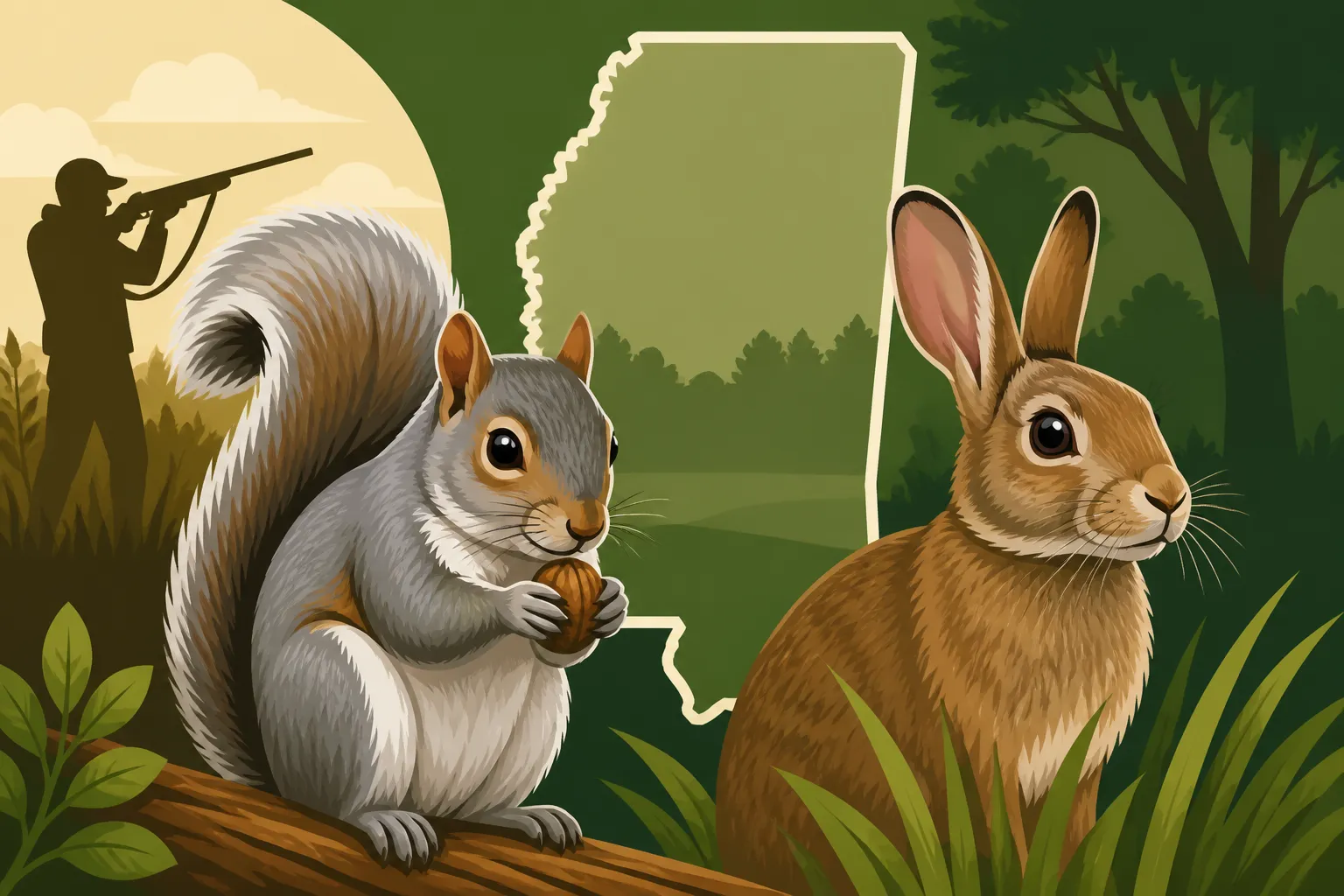
When we talk about squirrels in Mississippi, we're primarily focused on two species: the gray squirrel and the fox squirrel. Both are abundant in the right habitats, but they have distinct preferences and characteristics that make hunting one quite different from hunting the other.
Gray Squirrels: Acorn Eaters of the Hardwoods
The gray squirrel (often just called "cat squirrel" by locals) is by far the most common squirrel encountered in Mississippi. They are smaller, more social, and thrive in vast tracts of mature hardwood forests, especially those rich in oak and hickory. These trees provide not only critical food sources like acorns and hickory nuts but also den sites in their hollows.
You'll find gray squirrels pretty much statewide wherever suitable hardwoods exist, but they are particularly prolific in the bottomland hardwood forests of the Mississippi Delta and along the many river and creek drainages. They are highly active, especially during early morning and late afternoon, constantly foraging for nuts and seeds, burying them, and retrieving them later. Their nervous energy and constant chattering make them a bit easier to locate, though their incredible speed and agility through the treetops still present a fun challenge. When you're out there, pay close attention to leaf litter; you'll often hear them rustling long before you see them. For a deeper dive into their preferred haunts, check out Squirrel Hunting Delta Bottomland Hardwoods.
Fox Squirrels: Larger, More Elusive, and Forest-Dwelling
Fox squirrels are the giants of the squirrel world in Mississippi. They are noticeably larger than gray squirrels, often sporting a more reddish or yellowish-gray coat, and sometimes have distinct black "masks" or white noses depending on the subspecies. Unlike their gray cousins, fox squirrels tend to be more solitary and prefer open, park-like pine forests, pine-hardwood mixes, or mature stands with less dense undergrowth. They aren't as agile in the canopy as gray squirrels, often preferring to run along the ground or up and down tree trunks.
Finding fox squirrels requires a different approach. They move slower and are often more cautious. While you might see several gray squirrels in one tree, a fox squirrel is more likely to be alone, deliberately moving through a stand. Their diet is also a bit more varied, including pine cones, fungi, and even insects, in addition to hard mast. While they are present statewide, you might find them more consistently in the upland pine forests of central and south Mississippi, rather than the dense Delta bottoms.
Regional Hotbeds for Squirrel Activity
Mississippi offers fantastic squirrel hunting opportunities across its diverse landscape. The Delta region, with its vast tracts of bottomland hardwoods, is a legendary destination for gray squirrels. Areas like Delta National Forest and other public lands provide thousands of acres of ideal habitat. Here, the sheer density of mast-producing trees often leads to higher squirrel concentrations, especially after a good acorn year.
As you move eastward into the Hills and Piney Woods regions, you'll find a mix of both gray and fox squirrels. The rolling hills with their mixed pine and hardwood draws, along with the extensive National Forests like Homochitto and Bienville, are excellent spots. These areas tend to have more diverse habitat, supporting both species. Scouting is key here to identify the specific timber types and mast crops that are producing. Many hunters find tools like GoHunt invaluable for analyzing satellite imagery and topo maps, allowing them to pinpoint prime squirrel habitat—especially those mature hardwood pockets—before even stepping foot on public ground. Knowing how to interpret these maps can truly elevate your Scouting Mississippi Public Land Before Season game.
The Realm of Mississippi Rabbits
While squirrels capture the arboreal imagination, rabbits bring the thrill of the chase low to the ground, bursting from cover with startling speed. Mississippi is a fantastic place for rabbit hunting, and it's almost exclusively centered around the ubiquitous cottontail.
Cottontail Rabbits: Masters of the Thicket
The Eastern Cottontail is the primary rabbit species sought by hunters in Mississippi. These small, agile mammals are masters of camouflage and incredible breeders, often producing multiple litters a year. Their survival strategy revolves around finding dense cover for protection and readily available green vegetation for food. They are incredibly adaptable and can be found in almost every county, from agricultural field edges to suburban parks, provided the right habitat mosaic exists.
The sheer excitement of a rabbit hunt often comes from the sudden flush. Whether you're walking them up or running them with dogs, the adrenaline spike when a cottontail bursts from underfoot is unmatched. They don't typically run far in open country, preferring to circle back to their home cover, which makes them excellent quarry for beagles. For those who enjoy the camaraderie and tradition of running dogs, our article on Rabbit and Upland Hunting in Mississippi covers tactics and tips for a successful outing.
Habitat Preferences and Densities
Rabbits absolutely thrive in "edge" habitats. Think fencerows, old abandoned fields grown up in briars and saplings, regenerating clear-cuts, brushy creek bottoms, and the overgrown borders between timber and agricultural fields. They need dense, thorny cover to escape predators like coyotes, bobcats, and hawks, and they need it close to food sources. This means areas with a mix of cover and forage tend to hold the highest densities.
Unfortunately, clean farming practices and the loss of smaller, diversified farms have led to a decrease in some of these prime rabbit habitats over the years. However, public lands often offer excellent opportunities in their early successional areas, power line cuts, and areas managed with prescribed burns that encourage new growth. The availability of food and cover dictates local population density more than anything else. A robust fencerow next to a winter wheat field is a rabbit magnet, while a vast, clean-tilled field surrounded by mature, open timber will likely be barren.
Where to Find the Best Rabbit Hunting
The best rabbit hunting in Mississippi often occurs where land use creates a mosaic of dense cover and forage. The Hills region, with its diverse landscapes of small woodlots, agricultural fields, and brushy draws, can be phenomenal. Look for areas with tangled briar patches, honeysuckle thickets, and regenerating timber stands. Our piece on Rabbit Hunting Mississippi Fencerows specifically details how to identify and hunt these linear habitats, which are often overlooked but incredibly productive.
Even in the Delta, while known for its vast fields, you can find excellent rabbit hunting along ditch banks, drainage canals, and the edges of timber blocks. Just remember, rabbits are masters of concealment, so don't be afraid to push that thick, nasty cover that other hunters might walk past. Using tools like GoHunt to identify small, neglected pockets of habitat on public ground or to scout private property that might offer hidden honey holes can be a game-changer for consistently finding rabbits. These are the forgotten corners where cottontails often thrive, offering great opportunities for those willing to put in the effort.
| Species | Preferred Habitat | Primary Food Sources | Key Identification (Hunting) |
|---|---|---|---|
| Gray Squirrel | Mature Hardwood Forests (Oak, Hickory) | Acorns, Hickory nuts, Seeds | Smaller, social, canopy-dweller, often noisy |
| Fox Squirrel | Open Pine Forests, Mixed Pine/Hardwood | Pine cones, Hard mast, Fungi | Larger, solitary, ground-runner, more cautious |
| Cottontail Rabbit | Dense Thickets, Fencerows, Clearcuts | Green vegetation, Leaves, Twigs | Bursts from cover, circles back, close-range flush |
Factors Influencing Small Game Populations
Understanding the dynamics behind squirrel and rabbit populations isn't just for wildlife biologists; it's vital for hunters too. Knowing what makes these populations tick can help you predict where to find them and understand why some years are better than others.
Habitat Changes and Their Impact
Habitat is the single most critical factor for any wildlife population, and squirrels and rabbits are no exception. For squirrels, the health and abundance of mast-producing trees, particularly oaks and hickories, directly correlate to population numbers. Years with poor mast crops often mean fewer squirrels the following year, as breeding success and overwinter survival are reduced. Conversely, a bumper crop can lead to a surge in squirrel numbers. Large-scale timber practices, such as clear-cutting mature hardwoods, can temporarily devastate local squirrel populations by removing both food and shelter. Sustainable forestry, however, can create diverse age classes of timber that benefit different species over time.
Rabbits, as mentioned, are highly dependent on early successional habitat – those transitional areas where fields are growing back into forests, or where natural disturbances like storms or selective logging create a dense tangle of young plants and briars. The conversion of these diverse landscapes into monoculture agricultural fields or dense, mature timber stands reduces the patchwork of cover and food they need to thrive. Even something as simple as routinely bush-hogging fencerows or ditch banks can remove vital rabbit habitat. This is why when you're thinking about Finding Ground Others Walk Past, those overlooked brushy areas are often goldmines.
Predation and Disease Pressures
While squirrels and rabbits are prolific breeders, they also face constant pressure from predators. Coyotes, bobcats, foxes, owls, and various snakes all rely on these small game animals as a food source. In healthy ecosystems, predation is a natural and necessary check on populations, ensuring the fittest survive and preventing overpopulation that could degrade habitat. However, a local surge in predator numbers, coupled with declining habitat, can sometimes put added stress on small game. Our guide on Predator Hunting in Mississippi offers insights into managing these dynamics.
Diseases can also play a role, though often localized and less widespread than habitat loss. Tularemia, for example, can affect rabbit populations, particularly in wet, mild winters. While hunters should always practice safe game handling, large-scale die-offs due to disease are less common with these species compared to, say, deer or turkeys in some circumstances. Regularly checking the MDWFP website for any wildlife health alerts is always a good idea, as part of being a responsible hunter.
The Role of Hunter Harvest and Management
Hunter harvest plays a relatively minor role in the overall population dynamics of squirrels and rabbits in Mississippi, especially compared to factors like habitat and weather. Their high reproductive rates mean they can quickly bounce back from hunting pressure. Mississippi's generous small game seasons and bag limits reflect this resilience. The MDWFP sets these limits based on biological data, ensuring that hunting remains sustainable.
Effective management focuses on habitat preservation and creation. This includes promoting diverse forest management practices that benefit squirrels and encouraging landowners to maintain brushy cover for rabbits. For hunters, knowing your regulations and abiding by them is paramount. Additionally, supporting conservation efforts through license purchases helps fund the very programs that monitor and manage these precious resources for future generations. Even if you're a seasoned hunter, a quick refresher on Mississippi Hunter Education Requirements or local WMA rules, perhaps found on the MDWFP app, can keep everyone safe and compliant. Using the MDWFP App Without Cell Service is a handy trick many seasoned hunters use to stay informed even in remote areas.
Disclaimer
This article is for general informational purposes only and does not constitute professional advice. Laws, prices and regulations vary by location and change over time. Consult a qualified professional for guidance on your specific situation.