Mississippi Spring Turkey Harvest Numbers
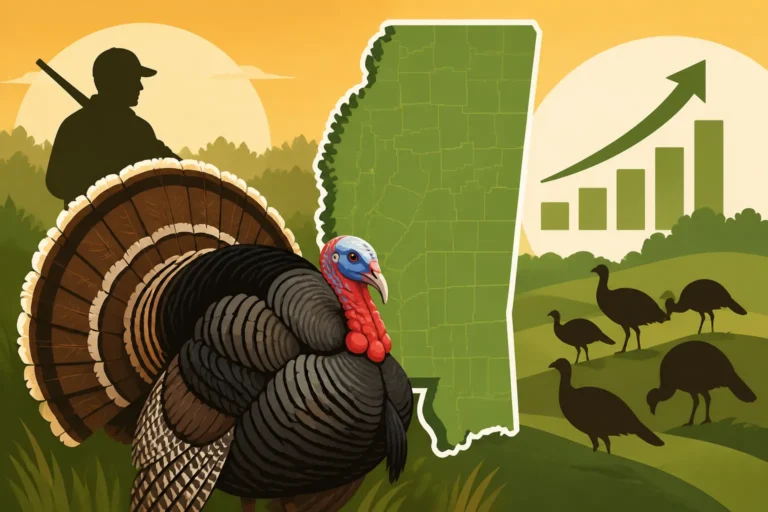
It's incredibly frustrating when you spend months scouting, practicing your calls, and finally, the Mississippi spring turkey season arrives, only to wonder if your efforts will be rewarded or if the birds just aren't there like they used to be. Every hunter feels that same anticipation, sometimes mixed with a little anxiety about the health of our beloved wild turkey population. This guide is here to shed some light on Mississippi's spring turkey harvest numbers, helping you understand what they mean, how they're collected, and what factors truly influence whether a bird ends up in your vest or not.
Understanding Mississippi's Annual Turkey Harvest Data
For many of us, the spring turkey season is almost a religious experience. The gobble echoing through the timber at dawn is enough to stir the soul. But beyond the thrill of the hunt, there's a serious side to understanding the numbers behind it all. When the Mississippi Department of Wildlife, Fisheries, and Parks (MDWFP) releases its annual harvest reports, it's not just a collection of statistics; it's a critical snapshot of our state's wild turkey health and a guide for future management.
The Importance of Harvest Reporting
Harvest reporting isn't just bureaucratic red tape; it's the heartbeat of conservation. When you take the time to report your turkey, you're directly contributing to the pool of data that wildlife biologists use to make informed decisions. These numbers help them monitor population trends, assess the impact of hunting pressure, and understand the success rates across different regions and even different hunting units. Without accurate reporting, the MDWFP is essentially trying to manage a resource blindfolded.
It's natural to feel a bit disheartened if the numbers from a particular year show a dip. Maybe you had a tough season yourself, and seeing that reflected in the statewide data can feel like a personal validation of the struggles you faced. But it's crucial to remember that these numbers are long-term indicators. A single down year doesn't necessarily spell doom for the population, but consistent trends over several years certainly warrant attention and potential adjustments to season structures or bag limits. For instance, understanding the Mississippi Spring Turkey Season Rules often hinges on these long-term data points.
How Harvest Numbers Are Collected
So, how do these numbers actually get tallied? In Mississippi, hunters are typically required to report their harvested turkeys. This process has evolved over the years, becoming more accessible and efficient. Historically, it might have involved physical check stations, which were a great way to meet fellow hunters and share stories, but could also be a logistical headache in remote areas.
Today, the MDWFP largely relies on digital reporting methods. You might use a dedicated mobile app on your smartphone, or log into an online portal on their website. Some traditionalists still prefer to report via phone, but the digital options offer instant data collection, which is invaluable for biologists. While these modern methods are convenient, there's always the challenge of compliance. Not every hunter reports every bird, and that's just a realistic fact of life. This can lead to some level of underreporting, meaning the actual harvest might be slightly higher than the official numbers reflect. However, biologists use statistical models and other survey methods to account for this and provide the most accurate picture possible.
Interpreting Spring Turkey Harvest Trends
Looking at a raw number from a single year only tells a fraction of the story. To truly understand what's happening with our wild turkeys, we need to look at trends, comparing current harvest data against previous years and understanding the various factors that contribute to those figures. It’s like watching the stock market; you don’t panic over a single day’s dip, but a consistent downward trend over months or years demands investigation.
What Affects Annual Harvest Numbers?
A wild turkey population is an intricate, delicate system, and many variables can influence how many birds hunters take each spring. It’s rarely just one thing, but rather a perfect storm (or calm) of circumstances that dictates success.
One of the biggest factors is weather patterns. An unusually cold or wet spring can suppress gobbling activity, making birds less vocal and harder for hunters to locate and call in. If the season opens during a prolonged period of bad weather, hunter participation might drop, or success rates might plummet. Conversely, a mild, consistent spring with good conditions can lead to higher overall harvest numbers. Think about those beautiful, crisp mornings where gobblers are just hammering on the roost – those are the days dreams are made of, and they contribute to higher success.
Habitat conditions also play a crucial role. A landscape with plenty of mature timber for roosting, diverse understory for bugging, and open areas for strutting creates ideal turkey country. Conversely, widespread habitat degradation or changes in land use can negatively impact populations over time. The availability of food sources throughout the year also impacts bird health and reproductive success, which then cascades into future spring populations. When we talk about Mississippi Turkey Population Trends, these habitat factors are always at the forefront.
Perhaps one of the most critical long-term influences is poult-to-hen ratios and reproductive success from previous nesting seasons. If hens aren't successfully raising broods due to high predation, poor nesting cover, or bad weather during nesting, then there will simply be fewer jakes and two-year-old gobblers available for hunters in subsequent springs. This is why agencies like MDWFP spend so much time monitoring these ratios, as they are a direct predictor of future harvest potential. Poult-to-Hen Ratios and What They Mean is a topic that every serious turkey hunter should dive into to grasp the full picture.
Finally, hunting pressure and hunter participation itself influences the numbers. More hunters in the woods, especially during peak gobbling periods, can lead to higher harvest figures. However, increased pressure can also make birds "go silent" or become more wary, making them harder to hunt. If fewer people are hunting for various reasons – maybe economic factors, less free time, or simply a feeling that the hunting isn't as good – then the harvest numbers will naturally reflect that lower effort, even if the bird population itself is stable.
Comparing Current Numbers to Historical Averages
When the MDWFP announces the latest spring turkey harvest numbers, the first thing many of us do is compare them to last year. But a single year-over-year comparison is like judging a whole book by one chapter. To get a real sense of what’s happening, we need context. That's where historical averages, often referred to as the "decade mean" or similar long-term benchmarks, come into play.
Comparing a given year's harvest to the average of the last five or ten years provides a much more stable and reliable indicator of population health and hunting success. If this year's harvest is significantly below the decade mean, it suggests a more widespread issue than just a single bad weather streak. For example, if you heard the news about Why the 2025 Turkey Harvest Fell Eleven Percent, understanding its relation to the overall trend gives you better perspective. Was it an anomaly, or part of a larger, sustained decline? This is the kind of question these long-term averages help answer.
A slight dip or rise might just be natural fluctuation, but a consistent trend either way indicates something more significant. Perhaps habitat improvements are finally paying off, or conversely, increased predation pressure (something like Nest Predation and Mississippi Turkey Hatches can wreak havoc) is consistently impacting recruitment. Agencies often use these benchmarks to decide if and when management actions, such as adjusting bag limits or altering season dates (like When Mississippi's Spring Turkey Season Opens), are necessary. As hunters, staying informed about How Mississippi's Turkey Harvest Compares to the Decade Mean allows us to be more engaged and understanding partners in conservation.
The Broader Picture: Connecting Harvest to Population Health
It's easy to look at turkey harvest numbers and immediately think, "Are there enough birds?" While harvest data is an important piece of the puzzle, it's not the only piece, nor does it always tell the complete story of the overall wild turkey population health. Think of it more as a symptom than a full diagnosis.
Harvest Numbers as an Indicator, Not the Whole Story
A common misconception is that a lower harvest number automatically means fewer turkeys. While it can certainly be an indicator, it's not a direct, one-to-one correlation. A year with challenging weather conditions, for instance, might result in a lower harvest even if the overall turkey population is robust. Gobblers might simply not be gobbling as much, or heavy rains might keep hunters out of the woods, resulting in fewer opportunities. Conversely, a year with perfect weather could see a high harvest even if the population has experienced some stresses.
What harvest numbers really tell us is hunter success and effort under a given set of conditions. They show us how many birds were available to be harvested and how successfully hunters pursued them. To get the full picture of the actual population, wildlife managers look at a variety of other metrics. These include things like annual brood surveys (counting poults with hens in the summer), hunter opinion surveys, observed gobbling activity, and even anecdotal reports from reliable sources in the field. All of these data points, when combined, create a much more comprehensive understanding of the overall Wild Turkeys in Mississippi population dynamics.
Regional Differences in Turkey Harvest Success
Just like deer hunting, turkey hunting in Mississippi isn't uniform across the entire state. What works in the Delta might be completely different from what you encounter in the Hills or the Piney Woods region. This diversity means that statewide harvest numbers, while useful, can sometimes mask significant regional variations in success and population health.
For example, a particular year might show a slight decrease in the statewide harvest, but upon closer inspection, you might find that the Delta Unit actually had a fantastic season, while the Hills Unit struggled due to a harsh late-spring cold snap. These regional nuances are incredibly important for hunters to understand, especially if you focus your efforts on one specific area. Knowing which regions consistently produce higher numbers, or which ones are seeing struggles, can influence your scouting, your strategy, and even your decision to invest in specific gear like mapping tools from GoHunt to analyze land features unique to certain areas.
Factors like habitat quality, soil fertility, predator populations, and even local hunting culture can create these disparities. The rich bottomland hardwoods of the Delta, for example, might support different turkey densities and behaviors compared to the more rugged terrain of the northeastern Hills. Understanding these differences can help you refine your tactics, whether you're trying Roost Hunting Mississippi Gobblers in a certain type of timber or deciding to focus on a particular region known for its Best Mississippi Counties for Turkeys.
Here's a quick look at some key factors influencing spring turkey harvest:
| Factor | Impact on Harvest Numbers | Notes |
|---|---|---|
| Previous Year's Reproduction | Direct (High reproduction = more birds) | Healthy poult-to-hen ratios lead to more jakes and 2-year-old gobblers in subsequent seasons. |
| Spring Weather Conditions | Significant (Good weather = higher success) | Mild, clear, and calm weather encourages gobbling and hunter participation. Cold/wet suppresses both. |
| Habitat Quality | Long-term (Good habitat = healthier population) | Abundant food, nesting cover, and roosting sites support a thriving turkey population over time. |
| Predator Abundance | Negative (High predators = lower reproduction) | Increased predation on nests and poults reduces the number of birds entering the population. |
| Hunter Participation | Direct (More hunters = potentially higher harvest) | More hunters in the woods can lead to more birds harvested, assuming birds are available and conditions are favorable. |
| Hunter Skill & Effort | Varies (Experienced hunters = higher success) | Hunters who put in scouting time and have good calling skills generally have better success rates. |
| Disease Outbreaks | Negative (Disease = lower population) | Localized outbreaks of diseases can temporarily or long-term impact turkey numbers, though less common. |
Disclaimer
This article is for general informational purposes only and does not constitute professional advice. Laws, prices and regulations vary by location and change over time. Consult a qualified professional for guidance on your specific situation.