Best Mississippi Counties for Turkeys
There's nothing quite like the sound of a spring gobbler hammering on the limb before daylight, but finding consistent opportunities to experience that thrill can feel like searching for a needle in a haystack if you're not focusing your efforts. Many hunters spend countless hours in areas with low turkey densities, only to come home frustrated. This guide is designed to cut through that guesswork, giving you a detailed look at the best Mississippi counties for turkeys, helping you strategize your spring hunts more effectively and put you in a better position to tag a longbeard.
Understanding Mississippi's Turkey Distribution
Before we dive into specific counties, it's crucial to understand what makes certain areas shine brighter than others for wild turkeys. Mississippi is a diverse state, from the rich Delta flatlands to the rolling Hills and the expansive Piney Woods, and each region offers different advantages and challenges for turkey populations. The birds are resilient, but their numbers are deeply tied to habitat quality, food availability, and even historical stocking efforts.
The Lay of the Land: Habitat and Geography
Wild turkeys, specifically the Eastern subspecies found throughout Mississippi, thrive in mature hardwood forests interspersed with open areas for bugging and nesting. They need good roosting trees, like large oaks or pines, along with a healthy understory for cover and protection from predators. Think about creek bottoms, river drainages, and areas with diverse timber stands. Counties with fragmented habitat, heavy urbanization, or vast monoculture crops without adequate wooded corridors will naturally hold fewer birds. The landscape dictates where turkeys can successfully live, nest, and raise their poults. For a deeper dive into their presence across the state, consider exploring information on Wild Turkeys in Mississippi.
In areas like the Delta, while much of it is agricultural, the remaining tracts of bottomland hardwoods along major rivers and their tributaries become absolute magnets for turkeys. These isolated islands of timber, often bordering sloughs and oxbow lakes, provide the necessary elements in an otherwise open landscape. Conversely, the Hills region, characterized by its rolling topography and mixed pine-hardwood forests, offers a more consistent, widespread habitat that can support a robust turkey population across a broader area. This variation in habitat is a primary driver in where turkeys congregate.
Population Trends and Harvest Data
While anecdotal evidence from local hunters is invaluable, official data from the Mississippi Department of Wildlife, Fisheries, and Parks (MDWFP) can provide a broader picture of turkey health and distribution. They track population estimates, conduct brood surveys, and compile harvest numbers each season. When we look at Mississippi Turkey Population Trends, we see that while some areas have seen fluctuations, others consistently report higher densities and better success rates. This isn't just about how many birds are harvested, but often correlates with a healthy, reproducing population.
Factors like poult-to-hen ratios, which indicate nesting success and brood survival, play a huge role in future turkey numbers. Years with good hatches will lead to more jakes and two-year-old gobblers in subsequent seasons. Understanding Poult-to-Hen Ratios and What They Mean can give you an edge in predicting future hunting quality. For example, a county that consistently reports strong poult numbers is likely to be a better long-term bet than one with poor reproduction, even if the current year's harvest looks similar. Keeping an eye on these reports, often available through the MDWFP or detailed hunting apps like GoHunt, can inform your county selection significantly.
Identifying Mississippi's Top Turkey Hotbeds
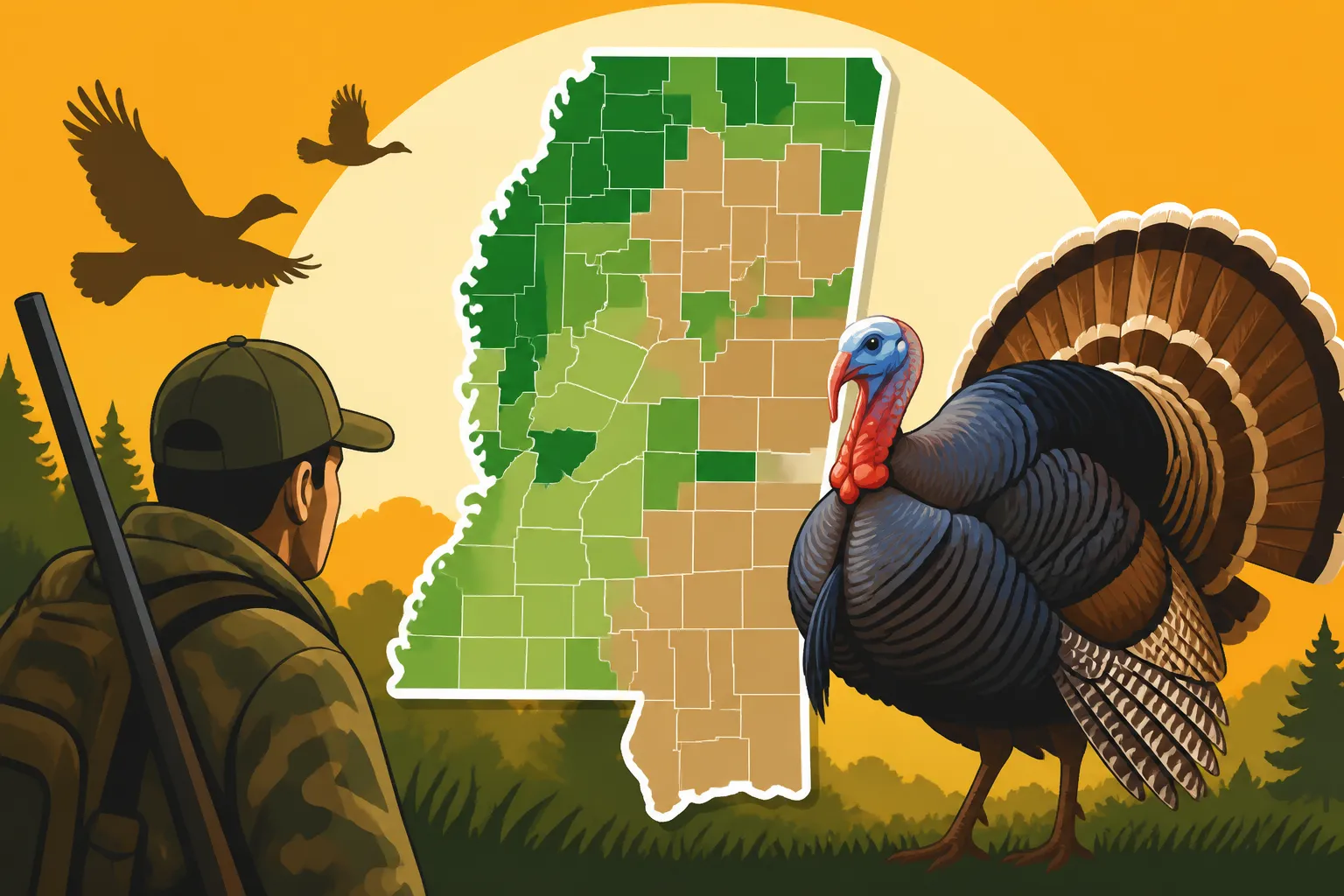
Based on a combination of historical data, habitat quality, and hunter success, several regions and specific counties consistently stand out as prime turkey hunting destinations in Mississippi. It's not always about the highest number of birds statewide, but often about accessible populations and quality hunting experiences.
Delta Region: Surprising Pockets of Opportunity
While primarily agricultural, the Mississippi Delta holds some incredibly rich, albeit often isolated, turkey habitat. The key here is focusing on the major river systems and their associated bottomland hardwoods. Counties like Issaquena, Sharkey, and Washington often boast impressive turkey populations within their remaining timbered tracts. These areas, particularly the national wildlife refuges and large private timber holdings, can be phenomenal. The birds here often have less pressure than some other parts of the state due to limited access or the sheer size of the private land.
Imagine walking into a large block of flooded timber in Issaquena County before dawn, the silence broken only by distant barred owls, and then a booming gobble erupts right over your head. It’s a different kind of turkey hunting than the rolling hills, but no less exciting. These birds often roost near water and can be callable if you can get in front of them. When planning a hunt in these areas, mapping tools like those offered by GoHunt are essential for identifying those crucial timber blocks and understanding property boundaries. It's about finding those overlooked havens where the birds feel secure.
Hills and Northeast: Classic Hardwood Country
The rolling Hills region, particularly the counties in the northeast and north-central parts of the state, are often considered classic Mississippi turkey country. Counties like Neshoba, Kemper, Winston, and Oktibbeha are frequently highlighted for their robust turkey populations. These areas offer a mix of pine and hardwood forests, diverse terrain, and generally excellent habitat that supports high turkey densities. Here, the turkeys have plenty of room to roam, roost, and nest, leading to consistent opportunities.
The topography in these counties allows for varied hunting tactics, from setting up in saddles and creek bottoms to working ridges. You'll find a strong tradition of turkey hunting here, with many local hunters highly skilled at deciphering gobbler behavior. This is often where you'll see consistently high Mississippi Spring Turkey Harvest Numbers, reflecting both healthy bird populations and dedicated hunters. Don't overlook counties like Lafayette and Union either, which blend excellent habitat with accessible public land opportunities.
Piney Woods and Coastal Plain: Diverse Terrain, Diverse Birds
Moving south, the Piney Woods region and the Upper Coastal Plain also offer excellent turkey hunting, though the habitat might look a bit different. Counties such as Marion, Lamar, Forrest, and Perry are known for their managed pine forests interspersed with hardwood drains and agricultural fields. Turkeys here adapt well to the mosaic of habitat, often utilizing the open pine stands for travel and bugging, and the hardwoods for roosting and nesting.
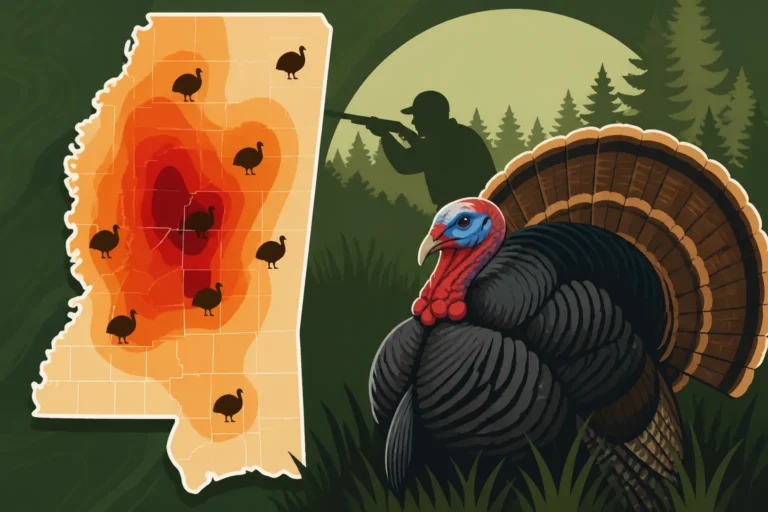
These regions, while perhaps not always boasting the highest density of birds per square mile compared to some Hills counties, can offer fantastic hunting, especially on large timber company lands or expansive private tracts. The key is finding areas with mature timber and good understory management. The MDWFP often reports strong turkey activity in these areas, and hunters willing to scout and cover ground can be very successful. Understanding Where Mississippi Turkeys Are Densest can help you narrow down your focus within these broader regions.
Key Factors for Successful Turkey Hunting Beyond County Names
While knowing the "best counties" gives you a starting point, successful turkey hunting is about more than just drawing a circle on a map. Several critical factors come into play, regardless of where you decide to pursue a gobbler in Mississippi. Overlooking these can lead to frustration, even in a top-tier county.
Access and Pressure: Public vs. Private
Let's be real, access is king. A county might have a phenomenal turkey population, but if it's 95% private land with no hunting leases available, it might as well not have any turkeys for the average hunter. Many of the truly "best" turkey spots in Mississippi are on private land with restricted access. However, Mississippi does offer significant public land opportunities through National Forests and Wildlife Management Areas (WMAs).
When hunting public land, expect more pressure, especially on opening weekend. That doesn't mean it's impossible, but it requires different strategies. You might need to walk farther, hunt later in the morning, or target areas that other hunters overlook. For private land, gaining permission is paramount. A knock on the door, a polite conversation, and a good reputation can open doors to some fantastic hunting, sometimes even in counties not typically highlighted for their turkey numbers. Understanding the rules for Mississippi Spring Turkey Season Rules on both public and private land is crucial.
Scouting and Adaptability
Even in the best counties, you won't find turkeys sitting by the roadside waiting for you. Thorough scouting, both pre-season and during the hunt, is non-negotiable. Look for roosting areas, strutting zones, and feeding patterns. Fresh tracks, droppings, and shed feathers are all clues. Apps like GoHunt can be invaluable for pinpointing potential habitat, identifying property lines, and understanding topographical features before you ever step foot in the woods. Learning Scouting Mississippi Public Land Before Season is an art form that pays dividends.
Turkeys are notoriously fickle. What works one day might not work the next. Weather changes, hunting pressure, and the stage of the breeding cycle all influence their behavior. Being adaptable means being willing to change your setup, your calling sequence, or even your hunting area if what you're doing isn't producing results. If a gobbler is henned up, for instance, aggressive calling might push him further away, while a subtle approach might entice him later in the day. This adaptability is critical to success.
Maximizing Your Gobbler Chances in Any County
Regardless of whether you're hunting in a renowned turkey county or a lesser-known gem, certain strategies and preparations will significantly boost your chances of punching a tag. It's about combining knowledge of the birds with skillful execution in the field.
Calling Strategies and Decoy Use
Effective calling is undoubtedly one of the most vital skills in turkey hunting. It's not just about making turkey sounds; it's about knowing when to call, how loud to call, and what type of call to use. Soft tree yelps at dawn, aggressive cutting and cackling to pique a gobbler's interest, or subtle clucks and purrs to seal the deal when a bird is close – each has its place. Over-calling can spook wary birds, while under-calling might prevent you from locating one. Practice is key, and listening to real turkeys will always be your best teacher.
Decoys can be incredibly effective, especially for drawing gobblers across open fields or for giving a bird that final visual reassurance to commit. A jake and hen setup, or even a single hen, can often be enough. However, in heavily pressured areas, some hunters opt to forgo decoys to avoid giving away their position or making birds wary. Think about your hunting situation – open woods, field edge, thick cover – and choose your decoy strategy accordingly. For early morning hunts, knowing how to approach a bird on the roost is critical, so understanding Roost Hunting Mississippi Gobblers can be a game changer.
Respecting Regulations and Ethical Hunting
Every hunter has a responsibility to know and abide by all hunting regulations. This includes understanding bag limits, season dates, and specific rules for public land. The MDWFP website is your best resource for current information, and always carry your valid Mississippi Wild Turkey Stamp and license. Ethical hunting goes beyond just following the law; it means making clean shots, recovering game promptly, and respecting both the animals and other hunters.
Knowing your effective range with your shotgun, understanding proper shot placement, and being patient enough to wait for a clear, ethical shot are all part of the process. If you're on public land, be mindful of other hunters and give them space. A bad interaction can ruin a hunt faster than any silent gobbler. Mississippi has a rich hunting heritage, and it's up to all of us to uphold the highest standards.
Table: Mississippi's Turkey Potential by Region
Here's a quick overview of how different regions of Mississippi generally stack up for turkey hunting:
| Region | Primary Habitat | General Turkey Density | Hunter Success Rate (Perception) | Key Considerations |
|---|---|---|---|---|
| Delta | Bottomland Hardwoods, Agricultural Field Edges | Moderate to High (Localized) | Medium to High | Access to private land is crucial; concentrated birds. |
| Hills/Northeast | Mixed Pine-Hardwood Forests, Rolling Terrain | High | High | Consistent habitat, traditional turkey country. |
| Piney Woods/South | Managed Pine Forests, Hardwood Drains | Medium to High | Medium | Good public land options; birds adapt to diverse habitat. |
| Coastal Plain | Mixed Forests, Swampy Areas near Coast | Medium (Spotty) | Medium | Habitat can be challenging; localized hotspots. |
This table is a generalization, and exceptions exist within every region. Dedicated scouting and adaptation are always the true keys to success. For instance, sometimes a Run-and-Gun Turkey Tactics on Public Land approach in the Piney Woods can yield better results than sitting and waiting in a traditionally higher-density Hills county.
Disclaimer
This article is for general informational purposes only and does not constitute professional advice. Laws, prices and regulations vary by location and change over time. Consult a qualified professional for guidance on your specific situation.