Nest Predation and Mississippi Turkey Hatches
It's incredibly frustrating for any Mississippi turkey hunter to spend countless hours scouting, hearing gobblers fire off on the limb, and seeing hens during the breeding season, only to find the woods eerily quiet come late summer with hardly a poult in sight. This disheartening reality often points to a significant challenge: nest predation. This guide will explore the silent, unseen forces that decimate turkey nests, impacting vital hatch rates and future hunting opportunities across our beautiful state.
The Silent Threat: Understanding Nest Predation's Impact on Mississippi Turkeys
We all yearn for those booming gobblers and the sight of a hen leading a healthy brood through the fields. When the population numbers aren't what they should be, or when you simply aren't seeing the birds you expect, it often comes down to the survival rate of those tiny eggs and vulnerable poults. Nest predation is a huge piece of that puzzle, acting as a natural, but often intensified, barrier to robust turkey populations.
The Cycle of Life: Why Healthy Hatches are Crucial
For wild turkeys, like so many ground-nesting birds, the entire future of the flock hinges on successful reproduction each spring. A hen lays a clutch of eggs, typically between 8 to 15, and dedicates nearly a month to incubating them, a period of immense vulnerability. When these nests are repeatedly destroyed by predators, it means fewer poults hit the ground, and fewer young birds mature into the jakes and gobblers we pursue, or the hens that will continue the cycle. It's a direct blow to the annual recruitment of new birds into the population. Without those successful hatches, the overall Mississippi Turkey Population Trends will inevitably suffer, leading to fewer birds in the woods and potentially affecting future season lengths or bag limits. Every lost nest represents a lost opportunity for the next generation.
Reading the Landscape for Success and Failure
As hunters and conservationists, we spend so much time observing the woods. We learn to spot strut zones, dusting bowls, and escape routes. But just as important is learning to "read" the landscape for signs of nesting success or failure. An area with abundant food, water, and prime roosting cover might seem like a turkey paradise, yet consistently produce low poult numbers. This discrepancy often indicates a high predator load or inadequate nesting cover. You might see evidence of scratched-out nests, scattered eggshells, or simply the absence of poults where hens were plentiful just weeks before. Observing these subtle clues is essential for understanding the underlying issues affecting turkey hatches. Even subtle differences in habitat, like fragmented cover or too much open understory, can spell the difference between a successful hatch and a predator's easy meal.
Who's Raiding the Nests? Common Predators of Mississippi Turkeys
Turkey nests are veritable smorgasbords for a variety of wildlife, both large and small. It's a brutal reality of nature, but understanding who is doing the damage is the first step in addressing the problem. In Mississippi, we have a diverse array of animals eager to find a protein-rich meal of turkey eggs or vulnerable young poults.
The Usual Suspects: Raccoons, Opossums, Skunks, and Snakes
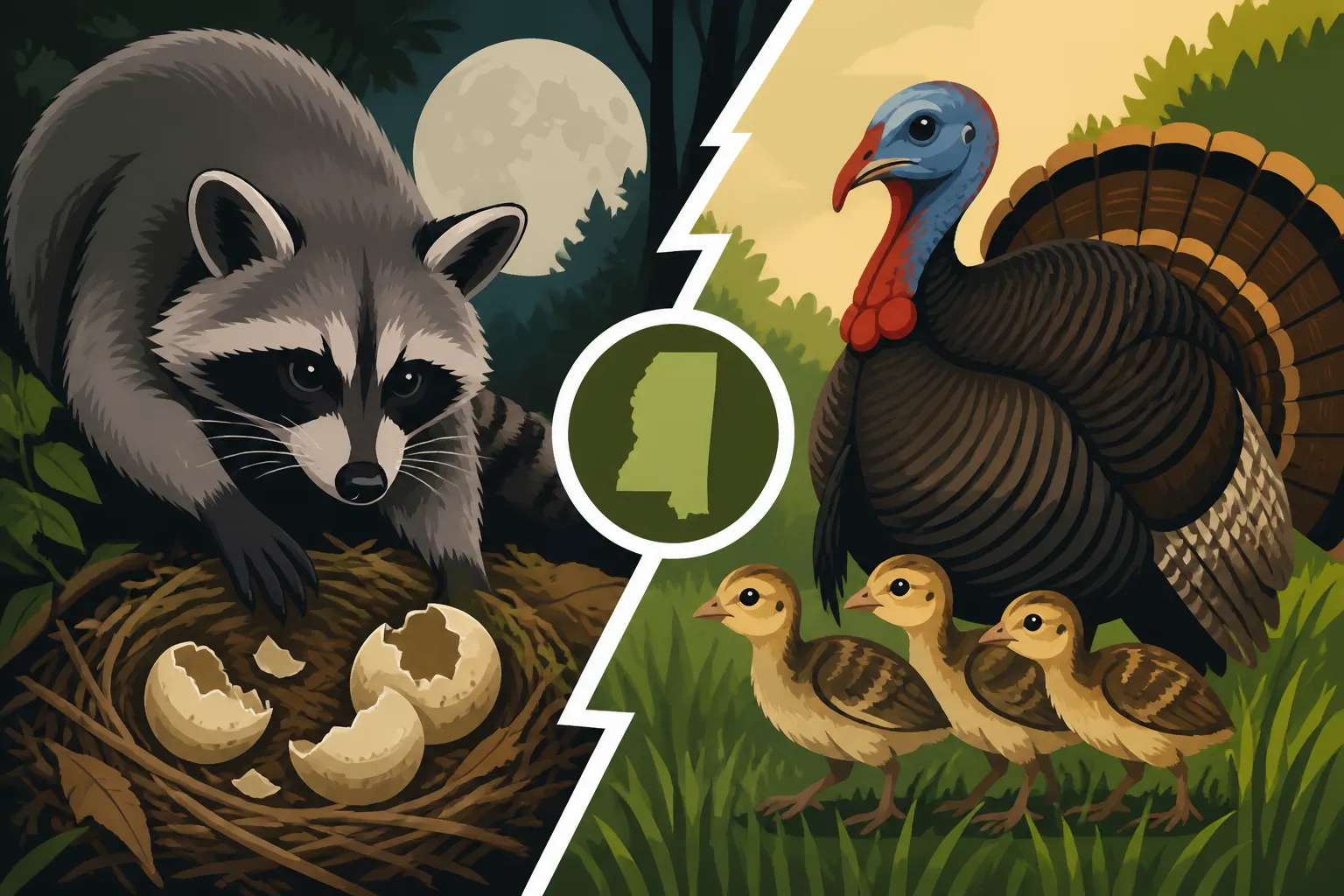
These are the notorious egg thieves. Raccoons, with their incredibly dexterous paws and keen sense of smell, are perhaps the most efficient nest predators. They'll systematically go through an area, sniffing out nests hidden under sparse cover. Opossums, while perhaps less agile, are also highly opportunistic and will readily consume eggs. Skunks, like raccoons, are expert sniffers and will also dig up nests. The collective presence of these furbearers can be devastating to a turkey's reproductive efforts. Snakes, particularly larger species like rat snakes and black racers, are also significant nest predators, often consuming entire clutches. They are less deterred by dense cover, silently slithering into the nest while the hen might be off feeding. When these populations are unchecked, the impact on annual hatches is profound, making it incredibly difficult for turkeys to get ahead.
Other Opportunistic Eaters: Coyotes, Feral Hogs, and Birds of Prey
Beyond the smaller, dedicated egg-eaters, several other species pose a serious threat. Coyotes and Predators in Mississippi are extremely efficient hunters, and while they might target a nesting hen directly, they are certainly not above raiding a nest of eggs or snatching a young poult. Their widespread distribution means they are a constant presence in many turkey habitats. But perhaps one of the most destructive forces impacting ground-nesting birds in Mississippi is the ever-expanding population of Feral Hogs Across Mississippi. These intelligent, prolific animals are omnivores that will literally vacuum up everything in their path, including turkey nests and even young poults. Their rooting habits can also destroy critical nesting cover, indirectly making future nests more vulnerable. Lastly, certain birds of prey, such as various hawk and owl species, can also take young poults from a brood, though their impact on the eggs themselves is less direct. It's a complex web of predation, with multiple threats converging on those fragile nests.
Understanding the "Why": Factors Increasing Predation Risk
It's not just the presence of predators that determines nest success; it's also about the environment in which those nests are laid. Several factors, both natural and human-influenced, can dramatically increase the vulnerability of turkey nests to predation, turning what should be safe havens into feeding grounds.
Habitat Matters: Cover, Openings, and Nesting Success
A hen turkey's primary defense against predators during nesting is concealment. She chooses a site with dense overhead and lateral cover, hoping to remain unseen and unheard. However, if this type of high-quality nesting habitat is scarce, hens are forced to utilize suboptimal areas, such as thin fencerows, sparse grass patches, or field edges. These less-than-ideal spots make nests easy targets for anything with a nose or keen eyesight. Think about a wide-open pine plantation with a clean understory compared to a brushy hardwood bottom. The latter offers far more safe spots. Practices that diminish this critical low-level cover, such as overgrazing, intensive timber harvesting without regeneration plans, or broad-scale herbicide use, can drastically reduce nesting success. When secure nesting cover is abundant and widely distributed, hens have more options, increasing the odds that at least some nests will go undetected. Land managers who prioritize creating and maintaining diverse understory vegetation are doing a tremendous service for our turkey populations.
Human Footprint and Edge Effects
Our own activities, however unintentional, can often exacerbate nest predation. Roads, utility rights-of-way, agricultural field edges, and clearings create "edge effects." These edges often serve as travel corridors for predators, allowing them to move efficiently through habitats where they might otherwise be less common. A raccoon or coyote can easily patrol a field edge or a logging road, systematically checking for vulnerable nests. Fragmented habitats, where large blocks of timber are broken up by fields or development, also increase the amount of edge habitat, essentially creating more easy access points for predators. Even something as simple as allowing dogs to roam freely during nesting season can inadvertently lead predators to nests. The more we understand how our activities shape the landscape, the better we can manage it to minimize negative impacts on ground-nesting birds. This is where thoughtful land management, even on small private tracts, can make a significant difference.
The Weather's Role: Flooding, Drought, and Vulnerability
Nature itself can play a cruel hand. Extreme weather events can significantly impact nesting success. Prolonged heavy rains and subsequent flooding, especially in bottomland habitats, can inundate nests, drowning eggs or forcing hens to abandon them. If a hen renests, it's often in a less ideal, more exposed location, and the clutch size is usually smaller. Conversely, severe droughts can reduce the lush herbaceous cover that hens rely on for concealment, making nests easier to spot. Dry conditions can also affect the availability of insects, a critical food source for newly hatched poults. A hen already stressed by environmental conditions might also be less vigilant on the nest, further increasing its vulnerability to predation. Monitoring conditions, particularly during the critical nesting months of April and May in Mississippi, is crucial for assessing potential impacts on turkey hatches.
Strategies for Mitigating Nest Predation in Mississippi
While we can't eliminate every predator, there are concrete steps we can take, both as landowners and informed hunters, to help Mississippi's wild turkeys beat the odds. It’s about creating an environment where hens have the best chance to successfully hatch and raise their broods.
Habitat Improvement: Creating Safer Nesting Sites
The most effective long-term strategy for increasing turkey hatches is through targeted habitat improvement. This focuses on providing abundant, secure nesting cover across the landscape. Think about establishing dense clumps of native grasses, like bluestem or switchgrass, which offer excellent overhead concealment. Prescribed burning, when done correctly and on a rotational basis, can rejuvenate older stands of timber, promoting new, thick understory growth that offers superb nesting sites. Leaving brush piles and areas of undisturbed thickets can also provide crucial cover. For areas where timber has been harvested, ensure that regeneration efforts prioritize species and practices that will quickly provide low-level nesting cover. This aligns with similar efforts seen in quail conservation, where Mississippi Longleaf Pine and Quail Habitat projects demonstrate the power of specific habitat work for ground-nesting birds.
Regular disking of old fields or food plots can also stimulate new growth that provides nesting cover and insect forage. The goal is not just any cover, but diverse cover – areas where hens feel safe laying eggs and where poults can find plenty of insects without being overly exposed. Land managers might use tools to map out potential nesting areas and observe patterns. Platforms like GoHunt could potentially assist in tracking historical nesting locations and cross-referencing them with habitat features to identify key areas for improvement.
Predator Management: Ethical and Effective Approaches
While habitat work is foundational, in some areas with exceptionally high predator populations, targeted predator management can be a necessary supplemental strategy. This doesn't mean trying to eradicate every predator, which is neither feasible nor desirable. Instead, it involves focused trapping efforts, particularly for species like raccoons, opossums, and skunks, in key nesting areas just before and during the nesting season.
It's crucial that any predator removal efforts are ethical, legal, and well-planned, often requiring coordination with state wildlife agencies or professional trappers. Remember, predators are a natural part of the ecosystem, but an overabundance, especially of opportunistic nest raiders, can disproportionately impact turkey populations. Hunters who use tools like GoHunt to log observations of predator sign, like tracks or scat, can help identify areas where management might be most effective. Understanding Mississippi Hog Trapping Success Rates for feral hogs, for instance, can provide insights into effective strategies for another major nest predator. These efforts are typically most impactful on smaller, managed private lands where localized control can be achieved.
Monitoring and Data Collection: How to Track Success and Identify Issues
Knowledge is power. For landowners and wildlife agencies alike, diligently monitoring turkey populations and nesting success is vital. This can involve conducting spring gobbler counts, summer brood surveys to estimate poult-to-hen ratios, and even setting up trail cameras near suspected nesting areas (respecting regulations, especially on public lands). Tracking Mississippi Turkey Brood Survey Results over time helps biologists and hunters understand if conservation efforts are making a difference.
Detailed record-keeping about when and where hens are seen, observed nesting attempts, and the eventual outcome (successful hatch vs. failed nest) provides invaluable data. Hunters can contribute to this effort by reporting their observations to the MDWFP or participating in citizen science programs. Utilizing platforms like GoHunt to log your scouting observations, including any predator sightings or signs of disturbed nests, can provide valuable data points that, when aggregated, paint a clearer picture of local conditions. This kind of systematic monitoring allows for adaptive management, meaning we can adjust our strategies based on what the data tells us is working or not working.
Public Land Considerations: What You Can Do as a Hunter
For those of us who primarily hunt public land, direct habitat manipulation or predator control isn't usually an option. However, we still have a crucial role to play. First, be a responsible land user: stick to designated trails, properly dispose of waste, and minimize disturbance during the nesting season. When Scouting Mississippi Public Land Before Season, pay attention not just to turkey sign, but also to predator sign. If you consistently find evidence of high predator activity in what should be prime turkey nesting habitat, report it to the WMA manager or the MDWFP.
Supporting conservation organizations that advocate for sound habitat management on public lands, or purchasing relevant licenses and stamps, directly contributes to the funding for these efforts. Understanding habitat needs and supporting programs like those aimed at promoting How Managed Pine Could Restore Mississippi Quail will indirectly benefit turkeys, as healthy, diverse habitats benefit a wide range of ground-nesting species. By being informed, observant, and proactive in our support, we can all contribute to healthier turkey populations and more successful hatches across Mississippi.
| Common Nest Predator | Primary Method of Predation | Impact on Turkey Nests | Habitat Preference | Management Focus |
|---|---|---|---|---|
| Raccoon | Scent-tracking, dexterity | High (eggs, some poults) | Diverse, near water | Trapping, habitat cover |
| Opossum | Opportunistic foraging | Moderate (eggs) | Diverse | Trapping, habitat cover |
| Skunk | Scent-tracking, digging | Moderate (eggs) | Open woods, edges | Trapping, habitat cover |
| Snakes | Silent infiltration | Moderate (eggs) | Dense undergrowth | Habitat management |
| Feral Hogs | Omnivorous foraging, rooting | Very High (eggs, poults, habitat destruction) | Diverse, thickets | Trapping, removal programs |
| Coyote | Opportunistic hunting | Moderate (poult, hen) | Open country, edges | Habitat, targeted removal |
| Birds of Prey | Aerial hunting | Low (poult) | Open areas | Minimal direct impact |
Disclaimer
This article is for general informational purposes only and does not constitute professional advice. Laws, prices and regulations vary by location and change over time. Consult a qualified professional for guidance on your specific situation.