Where Mississippi Turkeys Are Densest
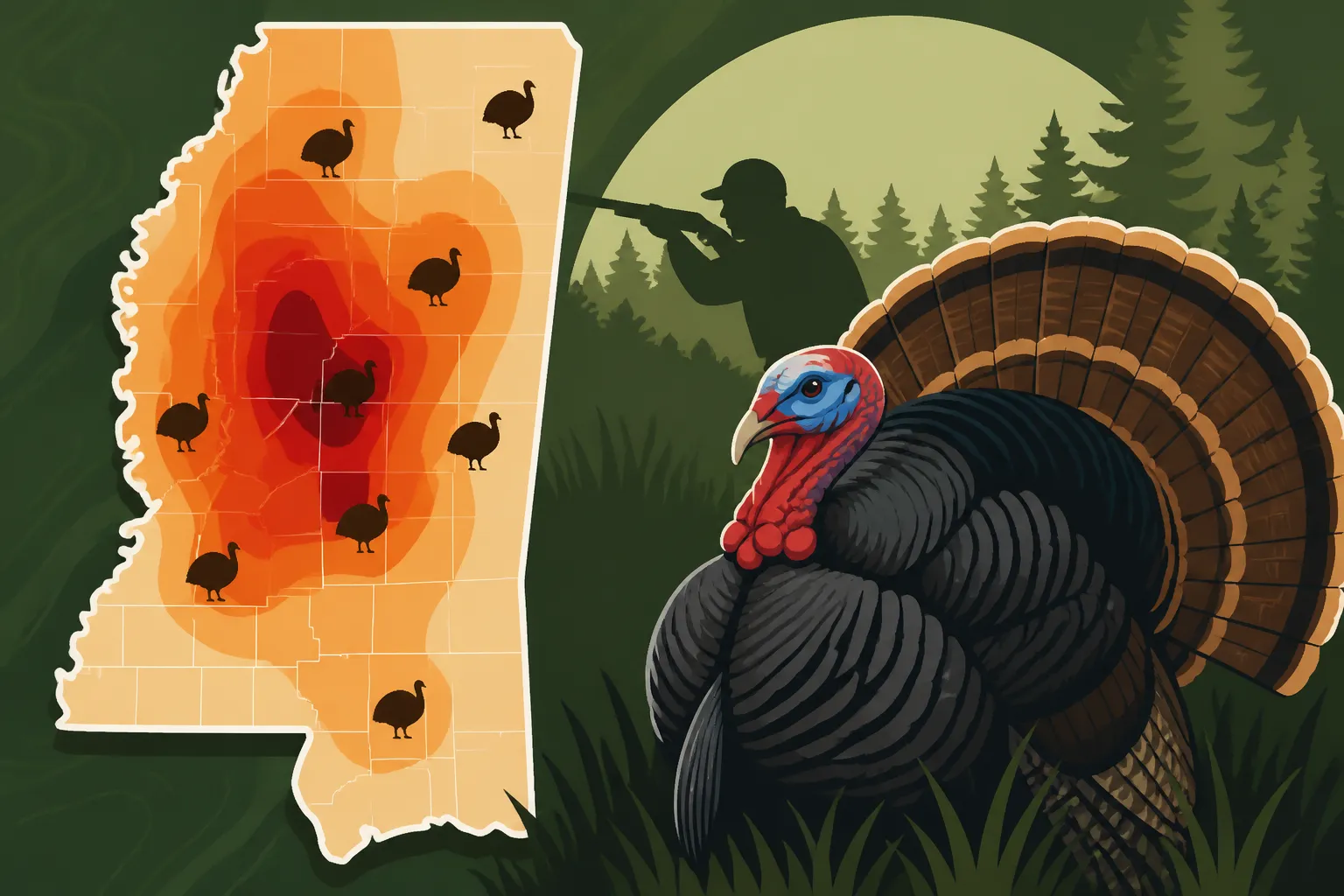
Trying to pinpoint where Mississippi's wild turkeys are densest can feel like searching for a needle in a haystack, especially when you're looking for that sweet spot where gobblers consistently sound off. Many hunters get frustrated driving countless miles only to hear nothing but silence, making it tough to plan a successful hunt. This guide will walk you through the prime areas of Mississippi where turkey populations tend to thrive, giving you a better chance to find those elusive birds.
Understanding Mississippi's Diverse Turkey Habitat
Mississippi is a beautiful state, and its diverse landscapes offer a wide array of habitats for wild turkeys. From the fertile bottomlands of the Delta to the rolling hills and the vast pine forests, each region presents unique challenges and opportunities for turkey hunters. Knowing what kind of terrain and vegetation turkeys prefer is the first step in understanding where to focus your efforts. It's not just about a big woods feeling; it's about the right kind of big woods, mixed with other crucial elements.
The Importance of Mature Timber for Roosting and Foraging
Mature timber is absolutely critical for healthy turkey populations, acting as both a safe haven and a dinner table. Turkeys rely heavily on large, sturdy trees for roosting at night, providing them protection from ground predators. Think about those massive oaks and hickories, often near water, that have strong horizontal limbs perfect for a flock to settle into for the night. These older stands of trees also provide abundant food sources like acorns, hickory nuts, and other mast crops, especially in the fall and winter, which helps birds build up reserves for the breeding season. During spring, the canopy cover offers security, and the forest floor provides insects and greens. Hunting the Mississippi Turkey Roost Tree Preferences is key to understanding where to focus your morning efforts.
When you're scouting, look for evidence of past roosts—droppings and feathers under big trees. This tells you that turkeys are consistently using that area. It's not just about a single tree, but often a cluster of suitable trees within a larger block of timber. These areas become central hubs for turkey activity, serving as a base from which they fan out to feed and breed. The mature timber offers them everything they need: safety, food, and cover.
Role of Agricultural Land and Edges
While mature timber provides essential cover and roosting sites, agricultural fields and their edges play an equally vital role in supporting dense turkey populations. Turkeys are opportunistic feeders, and the grains left after harvest, along with the bugs and insects that thrive in these fields, are a huge draw. Imagine a big flock of hens and poults scratching through a cut cornfield in late summer or a group of gobblers strutting along a soybean field edge in the spring. These open areas provide excellent foraging opportunities and also allow turkeys to dust themselves and sunbathe, which is important for their feather health.
The edges where these fields meet timber or thick cover are particularly crucial. These transition zones offer turkeys the best of both worlds: easy access to abundant food in the fields, coupled with the security of dense cover just a few yards away. This is where you'll often see them entering and exiting fields, making these pinch points prime locations for setting up a blind or ambush. Knowing how to use these edges is a major part of successful hunting, whether you're trying to set up on a Delta Field Edge or just observing movement.
Water Sources and Brood Rearing
Water is another often-overlooked but critical element for robust turkey populations. Turkeys need access to fresh water daily, especially during hot Mississippi summers. Rivers, creeks, ponds, and even small seeps can attract turkeys, especially if they are surrounded by good cover. Beyond just drinking, reliable water sources are often associated with lush vegetation and insect activity, which are paramount for turkey broods.
Hens with young poults will actively seek out areas with abundant insects, as these protein-rich meals are essential for rapid growth. Creek bottoms, sloughs, and damp areas around ponds often provide a higher concentration of bugs. These areas also tend to have denser undergrowth, offering young poults protection from aerial predators like hawks and owls. When you're scouting for areas with high turkey density, don't just look for big trees; consider the proximity and quality of water sources, as these spots often become magnets for hens and their broods. The health of the poult crop directly impacts overall turkey population trends.
Regional Hotbeds: Where Turkeys Thrive in Mississippi
Mississippi is divided into different regions, and turkey densities can vary significantly from one to another. While you might find a lone gobbler almost anywhere there's suitable habitat, certain areas consistently hold higher numbers of birds year after year. Understanding these regional distinctions can help you narrow down your search and maximize your chances of success.
The Allure of the Delta Unit
The Mississippi Delta, particularly its unique blend of bottomland hardwoods and vast agricultural fields, is often a prime area for turkeys. While historically it might have been more known for its deer and waterfowl, proper habitat management has allowed turkey populations to flourish in many pockets. The Delta Unit, with its rich soils, supports impressive stands of oak, pecan, and cypress, providing excellent roosting and foraging grounds. The sheer scale of some of these timber blocks, especially in areas like the Delta National Forest or Mahannah Wildlife Management Area, offers turkeys vast, undisturbed territory.
The extensive agricultural landscape surrounding these timber blocks creates a buffet for turkeys. Fields of corn, soybeans, and winter wheat provide consistent food sources throughout the year. The blend of security cover in the hardwoods and abundant food in the fields creates an ideal environment. However, the Delta can be challenging to hunt due to its vastness and often dense undergrowth. Utilizing satellite imagery and scouting apps like GoHunt can be invaluable here, helping you identify those critical timber-to-field transition areas and potential roosting bottoms. Looking for "Finding Sign in Big Delta Timber" is a great way to start your scouting.
Hills Unit: Hardwood Ridges and Draws
Moving east from the Delta, the Hills Unit presents a different but equally productive landscape for turkeys. This region is characterized by rolling terrain, steep hardwood ridges, and deep creek draws. Here, turkeys often utilize the elevation changes to their advantage, roosting on ridge tops for security and then flying down into the draws to feed. The diverse timber types, including oaks, hickories, and pines, offer a varied diet throughout the seasons.
The broken topography of the Hills Unit creates numerous pinch points and travel corridors that turkeys frequent. Imagine a gobbler working his way along a hardwood ridge, stopping to strut and gobble in a small saddle, or a flock of hens feeding through a creek bottom thick with insects. These natural features can be excellent places to intercept birds. Public lands like Homochitto National Forest or Bienville National Forest offer significant opportunities for hunters willing to put in the legwork. Scouting for things like Reading a Ridge for Hills Unit Deer can also provide insights into turkey movement patterns.
Southeast Unit: Piney Woods and Mixed Forests
The Southeast Unit, dominated by extensive pine forests, also holds healthy turkey populations, particularly where these pines are interspersed with hardwood drains, clear-cuts, and mixed timber. While turkeys prefer hardwoods for mast, the open understory of well-managed pine forests can provide excellent bugging grounds and visibility, especially after prescribed burns. The patchwork of different timber stages—young pines, mature pines, and hardwood bottoms—creates a diverse habitat mosaic that turkeys can thrive in.
The key to finding turkeys in the Southeast Unit is often locating those transition areas where pine meets hardwood, or where natural breaks in the timber provide food and cover. Clear-cuts, when they reach a certain age of regrowth, can offer excellent nesting cover and bugging opportunities for poults. Look for areas with a good mix of timber types and varying age classes. This region might require a bit more walking, but the rewards can be significant. The Hunting Southeast Unit Pine Flats can be a unique and rewarding experience.
North Central Unit: A Mix of Habitats
The North Central Unit of Mississippi, often characterized by its mix of agricultural lands, hardwood forests, and sometimes more rolling topography than the flat Delta, also has significant turkey populations. This unit can be a blend of what you find in the Hills and the Delta, offering good opportunities for turkeys that adapt to various habitat types. Here, you'll often find mature hardwoods along creek bottoms and river drainages, which provide excellent roosting and travel corridors, flanked by smaller agricultural fields or pastures.
The habitat patchwork in the North Central Unit means turkeys often have access to a consistent food supply from both natural mast crops and agricultural remnants. Scouting here involves looking for those key intersections where food, water, and cover converge. Wildlife Management Areas (WMAs) in this unit can offer some fantastic public hunting, but often require more thorough scouting to find less pressured birds. Understanding Hunting North Central Unit Hardwood Draws will be crucial for success in this region.
Factors Influencing Local Turkey Density
Beyond the broad regional categories, several localized factors play a huge role in determining how many turkeys you'll actually encounter in any given spot. It’s not just about good habitat on paper; it's about the real-world dynamics of turkey life. These factors can turn a seemingly perfect piece of ground into a ghost town, or a sleeper spot into a turkey mecca.
Poult-to-Hen Ratios and Nesting Success
One of the most significant indicators of future turkey density is the annual poult-to-hen ratio. This metric reflects nesting success and poult survival rates, which are directly tied to environmental conditions and predator pressure. A good year with mild weather during nesting and hatching, coupled with low predator numbers, means more young birds make it to maturity. Conversely, cold, wet springs or high numbers of raccoons, opossums, and coyotes can decimate a year's poult crop, leading to fewer turkeys in the following seasons.
MDWFP often conducts brood surveys, gathering data on these ratios, and while specific numbers aren't always released for individual counties, the general trends can tell you a lot about the health of local populations. If you want to dive deeper into the science behind turkey population health, looking into Poult-to-Hen Ratios and What They Mean can be very enlightening. As a hunter, paying attention to what you see in late summer and early fall—like the number of young birds accompanying hens—can give you a good idea of what to expect come spring.
Hunting Pressure and Accessibility
Let's be real: turkeys are smart, and they learn quickly. Areas that receive heavy hunting pressure, especially on public land, tend to have lower turkey densities during the season, or at least birds that are much warier and harder to call in. Turkeys in heavily hunted areas become "ghosts" – silent, secretive, and masters of evading detection. This is a frustration many hunters face when hunting public land.
Conversely, private lands with limited hunting access, or public areas that are difficult to reach (requiring a long walk, boat access, or navigating thick terrain), often hold higher densities of less pressured birds. These birds might be more vocal, more willing to respond to calls, and generally exhibit more natural behavior. When you're scouting, it's worth considering how easily other hunters can access the area. Sometimes, putting in a little extra effort to get away from the crowds can make all the difference. Mapping tools in platforms like GoHunt can help you identify remote pockets of public land, away from easy road access, giving you a competitive edge. The article on Hunting Pressure on Mississippi Public Land really nails this concept.
Land Management Practices and Food Sources
The way land is managed, whether by private landowners, timber companies, or state agencies, directly impacts turkey habitat quality and, by extension, turkey density. Active timber management, such as selective cutting, thinning, and prescribed burns, can create ideal conditions for turkeys by promoting diverse understory growth, encouraging mast production, and opening up the forest floor for foraging. Think of it: a landowner actively managing their timber for wildlife is creating a turkey haven.
Conversely, large monoculture pine plantations with dense, unthinned stands and no hardwood component offer very little to turkeys. Similarly, areas where all natural food sources are eliminated or not supplemented can struggle to hold birds. Food plots, though sometimes controversial, can provide critical nutrition during lean times, especially in areas with limited natural mast. Understanding what land management practices are in play can help you predict where turkeys might congregate. Areas managed with an eye towards overall wildlife health, not just timber production, will almost always support higher turkey numbers. You can often glean insights into habitat work and food plot strategies by reading more about Habitat Work on Mississippi WMAs.
Leveraging Data and Tools to Find Your Gobbler
In today's hunting world, we have more resources than ever to help us understand game populations and locate hot spots. While nothing replaces boots on the ground, starting with good information can save you a lot of time and effort. Using available data and modern mapping tools is a smart way to approach finding those denser turkey populations.
MDWFP Resources and Harvest Reports
The Mississippi Department of Wildlife, Fisheries, and Parks (MDWFP) is your primary source for official information on turkey populations, harvest data, and management units. While they don't always pinpoint exact densities by specific square mile, their annual harvest reports and general population estimates by unit can provide valuable insights into where turkeys are generally doing well. These reports often highlight successful seasons in certain regions or indicate areas where populations might be stable or growing.
Checking the MDWFP website for their annual Mississippi Spring Turkey Harvest Numbers can give you a broad overview. While past harvest numbers don't guarantee future success, consistently high harvest in a particular county or unit often correlates with a healthy, dense turkey population. This information, combined with knowing the general habitat types in those successful areas, helps you build a picture of where to start scouting. It’s like getting a big-picture weather forecast before you plan your fishing trip.
Mapping Applications for Scouting
Gone are the days when a paper topo map was your only tool. Modern mapping applications have revolutionized scouting, allowing hunters to analyze terrain, timber types, access points, and private/public land boundaries from the comfort of their home. Platforms like GoHunt, or other similar apps, offer satellite imagery that can reveal mature timber, agricultural fields, clear-cuts, and water sources—all critical elements for identifying potential turkey hotbeds.
With these apps, you can mark potential roosting sites near water, trace travel corridors along ridge lines or creek bottoms, and identify those crucial habitat transition zones. You can also layer public land boundaries and even identify landowners for potential permission requests. Using these tools to scout before you ever set foot in the woods allows you to formulate a strategic plan, focusing your on-the-ground efforts on the most promising areas. Imagine virtually walking miles of timber from your couch, identifying key features that would take days to find otherwise. This technological advantage is a game-changer for finding where turkeys are densest.
| Mississippi Turkey Habitat Component | Importance | Example Locations | Scouting Indicators |
|---|---|---|---|
| Mature Hardwood Timber | Roosting, Mast Crops | Delta river bottoms, Hills Unit ridges | Large oaks/hickories, droppings, feather piles |
| Agricultural Fields & Edges | Foraging, Dusting | Delta crop fields, North Central farmlands | Cut crops, strut marks, tracks along field lines |
| Water Sources | Drinking, Brood Habitat | Creek bottoms, sloughs, ponds | Lush vegetation, insect activity, tracks |
| Diverse Forest Age Classes | Nesting, Cover | Southeast Unit mixed forests, clear-cuts | Mixed timber stages, thick regrowth, open pines |
| Low Hunting Pressure | Less wary birds | Remote public land, managed private land | Lack of boot tracks, more vocal birds |
| Active Land Management | Habitat Quality | WMAs, private timber lands | Prescribed burns, thinned timber, food plots |
The Value of Local Knowledge and Experience
While data and technology are powerful, never underestimate the value of local knowledge and your own experiences afield. Talking to seasoned hunters, wildlife biologists, or even landowners in a particular area can sometimes reveal nuances that maps and reports simply can't. They might know about a specific creek bottom that always holds birds, or a particular ridge that gobblers prefer to roost on due to prevailing winds.
Furthermore, your own time spent scouting and hunting will gradually build your personal knowledge base. Every time you're in the woods, you're learning—about turkey habits, their preferred feeding areas, and how they react to pressure in that specific location. Keep a hunting journal, mark your maps, and pay attention to details. Over time, you’ll develop an intuition for "turkey country" that no app can replicate. Combining this on-the-ground wisdom with your digital tools will make you an incredibly effective turkey hunter, consistently finding those denser turkey populations throughout Mississippi.
Disclaimer
This article is for general informational purposes only and does not constitute professional advice. Laws, prices and regulations vary by location and change over time. Consult a qualified professional for guidance on your specific situation.