Why Delta Hogs Reproduce So Fast
If you've spent any time hunting or farming in the Mississippi Delta, you know the constant, uphill battle against feral hogs. Their numbers seem to explode overnight, making you wonder just how quickly these destructive critters multiply. This guide dives deep into the unique biological and environmental factors that make Delta hogs reproduce at such an astonishing rate, shedding light on why they're such a persistent and challenging problem across our landscapes.
The Biological Blueprint for Proliferation
Feral hogs are not just prolific; they are engineered for it. Their reproductive biology is truly remarkable, allowing them to rapidly replenish populations even under significant hunting and trapping pressure. It’s a biological advantage that makes them one of the most successful invasive species on the continent, and certainly here in Mississippi.
Early Sexual Maturity in Sows
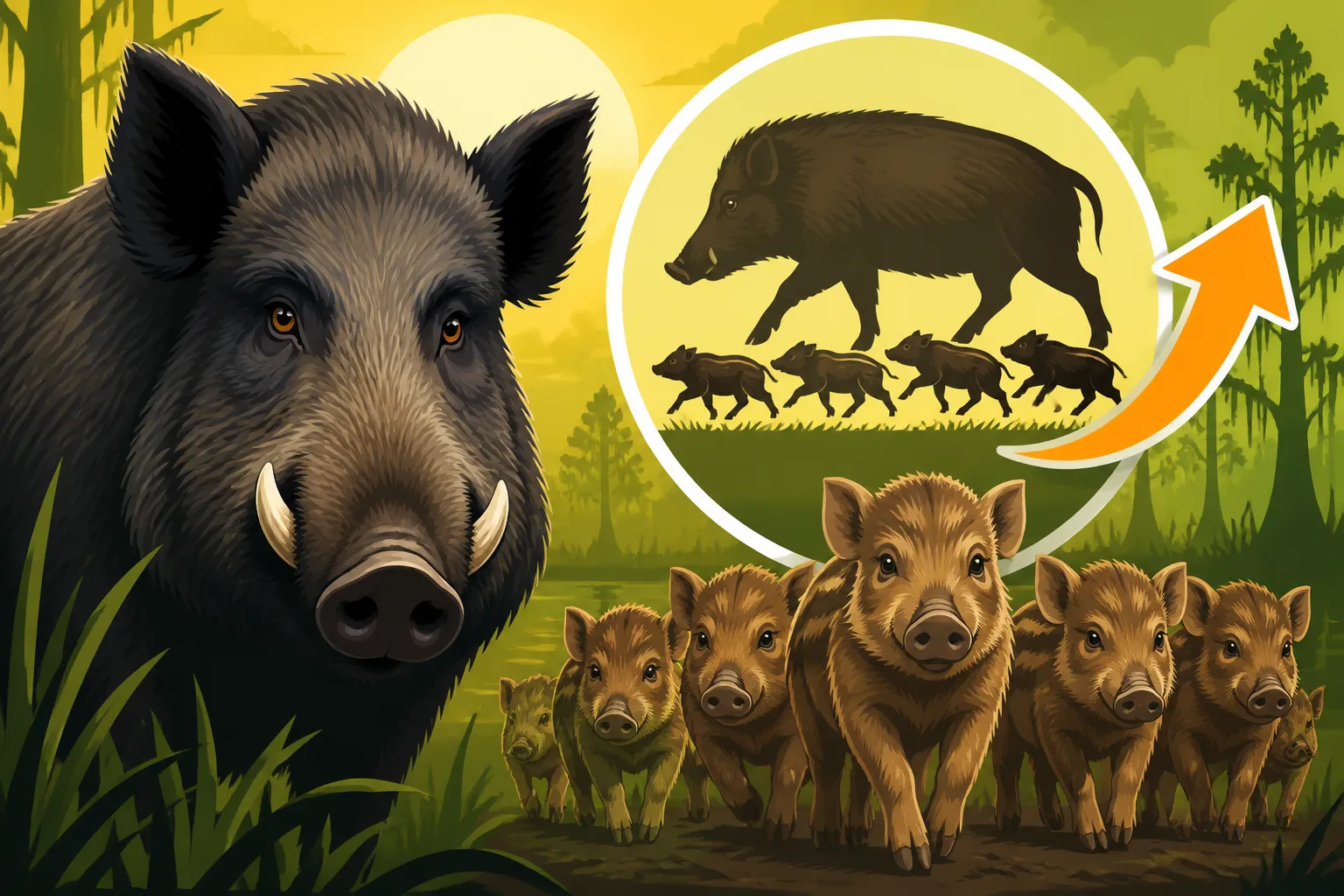
One of the most critical factors in the rapid reproduction of feral hogs is the incredibly early age at which sows reach sexual maturity. Unlike many other large game animals, a female feral hog can become pregnant when she is as young as six months old. This means that piglets born in the spring can be having their own litters by the following winter, or even late fall if conditions are optimal. This rapid turnaround from birth to breeding significantly shortens the generational interval, constantly adding new breeders to the population at an alarming rate. It’s a compounding effect that makes control efforts feel like you're trying to empty a bathtub with a teaspoon while the faucet is wide open.
Large Litter Sizes
When a sow does breed, she tends to produce a substantial litter of piglets. While the average litter size can vary, it's typically between four and eight piglets, but it's not uncommon to see litters of 10 or even 12 in healthy, well-fed sows. Imagine just one sow adding eight new hogs to the landscape in a single farrowing event. Now multiply that by hundreds or thousands of sows across a county. This incredible fecundity means that even if a significant percentage of piglets don't survive to adulthood, the sheer volume of births ensures that enough do to maintain or increase the population. This contrasts sharply with deer, for instance, which typically have one or two fawns per year, making hog population growth orders of magnitude faster.
Multiple Litters Annually
Adding to their reproductive prowess, feral hog sows are polyestrous, meaning they can come into heat multiple times throughout the year. In ideal conditions, a sow can farrow two litters in a single year, and sometimes even three if she loses an early litter and re-breeds quickly. This capability for year-round breeding, unhindered by harsh winters as found in more northern climates, ensures a continuous cycle of population growth. There's no "off-season" for hog reproduction in the Delta. This constant reproductive cycle means that any sustained pressure needs to be equally constant and intense, which is incredibly difficult to achieve across vast landscapes.
High Piglet Survival Rates
While piglets are vulnerable to various threats, under good environmental conditions, their survival rates are surprisingly high. Sows are fiercely protective mothers, often hiding their young in dense cover. The Delta provides abundant escape cover in thickets, cane breaks, and overgrown field edges, offering significant protection for young pigs. Furthermore, the mild climate means less energy expended on thermoregulation for young, delicate piglets, allowing them to focus more energy on growth and development. This combination of protective maternal behavior, ample cover, and a favorable climate ensures a robust percentage of those large litters make it to reproductive age, fueling the population explosion.
The Delta's Fertile Grounds: An Ideal Environment
The Mississippi Delta isn't just a perfect place for growing cotton, corn, and soybeans; it's also a paradise for feral hogs. The unique environmental conditions of this region—from its agricultural bounty to its mild climate and abundant natural cover—create an almost utopian habitat for these opportunistic animals, further accelerating their already impressive reproductive rates.
Abundant and Year-Round Food Sources
One of the primary drivers of rapid hog reproduction in the Delta is the sheer abundance of high-quality food available year-round. Our rich agricultural landscape, with its vast fields of corn, soybeans, rice, and wheat, provides an endless buffet. Hogs are incredibly adaptable omnivores and will feast on cultivated crops, often causing significant damage to farmers' livelihoods. Beyond agricultural crops, the Delta's natural environment offers a bounty of acorns, roots, tubers, mushrooms, and even small animals and insects. This consistent, calorie-rich diet means sows are almost always in peak physical condition, which directly translates to earlier sexual maturity, larger litter sizes, and the ability to farrow multiple times a year. To understand the severity of this issue, it's helpful to look at the larger problem of Crop Damage Hogs Cause in the Delta.
Mild Climate and Long Growing Seasons
Mississippi's temperate climate, particularly in the Delta, plays a crucial role in sustained hog reproduction. Unlike states with harsh, prolonged winters where food might be scarce and energy demands high for survival, our mild climate means hogs rarely face significant nutritional stress. There's no "winter lull" in breeding activity; sows can conceive and farrow throughout the year without the physiological burden of extreme cold. This extended breeding window, coupled with a long growing season that supports ample natural forage and multiple crop cycles, means sows can consistently produce and raise young without environmental interruptions, pushing their reproductive potential to its maximum.
Dense Cover and Water Accessibility
The Delta's landscape is characterized by its extensive network of sloughs, bayous, river bottoms, and drainage ditches, all lined with dense vegetation, often including impenetrable cane thickets and bottomland hardwoods. This natural cover provides perfect farrowing sites, offering security and protection for sows and their vulnerable piglets from predators and human disturbance. It's easy for a sow to disappear into these thickets to raise her young in seclusion. Coupled with this, water is almost always readily available, which is vital for hog health and survival, especially for lactating sows. This combination of secure breeding grounds and constant access to water creates a safe haven where hog populations can not only thrive but rapidly expand, often unseen by human eyes until their numbers become overwhelming.
Missing Checks and Balances: A Predator Vacuum
In a perfectly balanced ecosystem, natural predators would help keep a species' population in check. However, for feral hogs in the Mississippi Delta, these natural checks are largely absent, contributing significantly to their unchecked reproductive success. It's a key reason why their numbers continue to swell despite human efforts.
Absence of Effective Apex Predators
Historically, large apex predators like wolves and bears would have exerted some control over wild pig populations. However, these predators are either extirpated from much of Mississippi or exist in numbers too small to have a significant impact on the burgeoning hog population. While coyotes and bobcats might occasionally take a very young piglet, they are not effective predators of adult hogs or even larger juveniles. This lack of natural, consistent predation means that most feral hogs, once they survive their initial few weeks, face very few threats that can naturally reduce their numbers. This vacuum at the top of the food chain leaves humans as the primary, and often only, significant control factor. It's a stark reality that explains Why Mississippi Hogs Have No Natural Predator Check.
Human Hunting Pressure vs. Reproductive Capacity
While recreational hunting is a popular activity for many Mississippi hunters, its effectiveness in controlling widespread feral hog populations is often limited when measured against their reproductive capacity. Even with hunters taking hogs year-round and without bag limits on private land, the rate at which hogs reproduce often outpaces the harvest rate. Hogs are intelligent and quickly learn to avoid areas with high human activity. They become largely nocturnal, moving in dense cover, making them incredibly difficult to consistently hunt. While individual hunters can certainly impact local populations, widespread, sustained population-level reduction through hunting alone is a monumental challenge given the sheer numbers and their rapid breeding cycle. Hunters often utilize methods like Running Dogs on Mississippi Feral Hogs or Night Hog Hunting Light Rules in Mississippi to try and increase their success.
Limitations of Trapping and Removal Efforts
Trapping is widely considered the most effective method for removing large numbers of feral hogs at once, especially when utilizing sophisticated trap designs and pre-baiting strategies. For many landowners and wildlife managers, trapping is the go-to for significant hog removal. However, even with highly effective traps, there are limitations. Trapping requires significant time, effort, and resources to set up, monitor, and relocate or dispatch captured hogs. Trapping success can also be influenced by hog behavior and available food sources. If natural forage is abundant, hogs might be less inclined to enter traps. Furthermore, once some hogs are removed, the remaining population, thanks to its exceptional reproductive rate, can quickly rebound and fill the void. This continuous need for intense and strategic trapping efforts, like understanding What Hog Trappers Use in Mississippi or Building and Freshening a Hog Bait Site, highlights the uphill battle against their population dynamics. Even with modern tools, Mississippi Hog Trapping Success Rates vary.
The Uphill Battle of Management: Economic and Ecological Impacts
The rapid reproductive rate of Delta hogs isn't just a biological curiosity; it translates into significant economic strain and ecological disruption across Mississippi. Managing these fast-multiplying invaders presents an ongoing and complex challenge for landowners, farmers, and wildlife agencies alike.
The Elusive Nature and Adaptability of Feral Hogs
Feral hogs are incredibly intelligent and adaptable animals. They learn quickly, becoming wary of human presence, hunting pressure, and trapping methods. This elusiveness makes consistent control incredibly difficult. When faced with pressure, they will often switch to nocturnal activity, utilizing dense cover to evade detection. Their ability to adapt their behavior means that management strategies must constantly evolve, requiring landowners and wildlife managers to be equally clever and persistent. Relying on simple, one-off solutions against such a wily adversary is almost always a losing proposition. Even advanced mapping and scouting tools like those found on GoHunt can help identify potential travel corridors and bedding areas, but ultimately, consistent pressure is key.
Rapid Population Rebound After Removal Efforts
Perhaps the most frustrating aspect of managing feral hog populations is their capacity for rapid rebound. Even after successful, large-scale removal efforts—whether through trapping, sustained hunting, or organized eradication programs—the remaining individuals, fueled by their incredible reproductive rates, can quickly re-populate an area. A substantial cull might temporarily reduce visible hog activity, but unless every single hog is removed, the population can bounce back to its previous levels, or even higher, within a surprisingly short timeframe. This means management isn't a one-and-done task; it's an ongoing, relentless commitment. It's a testament to their reproductive power that even after dedicated campaigns, the overall estimate for How Many Feral Hogs Mississippi Has remains so high.
Economic and Ecological Strain
The unchecked proliferation of feral hogs in the Delta imposes a heavy toll. Economically, they cause millions of dollars in agricultural damage annually, destroying crops, fences, and irrigation systems. They compete with native wildlife for food sources like acorns, and their rooting behavior damages soil, destroys plant communities, and degrades water quality. Ecologically, they are a profound threat to sensitive habitats, ground-nesting birds, and native plant species. Their constant presence contributes to the spread of diseases, not just to livestock, but potentially to humans and other wildlife. For more information on overall management, consider looking into Hunting Mississippi's Year-Round Feral Hogs. Understanding Which Mississippi Counties Have the Most Hogs can also help in targeting management efforts. Navigating these challenges requires sustained effort and a clear understanding of the deep-rooted problem. Many hunters also utilize digital platforms, like GoHunt, to help track movements and identify key areas.
Mississippi Feral Hog Reproductive Characteristics
| Characteristic | Description | Impact on Population Growth |
|---|---|---|
| Sexual Maturity | Sows can become sexually mature as early as 6 months of age. | Drastically shortens the time for new individuals to reproduce. |
| Litter Size | Typically 4-8 piglets per litter, but can be up to 12 or more. | Each farrowing event adds a large number of potential breeders. |
| Farrowing Frequency | 1-2 litters per year are common; up to 3 litters are possible. | Continuous production of young ensures constant population growth. |
| Gestation Period | Approximately 114-120 days (around 3 months, 3 weeks, 3 days). | Short gestation allows for quick turnarounds between litters. |
| Piglet Survival | High in areas with ample food, water, and dense cover. | Ensures a significant number of young reach reproductive age. |
| Longevity | Hogs can live up to 5-8 years in the wild, sometimes longer. | Older sows contribute multiple litters over their lifespan. |
Conclusion: A Persistent Challenge Requiring Persistent Solutions
The rapid reproductive rate of feral hogs in the Mississippi Delta is a multifaceted problem rooted in their biology and exacerbated by the region's ideal environmental conditions and a lack of natural population controls. Understanding these factors is the first step toward effective management. It's a constant battle, but by combining aggressive hunting, strategic trapping, and coordinated landowner efforts, we can work towards mitigating the devastating impacts of this highly prolific invasive species. For anyone serious about understanding game animals and planning hunts, a tool like GoHunt can provide invaluable insights into terrain and potential activity areas. The challenge is immense, but the dedication of hunters and land managers in Mississippi is equally strong. Make sure you're always up-to-date on Mississippi Feral Hog Regulations to ensure your efforts are legal and effective.
Disclaimer
This article is for general informational purposes only and does not constitute professional advice. Laws, prices and regulations vary by location and change over time. Consult a qualified professional for guidance on your specific situation.