Mississippi Feral Hog Regulations
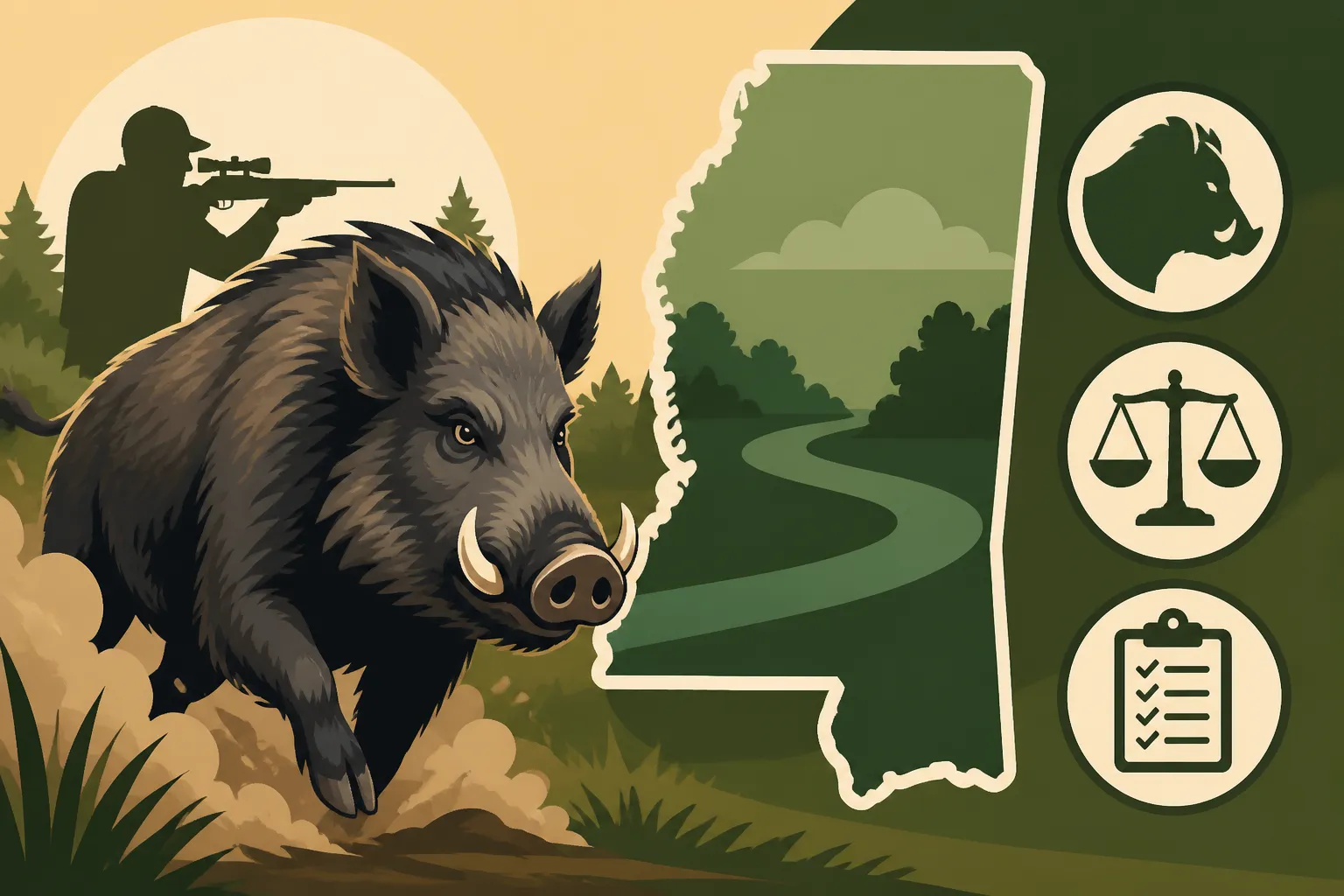
Feral hogs are a relentless problem across Mississippi, tearing up farmland, destroying natural habitats, and outcompeting native wildlife for food. It’s a constant battle, and the rules around hunting these destructive animals can sometimes feel a bit murky, leaving many hunters and landowners scratching their heads about what they can and can't do to combat them. This guide aims to clear up all the nuances of Mississippi's feral hog regulations, giving you a comprehensive understanding of how you can legally and effectively help control these invasive pests, whether you're a seasoned hunter or a frustrated landowner.
The Relentless Problem of Feral Hogs in Mississippi
Mississippi’s landscape, from the rich Delta farmlands to the Piney Woods, is under constant assault from feral hogs. These aren’t just a minor inconvenience; they are an ecological and economic disaster in hooves, multiplying at an alarming rate and leaving a trail of destruction wherever they roam. It’s a frustration shared by farmers seeing their crops annihilated and conservationists watching native flora and fauna vanish. Understanding the sheer scale of this problem is key to appreciating why Mississippi’s regulations on feral hogs are so unique and permissive compared to other game species.
Hog Population and Damage
The numbers are staggering, though exact counts are incredibly difficult due to their secretive nature and rapid reproduction. What we do know is that feral hogs are prolific breeders, with sows capable of having multiple litters a year, often with 4-8 piglets per litter. This explosive reproductive rate means that even with significant hunting pressure, their populations can quickly rebound. They’re adaptable, thriving in nearly every habitat type Mississippi has to offer, from dense swamps and bottomlands to open agricultural fields and even suburban fringes. It's truly an uphill battle against a determined and rapidly expanding adversary. You can learn more about How Many Feral Hogs Mississippi Has to grasp the full scope of the issue.
The damage they inflict is visible everywhere. Just drive through an area known for hogs, and you'll spot fields that look like they've been rototilled, often overnight. Their rooting behavior, where they use their powerful snouts to dig for roots, tubers, and insects, destroys crops like corn, soybeans, and peanuts, leading to millions of dollars in agricultural losses annually. Beyond farming, this rooting also churns up forest floors, damaging tree roots, disrupting sensitive ecosystems, and even destroying critical food sources for native wildlife. It’s not just a matter of economic loss; it’s an environmental catastrophe unfolding right before our eyes.
Ecological and Agricultural Impact
Beyond direct crop destruction, the ecological footprint of feral hogs is deeply troubling. They are opportunistic omnivores, meaning they'll eat just about anything, and that includes the nests and eggs of ground-nesting birds, fawns of white-tailed deer, and even small reptiles and amphibians. This predation directly impacts native wildlife populations, adding yet another layer of stress to ecosystems already facing habitat loss and other challenges. Imagine a clutch of turkey eggs, carefully laid and incubated, only to be sniffed out and devoured by a passing sounder of hogs. It’s a scenario that plays out far too often.
Their impact on water quality is another often-overlooked issue. Hogs wallow in creeks and ponds, spreading bacteria and parasites, contributing to erosion, and degrading water sources for both wildlife and human consumption. They also act as vectors for various diseases, including swine brucellosis and pseudorabies, which can be transmitted to livestock, domestic pigs, and even humans. This disease risk is a serious concern for the agricultural industry, leading to costly testing and quarantine measures when outbreaks occur. It's a comprehensive threat that touches nearly every aspect of Mississippi's natural and agricultural landscape.
Why Regulations Are Unique for Hogs
Given the severity of the feral hog problem, Mississippi's hunting regulations for these animals stand in stark contrast to those for native game species like deer or turkey. While deer and turkey seasons are meticulously structured with specific dates, bag limits, and legal weapons, feral hogs are largely treated as an invasive pest to be controlled year-round. This is because the goal isn't "sport" in the traditional sense, but rather population reduction and damage mitigation. The Mississippi Department of Wildlife, Fisheries, and Parks (MDWFP) recognizes the urgent need to allow hunters and landowners maximum flexibility in dealing with hogs.
Unlike regulated game animals, there's no closed season for feral hogs in Mississippi, and no daily or seasonal bag limits. If you see a hog, and you're legally able to take it, you are encouraged to do so. This "take all you can" philosophy underscores the state's desperate efforts to curb their numbers. The regulations also permit methods that are usually highly restricted or outright illegal for other species, such as night hunting with artificial lights on private land. This flexibility empowers individuals to actively participate in the ongoing fight against a species that poses a significant threat to the state's natural resources and agricultural economy.
Statewide Regulations for Hunting Feral Hogs
Navigating the specifics of feral hog regulations in Mississippi can feel like a maze, especially since they differ so much from traditional game hunting rules. But trust me, once you understand the basic framework, you'll see just how much freedom you have to pursue these destructive animals. The underlying principle is simple: if you can safely and legally take a hog, the state wants you to.
Year-Round Season and No Bag Limits
This is perhaps the most liberating aspect of hunting feral hogs in Mississippi: there is no closed season and absolutely no bag limit. That's right, hogs can be hunted 365 days a year, day or night (with certain provisos for night hunting, which we'll get to), and you can take as many as you can reasonably process. This unrestricted access reflects the MDWFP's recognition of hogs as a severe nuisance rather than a managed game species. It's a stark contrast to the highly regulated seasons for deer or turkey, where every day counts, and limits are strictly enforced.
For hunters, this means unparalleled flexibility. If you're out scouting for deer in July and spot a sounder of hogs, you're not just allowed to take them; you're encouraged to do so. Landowners who are suffering crop damage don't have to wait for a specific season to open; they can act immediately to protect their livelihood. This year-round, unlimited take policy is a direct response to the hogs' explosive reproductive rate and their ability to cause continuous damage. It's a critical tool in the ongoing battle, allowing constant pressure on these prolific pests.
Legal Methods and Equipment
Mississippi is quite broad when it comes to the legal methods and equipment for taking feral hogs, again emphasizing control over traditional fair chase ethics. Pretty much any legal firearm or archery equipment allowed for deer hunting is fair game for hogs. This includes rifles of various calibers, shotguns, muzzleloaders, and all types of bows and crossbows. It’s important to remember that general firearm safety rules and caliber restrictions for big game hunting still apply; you’re not going to be using a .22 short for a big boar, nor should you for ethical reasons.
Beyond conventional hunting tools, some less conventional methods are also permitted, particularly for landowners. Trapping is a highly effective method, and we'll dive deeper into Trapping Mississippi Feral Hogs shortly. Running dogs on hogs is also a time-honored tradition in many parts of the state, especially in dense bottomlands where still-hunting can be difficult. On private land, you can even use artificial lights for night hunting, and many hunters are now using thermal imaging and night vision devices, which are becoming increasingly popular and accessible. The key takeaway here is that if it's safe, effective, and doesn't violate core safety laws, it's likely allowed for hog control.
Hunting Hours and Restrictions
While the season is year-round, hunting hours for feral hogs do have a few nuances, primarily depending on where you're hunting and how. On private lands, the rules are incredibly liberal. You can hunt feral hogs 24 hours a day, 7 days a week. This is especially critical for landowners dealing with nocturnal hog activity, as hogs often do their most significant damage under the cover of darkness. This includes the use of artificial lights, which is a game-changer for effective night hunting. For detailed information on this, check out Night Hunting Hogs With Lights on Private Land.
However, when hunting on public lands, such as Wildlife Management Areas (WMAs) or National Forests, the rules typically revert to standard hunting hours for game species, which generally means from one-half hour before sunrise to one-half hour after sunset. The use of artificial lights for night hunting is almost universally prohibited on public lands unless specifically stated otherwise for a particular WMA or special hunt. It's always crucial to check the specific regulations for any public land area you plan to hunt, as they can vary. Ignorance of the law is no excuse, and a simple check of the MDWFP website or a quick call can save you a hefty fine and a ruined hunt.
Special Rules for Private Land Hog Control
Private landowners in Mississippi bear the brunt of feral hog damage, and because of this, they are afforded considerable flexibility in how they can manage these destructive pests. The state essentially grants landowners and those with permission significant leeway, recognizing that prompt and effective action is often needed to protect crops, livestock, and property.
Night Hunting with Lights
One of the most powerful tools available to private landowners and hunters with permission is the ability to hunt feral hogs at night using artificial lights. This isn't allowed for deer or most other game species, but for hogs, it's explicitly permitted because hogs are largely nocturnal, and much of their destructive activity occurs after dark. This means you can mount spotlights, thermal scopes, or night vision optics on your firearms and pursue hogs under the cover of night. It's a highly effective way to target sounders that might be avoiding daylight activity due to pressure or habit. You can delve into the specific Night Hog Hunting Light Rules in Mississippi for more details.
When engaging in night hunting, always prioritize safety. Be absolutely certain of your target and what lies beyond it. While hunting at night provides an advantage against hogs, it also reduces visibility and increases the risk of misidentification or unsafe shots. Communication with any hunting partners is paramount. Also, while you're hunting at night on private land, remember that trespassing onto adjacent properties, even to retrieve a downed hog, requires explicit permission from that landowner. This is a critical distinction, as even the most liberal hog hunting laws don't override basic property rights. Using a reliable mapping app, like those often mentioned on GoHunt, can help you stay aware of property lines, especially in unfamiliar terrain.
Trapping and Snaring Regulations
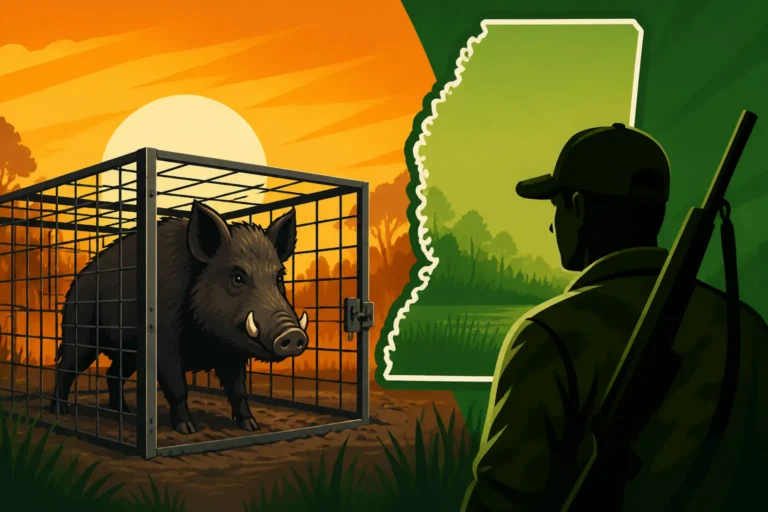
Beyond hunting, trapping stands out as one of the most effective methods for reducing feral hog populations, especially when dealing with large sounders. Mississippi's regulations on Mississippi Feral Hog Trapping Rules are quite clear: traps can be used year-round on private land, and there are no specific size or bag limits for what you can catch. The MDWFP encourages trapping as a primary control method because it can remove multiple animals at once, including entire sounders. Common trapping methods include large corral traps, panel traps, and even snares.
However, even with this flexibility, certain ethical and practical considerations come into play. Traps must be checked regularly, typically daily, to minimize stress on captured animals and ensure humane dispatch. Non-target animals, though rare in well-designed hog traps, must be released unharmed if caught. When using snares, ensure they are placed correctly to minimize injury and are checked frequently. While it might seem like a simple solution, successful trapping requires planning, baiting strategies, and consistent monitoring. It's a commitment, but one that can yield significant results in terms of hog removal.
Running Dogs on Hogs
For many hunters in Mississippi, especially in areas with dense cover and challenging terrain like the Delta bottomlands, running dogs is a traditional and highly effective method for hunting feral hogs. The regulations generally permit Running Dogs on Mississippi Feral Hogs on private lands, provided you have landowner permission. This method involves using specially trained dogs to locate, bay, and sometimes catch hogs, allowing hunters to move in for the dispatch. It's a high-energy, immersive experience that requires a deep understanding of dog behavior, hog behavior, and the landscape.
While running dogs is legal, responsibility falls squarely on the hunter to ensure their dogs do not trespass onto property where they don't have permission. This can be a significant challenge if hogs lead dogs across property lines. Advanced GPS tracking collars are a must for any serious hog dogger to monitor their pack's location and retrieve them quickly if they stray. Additionally, safety is paramount. Hog hunting with dogs can be dangerous for both dogs and hunters, as hogs are powerful and can be aggressive when cornered. Appropriate protective gear for dogs (like cut vests) and vigilant handling by hunters are essential to minimize risks.
Hunting Hogs on Public Lands and WMAs
While private land offers the most flexibility for hog hunting, many Mississippians rely on the state’s extensive public land system to pursue game. Hunting feral hogs on public lands, including Wildlife Management Areas (WMAs) and National Forests, is absolutely permitted, but it comes with a slightly different set of rules and considerations compared to private ground. The key here is always to check the specific WMA or National Forest regulations, as they can sometimes vary widely. If you're looking for general information on where to find these areas, Public Hunting Land in Mississippi is a great resource.
General WMA Regulations
Mississippi's Wildlife Management Areas are invaluable resources for hunters, offering diverse habitats and well-managed game populations. When it comes to feral hogs on WMAs, the general approach is still one of encouraged take, but often within the framework of existing game seasons. This means that if you're hunting deer on a WMA during archery season, and you encounter a hog, you can legally take it with your archery equipment. The same applies during gun season, muzzleloader season, or even small game seasons, provided your equipment is legal for the primary species you are hunting or for hogs specifically during any overlap.
However, a critical distinction is that WMAs typically do not allow year-round, dedicated hog hunting with methods like night hunting or dedicated trapping outside of specific, MDWFP-sanctioned programs. Standard hunting hours (daylight hours) apply, and the use of artificial lights for night hunting is generally prohibited. Some WMAs might occasionally host special hog eradication efforts or have specific rules, so it's paramount to consult the MDWFP's WMA-specific regulations brochure or website before heading out. Ignoring these specific rules can lead to citations, even if your intent was to help control hogs. You can find detailed information on Mississippi Wildlife Management Areas to guide your planning.
National Forest and Wildlife Refuge Rules
Hunting feral hogs on federal lands, such as the Delta National Forest, Homochitto National Forest, Bienville National Forest, or National Wildlife Refuges, also requires careful attention to the rules. These lands often have their own set of specific regulations that supplement or sometimes supersede state regulations. In National Forests, hogs can generally be taken during any open hunting season for other game animals with legal equipment for that season. For example, during deer gun season, you can take a hog with your rifle.
However, National Wildlife Refuges (NWRs) often have the most restrictive rules. Many NWRs are primarily focused on migratory bird conservation or specific endangered species, and hunting is often limited to specific seasons, areas, and methods. Some refuges might allow hog hunting during specific deer or small game seasons, while others might require special permits or prohibit it entirely. It's not uncommon for NWRs to have strict prohibitions on dogs, trapping, or night hunting. Before you even think about setting foot on an NWR for hogs, make sure you've thoroughly reviewed their specific hunt plan and any supplemental regulations they publish. A simple phone call to the refuge office can save a lot of trouble.
Specific Public Land Permit Requirements
Beyond your general hunting license, some public lands in Mississippi, particularly certain WMAs, require an additional WMA permit. This permit is usually an annual fee that contributes to the management and maintenance of these areas. It's a small investment that provides access to some of the state's best hunting grounds. If you plan to hunt hogs on a WMA, ensure you have this permit in addition to your standard Mississippi Hunting Licenses and What They Cost. These permits can usually be purchased online through the MDWFP website.
Furthermore, certain WMA areas or National Forests might have specific sign-in/sign-out procedures or daily permit requirements, especially for quota hunts or during peak seasons. While hog hunting is often secondary to deer or turkey hunting on these lands, adhering to all check-in/check-out protocols is still vital. Even if you're "just" hunting hogs, you're still using the public resource and need to comply with all administrative requirements. This helps the MDWFP track hunter effort, harvest data, and manage overall pressure on the land and its wildlife.
Licensing Requirements for Hog Hunters
Even though feral hogs are considered a nuisance, there are still licensing requirements for most individuals who want to hunt them in Mississippi. It's a common misconception that because there's no season or bag limit, you don't need a license. That's simply not true for the vast majority of hunters. Having the proper documentation is essential, not just for compliance, but because those license fees directly support the wildlife management efforts of the MDWFP.
Resident and Nonresident License Options
For Mississippi residents, a basic hunting license is required to hunt feral hogs, unless you fall into specific exemption categories (which we'll cover next). The most common option is the "All-Game Hunting License," which covers big game, small game, and hogs. Many residents opt for the "Sportsman's License," which combines hunting and fishing privileges and usually includes the WMA permit, making it a comprehensive choice for avid outdoorsmen. These licenses are typically annual and are valid for a full year from the date of purchase.
Nonresidents, however, face different requirements and often higher costs. A nonresident must purchase a Mississippi nonresident hunting license. There are various options, including an "All-Game Hunting License" or shorter-term "7-Day All-Game" licenses, which can be a good option for those planning a quick trip. Additionally, if a nonresident plans to hunt on a WMA, they will also need to purchase a WMA permit, just like residents. The specific Mississippi Nonresident License Options can be explored on the MDWFP website, and it's advisable to purchase them well in advance of your trip.
Exemptions and Apprentice Licenses
There are a few important exemptions to the general hunting license requirement for hogs. Perhaps the most significant applies to resident landowners, lessees, and their immediate family members (spouse, parents, children, siblings) hunting on their own lands. They are generally exempt from needing a hunting license to hunt hogs on their owned or leased property. This exemption is crucial for those actively managing hog populations on their farms or private timberland. However, if they step off their property onto adjacent land, even public land, they would need a license.
Mississippi also offers an "Apprentice Hunter License." This is a fantastic program for new hunters, regardless of age, who haven't completed a hunter education course. It allows an individual to hunt under the direct supervision of a licensed adult hunter (at least 21 years old and hunter education certified) for up to two license years without having to complete hunter education immediately. This provides a valuable pathway for newcomers to gain experience and learn responsible hunting practices, including the specifics of Hunting Mississippi's Year-Round Feral Hogs. It’s a great way to introduce someone to the challenges and rewards of hog hunting.
Carrying Proof of License
Regardless of whether you are a resident or nonresident, or even if you fall under an exemption, it is absolutely crucial to carry proof of your license or your exempt status whenever you are hunting hogs. For most, this means having your physical hunting license with you, or at least a digital copy easily accessible on your phone through the MDWFP app. Wildlife enforcement officers frequently check hunters in the field, and not having your license can result in a citation and fines.
For landowners operating under an exemption, carrying proof of land ownership (such as a deed or tax statement) or a copy of your lease agreement is highly recommended. While officers can often verify land ownership on the spot, having documentation readily available can prevent delays and unnecessary questioning. This simple step ensures that your hog hunting efforts are fully compliant and that you can focus on the hunt without worrying about administrative details. Being prepared shows respect for the law and the officers enforcing it.
Safety Considerations and Ethical Hunting Practices
Hunting feral hogs, while encouraged, still demands a commitment to safety and ethical practices. Just because they're a nuisance doesn't mean we abandon the core principles of responsible hunting. In fact, due to the nature of hog hunting—often in thick cover, sometimes at night, and with an animal that can be aggressive—safety becomes even more paramount.
Identifying Feral Hogs vs. Domestic Pigs
One of the most critical safety and ethical considerations is accurately identifying your target. Feral hogs can sometimes resemble domestic pigs, especially escapees from local farms. While generally, most "feral" hogs in Mississippi are wild animals, it's not unheard of for domestic pigs to escape and interbreed with wild populations. Legally, you are permitted to take feral hogs. Taking a domestic pig without the owner's permission could lead to charges of property destruction or even theft.
Always be sure of your target. Feral hogs typically have a more streamlined, muscular build, often with coarse hair, longer snouts, and tusks. Their coloration can vary widely but tends to be darker and less uniform than many domestic breeds. Domestic pigs, on the other hand, might have ear tags, a plumper build, and more distinct domestic breed characteristics. If there's any doubt, err on the side of caution. It's better to let an animal pass than to make a mistake that could have legal or ethical repercussions.
Safe Shot Placement and Recovery
Ethical hunting dictates a quick, humane kill. This is no less true for feral hogs. While they are incredibly tough animals, proper Shot Placement on a Feral Hog is crucial for a clean harvest and to prevent a wounded animal from escaping. The primary target zone is typically the area behind the shoulder, aiming for the lungs and heart, or a head shot if the angle and distance are appropriate and you are confident in your marksmanship. Avoid gut shots, as these cause unnecessary suffering and make tracking and recovery much harder.
Hogs can be notoriously difficult to track, especially in dense Mississippi cover, and a wounded hog can be dangerous. Always wait a reasonable amount of time after the shot before initiating a follow-up. This allows the animal to expire or stiffen, reducing the risk of a charge. When tracking, move slowly and deliberately, paying close attention to blood trails, broken vegetation, and tracks. If you suspect you have a wounded hog, especially a large boar, proceed with extreme caution and consider bringing a partner for safety. Blood Trailing After Dark in Mississippi can be an especially challenging endeavor, so it's wise to plan ahead.
Carcass Disposal and Disease Prevention
Once a hog is down, proper handling and disposal of the carcass are essential, especially given the disease risks associated with feral swine. If you plan to process the hog for meat, wear gloves during field dressing and processing. Always ensure the meat is thoroughly cooked. Many hogs carry diseases like brucellosis or pseudorabies, which can be transmitted to humans through direct contact with infected fluids or tissues, or by consuming undercooked meat.
For carcasses that won't be consumed, disposal should be done responsibly to prevent the spread of disease and to avoid attracting other scavengers to unwanted areas. Burying the carcass deep enough to prevent disturbance by scavengers is ideal, or leaving it in a remote area far from human activity, water sources, and public access points. Never dump carcasses near roads, residences, or water bodies. The MDWFP encourages hunters to be good stewards of the land, and responsible carcass disposal is a vital part of that commitment to public health and environmental integrity.
Future of Hog Management and Regulation Changes
The battle against feral hogs in Mississippi is far from over, and the strategies and regulations employed to combat them are continually evolving. The MDWFP and other conservation agencies are always looking for more effective ways to manage this pervasive problem, and that means hunters and landowners should stay informed about potential changes and ongoing initiatives.
MDWFP's Ongoing Efforts
The Mississippi Department of Wildlife, Fisheries, and Parks is at the forefront of the state's hog management efforts. They conduct extensive research into hog populations, movements, and effective control methods. This includes monitoring damage, evaluating trapping techniques, and collaborating with federal agencies like the USDA's Animal and Plant Health Inspection Service (APHIS) to implement large-scale eradication programs in sensitive areas. They also play a crucial role in public education, raising awareness about the damage hogs cause and providing resources for landowners.
Their efforts often involve targeted initiatives on WMAs and other public lands to reduce hog numbers. These might include specialized trapping programs, increased hunting opportunities during certain times, or partnerships with experienced hog hunters. The MDWFP understands that traditional hunting alone, while important, isn't enough to control these prolific breeders. A multi-pronged approach combining trapping, hunting, and public education is necessary to make a meaningful impact on Mississippi Feral Hog Regulations.
Potential Legislative Changes
As the feral hog problem persists, there's always the possibility of new legislative changes aimed at either enhancing control efforts or adapting to new challenges. This could involve funding for larger eradication programs, changes to permitting requirements for certain control methods, or even incentives for landowners to engage in more aggressive hog removal. Lawmakers are constantly hearing from farmers and landowners about the devastating impacts, which often spurs discussion and potential action.
For example, there might be debates about allowing certain night hunting techniques on public lands under specific conditions, or exploring new technologies for detection and removal. It's unlikely that regulations would become more restrictive for hog hunting given the severity of the problem, but rather that they might be adapted to provide more tools and flexibility. Staying engaged with MDWFP news releases and local legislative updates is a good way for hunters and landowners to keep abreast of any forthcoming changes that could impact their hog control strategies.
Community Involvement and Reporting
One of the most powerful tools in the fight against feral hogs is community involvement. The MDWFP can't be everywhere, and information from hunters, landowners, and concerned citizens is invaluable. If you're seeing significant hog activity, crop damage, or suspect disease, reporting it to the MDWFP can help them track populations, identify problem areas, and deploy resources more effectively. Many states have online reporting tools or dedicated phone lines for wildlife observations.
Furthermore, hunters and landowners can form local cooperatives to tackle the problem together. Coordinated trapping efforts across adjacent properties can be far more effective than individual, isolated efforts. Sharing knowledge about hog movements, successful trapping sites, and effective hunting techniques can significantly amplify control efforts. This grassroots collaboration, combined with the MDWFP's statewide strategies, offers the best hope for mitigating the devastating impact of Feral Hogs Across Mississippi.
Understanding the "Take All You Can" Mentality
The unique approach Mississippi takes to feral hog management, essentially encouraging hunters to "take all you can," is born out of necessity. This isn't about traditional game management or fostering a population for sustained harvest; it's about active, aggressive pest control to protect the state's natural and agricultural resources.
Economic and Environmental Incentives
The "take all you can" mentality isn't just a suggestion; it's a direct response to the immense economic and environmental damage caused by feral hogs. From an economic standpoint, the cost of crop damage alone runs into the millions of dollars annually for Mississippi farmers. Add to that the expenses of repairing fences, damaged infrastructure, and the potential for disease transmission to livestock, and the financial incentive to remove hogs becomes incredibly clear. Every hog removed is a small victory for a farmer's bottom line.
Environmentally, the incentives are even more profound. Hogs destroy critical habitats, outcompete native wildlife for food, and prey on vulnerable species. The ecological cost is immeasurable, impacting everything from ground-nesting birds like turkeys (you can read more about Wild Turkeys in Mississippi) to delicate plant communities. By removing hogs, hunters are directly contributing to habitat restoration and the preservation of native biodiversity. It’s a conservation effort that hunters can directly participate in, knowing that each animal taken helps restore balance to the ecosystem.
The Role of Hunters in Control
Hunters play an absolutely vital role in the state's feral hog control strategy. With their knowledge of the land, tracking skills, and access to equipment, they are often the most effective individuals on the ground fighting these animals. While large-scale trapping operations are highly effective, individual hunters provide consistent, year-round pressure across vast landscapes that government agencies simply cannot cover entirely.
This means that every hunter who takes a hog, whether it's opportunistically during deer season or on a dedicated hog hunt, is contributing to the greater good. It's a prime example of citizen science and grassroots conservation in action. The MDWFP explicitly acknowledges and appreciates the efforts of the hunting community in this ongoing battle, understanding that without their participation, the problem would be even more severe. For hunters, it offers a year-round opportunity to hone their skills while making a tangible difference for Mississippi's environment and economy.
Challenges to Eradication
Despite the aggressive "take all you can" approach and the combined efforts of agencies and hunters, complete eradication of feral hogs in Mississippi is an incredibly challenging, if not impossible, goal in the short term. Their prolific breeding rates mean that even high removal rates often struggle to keep pace with reproduction. Hogs are also incredibly intelligent and adaptable, quickly learning to avoid pressure and becoming more nocturnal or secretive in response to hunting efforts.
Another significant challenge is access and coordination. While private landowners have great flexibility, fragmented land ownership, differing management priorities, and the sheer scale of the problem make a truly unified, statewide eradication effort difficult. Hogs don't respect property lines, and a sounder removed from one property can quickly be replaced by animals migrating from an adjacent, unmanaged area. This highlights the need for continued vigilance, sustained effort, and innovative strategies to keep feral hog populations in check, ensuring they don't completely overwhelm Mississippi's precious natural resources.
Disclaimer
The information provided in this guide is for general informational purposes only and is not legal advice. Hunting regulations in Mississippi can change, and specific rules may vary by county, WMA, or National Forest. Always consult the official Mississippi Department of Wildlife, Fisheries, and Parks (MDWFP) website or regulatory digest for the most current and specific regulations before engaging in any hunting activities. It is your responsibility to know and understand all applicable laws and regulations.