Canada Geese on Mississippi Farmland
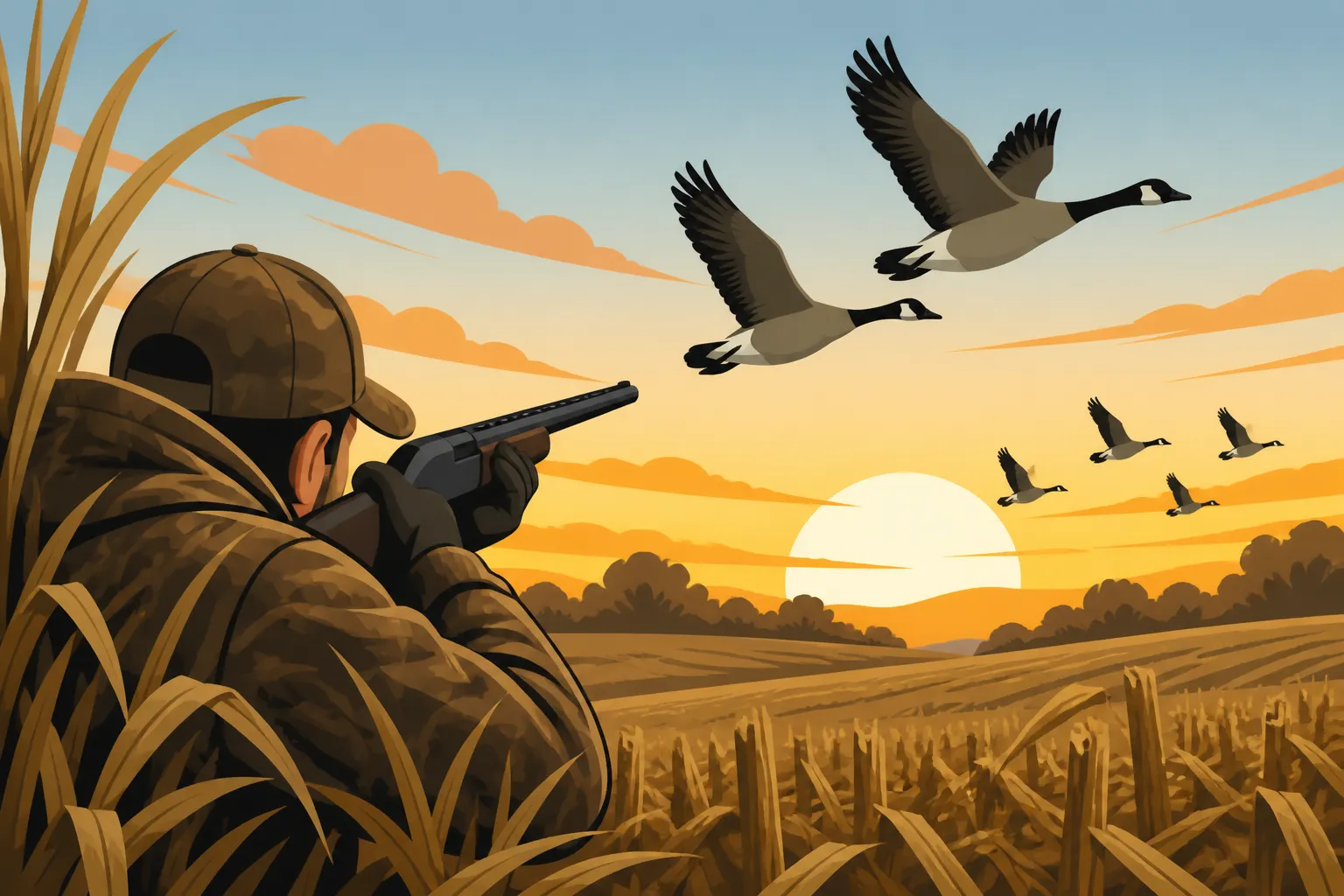
There's nothing quite as frustrating as seeing a massive flock of Canada geese winging their way into a freshly harvested cornfield, knowing they're just out of reach, or watching them lift off before you even get within a quarter-mile. These big, wary birds present a unique challenge, especially on the vast farmlands of Mississippi. This guide is here to unravel the mysteries of Canada geese on Mississippi farmland, helping you understand their patterns, master your scouting, and implement effective strategies to put more of these magnificent birds in your spread.
The Allure of Mississippi Farmland for Canada Geese
Canada geese, whether they're the big migrants that push down from the north or our local, year-round residents, find Mississippi's agricultural landscape incredibly appealing. This isn't just a happy coincidence for them; it's a calculated survival strategy that hunters need to understand to increase their success rates. The rich, flat expanses of our Delta region, in particular, offer an almost endless buffet.
Understanding Resident and Migratory Populations
When we talk about Canada geese in Mississippi, it's crucial to distinguish between two main groups: the truly migratory birds and the resident populations. Migratory Canada geese are the ones that breed much further north, often in the Canadian prairies or the northern Great Plains of the U.S., and follow the Mississippi Flyway south as temperatures drop and food sources diminish. These birds are often larger, travel in huge flocks, and can be incredibly wary, having encountered hunting pressure across multiple states. They are the classic "honkers" that inspire many a cold morning hunt. Their arrival and departure can significantly impact hunting opportunities, making it crucial to stay on top of the broader Mississippi Waterfowl Migration Timing.
On the other hand, Mississippi also has thriving resident Canada goose populations. These are birds that have established year-round breeding grounds within the state, often around urban parks, golf courses, and, yes, right on prime agricultural lands. These resident geese are typically less nomadic, more predictable in their daily movements, and sometimes a bit more tolerant of human presence, though they quickly become wary once hunting season opens. They feed extensively on green vegetation like winter wheat or cover crops, as well as waste grain from harvested fields. While they don't offer the same romantic allure as a major migratory push, resident geese provide consistent hunting opportunities closer to home for many Mississippians. Understanding which type of geese you're targeting can greatly influence your scouting efforts and hunting tactics.
Why Agricultural Fields Are Irresistible
The sheer abundance of food found in Mississippi's agricultural fields is the primary draw for Canada geese. After a combine rolls through a corn, soybean, or rice field, there's always a significant amount of waste grain left behind. For geese, these kernels are pure gold – high-energy, easily accessible, and incredibly nutritious. Imagine a buffet where every plate is overflowing, and you start to get the picture. These fields offer vast, open spaces where large flocks can land, feed, and feel relatively safe from ground predators. The nutritional value of grains like corn and soybeans helps geese build up fat reserves, essential for surviving cold fronts or sustaining long migrations.
Beyond the waste grain, many farmers also plant winter wheat or other cover crops, which provide a constant source of green browse throughout the cooler months. Geese are grazers by nature, and these lush green fields offer a perfect complement to the high-energy grains. This combination of easily digestible, energy-rich food and continuous green forage makes Mississippi farmland an indispensable wintering and year-round habitat. Without these agricultural landscapes, our goose populations, both migratory and resident, simply wouldn't be able to thrive to the extent they do.
Decoding Goose Behavior on Mississippi Farm Fields
Successfully hunting Canada geese on farmland isn't just about showing up with a shotgun and decoys; it's about understanding their daily routines, their feeding preferences, and how they interact with the landscape. Geese are creatures of habit, but they are also incredibly adaptable, constantly adjusting their behavior based on food availability, weather, and hunting pressure.
Preferred Feeding Patterns and Crop Choices
Canada geese are primarily grazers, but they are also opportunistic eaters, which means they'll take advantage of whatever high-quality food source is most readily available. In Mississippi, this often translates to a clear preference for certain agricultural crops. Cornfields, especially those harvested but not yet tilled, are probably the number one draw. The large, energy-rich kernels of waste corn provide an easy meal that allows geese to quickly fill their crops. You'll often see them walking through these fields, methodically picking up kernels, or even digging slightly to uncover buried ones.
Soybean fields are another major target. While the beans themselves might not be as calorically dense as corn, the sheer volume of waste soybeans can be enough to draw in huge flocks. Wheat fields, especially winter wheat planted in the fall, offer tender green shoots that geese love to graze. They'll spend hours in these fields, clipping the tops of the plants. Sometimes, they'll even work over peanut fields or rice stubble, depending on the region and what crops are locally prevalent. Their feeding patterns usually involve flying into a field shortly after sunrise, feeding for a few hours, then possibly heading to water to rest and digest, only to return to feed again in the late afternoon before heading to their roost for the night. Recognizing these patterns and knowing "when Mississippi's Duck and Goose Bag Limits are high" can help maximize your hunting efforts.
Identifying Essential Roosting and Resting Havens
While the feeding fields get all the glory, where Canada geese choose to roost and rest is equally critical for a successful hunt. Geese are highly social birds, and they feel safest in large numbers, often on open water where they can detect predators from a distance. Large lakes, wide rivers, and even flooded timber or large farm ponds can serve as primary roosting sites. The Mississippi River backwaters, with their expansive open water and minimal disturbance, are classic examples of where thousands of geese might congregate overnight.
During the day, after their initial morning feed, geese will often seek out smaller bodies of water or undisturbed sections of fields for loafing and digestion. This could be a secluded corner of a farm pond, a wide drainage ditch, or even just a low-lying, wet spot in a field that offers them a sense of security. These resting areas are crucial for their metabolism and social bonding. Identifying these roosting and loafing areas is just as important as finding their feeding fields, as it allows you to pinpoint their travel routes. If you know where they sleep and where they eat, you can often set up along the flight path in between, intercepting them as they move. Using a tool like GoHunt's satellite imagery can be incredibly helpful for spotting these potential water sources and connecting them to known feeding fields.
Strategic Scouting and Patterning for Success
You can have the best decoys, the fanciest call, and the most expensive shotgun, but if you're not where the geese want to be, you might as well be hunting unicorns. This is where scouting comes in. It's the most critical, often overlooked, aspect of consistently harvesting Canada geese on Mississippi farmland. Think of it as detective work, piecing together clues to predict their movements.
Pre-Season Reconnaissance and Digital Tools
Scouting shouldn't just begin the week before the season opener; the best goose hunters start long before that. Pre-season reconnaissance involves driving rural roads, looking for patterns, and identifying potential hotspots. Pay attention to fields that historically hold birds, areas near known roosts, and newly harvested fields. Early in the fall, even before the main migration, you can often spot resident geese, giving you a baseline for their local movements. Look for white patches in fields – that's goose droppings, a sure sign of activity. Even during "Mississippi's Deer Season Structure," keep an eye out for goose activity if you're out scouting for deer.
In today's hunting world, digital tools are absolute game-changers for pre-season scouting. Apps and mapping platforms like GoHunt allow you to pore over satellite imagery from the comfort of your home. You can identify potential roosting lakes, ponds, or river stretches, mark harvested fields, and trace possible flight lines between them. Look for pinch points, tree lines that funnel birds, and access points. You can even check historical satellite images to see which fields were planted with corn or soybeans in previous years, giving you clues about likely future food sources. This digital groundwork saves you countless hours of driving and can highlight areas you might never discover from the road alone.
In-Season Observation and Adapting to Changes
Once the season opens, scouting becomes an ongoing, dynamic process. Geese are highly responsive to pressure, weather changes, and food depletion. What was a hot field one week might be barren the next. Your in-season scouting needs to be conducted discreetly to avoid pressuring the birds you intend to hunt. Drive slowly, use binoculars or a spotting scope, and observe from a distance. Pay attention to how the birds enter and exit fields, their exact landing zones, and their preferred escape routes. Are they using a particular corner of the field, or landing right in the middle?
Crucially, you need to adapt to what you observe. If a field you planned to hunt suddenly has no birds, don't just hunt it out of stubbornness. Move. Find the birds. This might mean driving to an entirely new area or finding an alternative field closer to their current activity. Weather plays a huge role too; a strong north wind might push birds lower, making them more susceptible to decoying, while warm, still days can make them wary and high-flying. Understanding how to react to these environmental shifts, along with knowing "when the Mississippi Rut by Unit" is occurring (as it affects deer hunter presence), can also indirectly impact goose movements as general human presence can affect them. The best goose hunters are those who are constantly observing, learning, and adjusting their plans, sometimes even mid-hunt.
Masterful Setups for Hunting Farmland Canada Geese
Once you've done your homework and located the geese, the next step is to create a setup that convinces them to commit to your spread. This involves a careful combination of decoy placement, effective concealment, and persuasive calling. Remember, you're trying to fool one of the smartest birds in the sky.
Crafting Realistic Decoy Spreads
The foundation of any successful goose hunt is a realistic decoy spread. For Canada geese on farmland, numbers often matter. While you can sometimes fool a small flock with a dozen decoys, larger spreads (3-5 dozen or more) tend to be more effective, especially for wary migratory birds. The type of decoy matters too: full-body decoys are generally preferred for their realism, but a mix of full-bodies, shells, and even silhouettes can work, especially if the silhouettes mimic feeding birds. Mix up your poses – some feeders, some sentries, some resting birds – to create a natural look.
The actual layout of your spread is critical. A classic "J" or "U" shape, with the open end facing into the wind, is a common and effective tactic. Geese prefer to land into the wind, so this configuration gives them a clear landing strip right in front of your blinds. Place some decoys closer to your blinds to provide confidence birds for incoming flocks, and spread others out more loosely to simulate a natural feeding flock. Pay attention to the "kill hole" – the empty space where you want the geese to land, ideally within shotgun range. Avoid perfectly straight lines or symmetrical patterns; nature isn't neat, and neither should your spread be. Experiment with small family groups within the larger spread, as geese often land in tight-knit units.
Blind Placement for Optimal Concealment and Shots
Concealment is paramount when hunting Canada geese. They have incredible eyesight and will flare at the slightest hint of anything unnatural. Layout blinds are the standard for field hunting, as they allow you to lie flat, blend into the stubble, and jump up for a shot. When placing your layout blind, always think about the sun and the wind. Try to position yourself so the sun is at your back, making it harder for incoming geese to see into your blind.
More importantly, position your blinds so that the wind is at your back. Geese prefer to land into the wind, so if the wind is coming from behind you, they will approach your spread from the front, offering prime landing shots. Brush your blinds in meticulously. Use natural vegetation from the field you're hunting – corn stalks, soybean stubble, cut grass – to break up the outline of the blind. Don't be lazy about this step; a poorly brushed-in blind is a sure way to send geese packing. Some hunters even dig small pits to sit in, providing ultimate concealment, though this is only practical on private land with permission. Consider "Using a Ground Blind on Mississippi Public Land" or on private land when hunting geese. For permanent field blinds, building it into a fencerow or tree line can offer excellent cover, as can utilizing natural dips or folds in the terrain.
The Art and Science of Calling Geese
Goose calling is both an art and a science, requiring practice, timing, and an understanding of goose vocalizations. The basic calls you'll need are the "cluck," "honk," and "hail call." The hail call is a series of loud, drawn-out honks and clucks designed to get the attention of distant birds. Once they turn, you transition to more subtle calling, mimicking the sounds of a contented feeding flock. This includes quieter clucks, murmurs, and feeding cackles.
Timing is everything. Don't overcall. Let the birds work, and only call when they seem to be losing interest or need a little encouragement. As they get closer, watch their wings and feet. When they cup their wings and drop their feet, they're committed. That's usually your cue to go silent or offer just a few soft clucks to seal the deal. Different calls work for different situations. A deep, resonant short-reed call is excellent for close-in work and mimicking large honkers, while a flute call can be great for distant hail calls. Practice regularly, listen to real geese, and don't be afraid to experiment. Many online tutorials and instructional videos can help you refine your calling skills. Knowing the "Mississippi Duck and Goose Bag Limits" can also remind you of the reward for all that calling practice.
Overcoming Pressured Birds and Unpredictable Conditions
Hunting Canada geese on Mississippi farmland often means dealing with birds that have seen it all. They've been shot at, fooled by bad callers, and had their fields invaded. This pressure makes them incredibly wary and challenges even the most experienced hunters. On top of that, Mississippi weather can be notoriously fickle, throwing curveballs like sudden cold fronts or warm spells.
Recognizing Signs of Hunter-Wise Geese
Pressured geese are smart geese, and they quickly learn to avoid common mistakes. You'll recognize hunter-wise birds by several key behaviors. Firstly, they'll fly higher and wider around spreads, often circling several times before even considering dropping altitude. They might "swing off" your spread, meaning they pass by but don't commit, as if checking for something. They'll scrutinize your decoys from a distance, looking for anything unnatural. If they see a shimmer from a blind, a flash of reflective material, or an unnatural shape, they're gone.
Another sign is their sensitivity to calling. Overcalling or bad calling will almost certainly send them flaring. They might also land far out in the field, away from your spread, and then walk in, testing the water, so to speak. If you observe these behaviors, it's a clear signal that the birds in your area are educated. This means you need to step up your game significantly. It requires more meticulous concealment, subtler calling, and a willingness to adjust on the fly. This is where tools like GoHunt become even more valuable, allowing you to quickly scout new, less pressured areas if your current spot is too hot.
Adapting to Weather and Environmental Factors
Mississippi's weather can shift dramatically, and these changes directly impact goose behavior. A strong cold front pushing through can bring fresh migratory birds down from the north, making them more aggressive and willing to decoy. However, extreme cold can also make them very focused on feeding, getting in and out quickly, often at mid-day. Conversely, a warm spell can make geese lethargic and less inclined to fly, or cause them to scatter into smaller, harder-to-find groups.
Wind is perhaps the most significant environmental factor. Geese always want to land into the wind. If the wind shifts mid-hunt, you may need to quickly reconfigure your decoys and blinds to ensure the "kill hole" remains in front of you. Rain, fog, or heavy overcast conditions can sometimes work in a hunter's favor, lowering the birds' flight ceiling and making them less wary. However, severe weather can ground them completely. Water levels in flooded fields or nearby rivers can also impact roosting and feeding options. For instance, if you're hunting "Flooded Timber for Wood Ducks," those same areas might also provide excellent goose roosts. Staying flexible, keeping an eye on the forecast, and being ready to move or adjust your setup are crucial for success.
Essential Gear for Your Mississippi Goose Hunt
Like any specialized form of hunting, chasing Canada geese on Mississippi farmland requires specific gear to maximize your chances of success and ensure your safety and comfort. Don't skimp on the essentials; the right equipment can make or break your hunt.
Shotguns, Ammunition, and Choke Choices
For Canada geese, a 12-gauge shotgun is almost universally recommended, though a 10-gauge can offer a bit more payload and range for those challenging high flyers. A 3-inch or 3.5-inch magnum chamber is preferred to handle heavier loads. Most hunters opt for a semi-automatic or pump-action shotgun for quick follow-up shots on multiple birds. Reliability is key here; you don't want your gun jamming when a flock is cupped and committed.
Ammunition choice is paramount. Steel shot is legally required for all waterfowl hunting, and for Canada geese, you'll want larger pellet sizes to ensure enough energy and penetration for these tough birds. Common choices include BB, BBB, or T shot. Some hunters prefer bismuth or tungsten-super-shot (TSS) for their superior density and knockdown power, though these are significantly more expensive. For chokes, a modified or improved-modified choke is a great all-around choice. It provides a good balance of pattern density and spread. If birds are consistently decoying close, an improved cylinder might be effective, while a full choke could be used for very high, wary birds, though precise patterning is essential for such tight constrictions. Remember your Mississippi Federal Duck Stamp Requirement and your Mississippi HIP Certification for Bird Hunters are mandatory before heading out.
Decoys, Blinds, and Calls That Perform
We've touched on this already, but it bears repeating: your decoys and blinds are your primary tools for attracting and concealing. For decoys, full-body Canada goose decoys are the gold standard for realism. Brands like Higdon, Avery, or Dakota Decoy Systems offer incredibly lifelike options. Consider investing in some motion decoys, like a flapper or a feeder with a stake that creates movement, as motion is a huge attractant. Ensure your decoys are in good repair; faded, chipped, or unnatural-looking decoys can spook birds.
For blinds, the layout blind is the workhorse of field goose hunting. Rig'Em Right, Avery, and Final Approach make popular and effective models. Choose one that's comfortable, durable, and easy to brush in. For field blinds (permanent structures), ensure they are well-maintained and offer ample concealment. A crucial accessory for your blind is a good bag or backpack to carry your calls, shells, snacks, and other essentials.
As for calls, a quality short-reed Canada goose call is essential. Practice with brands like Zink, Foiles, or Haydel's to find one that fits your style and produces realistic sounds. Don't forget a lanyard to keep your calls secure and accessible. Additional items like binoculars for scouting, a comfortable hunting chair or pad for long waits, and plenty of warm, waterproof clothing are also critical for an enjoyable and successful hunt on Mississippi's often unpredictable farmland. It's not just about the gun and the decoys; it's about being prepared for whatever the Mississippi outdoors throws at you.
| Decoy Type | Best Use Case | Pros | Cons | Recommended Spread Size |
|---|---|---|---|---|
| Full-Body | Realistic representation, close-in work | Highly realistic, good drawing power | Bulky, expensive, heavy to transport | 1-3 dozen |
| Shell Decoys | Adding numbers, medium-range visibility | Lighter, more affordable, stackable | Less realistic than full-bodies | 3-6 dozen |
| Silhouettes | Bulk numbers, long-range visibility | Very light, easy to transport, inexpensive | Least realistic, limited appeal up close | 5-10 dozen |
| Motion Decoys | Attracting attention, adding realism | Crucial for realism, highly visible | Battery-dependent, can be fragile | 1-3 per spread |
| Floater Decoys | Water roosts or flooded fields | Essential for water, natural look | Limited to water, can drift | 1-2 dozen (on water) |
Disclaimer
Hunting is an inherently dangerous activity. Always prioritize safety, follow all local, state, and federal regulations, and obtain appropriate licenses. The information provided here is for educational purposes only and should not replace proper hunter education or professional guidance. Always respect private property and obtain permission before hunting on private land. Be aware of your surroundings, practice ethical hunting, and adhere to all game laws set forth by the Mississippi Department of Wildlife, Fisheries, and Parks (MDWFP).