Mississippi Gopher Tortoise Burrow Habitat
Finding a gopher tortoise in Mississippi isn't like spotting a deer on a food plot; these fascinating creatures are often out of sight, living an incredible underground life. If you've ever wondered where these unique reptiles make their homes, or perhaps stumbled upon what looks like a small cave entrance in the sandy soil of the Piney Woods, you're looking at a gopher tortoise burrow. This guide is all about peeling back the layers of the earth to understand the vital characteristics of these unique habitats, why they're so important, and what we can do to protect them in our beloved Magnolia State.
Understanding the Gopher Tortoise and Its Importance in Mississippi
The gopher tortoise (Gopherus polyphemus) is truly one of Mississippi's unsung heroes, a living testament to the unique ecosystems found in the southern parts of our state. Unlike many of the animals we typically focus on for hunting, this species is protected, and for very good reason. They're more than just a tortoise; they're an engineer of the ecosystem, shaping the very landscape around them.
The Gopher Tortoise as a Keystone Species
Think of a keystone in an archway – remove it, and the whole structure collapses. That's essentially what a gopher tortoise is to its habitat. Their deep, expansive burrows create shelter and refuge for hundreds of other species, earning them the nickname "ecosystem engineers." From snakes and frogs to insects and even small mammals like mice and rabbits, an entire community depends on these subterranean retreats. When a gopher tortoise digs a burrow, it's not just making a home for itself; it's building a multi-story apartment complex for an array of critters seeking shelter from predators, extreme weather, and wildfires. This is why preserving their habitat, particularly their burrows, is so crucial for the health of many other species in the longleaf pine ecosystem.
Their activity above ground also plays a role in seed dispersal and soil aeration, further contributing to the health and biodiversity of their environment. Without the gopher tortoise, many species would struggle to survive, leading to a significant decline in the biodiversity of the fire-maintained pine forests where they thrive. It's a complex web of life, and the tortoise is right at the center of it, quietly doing its vital work underground.
Gopher Tortoise Range and Status in Mississippi
In Mississippi, you'll primarily find gopher tortoises making their homes in the southern counties, particularly within the longleaf pine ecosystems that stretch across the Hunting the Piney Woods Region. This specific habitat is crucial for their survival, characterized by sandy soils that are easy to dig and sparse undergrowth maintained by natural or prescribed fires. Their presence is a good indicator of a healthy, functioning longleaf pine forest. These tortoises are listed as a federally threatened species in the western part of their range, which includes Mississippi, and are state-protected throughout. This means any interaction with them or their burrows requires extreme caution and adherence to state and federal regulations.
You'll find concentrated populations in areas like DeSoto National Forest Hunting, Homochitto National Forest Hunting, and Bienville National Forest Hunting, as well as some Mississippi Wildlife Management Areas that manage for longleaf pine. Knowing their Mississippi Gopher Tortoise Range is essential for anyone spending time in these parts of the state, not just for respectful coexistence, but also to understand the broader conservation picture. Their slow movements and dependence on specific habitats make them vulnerable, and their conservation is a priority for state and federal wildlife agencies.
Anatomy of a Gopher Tortoise Burrow
A gopher tortoise burrow is far more than just a hole in the ground; it's a meticulously engineered home, a fortress, and a lifeline for countless creatures. Understanding its structure gives us a deeper appreciation for these diligent diggers.
The Entrance and Tunnel Structure
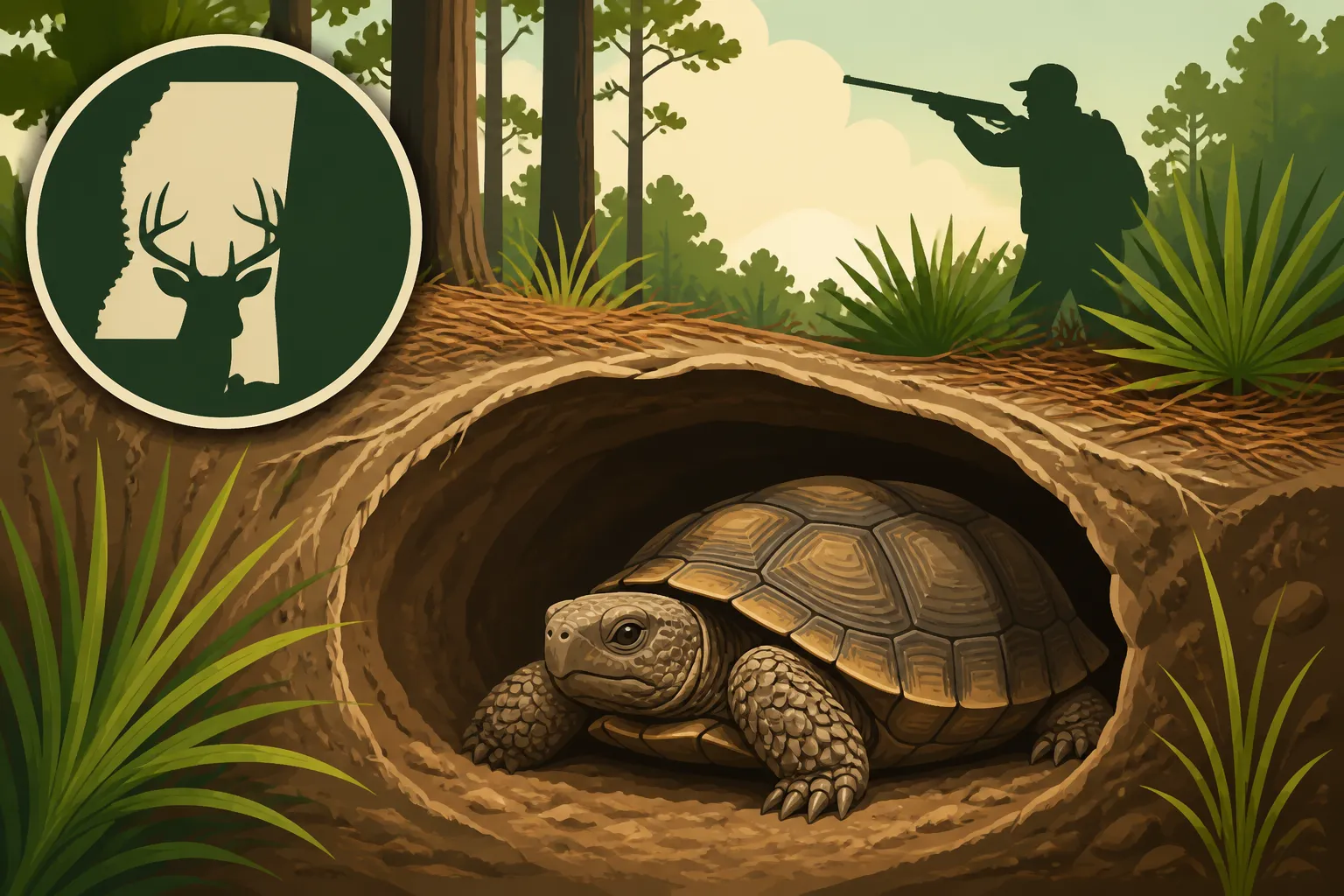
The most recognizable feature of a gopher tortoise burrow is its entrance. It's typically a half-moon or D-shaped opening, perfectly sized for the tortoise to squeeze through. The width of the entrance is a good indicator of the size of the tortoise living inside – a tell-tale sign if you're curious about the resident. Just outside the entrance, you'll often see a crescent-shaped mound of sand, excavated during the digging process. This "apron" of sand is a clear sign of an active burrow.
From the entrance, the tunnel typically slopes gently downward at an angle of 10-15 degrees, sometimes spiraling or curving to reach depths of up to 10-20 feet, and stretching horizontally for 30 feet or more. The tunnel's consistent diameter, just wide enough for the tortoise to turn around, is essential for keeping predators out and maintaining a stable internal temperature. This intricate design is a testament to the tortoise's incredible digging prowess and its survival instincts.
The Chamber and Its Microclimate
At the end of the main tunnel lies the primary chamber, a wider area where the gopher tortoise spends most of its time. This chamber serves as a critical refuge, offering protection from the elements, predators, and even wildfires. The depth and design of the burrow maintain a remarkably stable microclimate. In the scorching Mississippi summers, the burrow remains cool and humid, providing a much-needed escape from the heat. Conversely, during colder winter months, it offers insulation against freezing temperatures.
This stable environment is not just beneficial for the tortoise. Hundreds of species, known as commensals, also rely on the burrow's consistent conditions. Snakes, frogs, mice, rabbits, insects, and even larger animals like skunks or bobcats (if the tortoise has temporarily vacated) will use these burrows for shelter, especially during extreme weather events or when fleeing danger. This underground sanctuary is truly a hub of biodiversity, directly linking the survival of many species to the presence and health of the gopher tortoise population.
Burrow Construction and Maintenance
Digging a gopher tortoise burrow is an arduous process, taking days, weeks, or even months for a single tortoise to complete. They use their strong, shovel-like forelimbs and clawed feet to excavate the sandy soil, pushing it out with their hind legs. The process is continuous, with tortoises constantly maintaining and sometimes expanding their burrows throughout their lives. They might have several burrows within their home range, using different ones for different purposes or at different times of the year.
Maintenance involves clearing out debris, reinforcing walls, and sometimes deepening or extending sections. This ongoing work ensures the structural integrity of the burrow and keeps it functional. The sheer dedication and effort involved in creating and maintaining these subterranean homes highlight just how crucial they are to the gopher tortoise's survival, and by extension, to the survival of the numerous other species that depend on them.
Ideal Habitat Characteristics for Gopher Tortoise Burrows
Gopher tortoises aren't just looking for any old patch of dirt to dig their homes. They have very specific requirements for their burrow habitat, which speaks volumes about the health of the larger ecosystem they inhabit. When you see a healthy population of gopher tortoises, it's a strong sign that the habitat is thriving, often thanks to careful management.
Soil Preferences and Drainage
One of the most critical factors for gopher tortoise burrows is the soil type. They absolutely need well-drained, sandy soils that are relatively loose and easy to excavate. This is why you'll find them predominantly in the sandy uplands of the Piney Woods region. Heavy clay soils, waterlogged areas, or rocky terrain simply won't do. The sand allows for efficient digging and prevents the burrows from collapsing, providing structural integrity. Good drainage is also vital to prevent flooding of the burrows, especially during Mississippi's heavy rainfalls.
If a tortoise tries to dig in compacted, clay-rich soil, the effort required is immense, and the risk of the burrow collapsing increases dramatically. Furthermore, poor drainage can lead to flooded burrows, making them uninhabitable and forcing the tortoise to expend energy digging a new one – a significant stressor. This preference for specific soil types helps define the boundaries of suitable gopher tortoise habitat and is a key consideration for land managers aiming to protect these animals.
Open Canopy and Sunlight Exposure
Gopher tortoises are reptiles, which means they are ectothermic – they rely on external heat sources to regulate their body temperature. Therefore, their habitats require plenty of sunlight. This translates to an open canopy forest structure, typically found in Mississippi Longleaf Pine and Quail Habitat ecosystems. The open canopy allows sunlight to reach the forest floor, warming the sand around the burrow entrances and providing prime basking spots for the tortoises. A dense, shaded forest floor would make it difficult for them to thermoregulate effectively.
Regular prescribed burning, a common management practice in longleaf pine forests, helps maintain this open canopy and sparse understory. These fires reduce woody encroachment, prevent the buildup of leaf litter, and encourage the growth of low-lying herbaceous plants that tortoises forage on. Without fire, the forest would become too dense and shady, rendering it unsuitable for gopher tortoises. This highlights the delicate balance and active management required to support these species.
Native Vegetation and Foraging Needs
Beyond the soil and sunlight, the surrounding vegetation is equally important for a gopher tortoise burrow habitat. They are primarily herbivores, grazing on a variety of grasses, legumes, and forbs. A healthy gopher tortoise habitat will feature a diverse array of native herbaceous plants, which again, are often maintained by regular fire. These plants provide both food and a relatively clear line of sight, allowing the tortoises to spot predators.
Overgrown areas with dense shrubs and saplings not only block sunlight but also reduce the availability of their preferred food sources and can make it harder for tortoises to move around safely. Conservation efforts often focus on restoring and maintaining these native plant communities through selective timber harvesting and, most importantly, prescribed burning. This ensures a buffet of natural forage is available, supporting the tortoise's diet and overall health within its home range.
Threats to Gopher Tortoise Burrow Habitat and Conservation Efforts
Despite their incredible adaptability and long lifespans, gopher tortoises and their vital burrow habitats face numerous threats in Mississippi. Understanding these challenges is the first step toward effective conservation, ensuring these keystone species continue to thrive for generations to come.
Habitat Loss and Fragmentation
Perhaps the most significant threat to gopher tortoises is the relentless march of habitat loss and fragmentation. As Mississippi's population grows and development spreads, large tracts of their critical longleaf pine habitat are converted for agriculture, housing, commercial use, or replanted with dense, fast-growing pines that don't support their needs. This not only destroys existing burrows but also isolates remaining populations, making it harder for tortoises to find mates and maintain genetic diversity.
When a highway cuts through a tortoise's territory, it creates an impassable barrier, often leading to road mortality. Even seemingly small disturbances can have a ripple effect, reducing the overall carrying capacity of the land. This is a frustration many wildlife advocates face – how to balance development with the preservation of crucial natural spaces. Land managers and conservation groups are constantly working to acquire and protect remaining habitat, and to establish wildlife corridors to mitigate fragmentation where possible.
Predation and Human Disturbance
While their burrows offer excellent protection, gopher tortoises, especially juveniles, are still vulnerable to predation. Coyotes, raccoons, and even feral hogs can prey on eggs and young tortoises. Human-related disturbances also pose a significant threat. Unintentional harm can come from heavy machinery during logging or land clearing, and unfortunately, intentional harm or illegal collection still occurs.
Vehicular traffic on roads that cross their habitat is another major concern. Tortoises are slow-moving and often cross roads in search of food, mates, or new burrow sites, putting them at high risk of being hit. Furthermore, unchecked access by off-road vehicles in sensitive habitats can damage burrows and disturb tortoises. Education and public awareness are crucial in reducing these impacts, teaching people to respect these animals and their homes. Just as we monitor for issues like Mississippi Wildlife Disease Monitoring, we also need to be vigilant about protecting vulnerable species from direct human impact.
Conservation and Management Strategies
The good news is that dedicated conservation efforts are actively underway to protect Mississippi's gopher tortoises and their habitats. These strategies often involve a multi-pronged approach, focusing on habitat restoration, land acquisition, and public education. Prescribed burning is a cornerstone of gopher tortoise management, regularly used on public lands like national forests and Mississippi Wildlife Management Areas to maintain the open, sunny, herbaceous-rich environment they need. This management also benefits other species, like those discussed in Mississippi Longleaf Pine and Quail Habitat.
Protection also extends to direct intervention, such as relocating tortoises from areas slated for development to protected lands or assisting with Mississippi Wildlife Rehabilitation for Injured Game. The establishment of conservation easements and encouraging private landowners to adopt tortoise-friendly land management practices are also vital. Programs focused on habitat connectivity and reducing road mortality are also being implemented. Understanding the specific needs of these creatures and working collectively is how we ensure the future of Mississippi's gopher tortoises, much like efforts for species in the Mississippi Sandhill Crane Restoration Zone, show how concerted conservation can make a difference.
Disclaimer
This article is for general informational purposes only and does not constitute professional advice. Laws, prices and regulations vary by location and change over time. Consult a qualified professional for guidance on your specific situation.