Hunting Longleaf Pine Savanna for Deer
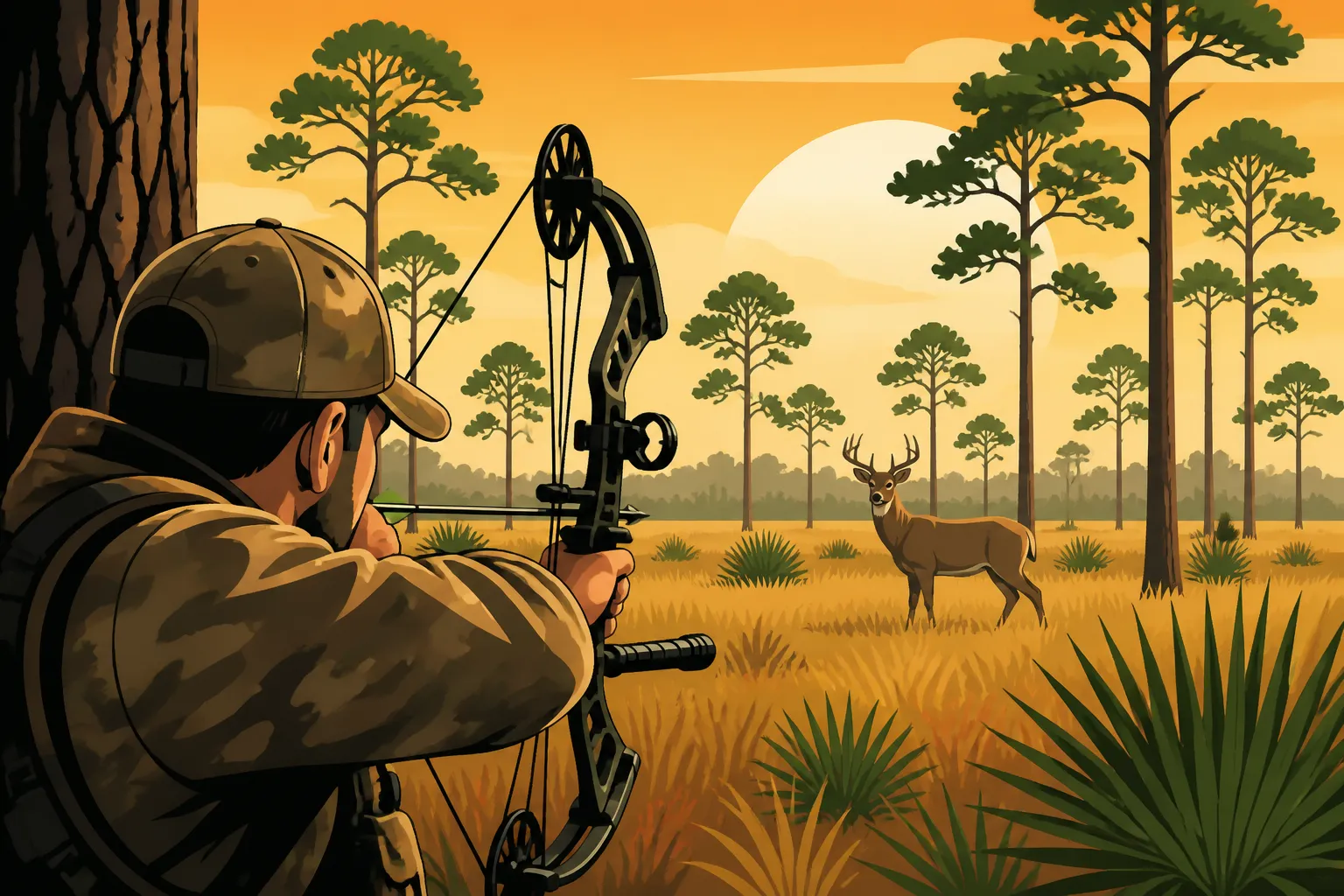
Hunting longleaf pine savanna for deer can feel like a totally different ballgame compared to the dense bottomlands or mixed hardwood forests many Mississippi hunters are used to. The expansive, often sparse landscape can make it tough to pinpoint deer movement, leaving you wondering where in the world the deer could even be hiding. But don't let that wide-open feeling fool you; longleaf savannas hold deer, and with the right approach, you can learn to read this unique habitat and consistently put venison in the freezer. This guide will walk you through the ins and outs of deciphering the longleaf pine savanna, from understanding the ecosystem to employing effective hunting strategies that put you on deer.
Understanding the Longleaf Pine Savanna Ecosystem
Mississippi’s longleaf pine savannas are truly special, a remnant of a once-vast ecosystem that covered millions of acres across the Southeast. For hunters, they present a distinct challenge and opportunity, unlike anything you'd find in the Delta or the steeper Hills Unit. Getting to know this environment is the first step in successful hunting.
The Unique Habitat Structure
When you first step into a longleaf pine savanna, you're likely struck by the openness. Unlike the thick, tangled undergrowth you might find in a young pine plantation or a dense creek bottom, longleaf forests, especially those managed with prescribed fire, feature a remarkably open understory. The towering longleaf pines create an overhead canopy, but beneath them, you'll often find a diverse ground cover dominated by wiregrass, various forbs, and perhaps scattered palmetto or gallberry. There’s typically a very sparse mid-story, meaning little in the way of dense shrubs or young trees between the ground and the canopy.
This structure is largely due to the historical and ongoing use of prescribed fire, which is crucial for maintaining the health of the longleaf ecosystem. Fire suppresses woody undergrowth, allowing sunlight to reach the forest floor and encouraging the growth of herbaceous plants that deer and other wildlife depend on. What this means for a deer hunter is vastly different visibility. You might be able to see hundreds of yards through the pines, but this also means deer can see you just as easily. It's a game of subtlety and using the sparse cover that is there to your advantage. Keep an eye out for isolated thickets, often found in depressions or along drainages where fire might not burn as intensely, as these are prime bedding areas.
Deer Behavior in Open Pinelands
Deer in longleaf savannas adapt their behavior to this more open environment. They become acutely aware of their surroundings, relying heavily on their eyesight and incredible sense of smell. You won't often find them crashing through dense cover unless they're spooked. Instead, they’ll glide through the open pines, often moving in a leisurely, deliberate fashion, constantly scanning and testing the wind.
Bedding areas in longleaf are usually not the impenetrable jungles you might imagine. Deer will seek out pockets of slightly denser vegetation – a thicket of palmettos, a small patch of young pines that have escaped the most recent burn, or even just a subtle depression in the landscape that offers a bit of visual obstruction. They'll also bed on slight ridges or rises where they can see and smell approaching danger from multiple directions. Travel corridors often follow the path of least resistance or offer some form of subtle cover. Think about drainages, the edges of slightly thicker stands of timber, or natural funnels created by changes in topography.
As for feeding, longleaf savannas are a buffet of native forbs and grasses, especially in areas that have recently been burned and are putting out fresh growth. While acorns are a primary food source in many parts of Mississippi, longleaf ecosystems often have scattered oak trees, not dense oak flats. Identifying these isolated oaks, particularly during the fall, becomes critical. Deer will also browse on the tender shoots of young pine regeneration, particularly longleaf pines themselves, which can often be found in clusters. Knowing what Late-Season Food Sources for Mississippi Whitetails are available in this specific habitat will be key.
Seasonal Changes and Deer Movement
The longleaf savanna isn't static; it's a dynamic environment that changes dramatically with the seasons and, crucially, with prescribed fire. These changes have a direct impact on deer movement and behavior.
In the spring and early summer, after a prescribed burn, the forest floor often erupts with tender new growth. This fresh forage, rich in nutrients, acts like a magnet for deer, drawing them to recently burned areas. While the ground cover is low, it’s also highly palatable. As summer progresses, this growth matures, and deer might shift their focus to other areas or more succulent plants.
Fall brings a different dynamic. If there are scattered oaks within the savanna, this is when acorns become a prime food source. Finding these isolated oak pockets and understanding how deer travel to and from them can be the golden ticket. Areas that might have seemed barren in summer suddenly become hot spots. Winter can see deer focusing on evergreen browse and any remaining mast, or seeking thermal cover in the slightly denser patches of timber during cold snaps.
Prescribed fire is arguably the most significant seasonal influence here. Understanding the burn rotations on public lands like the Homochitto National Forest or Bienville National Forest, often found in longleaf country, is vital. Deer will quickly move into newly burned areas to graze on the fresh green-up, but they might avoid areas immediately post-burn until new growth emerges. Check with local ranger districts or the MDWFP for burn schedules or look for signs of recent fire on maps or during your scouting trips. This knowledge helps you predict where deer will be feeding and traveling throughout the season.
Scouting and Locating Deer Sign in Longleaf Country
Scouting in longleaf pine savannas demands a different set of eyes and a whole lot of patience. The open nature means you won't always find obvious, worn deer trails or massive rub lines that scream "big buck lives here!" You have to learn to read the subtle clues.
Interpreting Sparse Sign
The biggest frustration for hunters new to longleaf is often the seemingly sparse sign. You might walk for miles and see very little. This doesn't mean deer aren't there; it means their sign is spread out and often less pronounced. Instead of highways, think faint footpaths. You need to look for:
- Subtle Trails: Deer still use trails, but they might not be deeply worn paths. Look for slightly depressed lines in the wiregrass, bent blades of grass, or disturbed pine straw that indicates recent passage. These often follow subtle contour lines, drainages, or lead to isolated water sources or food patches.
- Browsing: Deer browse on a variety of plants. In longleaf, this could be the tender tips of young pine saplings, gallberry, or various forbs. Look for clipped stems or leaves at deer height. This sign is often best after a fresh burn when new growth is abundant.
- Rubs and Scrapes: Rubs might not be on massive trees. Look for small saplings, especially young pines, that have been rubbed. These are often less aggressive than rubs you'd find on larger hardwoods, but they're still a clear indicator of buck activity. Scrapes, too, might be smaller and less obvious, often found along subtle travel routes or near isolated thickets. Pay close attention to these during the rut. If you hear Rattling and Grunting in Mississippi in these open areas, deer are likely nearby and could be checking a scrape.
- Scat: Deer droppings can be excellent indicators of recent activity. They often blend in with the pine straw, so you have to train your eyes to spot them. Fresh scat tells you deer have been through that exact spot very recently.
The key here is cumulative evidence. One faint trail might not mean much, but a faint trail leading to some browsed plants and a small rub line, followed by some fresh scat, starts to paint a picture of deer activity.
Key Topographical Features
Because the longleaf savanna can appear monotonous, identifying topographical features that break up the landscape is paramount. These features are where deer often concentrate their movements and bedding.
- Drainages and Creek Bottoms: Even a subtle dip in elevation that collects a bit more moisture can create a ribbon of slightly denser vegetation – hardwoods, thicker palmetto, or a different mix of undergrowth. These act as natural travel corridors, offering cover, food, and often water. Deer will often use the edges of these drainages for bedding or for moving between larger sections of the savanna. Hunting a Funnel Between Two Sloughs or creeks is a classic tactic that applies well here.
- Isolated Hardwood Pockets: Not all longleaf is pure pine. You'll often find islands or strips of mixed hardwoods, especially along creeks, drainages, or in areas protected from the most intense fires. These are goldmines. They offer different food sources (acorns!) and denser cover for bedding. Deer will travel significant distances through open pine to reach these pockets.
- Elevation Changes: Even slight changes in elevation can create thermals and air currents that deer use to their advantage, especially for bedding. A deer bedded on a slight rise can better detect approaching predators. Ridges, even small ones, can also serve as natural travel routes. When you're Reading a Ridge for Hills Unit Deer, many of those principles can be applied to subtle rises in longleaf.
- Transition Zones: Any place where the habitat changes—pine to mixed pine/hardwood, pine to swamp edge, or pine to a clear-cut—will be a high-traffic area. Deer love edges because they offer diverse food sources and cover options. These are prime locations for stand placement.
Utilizing Technology for Scouting
In open country like a longleaf savanna, technology becomes an invaluable scouting tool, especially when you're Scouting Mississippi Public Land Before Season. Apps like GoHunt or Google Earth are your best friends here.
Before you even set foot in the woods, pull up aerial imagery. Look for:
- Color Changes: Subtle differences in vegetation color can indicate denser patches, hardwood inclusions, or areas that haven't been burned recently and thus have more undergrowth. These are potential bedding or staging areas.
- Water Sources: Ponds, sloughs, or even areas that appear perpetually damp will draw deer, especially during dry periods.
- Drainage Patterns: Trace every drainage and creek. Notice how they meander, where they get wider, or where they might connect to larger water bodies. These are all potential travel corridors.
- Roads and Trails: Public land often has a network of old logging roads or fire breaks. These can be easy access points, but also high-pressure zones. Use them to get deep, then deviate to find untouched areas.
Once you’re on the ground, use your GPS or the mapping app on your phone to mark every piece of deer sign you find: a rub, a scrape, fresh tracks, heavy browse, or a potential bedding area. Over time, these marked points will start to reveal patterns. You might notice clusters of sign around a particular oak grove or consistent travel along a specific drainage. This data-driven approach, especially in seemingly featureless terrain, helps you build a detailed picture of deer movement. Remember, the more information you gather, the more effectively you can plan your hunt.
Effective Hunting Strategies for Longleaf Savanna
Given the unique characteristics of longleaf pine savannas, your hunting tactics will need to be adapted. Forget crashing through the woods; this environment demands stealth, observation, and smart stand placement.
Still-Hunting and Spot-and-Stalk
The open nature of longleaf savannas actually makes them ideal for still-hunting and, in some cases, spot-and-stalk tactics. However, this isn't about running and gunning. It's about moving at a snail's pace, often taking minutes to cover just a few yards.
- Slow and Steady Wins the Race: When still-hunting, you should be moving so slowly that you're practically meditating. Take a few steps, then stop for several minutes, scanning every tree, every patch of wiregrass, every shadow. Use quality binoculars, even in the timber, to pick apart distant cover. Deer often melt into the background, and it's only by standing motionless and observing that you'll spot an ear flick, a leg move, or the tell-tale horizontal line of a deer's back in a vertical forest.
- Use the Wind and Terrain: This is non-negotiable. Always hunt into the wind or with a quartering wind. In longleaf, where sound carries and visibility is high, a deer catching your scent is almost guaranteed to send it packing. Use subtle rises, the trunks of large pines, or patches of palmetto for visual breaks as you move.
- Spot-and-Stalk Opportunities: If you spot a deer from a distance that hasn't seen you, and the wind is in your favor, a spot-and-stalk might be viable. This requires extreme stealth, using every bit of available cover, and understanding how deer perceive their surroundings. It's a challenging but incredibly rewarding way to hunt. Practice making minimal noise, lifting your feet and placing them down softly, and breaking up your silhouette.
Stand Placement and Concealment
Picking a stand location in a longleaf savanna requires thinking differently than in dense cover. Your biggest challenge is often concealment, as there are fewer trees to hide behind.
- Focus on Transition Zones: As mentioned earlier, transition zones are prime. Look for where the open pine meets a drainage with hardwoods, a denser thicket, or even a different-aged stand of timber. These are natural funnels where deer will feel more secure traversing.
- Isolated Oaks and Food Sources: If you've identified scattered oak trees or specific patches of desirable forbs, position your stand to intercept deer traveling to or from these feeding areas. Place your stand slightly downwind if possible, allowing your scent to drift away from the primary travel routes.
- Bedding Area Edges: Locate those subtle bedding thickets—palmetto patches, young pine regeneration, or slight depressions. Set your stand on the downwind side, on an approach route that allows you to get in and out undetected, to catch deer as they leave their beds in the evening or return in the morning.
- Concealment is Key: In open longleaf, your stand will stick out like a sore thumb if not properly placed. Choose a tree that offers natural back cover, like a cluster of pines, or a tree with low-hanging limbs. Consider Using a Ground Blind on Mississippi Public Land, especially brushed-in models, as they can offer excellent concealment in open areas if placed strategically and given time for deer to get used to them. When hanging a tree stand, look for a tree with a large trunk that can break up your outline, or hang it high enough to be above the deer's line of sight, always being mindful of safety.
Here's a quick comparison of hunting strategies in two different Mississippi habitats:
| Feature/Strategy | Longleaf Pine Savanna | Hardwood Bottoms / Dense Forests |
|---|---|---|
| Visibility | High (often hundreds of yards) | Low (20-50 yards typical) |
| Deer Reliance | Sight, Scent, Hearing | Scent, Hearing, subtle cover |
| Sign Density | Sparse, subtle (faint trails, small rubs) | Concentrated, obvious (worn trails, large rubs, extensive scrapes) |
| Ideal Movement | Very slow still-hunting, spot-and-stalk | Slow still-hunting, ambushing |
| Stand Placement | Transition zones, isolated oaks, drainage edges, thicket fringes | Funnels, pinch points, dense cover, food source transitions |
| Concealment Need | Critical, often requires specific tree choice or ground blind | Important, but dense cover often provides natural breaks |
| Calling Effectiveness | Sound carries far, can draw deer from a distance (higher volume) | Sound often muffled, deer must be closer |
| Thermals/Wind | Crucial due to open nature, can be less predictable | Important, often channeled by terrain |
Calling and Decoying Tactics
Don't dismiss calling in longleaf country! Because sound carries so well in the open pines, rattling and grunting can actually be quite effective, potentially drawing deer from farther away than in dense timber.
- Rattling and Grunting: When Rattling Volume in Thick Cover might need to be subtle, in longleaf, you can afford to be a bit more aggressive. Loud rattling sequences, followed by grunts, can really echo through the pines. Give bucks plenty of time to respond, as they might be a couple of hundred yards away and need time to commit. Set up where you have good visibility in multiple directions, as deer might circle downwind before presenting a shot. A single buck decoy, especially during the rut, can add visual realism to your calling setup.
- Doe Bleats: Subtle doe bleats can also attract curious deer, especially during the early season or outside the peak rut.
- Strategic Decoy Placement: If you're going to use a decoy, the open nature of the longleaf savanna can be an advantage. Place your buck decoy in an open lane where it can be seen from a distance, perhaps facing away from where you expect a real buck to approach, mimicking a challenging buck. Ensure the decoy is downwind of your intended approach funnel. Always be aware of other hunters, especially on public land, and use blaze orange when walking with or setting up a decoy.
Hunting longleaf pine savanna requires adapting your mindset and tactics, but the rewards are well worth the effort. It’s a beautiful, dynamic ecosystem that offers a truly unique hunting experience, pushing you to become a more observant and patient hunter.
Disclaimer
Hunting is an inherently dangerous activity. Always prioritize safety, follow all local and state regulations, and obtain proper licenses and permits before venturing into the field. The information provided in this guide is for informational purposes only and should not be considered a substitute for professional instruction, proper training, or adherence to official guidelines from wildlife agencies. Always inform someone of your hunting plans and location.