Mississippi Fox Squirrel Color Variations
It's always a treat to be out in the Mississippi woods, hearing the rustle of leaves, spotting game, and just soaking in the natural beauty. But if you've spent any time chasing bushy-tails, you've probably noticed that not all fox squirrels look alike. Sometimes you see a rich, tawny red; other times, a surprisingly dark, almost black critter dashes up a pine. It can be confusing trying to figure out if you're looking at different species or just variations within the same one. This guide is here to demystify the fascinating world of Mississippi fox squirrel color variations, helping you understand why these furry acrobats come in so many shades and how to identify them in the wild.
What Exactly is a Fox Squirrel in Mississippi?
Before we dive into the kaleidoscope of colors, let's make sure we're all on the same page about what a fox squirrel actually is. Often, hunters will lump all squirrels into one category, but Mississippi is home to both gray squirrels and the larger, often more boldly colored fox squirrels. Knowing the difference is the first step to appreciating their unique attributes, including those striking color variations.
Size and General Appearance
The most noticeable difference between a fox squirrel (Sciurus niger) and its smaller cousin, the gray squirrel (Sciurus carolinensis), is generally size. Fox squirrels are substantially larger, both in body length and weight. If you see a squirrel that looks particularly robust, almost like it's been hitting the gym, chances are it's a fox squirrel. They tend to have a more muscular build, a broader head, and a tail that, while still bushy, might not appear as "fluffy" or uniformly gray as a gray squirrel's. Their movements can also be a bit more deliberate, less frenetic than the often hyperactive gray squirrel, though they can certainly still zip through the canopy when startled. This larger size also means they need more substantial food sources and often cover more ground.
When you're out in the field, perhaps during Mississippi Squirrel Season Opening Day, paying attention to these physical cues beyond just color can be incredibly helpful. You might be accustomed to seeing the standard gray squirrel, but once you train your eye for the sheer bulk of a fox squirrel, it becomes easier to distinguish them. They often give a more substantial thud when they hit the ground, too, a small detail that sometimes helps identification by sound alone in thick woods.
Habitat Preferences and Behavior
While both species are arboreal, meaning they live in trees, fox squirrels often prefer slightly different habitats than gray squirrels. You'll typically find fox squirrels in more open, mature hardwood forests, often bordering agricultural fields, pine stands, or even suburban areas with large trees. They are less common in dense, unbroken canopy forests where gray squirrels thrive. They spend a significant amount of time on the ground foraging for nuts, seeds, and even fungi, and their larger size allows them to carry bigger nuts, like pecans and walnuts, more easily. This ground foraging behavior is a key trait, and if you're scanning the forest floor in an open oak stand, you're more likely to see a fox squirrel than a gray one.
Their behavior also reflects their size and habitat choice. Fox squirrels can be quite bold, sometimes remaining visible for longer periods, especially if they feel secure near a large tree they can quickly ascend. They tend to be a bit more solitary than gray squirrels, which often forage in small groups. Understanding these behavioral nuances, combined with size and color, paints a clearer picture of the animal you're observing. For hunters targeting Squirrel and Small Game Hunting in Mississippi, knowing these preferences can really improve your scouting efforts and success rates.
Unpacking the Rainbow: Common Fox Squirrel Color Phases
Now for the exciting part! Mississippi fox squirrels are famous for their incredible range of coat colors, making them one of the most visually diverse squirrel species in North America. It's not uncommon to see several different colorations in the same general area, which can certainly lead to head-scratching moments for even seasoned woodsmen.
The Classic Red-Brown Phase
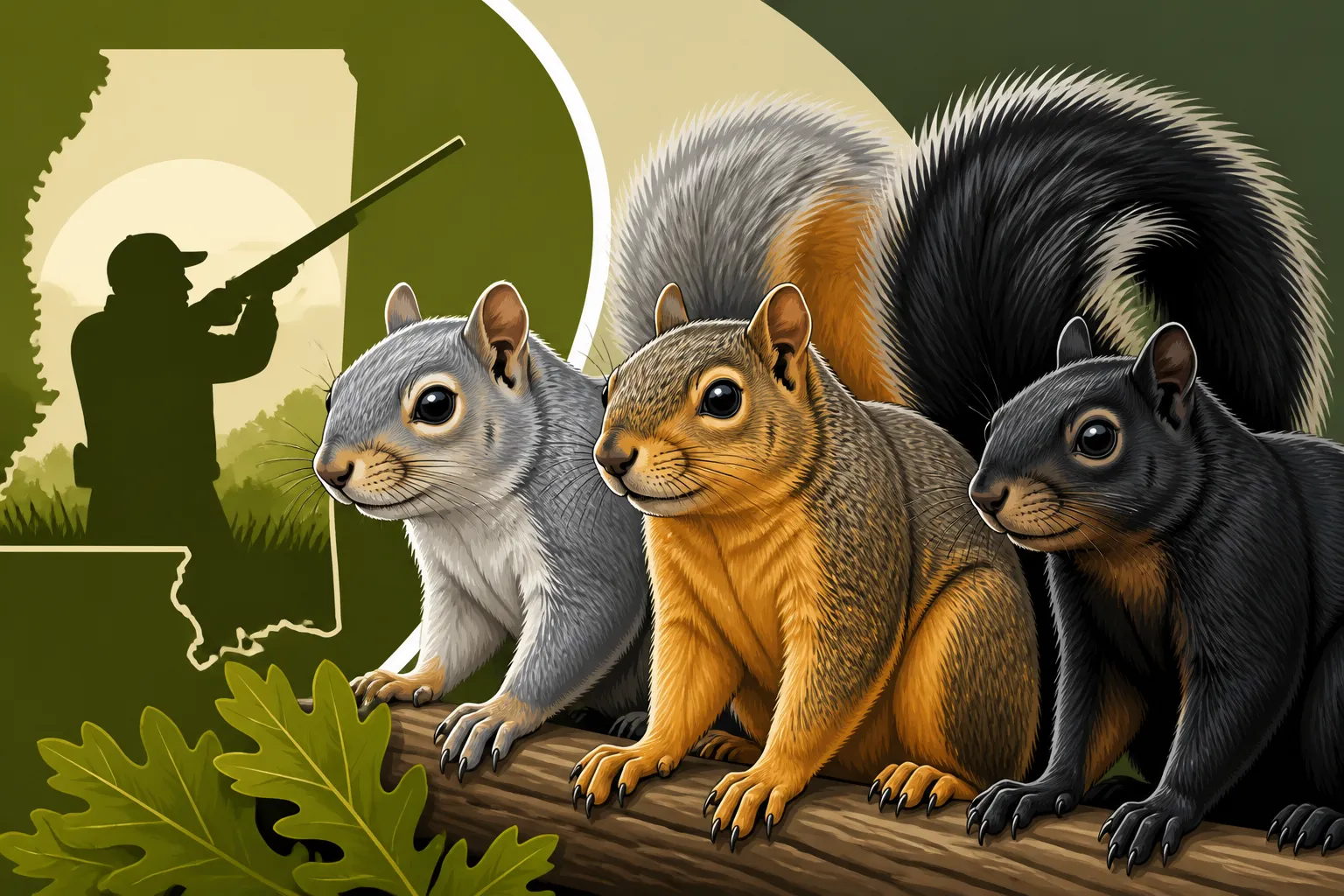
This is perhaps the most recognized and widespread color phase for fox squirrels across much of their range, including many parts of Mississippi. The classic red-brown fox squirrel typically features a body that is a warm, tawny brown, often with noticeable reddish or rust-colored highlights on its back, sides, and tail. Their undersides, including the belly and often the throat and chin, are usually a lighter, creamy white, orange, or even yellowish hue. The tail is often banded with black and tipped with white, giving it a somewhat frosted appearance.
You'll spot these classic red-brown squirrels in almost any suitable habitat, from the open piney woods of southeastern Mississippi to the scattered oak groves along field edges. They blend beautifully with the autumn leaves and bark, making them a challenging target during prime hunting seasons. Their distinctive coloration often stands out against the darker bark of oaks and hickories, or contrasts sharply with green foliage, making them a joy to watch as they navigate the canopy.
The Striking Black Morphs
One of the most surprising and visually arresting color variations is the melanistic, or black, fox squirrel. These aren't a separate species; they are simply individuals that possess a genetic trait causing an overproduction of melanin, resulting in a completely black coat. While they are less common than the red-brown phase, black fox squirrels are definitely present in Mississippi and can pop up unexpectedly in various regions. They might appear entirely glossy black, or sometimes have faint hints of their underlying red-brown genetics, perhaps a dark brownish sheen in certain light. Some even have a small patch of white on their nose or ears, which makes their dark bodies even more striking.
Spotting a black fox squirrel is a truly memorable experience. They often look like shadows moving through the trees, particularly in the deep shade of bottomland hardwoods or dense pine thickets. While not as prevalent as in some northern states, these dark morphs are a testament to the genetic diversity within Mississippi's fox squirrel populations. If you're using a scouting tool like GoHunt, and you're mapping out various timber types, keep in mind that these rarer color phases could appear anywhere there's suitable fox squirrel habitat, adding an exciting element of surprise to your observations.
The Unique Gray and Silver Variations
Adding another layer of complexity to the color palette, some fox squirrels in Mississippi exhibit primarily gray or silvery-gray coats. This can be particularly confusing for hunters who are used to differentiating fox squirrels from gray squirrels based on the fox squirrel's typically reddish tones. These gray-phase fox squirrels will still retain the larger body size and robust build characteristic of their species, but their fur might be a mottled mix of gray, black, and white, sometimes with a yellowish or orange wash on their belly or flanks. The tail often has more distinct bands of black and white, giving it a salt-and-pepper look that can appear quite silvery in bright sunlight.
These gray and silver variations are perhaps more common in certain geographical pockets of Mississippi, sometimes in areas where mixed hardwoods and pines create a different visual backdrop. They might also be found in transitional zones or along river corridors. It's an important reminder that simply seeing "gray" doesn't automatically mean it's a gray squirrel. Always consider the overall size and body shape. The discussions about Gray Versus Fox Squirrels in Mississippi really highlight the importance of looking beyond just color.
Patchy and Intermediate Colors
Beyond the more distinct phases, you'll also encounter fox squirrels that defy easy categorization, displaying a mix of colors. These "intermediate" or "patchy" squirrels might have a predominantly red-brown body with significant streaks of black, or a gray-phase squirrel might have prominent reddish patches on its shoulders or hindquarters. Their bellies might be an unusual mix of off-white and dull orange. These individuals are a clear demonstration of how genetics can express themselves uniquely in each animal, resulting in a truly individual coat pattern.
Think of it like human hair color – we have brunettes, blondes, and redheads, but then you have people with strawberry blonde, auburn, or salt-and-pepper hair. It's all part of the natural spectrum. These patchy squirrels are a reminder that nature loves variety. When you're spending time in different ecosystems, like scouting various sections of a Wildlife Management Area, you might notice these subtle shifts in local squirrel populations.
Why Do Mississippi Fox Squirrels Come in So Many Hues?
The incredible color diversity in Mississippi fox squirrels isn't just random; it's a fascinating interplay of genetics and environmental factors. Understanding these underlying causes helps us appreciate the complexity of wildlife populations.
Genetic Factors at Play
The primary driver behind the varied coat colors is genetics. Just like eye color or hair color in humans, a squirrel's fur color is determined by genes passed down from its parents. Different genes control the type and amount of pigment produced in the fur. For instance, the melanistic (black) phase is often due to a dominant gene that causes an excess of melanin. The classic red-brown and the gray/silver phases are likely influenced by other gene combinations that dictate the balance of different pigments like pheomelanin (red/yellow) and eumelanin (black/brown).
Genetic mutations can also occur, leading to unique color expressions that might be rare or localized. Over generations, if a certain color offers a survival advantage (perhaps better camouflage in a specific habitat) or if individuals with that color are more successful at reproducing, that trait can become more common in a local population. This is why you might hear local hunters in a particular county talk about seeing "more black squirrels" than elsewhere, even if they aren't common statewide. Mississippi Deer Antler Growth Timeline provides a great example of how genetics also play a huge role in antler development in another key game species.
Geographic and Environmental Influences
While genetics are fundamental, geography and environment can also play a role in the prevalence of certain color phases. Different regions of Mississippi have distinct habitat types – from the vast bottomland hardwoods of the Delta to the pine forests of the lower coastal plain, and the mixed woodlands of the Hills unit. A particular color phase might offer better camouflage in one type of environment over another. For example, a darker squirrel might blend in better with the shadows of a dense swamp, while a red-brown squirrel might disappear against the pine bark and reddish autumn leaves.
Furthermore, isolated populations, perhaps those separated by rivers, agricultural clearings, or urban development, can experience "genetic drift." This means that certain genetic traits (like specific color genes) might become more or less common purely by chance in smaller, isolated groups. Over time, this can lead to different predominant color phases in different parts of the state. So, while you might see a mix of colors in a central Mississippi woodlot, a hunter Hunting a Clear-Cut Regrowth Edge in another unit might report a different distribution of colorations. Factors like climate or historical population bottlenecks might also contribute to these regional differences, although the exact mechanisms are complex and ongoing areas of study for wildlife biologists.
Spotting and Identifying Different Color Morphs in the Field
Being able to reliably identify the different color variations of fox squirrels adds a whole new layer of appreciation to your time outdoors. It also helps you accurately report observations if you're ever participating in wildlife surveys or just chatting with fellow hunters about what you're seeing.
Key ID Features Beyond Color
As mentioned earlier, relying solely on color to identify a fox squirrel can be misleading due to their wide range of variations. Instead, focus on a combination of characteristics. The first and most reliable is size. Fox squirrels are noticeably larger and chunkier than gray squirrels. Look for that robust body and broader head. Their tails, while bushy, might not seem as uniformly dense or as long in proportion to their body as a gray squirrel's. Another excellent indicator is their behavior. Fox squirrels tend to move with more deliberate strides, spending more time on the ground foraging, and often seeking out larger, more mature trees for safety. If you see a squirrel that seems less frantic, more "plodding" in its movements, it's likely a fox squirrel.
Listen, too. Fox squirrels often have a distinct, raspy bark that's deeper and less shrill than the high-pitched chatter of a gray squirrel. Pay attention to their calls as you walk through the woods – it's another auditory clue that can help you differentiate. These collective observations provide a much more reliable identification than a quick glance at coat color alone. Even for a seasoned hunter, practice makes perfect, and observing these creatures without the pressure of a hunt can greatly enhance your identification skills.
When and Where to Look
To maximize your chances of observing the full spectrum of fox squirrel color variations, concentrate your efforts in the habitats they prefer. Look in open, mature hardwood forests, especially those with plenty of oak, hickory, and pecan trees, which provide abundant food sources. Areas bordering agricultural fields, where squirrels might venture out to forage for corn or soybeans, are also prime spots. Pine stands with a relatively open understory, particularly those mixed with hardwoods, can also hold good numbers of fox squirrels. Squirrel Hunting Delta Hickory Groves is a perfect example of a habitat that consistently produces fox squirrel encounters.
Timing can also play a role. Fox squirrels are generally most active during the early morning and late afternoon hours, much like many other game animals. Cooler, overcast days can sometimes extend their activity throughout the day. Consider using mapping tools, like those found on platforms such as GoHunt, to identify promising patches of diverse timber types or areas near agricultural interfaces. These tools can help you pinpoint potential hotspots where you might observe different populations and, consequently, different color morphs. Remember, patience is key – sit still, observe, and let the forest reveal its secrets. You might be surprised by the variety of colors that appear.
Table of Mississippi Fox Squirrel Color Variations
This table summarizes the primary color phases you might encounter in Mississippi's fox squirrels, along with some typical characteristics.
| Color Phase | Primary Body Color | Belly/Underside Color | Tail Characteristics | Relative Rarity in MS | Common Habitat Notes |
|---|---|---|---|---|---|
| Classic Red-Brown | Tawny brown, reddish/rust highlights | Cream, orange, or yellowish | Bands of black and reddish-brown, often white-tipped | Common | Mixed hardwoods, piney woods, field edges |
| Melanistic (Black) | Solid glossy black | Black | Solid black, sometimes with white tip | Uncommon to Rare | Denser woodlands, bottomlands |
| Gray/Silver | Silvery-gray, mottled gray | Pale gray, yellowish | Distinct black and white bands, silvery sheen | Uncommon | Mixed forests, river corridors |
| Patchy/Intermediate | Mix of above, mottled, streaky | Varied | Varies, often a mix of colors | Occasional | Wide range, individual expression |
No matter which color morph you encounter, each fox squirrel is a testament to the wild beauty and genetic diversity that thrives in Mississippi's rich ecosystems. Happy hunting, and keen observing!
Disclaimer
This article is for general informational purposes only and does not constitute professional advice. Laws, prices and regulations vary by location and change over time. Consult a qualified professional for guidance on your specific situation.