Amite County Public Hunting Ground
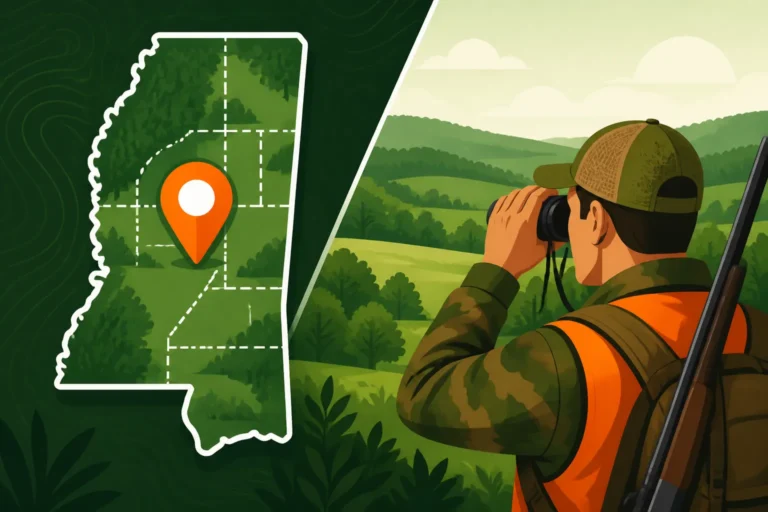
Finding quality public hunting ground in Mississippi can feel like a daunting treasure hunt, especially when you're looking beyond the well-trodden paths of the major national forests and wildlife management areas. If you're eyeing Amite County, you might be wondering where to even begin, feeling like all the prime spots are locked up in private leases. This guide will help you understand what kind of public hunting opportunities Amite County offers and how to maximize your chances of success on its often overlooked parcels.
The Quest for Public Land in Amite County
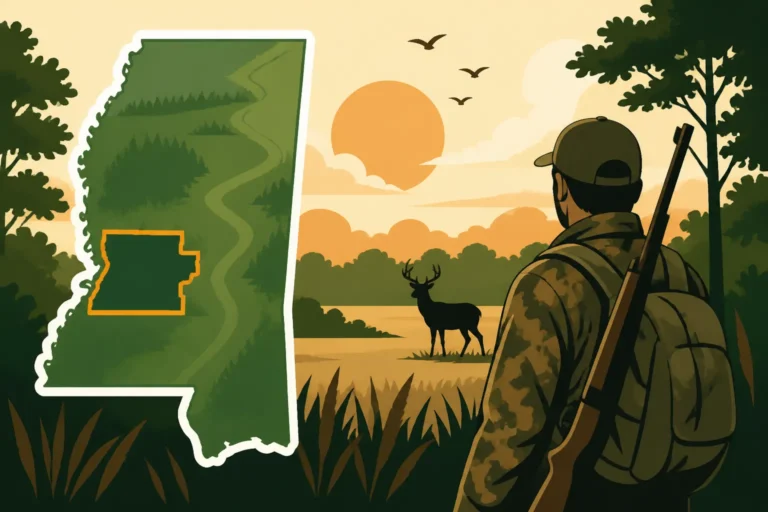
It's a common frustration for hunters in Mississippi: you look at a map, and it seems like every square inch is private land or part of a huge WMA that's hours away. Amite County, nestled in southwest Mississippi within the state's "Hills Unit," presents its own unique set of challenges and rewards when it comes to public hunting. Unlike the expansive bottomland hardwoods of the Delta National Forest or the vast pine plantations of DeSoto, Amite County's public land offerings tend to be a bit more fragmented and require a more diligent approach to locate and utilize effectively.
Many hunters assume that if a county isn't famous for a massive public tract, there's nothing there. But that's not always the case. The beauty of places like Amite County lies in the potential for smaller, less-pressured parcels that might not show up on every hunting blog, but still hold excellent game. The terrain here is classic rolling hills, a mix of timber, small farms, and winding creek bottoms, providing diverse habitat for various game species. You just have to know how to look for it, and what to expect once you find it. This means moving beyond just looking at a general map and really digging into the details.
Understanding Amite County's Landscape
Amite County is characterized by its rolling hills, mixed pine-hardwood forests, and numerous small drainages feeding into larger river systems like the Amite River itself. This landscape is a far cry from the flat, agricultural fields of the Delta or the uniform pine forests of the lower coastal plain. For a hunter, this means more topographical features to use for scouting, more natural travel corridors along creek beds, and a diverse mix of food sources. Deer here might not grow to the colossal sizes sometimes seen in the Delta, but they are plentiful, and the challenging terrain makes for an engaging hunt. Hills Unit Ten-Inch Spread Rule Explained offers insights into the antler restrictions that apply to this region.
The presence of smaller farms interspersed with timberland creates excellent edge habitat, which is always a draw for deer, turkeys, and small game. These "transition zones" are where different ecosystems meet, providing a buffet of food, cover, and water sources for wildlife. The public land you might find here will often reflect this mosaic pattern, possibly consisting of smaller state-owned tracts, school trust lands, or even parcels managed by local agencies that aren't widely advertised. It's truly a place where detailed scouting and local knowledge can pay off handsomely.
Why Public Access Can Be Tricky Here
The main challenge in Amite County, as with many rural areas in Mississippi, is the prevalence of private land. Generations of families have owned and managed these lands for timber, farming, or personal hunting leases. This means that any public ground is often surrounded by, or abutted against, private holdings. Navigating these boundaries legally and ethically is paramount. A common frustration is finding a promising spot only to realize it's a tiny public island surrounded by "No Trespassing" signs.
Furthermore, these smaller public tracts might not have dedicated parking areas or well-maintained access roads. You might find yourself parking on a gravel road shoulder or walking through a gate that looks private but is actually public access. This is where tools like Using the MDWFP Map Tool become invaluable, allowing you to clearly delineate public and private boundaries on your phone or GPS device. The reward, however, is often less hunting pressure than on the state's larger, more famous WMAs. This can lead to a more peaceful, and potentially more productive, hunting experience for those willing to do the legwork.
Uncovering Amite's Public Hunting Spots
While Amite County might not boast a massive national forest solely within its borders, don't let that deter you. There are still avenues to explore for public hunting, even if they require a bit more legwork and digital savvy. The key is to understand the different types of public land that might exist and how to locate them.
State-Managed Lands and Regional WMAs
Mississippi's Department of Wildlife, Fisheries, and Parks (MDWFP) manages numerous Wildlife Management Areas (WMAs) across the state. While Amite County itself might not host a sprawling WMA, it's often adjacent to or within a reasonable drive of several. For instance, areas like Caston Creek WMA or Copiah County WMA, though not in Amite, are relatively nearby and offer significant public hunting opportunities for deer, turkey, and small game within the same general geographic unit. Mississippi Wildlife Management Areas provides a broader overview of how these invaluable resources are managed and accessed.
It's crucial to check the specific regulations for any WMA you plan to hunt, as they often differ from statewide rules regarding seasons, bag limits, and legal weapons. The MDWFP website and app are your best friends here. They provide detailed maps, boundary lines, and regulation summaries that can save you a lot of grief and ensure you stay legal. Sometimes, smaller parcels of state timber land or even school trust lands can be found within county boundaries. These might be less publicized but offer opportunities if you can identify them.
Using Digital Mapping Tools to Identify Access
This is where technology really shines for the modern hunter. Relying solely on paper maps or general county maps often leaves you guessing about property lines. Digital mapping applications are essential for finding and navigating public land, especially in areas like Amite County where parcels might be small or interspersed with private holdings.
A tool like onX Hunt is an absolute game-changer. It allows you to overlay property ownership data, parcel boundaries, and public land designations directly onto a satellite or topographical map on your phone. Imagine knowing exactly where a small patch of public timber starts and ends, even if it's surrounded by private land. You can drop waypoints for potential stand locations, mark fresh sign, and track your route, all while being absolutely certain you're not trespassing. Many hunters use GoHunt for more big-picture strategic planning and understanding game movements, but for pinpointing actual property lines on the ground, nothing beats the real-time accuracy of onX Hunt. This kind of precision is crucial when public access might be limited to a narrow strip along a creek or a specific corner of a parcel.
Table: Types of Public Land & How to Find Them in Amite's Region
| Public Land Type | Typical Characteristics | Best Way to Locate | Hunting Focus (General) |
|---|---|---|---|
| State WMAs | Larger, actively managed for wildlife, specific regulations. | MDWFP website/app, county hunting guides. | Deer, Turkey, Hogs, Small Game, Waterfowl (seasonal) |
| National Forests | Extensive, multi-use (timber, recreation, hunting), general federal rules with state addendums. | US Forest Service maps, MDWFP app. | Deer, Turkey, Hogs, Small Game. |
| School Trust Lands | Smaller, often square/rectangular parcels, managed for revenue. | County tax assessor maps, digital mapping apps (e.g., onX Hunt). | Deer, Small Game, Hogs (opportunistic). |
| River Batture Lands | Floodplain areas along major rivers, less formal management. | Corps of Engineers maps, digital mapping apps, local inquiries. | Deer, Hogs, Waterfowl (seasonal). |
Scouting with an Aerial View
Before you ever set foot on the ground, fire up those mapping apps. Look for natural funnels, pinch points, and cover transitions. In Amite's rolling terrain, ridge lines and creek bottoms become super highways for deer and other animals. Identify potential bedding areas on dense south-facing slopes and feeding areas in mature hardwoods or near old fields. Reading Aerial Photos for Hills Unit Deer is a great resource for learning how to interpret these critical features from above.
Also, look for subtle indicators of previous human activity, or lack thereof. Old logging roads, clear cuts (which provide new growth for deer browse), or even signs of recent timber stand improvement can drastically alter game movement and provide new opportunities. The goal is to find areas that look promising from an aerial perspective, then verify them with boots on the ground, keeping those public boundaries firmly in mind.
Key Game Species and Seasons on Amite Public Land
Amite County, being part of the Hills Unit, offers a rich diversity of game species for the public land hunter. Understanding the primary species and their general season frameworks is essential for planning your hunts.
Deer Hunting: Whitetails of the Hills Unit
White-tailed deer are undeniably the main draw for many hunters in Amite County. The Hills Unit, which encompasses Amite, generally has robust deer populations, though trophy potential might differ from the Delta. The key here is consistent hunting pressure management and a diverse habitat. Mississippi Deer Season Structure Explained covers the statewide framework, but specifically for the Hills Unit, hunters will find a mixture of archery, primitive weapons (muzzleloader), and gun seasons.
Archery season typically opens early, offering hunters a chance to pursue deer before significant gun pressure. When Mississippi's Archery Season Opens is a good article to review for exact dates. Muzzleloader season provides another opportunity, often bridging the gap between early archery and the main gun season. Finally, the general gun season allows for the use of modern firearms, attracting the largest number of hunters. Remember, antler restrictions are in place in the Hills Unit, often requiring a minimum outside spread or antler points to be considered a legal buck. Always double-check the current regulations before heading afield.
Turkey Hunting: Chasing Gobblers in the Spring
Spring turkey hunting is a cherished tradition, and Amite County's mixed timber and rolling terrain provide excellent habitat for wild turkeys. Hearing a gobbler thunder from a distant ridge on a crisp spring morning is an experience unlike any other. Mississippi has done a fantastic job of restoring turkey populations, and the Hills Unit is no exception. Mississippi Spring Turkey Season Rules will give you the full rundown on when you can chase those longbeards.
Public land turkey hunting can be challenging, as gobblers on heavily pressured ground become wary quickly. Tactics often involve a fair amount of "run-and-gun" searching, covering ground to locate birds, and then setting up quickly. Look for areas with mature hardwoods for roosting, open clearings or fields for strutting, and plenty of mixed forest for feeding. Creek bottoms can act as natural travel corridors, and knowing how to read the terrain for roosting spots or strut zones is key.
Feral Hogs: A Year-Round Opportunity
Feral hogs are a pervasive issue across much of Mississippi, and Amite County is no exception. While they can be a nuisance for landowners and native wildlife, they also present a year-round hunting opportunity with no closed season or bag limit on private land, and very liberal rules on public land. Mississippi Feral Hog Regulations outlines the specific rules you'll need to follow.
Hogs can be found anywhere there's food, water, and cover. In Amite, this means creek bottoms, dense thickets, and areas near agricultural fields (even small, abandoned ones). They're highly intelligent and adaptable, making them a challenging quarry. Many hunters pursue hogs opportunistically while deer or turkey hunting, but dedicated hog hunting with traps, dogs, or night vision (where legal on private land) can be very effective. Look for rooting sign, wallows, and fresh tracks along water sources.
Small Game and Other Opportunities
Don't overlook the small game opportunities in Amite County. Squirrels (gray and fox) are abundant in the county's hardwood groves and mixed forests, providing a fun and often action-packed hunt. Rabbits can be found in briar patches, fencerows, and thickets, especially near fields. Squirrel and Small Game Hunting in Mississippi covers the general seasons and tactics for these often-underestimated game animals.
Coyotes are also prevalent, offering another year-round hunting or trapping opportunity that helps manage their populations and can be an exciting challenge. Predator calling can be effective, especially in more open country or along the edges of timber blocks. These diverse opportunities mean that even outside the prime deer and turkey seasons, there's usually something to hunt on Amite County's public land.
Tactics for Success on Amite County's Public Ground
Hunting public land successfully in Amite County requires a combination of good scouting, adaptability, and a realistic mindset. It's often about finding pockets of unpressured game and knowing how to approach them effectively.
Pre-Season Scouting is Non-Negotiable
This can't be stressed enough: pre-season scouting is absolutely critical, especially on smaller, less-known public parcels. Don't wait until opening morning to figure out the lay of the land. Use those mapping apps like onX Hunt to identify potential access points, property lines, and promising habitat features long before the season starts.
Walk the land. Look for deer trails, rub lines, scrape areas, and old bedding sites. Find turkey scratching, strut zones, and potential roost trees. Identify water sources and natural food sources like acorns, persimmons, or honeysuckle. Pay attention to how the terrain funnels animals. What looks like a dense thicket on a map might be an impenetrable wall of briars on the ground, or it could be a beautiful, open hardwood stand perfect for still-hunting. Scouting Mississippi Public Land Before Season provides comprehensive advice on what to look for and how to interpret the signs.
Adapting to Hunting Pressure
While Amite County's public lands may see less pressure than some major WMAs, they are still public. Expect other hunters, especially on weekends and during the gun season opener. Being flexible and willing to walk further than most can pay dividends. Often, the best hunting is found a mile or more from any road or parking area, in places others are unwilling to reach.
Consider hunting during weekdays if your schedule allows, or focusing on archery and primitive weapons seasons when pressure is generally lower. If you encounter other hunters, be courteous and give them plenty of space. Having multiple spots scouted out is a smart strategy so you can pivot if your primary location is already occupied. Remember that animals on public land are often more wary, so focus on low-impact entry and exit routes, minimizing noise and scent.
Stand Placement and Still-Hunting Strategies
In the rolling terrain of Amite County, strategic stand placement is key. Look for natural funnels created by topography (saddles between ridges, benches on hillsides, creek crossings) or cover changes (where a pine thicket meets hardwoods). Place your stands downwind of expected travel routes and bedding areas. Ground blinds can also be highly effective, especially in thicker cover where traditional treestands might be challenging to set up or where you need to move quickly to adjust to game. Using a Ground Blind on Mississippi Public Land covers the pros and cons of this approach.
Still-hunting—slowly stalking through the woods—can be very productive in Amite's diverse timber. This method is excellent for covering ground and finding animals that might be feeding or traveling through less accessible areas. Move slowly, scan constantly, and use the contours of the land to your advantage. The mixed pine and hardwood forests offer plenty of cover for a stealthy approach.
Essential Gear for Public Land Hunting
Beyond your weapon and license, a few pieces of gear are particularly valuable for public land hunting in Amite County:
- Mapping App with Offline Capabilities: As mentioned,
onX Hunt(or similar) is non-negotiable. Make sure you download offline maps, as cell service can be spotty in remote areas. - Good Binoculars: Essential for spotting game in dense cover or across ridges.
- Comfortable Boots: You'll be doing a lot of walking, potentially over varied terrain.
- Layered Clothing: Mississippi weather can be unpredictable. Layers allow you to adapt to changing temperatures throughout the day.
- Blaze Orange: Remember to check Mississippi Blaze Orange Requirements for specific regulations, especially during gun seasons.
- Scent Control: Deer in particular are highly sensitive to human odor.
- First-Aid Kit: Always a good idea when you're in remote areas.
Hunting Amite County's public land might require a little more effort upfront, but the rewards—less crowded woods, challenging hunts, and the satisfaction of finding success on less-pressured ground—are absolutely worth it.
Disclaimer
This article is for general informational purposes only and does not constitute professional advice. Laws, prices and regulations vary by location and change over time. Consult a qualified professional for guidance on your specific situation.