Rattling and Grunting in Mississippi
You've probably been there: perched in your stand, the woods are quiet, and you decide to try a few grunts or a rattling sequence, only to have nothing respond. It’s incredibly frustrating, feeling like you're speaking a language the deer just don't understand. But fear not, because mastering the art of rattling and grunting in Mississippi isn't just about making noise; it’s about understanding the subtle nuances of deer communication and knowing precisely when and how to use those calls to draw in that elusive buck. This guide is going to dive deep into turning those silent moments into thrilling encounters.
Understanding Deer Communication in Mississippi
Before you even think about lifting that grunt tube or clashing those antlers, you've got to understand the language you're trying to speak. Deer aren't just making random sounds or crashing antlers for fun; every vocalization and clash has a purpose, a specific message it's trying to convey. In Mississippi, where deer populations vary and hunting pressure can be significant, understanding these communication signals is even more critical.
The Science Behind Deer Vocalizations and Antler Clashing
Deer communication is a complex symphony of sounds, scents, and body language. Vocalizations, in particular, are incredibly varied. You have everything from the subtle fawn bleat, which signals distress or a call for its mother, to the aggressive snort-wheeze of a dominant buck. For hunters, the most relevant sounds are the grunts and bleats that indicate social interactions, especially during the breeding season. Grunts, for instance, are often associated with bucks searching for does or asserting dominance. There's a soft social grunt, a tending grunt made when a buck is actively pursuing a doe, and that unmistakable guttural "growl" that warns other bucks to stay away.
Antler clashing is a primal sound, a direct simulation of two bucks fighting for dominance or a breeding opportunity. This isn't just noise; it’s a direct challenge, an advertisement for aggression and strength. The intensity, duration, and even the type of clashing can tell other deer a lot about the "fight" that's happening. A light sparring session sounds much different from a full-blown, knock-down-drag-out battle. Mimicking these sounds effectively requires more than just clanging some antlers together; it demands an understanding of the deer’s world and the context of these interactions.
When and Why Mississippi Bucks Respond to Calls
Mississippi's deer season is long, and the rut varies significantly across our state's different units. Knowing when to deploy your calls is paramount. Generally, pre-rut and rut are your prime windows for aggressive calling like rattling and tending grunts. During the early archery season, before the rut really kicks in, bucks might be more curious about light sparring sounds or a subtle social grunt, but they're less likely to commit to a full-blown confrontation. As the rut approaches, especially in areas like the Delta Unit or the Hills Unit where the rut peaks in mid-December to early January, bucks become much more susceptible. They're wired to seek out does and challenge rival bucks, making them more reactive to vocalizations and the sound of clashing antlers.
The "why" is simple: survival and reproduction. Bucks respond to calls because it taps into their innate instincts. A grunt could signal a hot doe, a potential rival, or even just another deer moving through the area. Rattling mimics a fight, an event that draws in curious, subordinate bucks hoping to sneak in and steal a doe, or dominant bucks looking to assert their authority. Sometimes, even non-rutting bucks will respond out of sheer curiosity, especially younger bucks still figuring out their place in the pecking order. Understanding the Mississippi Deer Season Structure Explained and especially Hunting the Rut in the Delta Unit and Hunting the Rut in the Hills Unit can help you time your calling perfectly.
Interpreting Deer Body Language During a Calling Sequence
Calling isn't a one-way street; it's a conversation. When you call, you need to be constantly observing. How a deer responds (or doesn't respond) tells you everything you need to know about your next move. If you rattle and a buck throws his head up, stares intently, and then walks away, he might have identified your call as fake, or he's simply not interested in a fight at that moment. But if he responds by stiffening, laying his ears back, or even bristling his hair, you've likely hit a nerve.
Look for subtle cues. A buck that stops, turns his head, and slowly works his way toward your sound with a cautious gait is likely curious but wary. A buck that comes in aggressively, scent-checking the air with his nose high, is a buck ready to engage. If he circles downwind, he's trying to get your scent to confirm what his ears are telling him. This is where your concealment and scent control become absolutely vital. If he stomps his foot or blows, the game is probably up, at least for that sequence. Being able to read these signals in real-time allows you to adapt your calling, whether that means staying silent, delivering a soft grunt, or escalating to a more aggressive rattle.
Essential Rattling Techniques for Mississippi Deer
Rattling is one of the most exciting ways to hunt deer, especially during the peak of the rut. The sound of antlers crashing together can turn a silent morning into an adrenaline-pumping experience in seconds. But there’s a real art to making it sound convincing enough to fool a seasoned Mississippi buck.
Choosing the Right Rattling Antlers or Rattle Bag
Your equipment matters. While some hunters swear by real antlers, others prefer synthetic rattle bags or full-size synthetic antlers. Each has its pros and cons. Real antlers, typically from a shed buck, offer an authentic sound. The weight and feel can help you create a more realistic impact, especially if you have a full set that includes both shed sides. They can be a bit cumbersome to carry, however, especially through thick Delta bottomlands or dense pine plantations. If you're going deep into public land like in the Delta National Forest Hunting, lighter gear is always a plus.
Rattle bags, like the ones made by primos or knight & hale, are fantastic for portability and convenience. They're quieter to carry and can produce a surprising range of sounds, from light sparring to heavy clashing. However, getting the full realism of antlers sometimes takes more practice with a bag. Full-size synthetic antlers offer a good compromise, providing much of the authentic sound and feel of real antlers without the worry of breaking them or the weight. Ultimately, the "best" option is the one you can use most realistically and consistently in the field. Practice with whatever you choose until it sounds like two real bucks fighting, not just two pieces of plastic or bone clanking together.
Simulating Fights: Aggressive vs. Light Rattling
Not all fights are created equal, and neither should your rattling sequences be. You need a repertoire that matches the mood of the woods and the time of year.
-
Light Sparring: This is ideal for the pre-rut or early season. It mimics two younger bucks playfully testing each other or establishing a pecking order. It's not a full-blown fight, just a bit of antler clashing, some pushing and shoving, and maybe a few soft grunts. Start with light clicks and rubs of the antlers, maybe for 15-30 seconds, then a minute or two of silence, and repeat a few times. This can pique the curiosity of younger bucks or even older bucks checking out what the youngsters are up to. It works well in areas where deer might be less aggressive or in more open terrain where sound carries further but you don't want to overdo it.
-
Aggressive Fights: This is your bread and butter during the peak rut. You want to sound like two mature bucks are locked in a serious battle. Slam those antlers together, grind them, break twigs, and make some noise! This isn't subtle; it's a full-on acoustic advertisement for dominance. This draws in dominant bucks looking to assert their authority, and subordinate bucks hoping to slip in and grab a hot doe while the big boys are preoccupied. Remember, the louder and more realistic, the better. Incorporate stomping your foot or breaking a branch to really sell the illusion. Pay attention to Rattling Volume in Thick Cover versus more open areas, as sound carries differently.
| Rattling Type | Timing | Intensity | Duration | Target Bucks |
|---|---|---|---|---|
| Light Sparring | Pre-Rut, Early Season | Low to Medium | 15-30 seconds active | Young, curious, cruising |
| Aggressive Fight | Peak Rut | High | 1-2 minutes active | Dominant, territorial |
| Breaks & Grinds | Rut | Medium to High | Intermittent | All bucks during rut |
| Full Sequence | Pre-Rut to Peak Rut | Varies by intent | 5-10 minutes total | All bucks |
Timing and Duration of Rattling Sequences
Patience is a virtue, but so is understanding when to be aggressive and when to be quiet. A typical rattling sequence might last anywhere from 30 seconds to a few minutes of active clashing, followed by a much longer period of silence and observation.
Start with a more subtle approach, especially if you're not sure how deer in your area are reacting. A 30-second light sparring session, followed by 5-10 minutes of intense listening, is a good baseline. If nothing shows up or responds, you can either repeat the light sequence or escalate to a more aggressive fight if you're in the peak rut.
During the rut, an aggressive sequence can last 1-2 minutes of continuous clashing, grinding, and breaking, mimicking a genuine battle. Then, immediately go silent. The period after the rattle is just as important as the rattling itself. Bucks often approach cautiously, taking their time to pinpoint the source of the sound. Many bucks are busted walking in silently 5 to 15 minutes after a calling sequence. If you pack up too quickly, you'll miss them.
Consider the time of day too. Early mornings and late evenings, when bucks are most active, are prime rattling times. Midday during the rut can also be surprisingly effective, as bucks are often up cruising for does, making them more likely to investigate a fight. Always be prepared for a deer to come in quickly, especially if you're working a hot scrape line or a funnel between bedding and feeding areas.
Mastering Grunt Calls and Doe Bleats in Mississippi
Beyond the clang and crash of antlers, the subtle and sometimes not-so-subtle vocalizations of deer are incredibly effective. A grunt call or a doe bleat, used correctly, can be the ticket to bringing a wary buck into range.
Types of Grunt Calls and How to Use Them Effectively
Grunt calls are arguably the most versatile tools in a deer hunter's arsenal. They mimic various sounds a buck makes, from social contact to aggressive challenges.
- Social Grunt: This is a softer, shorter grunt. Think of it as a buck saying, "Hey, anyone around?" It's great for early season or cold calling when you're just trying to get a deer's attention or locate one. It's not overly aggressive, so it won't typically spook deer. Use 1-3 soft grunts every 15-20 minutes.
- Tending Grunt: This grunt is deeper, longer, and often repeated, signifying a buck actively pursuing a doe in estrus. It's often followed by a snort. This is a powerful call during the rut, telling other bucks there's a hot doe nearby and the "chase" is on. Use this call when you see a buck cruising or if you think there’s a hot doe in the vicinity. A series of 3-5 tending grunts, sometimes with a snort, followed by silence, can be devastatingly effective.
- Aggressive Grunt / Growl: This is the deep, guttural sound a buck makes when confronting another buck. It's a direct challenge. Save this for when you actually see a buck that isn't responding to other calls, or a buck that's acting dominant. It's high-risk, high-reward. A single, drawn-out, deep growl can sometimes stop a buck in his tracks or even bring him charging in to confront the perceived intruder. Understanding Grunt Calls in Mature Mississippi Timber might suggest a louder, more resonant call that can carry further.
Modern grunt tubes often have adjustable reeds or tubes to change pitch and tone, allowing you to mimic different deer. Brands like Buck Commander and Flextone make versatile grunt tubes. Experiment with them to find the sounds you can make most realistically.
The Power of Doe Bleats and Estrus Whines
While grunts are all about the bucks, doe bleats and estrus whines are all about attracting bucks looking for love. These calls can be absolute magic when used at the right time.
- Doe Bleat: This is a simple, high-pitched "Maaaaa" sound. It signals the presence of a doe, which can attract any buck looking for companionship or a breeding opportunity. It's a non-threatening call, good for attracting curious bucks throughout the season. You can use a can call (like the can call made by Hunter's Specialties or Primos) or a mouth call to produce this. Flip the can call over for a bleat, then let it sit for a few minutes.
- Estrus Whine: This is a longer, more drawn-out, almost begging bleat from a doe in heat. This is perhaps the most powerful call to draw in a rutting buck, as it directly signals a receptive female. This is usually produced with a specialized doe call or by manipulating a grunt tube. Use this sparingly and strategically during the peak rut. A few estrus whines, followed by silence, can make a buck forget all caution.
Combine these calls judiciously. A sequence of a few estrus whines followed by a tending grunt from a buck can paint a very convincing picture: a hot doe being pursued, which can drive a buck crazy.
Combining Grunts and Bleats for a Comprehensive Strategy
The real magic happens when you start layering these calls. Think of it like building a scene in the woods. You’re not just making a single sound; you’re telling a story.
A common and highly effective strategy is to start with a subtle doe bleat to get attention. If a buck responds or you don't see anything for a few minutes, follow up with a few soft grunts, as if a buck is approaching the doe. This can often seal the deal, convincing a hesitant buck that a romantic opportunity is unfolding.
During the peak rut, you can get more aggressive. Imagine a scenario: you let out a series of aggressive grunts, then immediately follow it with a quick rattling sequence. This suggests two bucks are fighting over a hot doe. If you throw in an estrus whine in the middle of the rattling, it can truly sell the illusion. The key is to make it sound natural, with appropriate pauses and variations in intensity. Don't just blast calls randomly. Listen to how real deer communicate, and try to replicate that.
For instance, when hunting a funnel or a bedding area edge, I might start with a low, social grunt every 10-15 minutes. If I see a buck moving, I might switch to a tending grunt. If he stops and looks, but doesn’t commit, a soft doe bleat might be the perfect follow-up. This adaptive approach, moving from observation to strategic calling, is what separates successful callers from those who just make noise.
Advanced Calling Strategies for Pressured Mississippi Deer
Hunting in Mississippi, especially on public lands or areas with significant hunting pressure, means deer are often educated. They've heard it all. This requires a more nuanced approach to calling.
Soft Calling in High-Pressure Areas
When deer are pressured, loud, aggressive calling can often backfire, signaling danger rather than opportunity. In these scenarios, less is often more. Think subtle, quiet, and infrequent. Instead of crashing antlers, try rubbing them together gently, mimicking a buck walking through brush or lightly sparring. Use a very soft social grunt, barely audible, to pique curiosity.
This approach works particularly well in areas like the Homochitto National Forest or certain WMAs where deer might be accustomed to hearing hunters' calls. The goal isn't to draw a deer from a mile away, but to subtly redirect a deer that's already within earshot but perhaps out of sight. A slight redirection, a nudge in the right direction, is often all you need. Focus on creating sounds that blend with the environment, rather than standing out. This might mean using a leaf call or even scratching the ground with your foot to simulate movement, combined with a barely audible bleat or grunt. In these areas, tools like a mapping app from GoHunt can help you identify overlooked pockets where soft calling might be more effective due to reduced pressure.
Calling During the Mississippi Rut by Unit Peaks
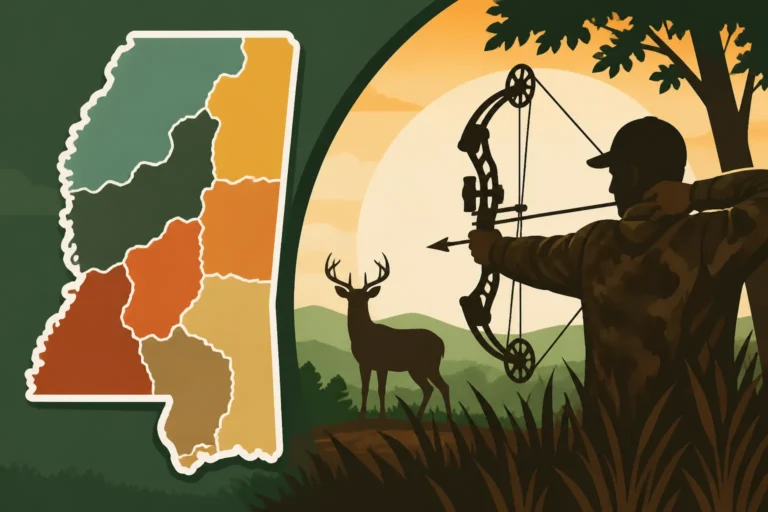
Mississippi's deer management units – Delta, Hills, North Central, and Southeast – each have slightly different rut timings. This means your calling strategy needs to adapt to the local peak.
- Delta Unit: The Delta is famous for its big bucks and a later rut, typically peaking in mid-December to early January. During this time, aggressive rattling and tending grunts are highly effective. Bucks are actively seeking out does and are more likely to respond to challenges. Focus on areas with good cover near agricultural fields or in flooded timber.
- Hills Unit: The Hills Unit generally sees its rut peak from late December through January. Similar to the Delta, aggressive calling works well here during the peak. Focus on calling from ridges, saddles, and creek bottoms where bucks will be traveling. Understanding Still-Hunting Hills Unit Ridges can provide insights into where bucks might be moving and thus, where to set up your calling sequences.
- North Central Unit: This unit's rut typically falls in early to mid-December. Use a mix of aggressive and curious calls, adapting to the deer activity you observe.
- Southeast Unit: The Southeast Unit has the earliest rut, often in late October through November, with a longer, more drawn-out period. Here, you might start with more curiosity-based calls and gradually increase aggression as the peak approaches. The Hunting the Extended Southeast Unit Archery Window might offer more opportunities for calling.
Knowing these timings, which you can often find through MDWFP resources, allows you to tailor your calling to the specific hormonal drive of the bucks in your hunting area. A tending grunt in October in the Southeast Unit might be more effective than a full-blown rattle, whereas the opposite might be true in January in the Delta.
Adapting Your Calls to Different Terrain and Habitat
The type of terrain and habitat you're hunting in should heavily influence your calling approach. Sound travels differently through various environments, and deer react differently based on their surroundings.
- Dense Bottomland Hardwoods (Delta Unit): In thick Delta bottomland, sound doesn't travel as far. You'll need to call more frequently and often louder to get attention. Aggressive rattling and loud grunts can penetrate the dense foliage. Be ready for close encounters, as deer might pop out quickly. Focus on areas like sloughs, creek bends, and edges of thickets. Consider using a louder, more assertive call like described in Grunt Calls in Mature Mississippi Timber.
- Open Pine Plantations (Piney Woods/Southeast Unit): In more open pine stands, sound carries a long way. This means you can be a bit more subtle, but you also need to be very aware of deer coming from a distance. Rattling might attract deer from further away, but they'll also have more time to scrutinize the sound. Longer pauses between calls are crucial here.
- Steep Ridges and Draws (Hills Unit): Wind and thermals are your biggest challenge in hilly terrain. Sound can be carried up or down draws, but also washed out by inconsistent winds. You need to pay close attention to Wind and Thermals in Delta Bottomland principles, even in the hills. Set up your calls so the sound travels effectively without giving away your scent. Often, calls made from a ridge-top saddle can travel well into multiple draws, drawing deer from various directions.
- Field Edges: When hunting food plots or agricultural field edges, deer might be more exposed and therefore warier. Often, a combination of visual (decoys) and auditory cues works best. Soft grunts and bleats can attract deer without alarming them as they approach the open area. Rattling from a field edge should be done with extreme caution, often deep enough in the cover to hide your movements.
Always assess the cover, the wind, and the likely approach routes of deer before you start calling. A good mapping tool can help you identify these nuances before you even step foot in the woods.
Common Mistakes and How to Avoid Them
Even the most seasoned hunters can make mistakes when calling. But by being aware of common pitfalls, you can drastically improve your success rate.
Overcalling and Undercalling
This is a classic Goldilocks problem: you need your calling to be just right.
- Overcalling: The most common mistake. Hunters get excited, or impatient, and they constantly blow their grunt tube or rattle their antlers. This can sound unnatural and often spooks deer. Imagine a real buck fighting or grunting every 30 seconds for an hour – it just doesn't happen. Overcalling signals an unnatural presence, making deer wary. It's often better to do a solid 1-2 minute sequence and then remain silent for 10-15 minutes, or even longer. Let the woods breathe, and let the deer process the sounds.
- Undercalling: On the flip side, some hunters are too shy with their calls. They might do one weak rattle or a single soft grunt and then give up after 5 minutes. If deer aren't responding, it could be that your calls aren't carrying far enough, or you're not generating enough interest. Sometimes, a more aggressive or prolonged sequence is needed, especially during the peak rut. Don't be afraid to experiment with intensity and duration, within reason. The key is to find that balance for the specific situation you're in.
A good rule of thumb is to vary your sequences. Start soft, listen, then perhaps escalate, and then go silent for a longer period.
Ignoring Wind Direction and Thermals
This is perhaps the deadliest mistake a caller can make. No matter how perfectly you simulate a fight or a hot doe, if a buck approaches downwind and catches your scent, the game is over. Period.
- Wind Direction: Always hunt with the wind in your favor. Position yourself so that any deer approaching the sound of your call will have to come from upwind, giving you a shot before they get your scent. If a buck starts to circle downwind, you know he’s trying to scent-check you. This is when you either need to be ready for a quick shot or prepare for him to bust you.
- Thermals: In hilly terrain, thermals are rising air currents in the morning and falling air currents in the evening. Your scent will travel with these currents. So, even if the general wind direction seems okay, if you're set up on the wrong side of a ridge, your scent could be carried down into a draw where deer are bedding, or up to a ridge where they are cruising. Understanding and compensating for both wind and thermals is crucial. GoHunt apps are excellent for showing real-time wind conditions and even predicting thermal drafts, helping you pick the perfect stand location before you even think about calling.
Never assume. Always verify wind direction with a wind checker and consider how thermals might be affecting your scent cone, especially when hunting the deep timber or creek bottoms of Mississippi.
Not Practicing Your Calling Sequences
Just like shooting your bow or rifle, calling is a skill that needs practice. Don't let your first time rattling or grunting be in the deer woods on opening day.
- Practice at Home: In your backyard, garage, or even inside (if your family can tolerate it!), practice your rattling and grunting sequences. Listen to real deer vocalizations online or on hunting shows. Try to mimic them. How does a young buck sparring sound versus two mature bucks crashing? Can you make your grunt tube produce a tending grunt, a social grunt, and an aggressive growl?
- Record Yourself: Use your phone to record your calling. Play it back and compare it to real deer sounds. This is an objective way to critique your technique. You might think you sound great, but the recording could reveal otherwise.
- Vary Intensity and Duration: Practice different sequences – short and soft, long and aggressive, and everything in between. Work on those pauses. The silence after a call is just as important as the call itself.
- Practice with Your Setup: If you're using a grunt tube around your neck, practice pulling it up and calling smoothly and quietly. If you're rattling, practice doing so without making excessive movement that could be seen by an approaching deer.
The more natural and confident you sound, the more likely you are to fool a wary Mississippi buck. This preparation will pay dividends when that moment of truth arrives.
Integrating Calling with Other Hunting Tactics
Calling is rarely a standalone tactic. It truly shines when combined with other elements of your hunting strategy, creating a more convincing scenario for wary whitetails.
Combining Calling with Decoys and Scents
Creating a full sensory experience for a deer is often the most effective way to draw them in. Calling alone might pique curiosity, but adding visual and olfactory cues can seal the deal.
- Decoys: A deer decoy, especially a buck or a doe in an estrus pose, can be incredibly effective when paired with calling. The visual of another deer reinforces the auditory signal. If you're rattling aggressively, a dominant buck decoy can infuriate a real buck into coming in to challenge it. If you're using doe bleats, a doe decoy can convince a cruising buck that he's found a receptive female. Always set your decoy upwind of your calling position, so any approaching deer will be focused on the decoy and give you a broadside shot before winding you. Positioning your decoy correctly and understanding its use with calling is key.
- Scents: Using deer scents can add another layer of realism. During the rut, an estrus doe urine or glandular lure placed near your stand or a decoy can amplify the effect of your doe bleats and tending grunts. Mock scrapes infused with buck urine and curiosity scents can also draw deer to an area, making them more receptive to your calls. While scents aren't a magic bullet, they can certainly enhance the illusion you're trying to create. Just be mindful of how you handle scents to avoid contaminating your clothing or gear.
The combination creates a multi-sensory trap: they hear it, they see it, they smell it. This is hard for any rut-crazed buck to resist.
Using Calls in Conjunction with Still-Hunting
Still-hunting is a slow, deliberate method of hunting, often involving moving only a few steps at a time and pausing for extended periods to observe. Integrating calling into this tactic can be incredibly effective, especially in dense cover.
Instead of sitting in a static location and calling, imagine creeping through a promising block of timber in the Bienville National Forest, stopping every 50-100 yards to perform a short, subtle calling sequence. This might be a few soft grunts, a light rattle, or a couple of doe bleats. After each sequence, you remain absolutely motionless for 5-10 minutes, intently listening and scanning for any movement.
This approach simulates a deer moving through the woods, making occasional sounds, which can be less alarming than a continuous, stationary calling routine. If you get a response, you can either stop and wait for the deer to come to you, or slowly stalk toward the sound if the cover allows. This is particularly effective when you're trying to locate deer that might be bedded down or subtly moving through an area without actively seeking out calls. It’s also a great way to cover ground and find actively moving deer during times when they might not be super vocal.
Post-Call Strategy: Patience and Observation
This is where many hunters drop the ball. You've made your calls, now what? The period immediately after a calling sequence is often the most critical.
- Extended Silence: Resist the urge to call again too quickly. Many bucks, especially older, wiser ones, will approach cautiously and silently. They might take 5, 10, or even 15 minutes to appear, circling downwind or coming in from an unexpected direction. If you're constantly calling or moving, you'll miss these deer. Give the area time to "settle" and let the deer commit.
- Intense Observation: Scan every direction. Look for subtle movements: a flick of an ear, a dark patch of hide, a horizontal line in a vertical forest. Use your binoculars to pick apart distant cover. Often, a buck will stand just inside the tree line, watching and listening, trying to pinpoint the source of the sound before committing further. He's testing the waters. If you spot him, he might already be within shooting range, or you might need a subtle, follow-up grunt to bring him the last few yards.
- Be Ready: Have your weapon up and ready. When a buck finally shows himself, especially if he's responding to aggressive calls, he might be moving quickly or appear suddenly. Fumbling with your rifle or bow at the last second will cost you the opportunity.
Remember, calling is a tool to influence deer movement, not guarantee a shot. The ultimate success often comes down to your patience and observation skills in those critical moments after the call. It's about being prepared for what happens next, which can often be a long, silent wait before the magic happens.
Disclaimer
Hunting is an inherently dangerous activity. Always prioritize safety, understand and follow all local, state, and federal hunting regulations, and obtain proper licenses and permits. This guide is for informational purposes only and does not endorse illegal hunting practices. Be aware of your surroundings and hunt responsibly.