Judging a Legal Buck Under Hills Unit Restrictions
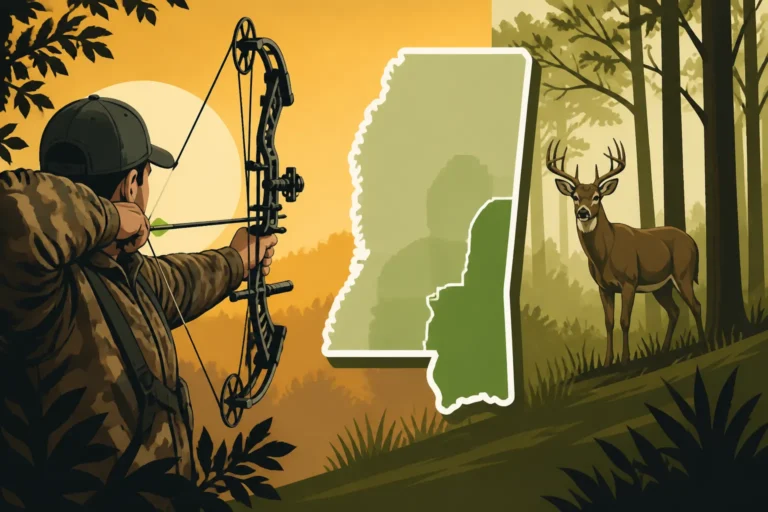
It’s a situation every Mississippi deer hunter dreads: that moment of truth when a buck steps out, your heart pounds, and you have mere seconds to decide if it’s a legal animal under the strict antler restrictions. In the Hills Unit, this pressure is particularly intense with the 10-inch minimum main beam spread rule. Making a mistake can mean a hefty fine, losing your deer, or even worse, your hunting privileges. This guide is here to walk you through exactly how to confidently judge a legal buck in the Hills Unit, helping you avoid those gut-wrenching moments of doubt and ensure a responsible harvest.
Understanding the Hills Unit Antler Restrictions
Hunting in Mississippi's Hills Unit comes with specific regulations designed to foster a healthier, more mature deer population. Unlike some other areas, the focus here isn't just on antler points but on a crucial measurement: the main beam spread. Getting this right is paramount for every hunter.
The "Ten-Inch Spread" Rule Explained
The core of the Hills Unit antler restriction is the "ten-inch main beam spread" rule. This means that for a buck to be considered legal, the distance between the outside edges of its main beams must be at least ten inches. It’s not about how long the antlers are, how many points it has, or how thick the bases are. It's strictly about that horizontal measurement across the widest part of the main beams. Imagine drawing a straight line from the tip of one main beam to the tip of the other; that measurement needs to be at least ten inches.
This rule can be incredibly tricky in the field. A buck might have impressive mass and good tine length, but if its main beams grow straight up with little outward spread, it could still be illegal. Conversely, a younger buck with shorter tines but a decent outward flare to its main beams might easily meet the 10-inch requirement. The challenge lies in making that judgment quickly, often in varying light conditions, with a deer that may only offer a brief, partial view. Many hunters feel the anxiety of a quick glance, second-guessing themselves as a buck disappears into the thick timber. It's a common frustration, and one that proper field techniques can help alleviate. For a full breakdown of all regulations, it’s always wise to consult the Mississippi Deer Season Structure Explained and specifically the Hills Unit Ten-Inch Spread Rule Explained.
Distinguishing a Legal Buck from an Illegal One
So, how do you tell the difference? A legal buck under the 10-inch spread rule in the Hills Unit will generally exhibit a noticeable width to its rack. The main beams will extend outwards enough that there's clear space between them, often appearing wider than the buck's head or even the inside of its ears.
An illegal buck, on the other hand, will typically have a narrower, more upright rack. Think of young bucks—spikes, fork-horns, or small 6-points—whose antlers might barely extend beyond their skull. Their main beams might be short, or they might grow relatively straight up, giving them a "basket rack" appearance where the spread is clearly less than ten inches. These are often yearling bucks (1.5 years old) that the Mississippi Department of Wildlife, Fisheries, and Parks (MDWFP) wants to protect to allow them to mature.
The critical distinction is positive identification. You can't just guess. If there's any doubt, it's always best to let the buck walk. A common scenario is seeing a buck at dawn or dusk when shadows play tricks, or when it’s partially obscured by brush. In these moments, your internal alarm bells should be ringing. Resist the urge to rush. The goal is a legal, ethical harvest, not just any buck.
Why These Rules Exist
These antler restrictions aren't put in place just to make hunting harder, far from it. They're a cornerstone of quality deer management in Mississippi, particularly in units like the Hills where historical harvesting practices often led to a skewed age structure. The primary goal is to protect younger bucks and allow them to reach older age classes.
When hunters consistently take yearling bucks, the herd's age structure suffers. There are fewer mature bucks, and the genetics for antler growth, while not the only factor, can't fully express themselves. By implementing a 10-inch spread rule, the MDWFP encourages hunters to pass on those 1.5-year-old bucks, giving them another year or two to grow. This leads to:
- Improved Age Structure: More older bucks in the population means a healthier social structure, better competition during the rut, and potentially earlier breeding in does.
- Enhanced Antler Quality: While genetics are complex, allowing bucks to mature for an extra year or two often results in larger, more impressive antlers for those older age classes.
- Better Hunter Experience: Ultimately, seeing and having opportunities to harvest more mature bucks can lead to a more rewarding hunting experience for everyone.
It's a long-term strategy that benefits both the deer and the hunter. Understanding this "why" can make passing on a borderline buck a little easier, knowing you're contributing to the overall health of the herd you love to pursue.
Practical Field Strategies for Judging Spread
When that buck steps out, you've got to make a quick, accurate decision. It's not always easy, but there are some time-tested tricks and techniques that veteran hunters swear by to help them judge antler spread in the blink of an eye.
Using Ear Width as a Reference
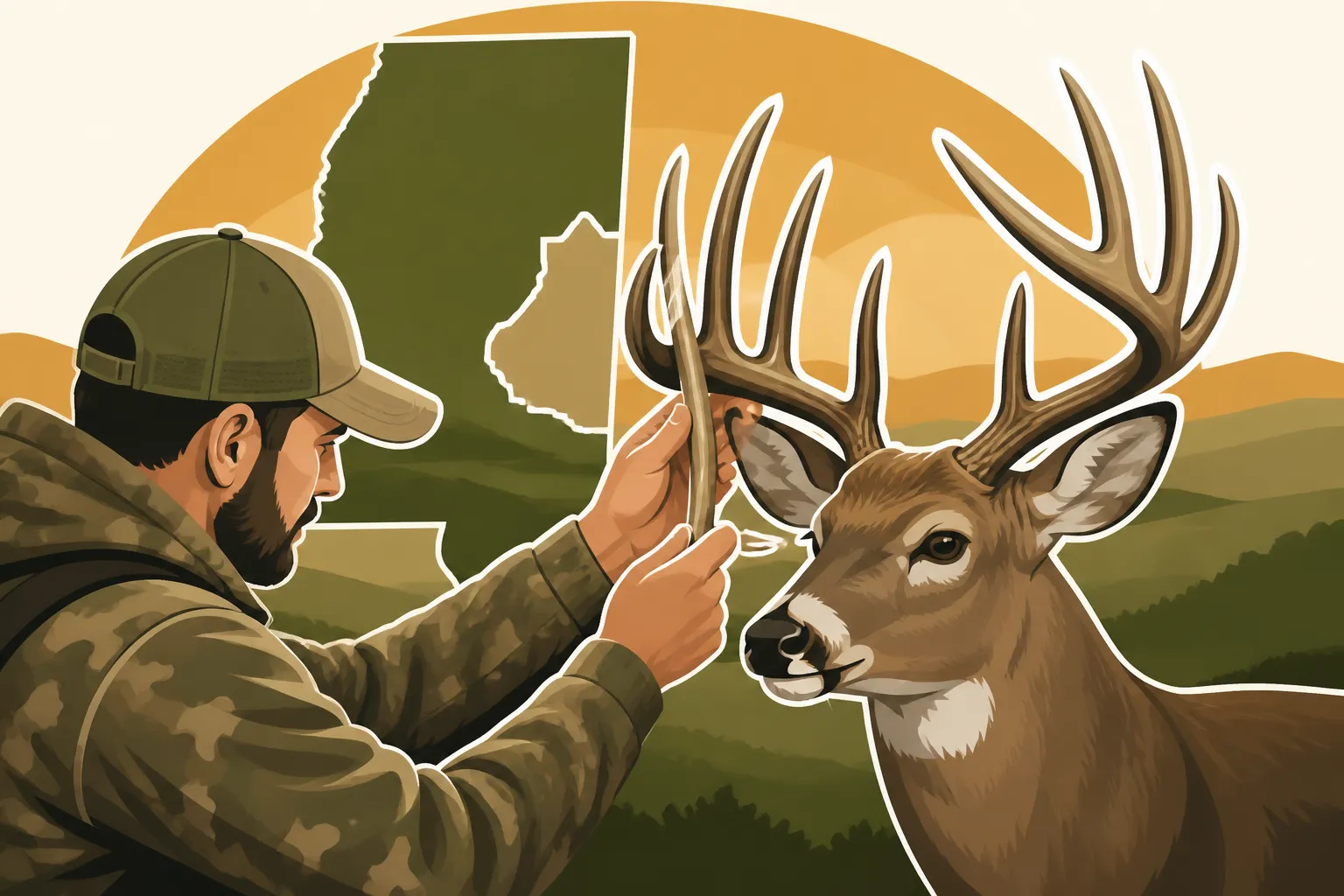
This is hands down one of the most effective and widely used methods for judging antler spread, especially for a 10-inch minimum. A mature whitetail buck's ears, when alert and pointed forward, typically measure between 13 to 15 inches from tip to tip. This provides an excellent, readily available "ruler" on the deer itself.
Here’s how to use it:
- The 10-inch Rule: If the outside edges of the buck's main beams are clearly inside its ears, even when the ears are pointed forward, it's highly likely that the spread is less than 10 inches, and therefore, an illegal buck.
- The Legal Indicator: If the main beams extend to or beyond the tips of the ears, or appear significantly wider than the inside of the ears, you're likely looking at a legal buck with a 10-inch or greater spread.
Caveats to Consider:
- Ear Position: A relaxed deer might have its ears laid back or splayed out, making them appear wider. You need to wait for the deer to be alert, with its ears forward, to get an accurate visual.
- Angle: If the buck is quartering away or directly facing you, it can distort the perceived width. Try to get a broadside view, or at least a quartering-to view, for the best judgment.
- Distance: The further away the deer, the harder this becomes without good optics.
Practicing this visual cue throughout the year, even just watching does or smaller bucks, will train your eye. It's a quick, reliable reference point that has saved many hunters from making an illegal shot.
Observing the Antlers' Curvature and Mass
While the 10-inch rule is strictly about spread, there are often secondary indicators that can help you confirm your initial assessment, especially when you're dealing with a borderline buck. These aren't hard-and-fast rules, but rather tendencies you'll notice in more mature deer.
- Curvature of the Main Beams: Younger bucks (1.5 years old) often have straighter main beams that grow more vertically before developing much curvature. As bucks age, their main beams tend to sweep out and then forward or inward, creating that wider, more open appearance. A buck whose main beams show a noticeable outward sweep is more likely to meet the 10-inch minimum than one with very upright, parallel beams.
- Overall Mass: Bucks with a 10-inch spread often, though not always, have a bit more mass to their antlers than a young spike or fork-horn. This isn't about score, but just a general thickness at the bases and along the beams. A deer with spindly, thin antlers might still meet the spread, but if it has good mass along with decent spread, it adds to the confidence that it's an older, legal buck.
Remember, these are supplementary cues. Always default to the ear-width rule for spread, but use curvature and mass as supporting evidence. This holistic view helps build confidence in your snap judgment.
Patience and Shot Opportunity
This might be the hardest "strategy" to implement in the heat of the moment, but it’s arguably the most important: practice patience. The adrenaline rush when a buck appears can be overwhelming, causing you to rush your judgment and your shot. However, rushing is precisely what leads to mistakes and illegal harvests.
It's absolutely critical to take a breath. Don't immediately shoulder your weapon. Instead, quickly grab your binoculars (more on that in the next section) and get a clear view of the buck. Observe its body language, its head and ear position, and try to get a broadside view.
- Wait for the Right Angle: If the buck is facing you head-on, or quartering heavily, it's incredibly difficult to judge spread accurately. Wait for it to turn. A deer will almost always offer a better angle if you give it a moment.
- Utilize Cover: If the deer is in thick brush, it might only offer fleeting glimpses. Instead of forcing a shot, consider if you can subtly shift your position, or if the deer is likely to move into a clearer opening.
- Pass if in Doubt: This is the golden rule. If you can't confidently confirm the 10-inch spread, let it walk. There will be other bucks, and other opportunities. The consequences of taking an illegal deer are severe, including fines, loss of hunting privileges, and even social shame among the hunting community. It's simply not worth the risk.
Developing this discipline takes practice, but it's a mark of an ethical and responsible hunter. Sometimes the best shot is the one you don't take.
Equipment and Aids for Better Judgment
While your eyes are your primary tool, modern hunting equipment offers significant advantages in the critical task of antler judging. Having the right gear can make the difference between a confident shot and a frustrating, doubtful pass – or worse, an illegal harvest.
The Role of Binoculars and Spotting Scopes
Never, ever head to your stand or still-hunt without a good pair of binoculars. They are absolutely indispensable for antler judging. Trying to eyeball a 10-inch spread at 50, 100, or even 200 yards with the naked eye in low light is a recipe for disaster.
- Binoculars (8x-10x magnification): These are your primary tool for scanning the woods and getting a clear, magnified view of a buck once it appears. An 8x or 10x magnification provides enough power to pick apart details like antler spread, tines, and overall body size without being too shaky for handheld use. They are crucial for assessing that ear-to-ear comparison accurately. When a buck steps out, resist the urge to immediately raise your rifle. Instead, smoothly bring up your binoculars, find the deer, and take a moment to carefully assess its rack.
- Spotting Scopes (15x-60x magnification): While less common for everyday deer hunting in the often thick Mississippi woods, a spotting scope can be invaluable if you're hunting open fields, power lines, or clear-cuts where deer can be observed at very long distances. From a stationary position, you can dial in high magnification to definitively judge a buck's spread before even considering a stalk or long shot.
Pro Tip: Invest in quality optics. Clear, bright glass, especially in low-light conditions (dawn and dusk, when deer are most active), will significantly improve your ability to judge antlers. Brands like Zeiss, Swarovski, Leica, and Vortex offer excellent clarity and light transmission, though there are many other reputable options for various budgets.
Trail Cameras and Pre-Season Scouting
Modern trail cameras have revolutionized how hunters prepare for deer season. They are arguably one of the best tools for taking the guesswork out of antler judging, especially for specific bucks that frequent your hunting grounds. Using apps like GoHunt can further streamline the process of managing and analyzing your camera data, allowing you to track individual bucks over time.
- Pre-Season Identification: Set up trail cameras on established trails, food plots, scrape lines, and bedding area edges well before the season opens. This allows you to inventory the bucks in your area and, critically, identify which ones meet the 10-inch spread requirement. You can get clear, static images of their antlers, eliminating the pressure of a fleeting, real-time encounter.
- Tracking Growth: By deploying cameras throughout the summer and fall, you can literally watch bucks grow. A deer that might have been borderline in August could easily be legal by November. This helps you understand the age structure and antler development on your property.
- Reducing Field Pressure: If you know "that big 8-point with the wide spread" is legal from your trail camera photos, you can hunt with much more confidence when you see him in person. The stress of on-the-spot judgment is greatly reduced. For more general advice, consider Scouting Mississippi Public Land Before Season.
- Data Management with GoHunt: Managing hundreds or thousands of trail cam photos can be overwhelming. Apps like GoHunt allow you to tag, categorize, and organize your buck photos. You can create profiles for individual deer, track their movement patterns, and even use AI features (where available) to help identify and analyze antler growth trends. This kind of detailed record-keeping takes the guesswork out of the woods and makes you a much more informed hunter.
Laser Rangefinders with Angle Compensation
While a laser rangefinder doesn't directly help you measure antler spread, it's an invaluable piece of equipment that contributes to a calm and confident hunting scenario, indirectly aiding in ethical antler judgment.
- Ethical Shot Placement: Once you've positively identified a legal buck, your next critical task is to make an ethical shot. A rangefinder tells you the precise distance to your target, eliminating guesswork. Knowing the exact yardage allows you to adjust your hold or scope turrets accurately, ensuring your bullet hits precisely where you intend.
- Reducing Rushed Decisions: When you're confident in your distance, you're less likely to feel rushed or panicked about making the shot. This calm demeanor allows you to re-verify your antler judgment one last time before pulling the trigger. Many rangefinders also come with angle compensation, which is particularly useful when hunting from elevated stands or in hilly terrain common in parts of the Hills Unit.
Having a rangefinder, especially during Mississippi Gun Season Dates by Unit, means you only have to focus on two things: is it a legal buck, and can I make a clean shot? It removes a significant variable from the equation, freeing up mental bandwidth for antler assessment.
Common Pitfalls and How to Avoid Them
Even the most experienced hunters can fall prey to certain traps when it comes to judging deer. The combination of adrenaline, excitement, and fleeting opportunities can lead to errors that are easily avoided with a bit of foresight and discipline.
The "Ground Shrinkage" Phenomenon
Ah, ground shrinkage. It's a term every hunter knows, and few want to admit has happened to them. This phenomenon describes the common experience where a buck's antlers appear much larger and wider in the field, when seen alive, compared to how they look once the deer is on the ground. It's almost as if the rack "shrinks" once you walk up to it.
- Why it Happens: Several factors contribute to ground shrinkage. Adrenaline plays a huge role; when your heart is pounding, everything seems amplified. Low light conditions can make antlers appear more massive or wider than they are. The deer's body size can also create an optical illusion—a small-bodied deer with a decent rack can make that rack look enormous, while a large-bodied deer can make a good rack look average. Lastly, comparing the live animal to smaller deer you've seen previously can skew your perception.
- How to Avoid It: The best way to combat ground shrinkage is to adhere strictly to your mental benchmarks. If you're using the "ear-width" rule for the 10-inch spread, stick to it. If the buck's main beams don't clearly extend past the ears, or if you have any doubt, pass. Don't let excitement or the perceived size of the buck's body influence your spread judgment. It's better to regret passing on a legal buck than to regret taking an illegal one. Always over-estimate the minimum requirement when in doubt.
Rushing the Shot
The excitement of seeing a buck, especially one that looks promising, can trigger a primal instinct to act fast. This rush, however, is a common cause of poor judgment and illegal harvests. When you feel that surge of adrenaline, it's easy to bypass your mental checklist for antler legality.
- Take a Breath: This cannot be stressed enough. When a buck appears, consciously take a deep breath. This helps to calm your nerves and allows your brain to engage rationally.
- Run Through Your Checklist: Before you even think about putting your finger on the trigger, mentally go through your antler judging process: "Are the main beams wider than the ears? Does it have noticeable outward sweep? Am I absolutely certain it's 10 inches or more?" If you have any hesitation on any point, hold off.
- Wait for the Perfect Angle: As discussed earlier, a quartering-to or broadside shot offers the best angle for judging spread. If the buck is facing you or quartering away heavily, you're looking at a compressed view of the antlers, making accurate judgment extremely difficult. Wait for it to turn. If it doesn't offer a better angle, let it walk. There are plenty of opportunities for Hunting the Rut in the Hills Unit or during other periods.
Remember, deer hunting is about the experience and ethical pursuit. A rushed shot, whether it results in an illegal deer or a wounded animal, detracts from everything we cherish about the sport.
Consequences of an Illegal Harvest
Understanding the repercussions of taking an illegal buck is a powerful deterrent against rushing a shot or making a questionable judgment. Mississippi wildlife laws are not lenient when it comes to violations of antler restrictions, and ignorance of the law is never an acceptable excuse.
- Fines: Expect significant monetary fines. These can range from hundreds to thousands of dollars, depending on the severity of the violation and whether it's a first offense.
- License Suspension/Revocation: This is often the most painful penalty for a dedicated hunter. Your hunting license and privileges can be suspended for a period, or even permanently revoked in severe or repeat cases. This means no hunting, fishing, or trapping in Mississippi for a specified time.
- Forfeiture of the Deer: The illegally harvested deer will be confiscated by wildlife officials. You will not get to keep the meat or the antlers.
- Potential Jail Time: In some egregious cases, especially if combined with other violations (e.g., hunting without a license, poaching), illegal harvest can lead to criminal charges and even jail time.
- Legal Fees: Dealing with these violations often involves court appearances and the need for legal representation, adding further financial strain.
- Reputational Damage: Word travels fast in the hunting community. An illegal harvest can damage your reputation among fellow hunters and landowners, potentially closing doors to future hunting opportunities.
The MDWFP takes these regulations seriously because they are vital to sound wildlife management. Game wardens are highly trained and observant. It's simply not worth the risk. Always be absolutely sure before you pull the trigger. Always be aware of Mississippi Deer Reporting Requirements once you do harvest a deer.
Specific Scenarios and Advanced Tips
Hunting in Mississippi's Hills Unit presents a variety of terrain and cover, each posing unique challenges for judging antler size. Adapting your strategy to these environments, and knowing how to handle unusual antler growth, will further sharpen your skills.
Judging in Thick Cover Versus Open Fields
The environment where a buck presents itself dramatically impacts your ability to make an accurate judgment.
- Thick Timber and Heavy Cover: This is perhaps the most challenging scenario. In dense pine plantations, thick bottomland hardwoods, or brushy clear-cuts, you might only get fleeting glimpses of a buck as it moves through openings. Shadows, branches, and a lack of clear sightlines make judging spread incredibly difficult.
- Strategy: Patience is paramount here. Don't rush a shot. Use your binoculars constantly to try and piece together a full view. Look for any break in the cover where the buck might pause, even for a second. Focus on getting a clear view of the entire antler spread. If you only see one side or a partial view, you simply can't make an accurate judgment. It's often better to let a buck walk in thick cover if you can't get a definitive read, rather than risk an illegal harvest. Consider how quickly you can get your rifle up and sight picture when you only have a small window.
- Open Fields and Food Plots: This scenario offers more advantages. Bucks often move cautiously into fields at dawn or dusk, giving you more time to observe.
- Strategy: Use the extended viewing time to your advantage. Get out your binoculars, take a long, careful look. Judge the spread against the ears. Look for body size indicators. You might even have time to range the deer multiple times as it moves. The clearer view reduces distortion from shadows or obstructions. This is where your pre-season scouting and use of tools like GoHunt really pay off; if you've patterned a specific buck using trail cameras, seeing him in an open field becomes a much more confident encounter. You can also get valuable insights from Reading Aerial Photos for Hills Unit Deer to identify these open areas.
Dealing with Unique Antler Configurations
Not all bucks grow perfectly symmetrical, typical racks. Sometimes you'll encounter a buck with a broken tine, a non-typical point, or an unusually shaped main beam. This can add another layer of complexity to antler judging.
- Focus on Main Beam Spread: Regardless of how many points a buck has, or if it has weird non-typical kicker points, the Hills Unit rule remains the same: it's about the widest outside measurement of the main beams. Don't get distracted by antler oddities. A gnarly 10-point with an inside spread of 8 inches is still illegal. Conversely, a wide 6-point that clearly measures 10 inches or more on the outside of its main beams is perfectly legal.
- Broken Tines or Beams: If a buck has a broken main beam, it can be very difficult to judge the original spread. In such cases, if you can't confidently ascertain the original 10-inch spread, it's best to pass. A broken antler can be misleading and lead to an illegal harvest. Always default to caution.
The rule is designed to be straightforward, but the nuances of antler growth in the wild can always throw a curveball. Maintain your focus on the core requirement.
Learning from Experience and Other Hunters
Antler judging is a skill that improves with practice and mentorship. You can read all the articles and watch all the videos, but there's no substitute for real-world experience.
- Spend Time Observing: The best way to get better at judging deer is to spend time simply observing them. Even if you're not hunting, take your binoculars to a field edge and watch deer. Pay attention to how a doe's ears relate to her head width. Watch young bucks and consciously try to estimate their spread. The more you train your eye, the faster and more accurate you'll become in the field.
- Hunt with Experienced Mentors: If you have the opportunity, go hunting with a seasoned veteran who has successfully navigated antler restrictions for years. They can point out subtle cues, share their tricks, and talk you through their decision-making process in real time. Learning from someone who has been there, done that, is invaluable.
- Utilize Online Communities and Resources: Hunting forums, local hunting groups on social media, or even apps like GoHunt often have sections where hunters discuss antler judging, share photos, and debate legality. While these aren't official resources, they can expose you to different perspectives and challenging scenarios that help you refine your own judgment skills. Learning about topics like Hunting Pressure on Mississippi Public Land can also help you understand how deer might react to various hunting scenarios.
By combining your own field time with the wisdom of experienced hunters and the strategic use of modern tools, you'll become a far more confident and ethical deer hunter in Mississippi's Hills Unit.
Visual Cues for Hills Unit Bucks
Here’s a quick reference to help you in the field:
| Feature | Legal Buck (10" Spread) | Illegal Buck (Less Than 10" Spread) |
|---|---|---|
| Main Beam Spread | Extends clearly outside the deer's ears (when alert) | Clearly inside the deer's ears (when alert) |
| Antler Curvature | Often shows noticeable outward sweep from the head | Tends to be more upright, parallel, and "basket-like" |
| Overall Antler Mass | Generally more substantial at bases and along beams | Typically thinner, more spindly antlers |
| Body Size (Relative) | May appear on a larger, more mature body | Often on a smaller, more juvenile body (1.5 years old) |
| Confidence Level | High certainty based on multiple visual cues | Any doubt whatsoever, or reliance on a single, quick glance |
Disclaimer
This guide is intended for informational purposes only and is not a substitute for official hunting regulations. Hunters are responsible for knowing and adhering to all current Mississippi Department of Wildlife, Fisheries, and Parks (MDWFP) rules and regulations. Always consult the latest MDWFP hunting guide for the most accurate and up-to-date information regarding antler restrictions, season dates, and licensing requirements before heading afield.