Hunting Deer After a Cold Front
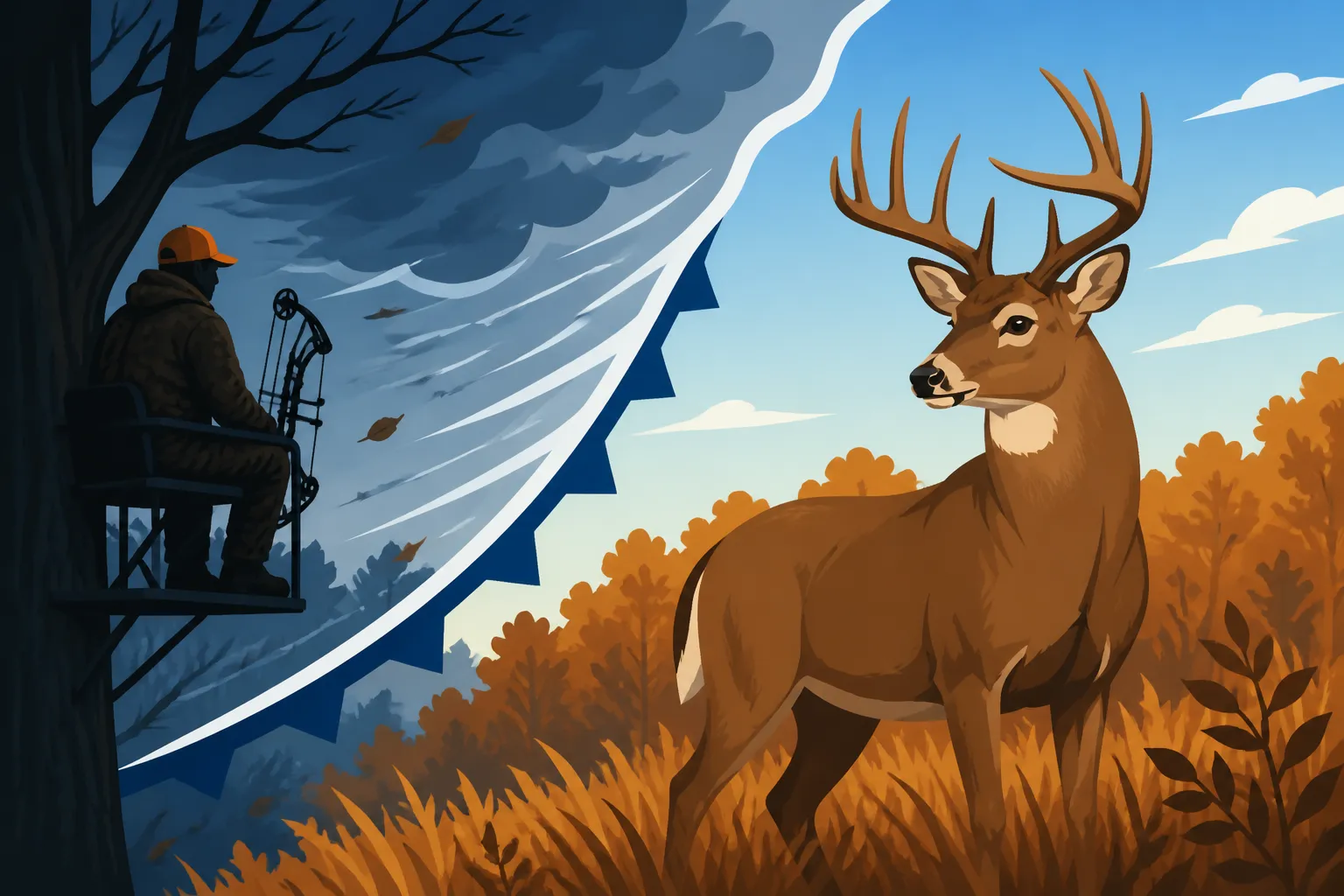
The sudden drop in temperature after a strong cold front can feel like a game-changer in the Mississippi deer woods, sometimes leaving us wondering if the deer just vanished into thin air. It's a common frustration when that beautiful crisp air arrives, but the deer activity seems to go from hot to cold. Don't pack up your gear just yet! This guide is designed to help you understand precisely how deer react to these shifts and equip you with the strategies to turn those chilly post-front conditions into some of your most productive hunting days.
Understanding Deer Behavior After a Cold Front
When a significant cold front sweeps through Mississippi, it's more than just a change in temperature; it's a dramatic shift in atmospheric pressure, wind, and overall environmental cues that profoundly influence deer behavior. Ignoring these changes can lead to slow, frustrating sits, while understanding them can unlock incredible opportunities.
Barometric Pressure and Deer Movement
The most impactful, yet often overlooked, aspect of a cold front is the barometric pressure. Before a front, the pressure usually drops. This falling pressure often signals approaching weather, and deer, like many animals, become more active, feeding heavily and moving more as if to "stock up" before the rougher conditions hit. Once the front passes, the barometric pressure rises sharply and then stabilizes at a higher point. This sudden rise in pressure, coupled with clearer skies and often brisk northwesterly winds, is a powerful stimulant for deer. They often emerge from bedding areas, looking to feed and move.
Think of it like this: that falling pressure before the storm makes them antsy, but the stable, high pressure afterward gives them a sense of security and energy. They know the weather has cleared, and it's time to get out and about. This is particularly true for mature bucks who might have hunkered down during the chaotic weather associated with the front. You might be surprised at the difference a day makes; a deer that was a ghost pre-front can suddenly appear, especially around midday.
Feeding Patterns and Energy Demands
With the drop in temperature, deer suddenly have a much higher caloric demand just to maintain their body temperature. This physiological need drives them to seek out high-energy food sources. While they might browse on green vegetation or acorns during milder weather, after a hard cold front, their focus shifts dramatically. They're looking for quick calories and bulk.
This means food sources like standing or recently harvested corn and soybean fields become absolute magnets. If you're hunting in areas like the Delta Unit or parts of the North Central Unit where row crops are prevalent, these fields can be goldmines. Even in more timbered regions, like parts of the Hills Unit, deer will gravitate towards any remaining concentrated food source, be it a forgotten persimmon patch, a late-dropping oak flat, or a planted food plot. Understanding these seasonal shifts in their diet is crucial. Knowing what to look for can help you identify prime feeding areas. For more details on what deer eat when, check out our guide on Late-Season Food Sources for Mississippi Whitetails.
Bedding Adjustments and Thermal Cover
Deer are incredibly efficient at conserving energy, and after a cold front, this often translates to adjustments in their bedding locations. They'll seek out thermal cover to shield themselves from the biting wind and cold. This might mean moving from exposed ridges to thick pine thickets or dense cedars on a south-facing slope that catches the sun. In bottomland areas, dense cane thickets, briar patches, or even the lee side of large blowdowns can provide crucial protection.
Understanding these bedding shifts is vital for still-hunting or planning entry and exit routes. You might find deer bedding tighter and in less obvious spots. Areas that offered great cover during warmer weather might be completely abandoned in favor of something with more insulating properties. When the wind howls, deer will almost always bed on the downwind side of dense cover, allowing the wind to bring them scent from behind while they can watch and hear what's coming from in front.
Strategic Adjustments for Post-Front Hunting
Successfully hunting deer after a cold front isn't just about showing up; it's about making deliberate, well-informed adjustments to your approach. The strategies that worked pre-front might be utterly ineffective now.
Locating Prime Food Sources and Staging Areas
Your number one priority after a cold front should be to pinpoint where deer are feeding, and just as importantly, the staging areas they use to get there. As mentioned, high-calorie food sources are key. If you have access to agricultural fields, scouting them for fresh tracks and droppings is non-negotiable. Using an app like GoHunt can help you overlay public land boundaries with satellite imagery, allowing you to identify potential food sources or travel corridors that might not be obvious on the ground. You might find deer moving earlier in the afternoon or later into the morning to reach these spots, extending the prime hunting windows beyond what you'd typically expect.
Staging areas are often overlooked but are critical. These are smaller patches of cover, sometimes just a dense briar thicket or a line of saplings, that deer use to "stage" before entering a large, open food source. They'll linger there, often just before dark, to scent check, observe, and gain confidence before stepping out into the open. Setting up a stand in one of these staging areas, rather than directly on the field edge, can give you a better shot at a cautious buck. Our guide on Setting Up on a Delta Field Edge offers more insights into this specific tactic.
Adjusting Stand Locations and Entry/Exit Routes
Given the changes in wind direction and deer movement patterns, re-evaluating your stand locations is paramount. The prevailing winds after a cold front are often from the north or northwest, sometimes quite strong. You absolutely cannot get away with a sloppy wind direction with a mature whitetail, especially after a front has them on edge. Use your GoHunt app to check current and forecasted wind direction, then choose a stand that keeps your scent completely out of the known travel corridors and feeding areas. This might mean moving to a different side of a field, or shifting to a completely new area of timber.
Furthermore, entry and exit routes become even more critical. With deer potentially moving during less typical times (like midday), you need to be able to get in and out of your stand undetected. This might involve longer walks, using natural terrain features to hide your approach, or even waiting longer after dark to climb down. Remember, the goal is to be a ghost in the woods. Pay attention to how the wind and thermals affect your approach, especially in areas with varied topography. Our article on Wind and Thermals in Delta Bottomland can provide valuable knowledge in this regard.
Patience and Persistence in Cold Conditions
Hunting after a cold front often demands a different kind of patience. While deer will move, their movement might be more sporadic or concentrated during specific windows, like the late morning or early afternoon, as temperatures slowly rise. Don't assume that if you don't see anything at first light, the day is a bust. Some of my most memorable post-front bucks have come between 10 AM and 2 PM when many other hunters have already left the woods.
Layering your clothing effectively is key to staying comfortable enough to remain on stand. High-quality base layers, insulating mid-layers, and a windproof outer shell are non-negotiable. Hand warmers and foot warmers can make a huge difference in your ability to sit still and wait. The deer are out there, driven by hunger and the comfort of stable weather; you just need to be in the right place at the right time and have the patience to see it through.
Key Gear and Preparation for Cold Front Hunting
Facing down a Mississippi cold front requires more than just a thicker jacket. Thoughtful preparation and the right gear can make or break your hunt, ensuring comfort, safety, and ultimately, success.
Essential Cold Weather Clothing Layers
Forget bundling up in one big, bulky coat; layering is your best friend when hunting after a cold front. Start with a good moisture-wicking base layer against your skin – synthetic materials or merino wool are excellent choices as they draw sweat away, keeping you dry and warm. Next, add insulating mid-layers, like fleece or down vests and jackets, to trap body heat. Finally, an outer shell that is both windproof and waterproof is critical for protecting you from the elements. A biting north wind will cut right through non-windproof material, stealing your body heat rapidly.
Don't forget your extremities! A warm hat that covers your ears is paramount, as a significant amount of body heat is lost through the head. Insulated, waterproof gloves or mittens are a must, ideally with a finger that can be exposed for shooting. Finally, warm, waterproof boots with thick, insulating socks will keep your feet from freezing. Sitting still for hours in cold temperatures, especially in a treestand, means your circulation slows, and your feet and hands are often the first to get cold.
Scouting and Mapping Tools
Even if you've hunted an area for years, scouting takes on renewed importance after a cold front. New sign, like fresh tracks in the frost or heavily browsed food plots, can pop up overnight. Beyond visual scouting, digital mapping tools are invaluable. Apps like GoHunt allow you to mark specific deer sightings, identify new trails, analyze terrain features, and even check historical weather patterns for the area you're hunting. You can mark potential bedding areas on south-facing slopes, identify thickets offering thermal cover, or pinpoint those high-calorie food sources.
Using these tools to identify potential travel corridors, such as pinch points between cover and food, or a saddle on a ridge line, can give you a significant advantage. Before the season, spending time with aerial photos and topographic maps on your GoHunt app can help you predict where deer might move when that cold front hits. For those hunting public lands, especially in areas like Delta National Forest, understanding the lay of the land from a map before you even step foot in the woods can save you hours of wasted effort. Check out our guide on Reading Aerial Photos for Hills Unit Deer for more specific tips on using maps to your advantage.
Scent Control and Quiet Movement
With crisp, cold air, your scent can travel much further and linger longer. This means strict scent control is more crucial than ever. Shower with scent-eliminating soap, wash your hunting clothes in scent-free detergent, and store them in airtight bags or containers. Dress at the truck or just before entering your stand to minimize picking up foreign odors. Using a quality scent spray on your outer layers, boots, and pack is also a good practice.
Equally important is quiet movement. Frozen ground, brittle leaves, and icy branches can make every step sound like a thunderclap. Take your time, walk slowly, and lift your feet rather than dragging them. Dress in quiet fabrics like fleece or wool that won't rustle or swish as you move. A squeaky treestand or noisy zippers can ruin a hunt just as quickly as a swirling wind. The colder air can carry sound farther, so being stealthy from the moment you leave your vehicle until you're settled in your stand is essential.
Specific Mississippi Considerations
Mississippi's diverse landscapes mean that a cold front might manifest differently, and require tailored strategies, depending on which of the state's four deer management units you're hunting.
Delta Unit Strategies
Hunting the Delta Unit after a cold front presents unique challenges and opportunities. This flat, often agricultural region means deer are heavily reliant on row crops and the scattered bottomland hardwoods or river batture areas for cover. When temperatures plummet, deer in the Delta will gravitate even more strongly towards high-energy food sources in fields. This could be standing corn, soybeans, or even winter wheat plots. Expect increased movement during daylight, particularly around these crop fields.
The key here is finding the thickest cover adjacent to these food sources. Deer will bed in dense cane thickets, large patches of privet, or the deepest swamps to escape the wind. Identifying funnel points, like narrow strips of timber between two fields or subtle ridges within a vast bottomland, becomes critical. Your stand placement needs to be meticulous, factoring in those often strong north or northwest winds to avoid blowing your scent into bedding areas or travel corridors. Sometimes, hunting a funnel between two sloughs can be incredibly effective when deer are trying to get out of the wind.
Hills and North Central Unit Tactics
In the more undulating terrain of the Hills and North Central Units, cold fronts push deer to seek out specific types of cover and food sources. Pine thickets, especially those with dense undergrowth, become prime bedding areas, offering excellent thermal protection from the wind. South-facing slopes that catch the most sunlight are also favored bedding spots, allowing deer to warm up even on the coldest days.
Food sources in these units will still be a driving factor. Look for hard mast like oaks that might still be dropping acorns, or planted food plots of clover, wheat, or oats. Creek bottoms and draws often serve as natural travel corridors, providing both cover and easier movement through the topography. When the wind is really blowing, deer will often travel along the lee side of ridges, using the terrain to block the wind. Focusing your efforts on these sheltered travel routes or food sources near dense thermal cover can pay dividends. For more detailed strategies in this terrain, consider reading about Still-Hunting Hills Unit Ridges.
Southeast Unit Considerations
The Southeast Unit, with its mix of piney woods, clear-cuts, and bottomland drains, also requires specific adaptations. After a cold front, deer will similarly seek the thermal protection of dense pine plantations or thick clear-cut regrowth. Areas with mature longleaf pines often have sparse understory, pushing deer into the thicker sections for security and warmth.
Food sources might be a bit more scattered here, often relying on natural browse, planted food plots, or even areas where timber operations have created new growth that deer can access. Creek bottoms that wind through piney woods can be excellent travel corridors, offering cover and often a slightly warmer microclimate. Don't overlook the edges of clear-cuts where dense regrowth meets older timber; these transition zones can be natural funnels. The Southeast Unit also boasts an extended archery window, which can mean more opportunities to capitalize on these post-front conditions earlier in the season. Our guide on Hunting the Southeast Unit's Longer Archery Run dives into this further.
General Mississippi Hunting Advice
Regardless of the unit, always remember that deer are creatures of habit, but also opportunists. After a cold front, their habits might shift, but their fundamental needs for food, water, and cover remain. Paying attention to details like fresh tracks, rubs, and scrapes, even after a cold snap, is crucial. These signs, especially new rubs along a logging road, can confirm recent deer activity and help you adjust your strategy.
Always be prepared for a longer day and potentially a longer track if you connect with a deer. Cold weather can make blood trailing more challenging if the blood freezes or is sparse on hard ground. Be sure you have a reliable light source, even if you plan to be out before dark. And remember, camaraderie at deer camp is a huge part of the Mississippi hunting tradition; sharing stories and strategies with fellow hunters can often lead to new insights.
| Factor | Pre-Cold Front Deer Behavior | Post-Cold Front Deer Behavior |
|---|---|---|
| Barometric Pressure | Falling, often leading to increased movement | Rising and stabilizing, stimulating movement |
| Feeding Activity | Heavy feeding, often concentrated before front | Increased feeding, focused on high-calorie foods |
| Bedding Location | More varied, possibly in open areas | Seeks dense thermal cover, south-facing slopes |
| Movement Timing | Often early morning and late evening | Can be increased midday, extending activity |
| Wind Impact | Considered, but less critical than post-front | Extremely critical, drives bedding/travel choices |
| Food Source Focus | Acorns, green browse | Row crops, high-energy food plots |
Disclaimer
Hunting is an inherently dangerous activity. Always prioritize safety by adhering to all local, state, and federal hunting regulations. Understand and follow all rules set forth by the Mississippi Department of Wildlife, Fisheries, and Parks. Ensure you have proper landowner permission if hunting private land. Wear appropriate blaze orange or pink when required, and always be aware of your surroundings and other hunters. This information is for educational purposes only and does not substitute professional guidance or certified hunter education.