Predator Calling Mississippi Delta Fields
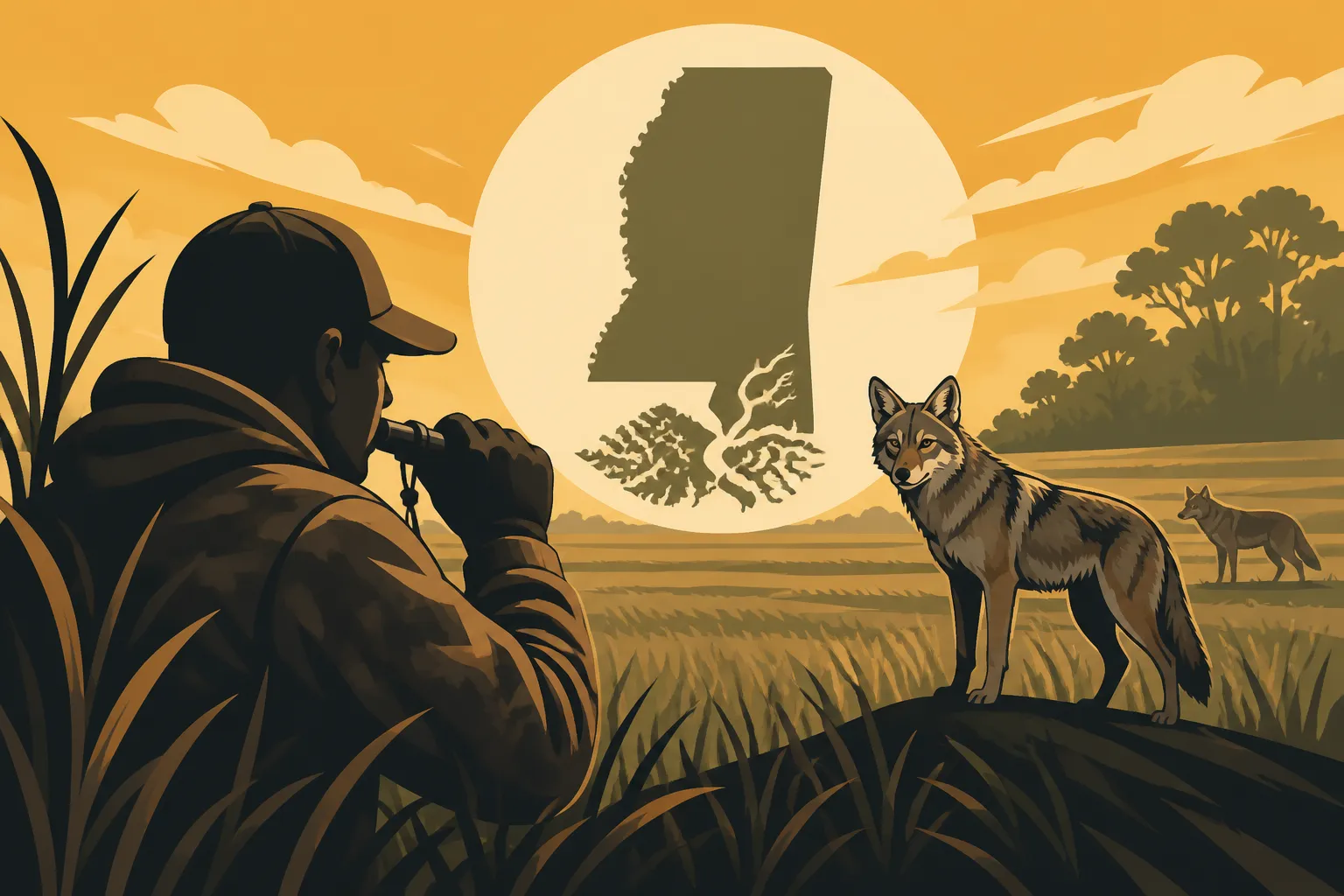
The vast, flat expanse of the Mississippi Delta, with its fertile fields and dense pockets of cover, presents a unique challenge for predator hunters. While these areas are rich in game like deer, turkeys, and waterfowl, they also provide an ideal environment for coyotes, bobcats, and foxes, whose increasing numbers can impact local wildlife populations. This guide will walk you through the specific strategies and considerations for effectively calling predators in the Mississippi Delta's open field country, helping you understand their movements and bring them into range.
Understanding the Mississippi Delta Predator Landscape
Hunting in the Delta is truly an experience, but it comes with its own set of considerations, especially when you're targeting predators. These animals thrive here, not just surviving, but genuinely multiplying, making predator control a year-round job for many landowners and hunters. It's not just about the thrill of the hunt; it's about balance and protecting the deer, turkeys, and ducks we all love to pursue.
Key Predator Species in Delta Fields
When you're out in the Mississippi Delta, you're primarily going to be focused on a few key predator species. Coyotes are probably the most common and widespread. They're incredibly adaptable and have really made themselves at home across the entire state, but especially in the Delta where food sources are so abundant. You'll find them ranging from the large agricultural fields to the edges of dense bottomland timber. Then there are bobcats, which are a bit more elusive, preferring thicker cover but still frequently traversing field edges and drainage ditches as they hunt. While not as numerous as coyotes, a bobcat responding to a call is a truly special experience. Finally, you've got foxes – both red and gray. Gray foxes often stick to the more wooded areas and thickets, while red foxes are more comfortable in open agricultural landscapes, often seen scurrying across fields at dawn or dusk. Each of these species offers a different challenge and requires a slightly nuanced approach to calling.
The impact of these animals isn't just theoretical; it's something you see on the landscape. I remember talking to a farmer near Yazoo City who lost a significant number of newborn calves to coyotes in one season alone. That's a direct economic hit, but for us hunters, it's about the fawn and poult recruitment numbers. Healthy predator populations, when unchecked, can put a serious dent in the survival rates of young deer and turkeys, not to mention the constant pressure they put on smaller game like rabbits and squirrels. Understanding this ecological role is crucial, because it highlights why predator control, done responsibly, is a vital part of game management in the Delta.
Why Delta Fields Attract Predators
So, why do predators love the Delta fields so much? It boils down to a few key factors: food, cover, and opportunity. These agricultural lands, particularly those along the Mississippi River batture, are absolute smorgasbords for coyotes, foxes, and bobcats. Think about it: vast fields of corn, soybeans, and rice attract an incredible amount of rodents. Mice, rats, voles – it's a buffet out there. These small mammals are a primary food source for all our target predators. Beyond that, the edges of these fields are often lined with thick fencerows, drainage ditches, and patches of brush, providing perfect travel corridors and ambush points.
Then there's the bigger game. White-tailed deer are everywhere in the Delta, and spring brings new fawns, which are easy prey for a hungry coyote or bobcat. The same goes for wild turkeys, especially during nesting season when hens are vulnerable and poults are just tiny, helpless morsels. The prevalence of Wild Turkeys in Mississippi makes these areas a prime hunting ground for predators. Waterfowl, particularly wintering ducks and geese, also draw predators to these fields, especially after harvest when grain is scattered or near smaller sloughs and potholes. The combination of easy prey, natural cover in the form of ditches and field edges, and the sheer vastness of the area makes Delta fields incredibly attractive. It's a land of opportunity for a predator, which means it can be a land of opportunity for us as predator hunters. You can learn more about how important these areas are for game by reading about Hunting the Mississippi Delta.
The Impact of Predators on Game Populations
It's a stark reality for anyone who spends time in the Mississippi Delta: an unchecked predator population can significantly impact the health and numbers of our cherished game species. We're talking about more than just a nuisance; it's a genuine ecological force. For deer hunters, especially those focused on herd health, the sight of a healthy fawn crop is a welcome one. However, high coyote numbers, for instance, can drastically reduce fawn survival rates. A significant portion of fawn mortality, particularly in the first few weeks of life, can be attributed to predation. This isn't just a concern for private landowners; it affects public lands too, making it harder for our deer herds to reach their full potential.
Similarly, turkey populations, while showing some resilience, are constantly under pressure. Nest predation by coyotes, bobcats, and even raccoons and opossums can wipe out an entire clutch of eggs. Once hatched, young poults are extremely vulnerable to these same predators. A bad hatch or high poult mortality due to predation can lead to noticeable dips in turkey numbers a couple of years down the line, frustrating hunters during Spring Turkey Hunting in Mississippi. And let's not forget waterfowl. While adult ducks and geese are usually safe, nests along field edges or near water can be raided, impacting breeding success. Beyond direct predation, the constant presence of coyotes can stress game animals, forcing them into less ideal habitats or making them more wary, which in turn makes them harder for us to hunt. It's a complex web, but understanding the link between predators and game helps solidify why responsible predator calling is a crucial management tool for Mississippi hunters.
Essential Gear and Setup for Delta Field Calling
Successfully calling predators in the Mississippi Delta isn't just about blowing a call; it's about being prepared and understanding the unique environment you're in. The open nature of many Delta fields means your gear and setup need to be top-notch, allowing you to see predators coming from a distance and remain completely concealed until the shot.
Optics and Observation Strategies
In the open fields of the Delta, good optics aren't just a luxury; they're an absolute necessity. Unlike hunting in dense timber, predators can often approach from hundreds of yards away, and if you don't spot them early, they'll often spot you first. A quality pair of binoculars, at least 10×42, is essential for scanning field edges, tree lines, and distant patches of cover. Don't skimp here; clear, bright glass makes a world of difference, especially in low light conditions at dawn and dusk. Many seasoned hunters will even carry a spotting scope, particularly if they're sitting in a stationary blind overlooking vast acreage. This allows for incredibly detailed observation of distant movement, letting you discern a coyote from a feral dog, or even spot subtle ear twitches that indicate an animal is listening.
When it comes to observation strategies, elevated positions are often your best friend. A small rise, the top of a levee, or even a well-placed ladder stand along a field edge can give you a significant advantage. The higher vantage point allows you to see over stubble fields and low vegetation, spotting those incoming coyotes long before they get close. Always scan slowly and methodically, breaking up the landscape into grids. Look for movement, yes, but also look for shapes that seem out of place—a tell-tale ear, a slight flicker of white on a coyote's chest as it trots. Using a mapping application like GoHunt can be incredibly helpful for identifying these elevated positions, drainage features, and potential travel corridors before you even step foot in the field. Pre-scouting with good maps and quality optics will dramatically increase your success rate.
Calls: Electronic vs. Hand Calls
Choosing the right call is paramount for predator hunting in the Delta. You've got two main categories: electronic calls (e-callers) and hand calls. Both have their place, but in the open, expansive Delta fields, e-callers often hold a distinct advantage.
Electronic Calls (E-Callers): These are incredibly versatile, offering a wide array of sounds – everything from rabbit distress to coyote howls, pup distress, and even bird sounds. Brands like Foxpro and Primos are popular choices, known for their sound quality and remote-control functionality. The remote control is a game-changer in the Delta. It allows you to place the caller out in front of you, away from your position, drawing the predator's attention to the sound source and away from your hiding spot. This is especially critical in open country where a coyote can spot movement from a long distance. You can also manipulate the volume and switch sounds easily without moving a muscle, which is vital when a wary coyote is hanging up at 200 yards. For calling in open fields, the ability to project sound across vast distances and direct attention away from yourself makes an e-caller a powerful tool. They are particularly effective when Coyote Calling in Mississippi Farm Country due to the wide open spaces.
Hand Calls: Don't count out hand calls entirely, though. They offer an authenticity and control that e-callers sometimes lack, and they're excellent for close-quarters calling or when you need to fine-tune a sound. Mouth-blown distress calls, like a cottontail or jackrabbit squeal, can be deadly when a coyote is already close or when you're hunting in smaller pockets of cover within the Delta. Learning to master a few different hand calls, particularly a good closed-reed distress call and an open-reed howler, can be incredibly rewarding. They also serve as a fantastic backup if your e-caller battery dies or malfunctions. While e-callers might be the primary tool for covering vast Delta fields, carrying a few reliable hand calls gives you added flexibility and a primal connection to the hunt.
Concealment and Wind Awareness
In the wide-open spaces of the Mississippi Delta, a predator's eyesight is arguably its most formidable sense. Therefore, flawless concealment is non-negotiable. Forget the idea of just standing behind a sparse bush; you need to vanish. Full camouflage, including face paint or a mask, gloves, and clothing that breaks up your outline, is essential. Think about blending into the natural contours of the land. Drainage ditches, the base of a levee, or even the shadows cast by a solitary pecan tree on a field edge can offer surprisingly good cover. Many hunters opt for ground blinds, either pop-up blinds or naturally brushed-in setups, especially when they plan to stay in one spot for an extended period. The key is to break up your human silhouette completely and ensure you have a clear shooting lane without having to make excessive movement.
However, even the best camouflage is useless if you don't account for the wind. Wind awareness is paramount when predator calling, arguably even more critical than visual concealment. A coyote's nose is incredible; they can often wind you from several hundred yards away. Always, always try to set up with the wind in your favor, meaning it should be blowing from the area you expect the predator to come from towards you. This forces them to approach with the wind at their back, or quartering into it, giving you time to spot them before they catch your scent. If a predator gets downwind of you, the hunt is usually over before it truly begins. Before every setup, I check a reliable wind app and confirm the direction with a small puff bottle. Also, consider thermals, especially in the mornings and evenings. As the ground heats and cools, air currents can shift. In the Delta, where the terrain is flat, these shifts might be subtle but can still carry your scent. Planning your entry and exit routes to maintain wind advantage is also crucial, ensuring you don't spook game, or more importantly, the predators you're after, on your way in or out.
Effective Calling Strategies for Open Delta Terrain
The Mississippi Delta's expansive fields and broken cover present a unique challenge for predator callers. Unlike dense woods, you often have long sightlines, but also less cover to work with. Crafting the right strategy for your stand location and calling sequence is what will turn those distant spots into responding predators.
Choosing Your Stand Location
Selecting the right stand location in the Delta is arguably the most critical decision you'll make. Since you're often dealing with vast, open fields, you can't just plop down anywhere. You need to identify features that offer a combination of cover, elevated visibility, and natural travel corridors for predators. Field edges are almost always a prime starting point. Look for areas where a field meets a treeline, a fencerow, or a drainage ditch. These transitions are where predators feel most comfortable traveling, offering a quick escape route into thicker cover if needed.
Drainage ditches and irrigation canals crisscross many Delta fields, acting as highways for coyotes and bobcats. Setting up along one of these, particularly at a bend or where it intersects with another feature, can be deadly. These depressions offer natural concealment while allowing predators to move undetected. Don't overlook isolated clumps of cover either, like a small stand of trees in the middle of a field, an old equipment row overgrown with brush, or even a levee system. These spots can serve as excellent ambush points or places for a wary predator to stage before committing to your call. Remember to use mapping tools like GoHunt to scout these features digitally before you head out. Pinpointing potential travel routes and dense pockets of cover, even when they're miles away, is key to choosing a high-percentage setup.
Calling Sequences and Volume
Once you're in your chosen spot, the real art begins: the calling sequence. In the Delta, with its open nature, you often want to start with a moderate volume distress call. Think a cottontail in distress or a juvenile coyote pup yelp. The goal is to grab attention without immediately screaming "danger." Predators can hear these sounds from a long way off, especially on calm days. After your initial sequence, which might last 30-60 seconds, go completely silent for a minute or two. This is crucial; often, a coyote will come charging in after hearing the initial call, and if you're still calling, it might hang up trying to locate the exact source.
If nothing appears after a few minutes, gradually increase your volume and perhaps change the type of distress. Maybe switch to a jackrabbit or a bird in distress. Play with the cadence—a few short bursts, then a longer, more frantic cry. Remember that these predators are used to hearing various sounds, and sometimes a change in pitch or rhythm is what breaks them. After about 10-15 minutes of distress calls, if you're not getting a response, consider throwing in some coyote vocalizations. A lone howl or a series of challenge howls can provoke a territorial response, especially from dominant males. Be patient. Some coyotes will come in fast, while others will take their sweet time, circling downwind to catch a scent. A typical stand in the Delta might last 20-30 minutes, allowing ample time for distant predators to respond.
Adapting to Different Predator Responses
Not every predator will come charging in perfectly. In fact, many won't, especially the mature, educated ones that have heard a call or two. Learning to adapt your calling strategy to different predator responses is a sign of an experienced caller. Sometimes, a coyote will appear at a distance, maybe 300-400 yards, and just stand there, staring in your general direction. This is a "hang-up." When this happens, often the best approach is to stop calling completely and let curiosity work its magic. If that doesn't work after a few minutes, try a very soft, subtle call – a whimper, a tiny rabbit squeak, or a very low-volume pup distress. The idea is to make them think the "prey" is weakening or moving away, trying to draw them the last few yards.
Other times, a coyote might circle far downwind, attempting to get your scent. This is where your wind awareness and setup are critical. If they start to circle, you might try a very quick, sharp distress call to try and stop them or divert their path before they hit your scent cone. If a coyote busts you and runs, don't just pack up and leave immediately. Sometimes, they'll stop at a safe distance and look back. A quick, frantic distress call or even a "yodel" or "howl" can sometimes stop them long enough for a shot. For bobcats and foxes, the approach is often much stealthier. They might show up quietly, almost magically, close to your position. For these, a continuous, lower-volume distress call is often more effective, as they are less likely to respond to aggressive coyote vocalizations. The key is constant observation, patience, and a willingness to adjust your sounds and volume based on how the predator is behaving. It's a dynamic chess match, and every hunt is a learning experience.
Advanced Tactics and Common Challenges
Once you've got the basics down, you'll start encountering more complex scenarios in the Delta. Advanced tactics can help you overcome these hurdles, but you also need to be prepared for the realities of hunting pressured animals and dealing with unique challenges like night hunting.
Night Hunting Considerations in the Delta
Night hunting predators in the Mississippi Delta is a whole different ballgame, offering unique opportunities but also demanding strict adherence to safety and regulations. Many states, including Mississippi, allow night hunting for certain predators like coyotes and hogs, often year-round. However, you must know the Night Hunting Rules for Mississippi Coyotes and any local ordinances, as these can vary. It's not uncommon for landowners to permit night hunting to control nuisance animals, especially where they impact livestock or game populations.
The primary advantage of night hunting is that predators, particularly coyotes, are often more active and less wary under the cover of darkness. They feel safer traveling and hunting. The gear for night hunting shifts dramatically. Forget your binoculars; you'll be relying on specialized optics. Thermal imaging scopes and binoculars are incredibly effective, allowing you to spot heat signatures of animals in total darkness, often from hundreds of yards away. Night vision devices (NVGs) are another option, amplifying ambient light to create a green-tinged image. Additionally, legal predator lights, usually red or green, are often used to identify and illuminate the target for a shot. These lights are often designed to be less alarming to nocturnal animals than white light. When calling at night, use the same distress calls, but often lower volume is more effective as sounds travel further without daytime ambient noise. Safety is paramount: always have a clear backdrop, positively identify your target, and never shoot towards roads or occupied dwellings. Hunting with a partner, one spotting and one shooting, is often the safest and most effective method.
Dealing with Hunting Pressure
Let's be real: quality hunting ground in Mississippi, especially for predators, can see a fair bit of pressure. Whether it's public land within a National Forest boundary or private land near population centers, those coyotes and bobcats get educated quickly. They've heard every rabbit distress call in the book, seen dozens of hunters, and probably had a few close calls themselves. When you're dealing with pressured animals in the Delta, you've got to think outside the box. Forget the obvious field edges; those animals are likely skirting those areas or only moving through them under the darkest cover of night.
This is where detailed scouting and creative stand selection come into play. Instead of the most obvious field corner, look for those overlooked pockets of cover – a small, thick briar patch in the middle of a larger cutover, an overgrown drainage ditch that nobody else bothers to walk, or a subtle rise that gives you an unexpected vantage point. Using a powerful mapping tool like GoHunt can help you identify these nuances. Look for areas on aerial photos that might be difficult to access or are just far enough off the beaten path that most hunters skip them. When calling pressured predators, less is often more. Start with very subtle, low-volume calls, maybe even pup distress or a single coyote howl to mimic a passing animal. Avoid aggressive vocalizations early on, as these can often spook an educated coyote. Be prepared for them to hang up far out, circle widely, and approach with extreme caution. Patience becomes even more of a virtue, and sometimes, a completely silent approach to a known bedding area, followed by a soft, short calling sequence, can be the ticket. Remember, the goal is to offer something different, something they haven't heard or seen countless times before. Sometimes, it's about Finding Ground Others Walk Past.
The Role of E-Callers and Decoys
In the open fields of the Delta, electronic callers (e-callers) truly shine. Their ability to broadcast high-quality, realistic sounds across vast distances is unmatched by hand calls. The remote control feature is a significant advantage, allowing you to place the caller 50-100 yards out in front of your position. This draws the predator's focus away from your hidden location and directly to the sound source, increasing your chances of getting a shot before they detect you. Modern e-callers offer a huge library of sounds, from various rabbit and bird distresses to a full range of coyote vocalizations, including howls, barks, and pup whines. Experimenting with different sounds and sequences is key. A distress sound followed by a few aggressive howls can sometimes trigger a territorial response from a dominant male, bringing him in on a string.
Motion decoys, especially when used in conjunction with an e-caller, can dramatically increase your success rate. A simple "critter" or "fur" decoy, often a feathered or furry top attached to a spinning motor, provides a visual stimulant that complements your audio call. In the open Delta fields, where predators can scrutinize a scene from a long distance, the subtle movement of a decoy mimics a struggling or feeding animal. This visual cue can often be the final convincing factor for a wary coyote or fox that's hanging up at 150 yards. Place the decoy near your e-caller, a bit out from your shooting position, so that it draws the predator's eyes. When a coyote comes in and sees the movement, its predatory instincts kick in, diverting its attention and often allowing you those crucial extra seconds for a clean shot. Brands like Mojo Outdoors make popular, effective motion decoys that are lightweight and easy to deploy in the field.
| Predator Species | Primary Call Types (E-Caller) | Effective Hand Call Types | Key Characteristics for Delta Fields |
|---|---|---|---|
| Coyote | Rabbit Distress, Pup Distress, Howls, Barks | Cottontail Squeals, Jackrabbit Distress, Open-reed Howlers | Widespread, highly adaptable, will often circle downwind, responds well to distress and challenge calls. |
| Bobcat | Fawn Distress, Bird Distress, Mouse Squeaks | Mouse Squeaks, Closed-reed Distress (soft) | More secretive, often uses dense cover, slower approach, less vocal, responds best to subtle, high-pitched distress. |
| Red Fox | Mouse Squeaks, Bird Distress, Vole Squeaks | Mouse Squeaks, Small Bird Distress | Often found in open fields, quick and agile, responds well to high-pitched distress, curious. |
| Gray Fox | Mouse Squeaks, Bird Distress, Kitten Distress | Mouse Squeaks, Vole Squeaks | Prefers thicker cover/wooded edges, more arboreal, can be harder to call into open areas. |
Disclaimer
Hunting is an inherently dangerous activity. Always prioritize safety, understand and follow all local, state, and federal hunting regulations, and obtain proper licenses and permits. The information provided in this guide is for informational purposes only and should not be considered a substitute for professional instruction or direct experience. Always be aware of your surroundings, the capabilities of your equipment, and practice ethical hunting principles.