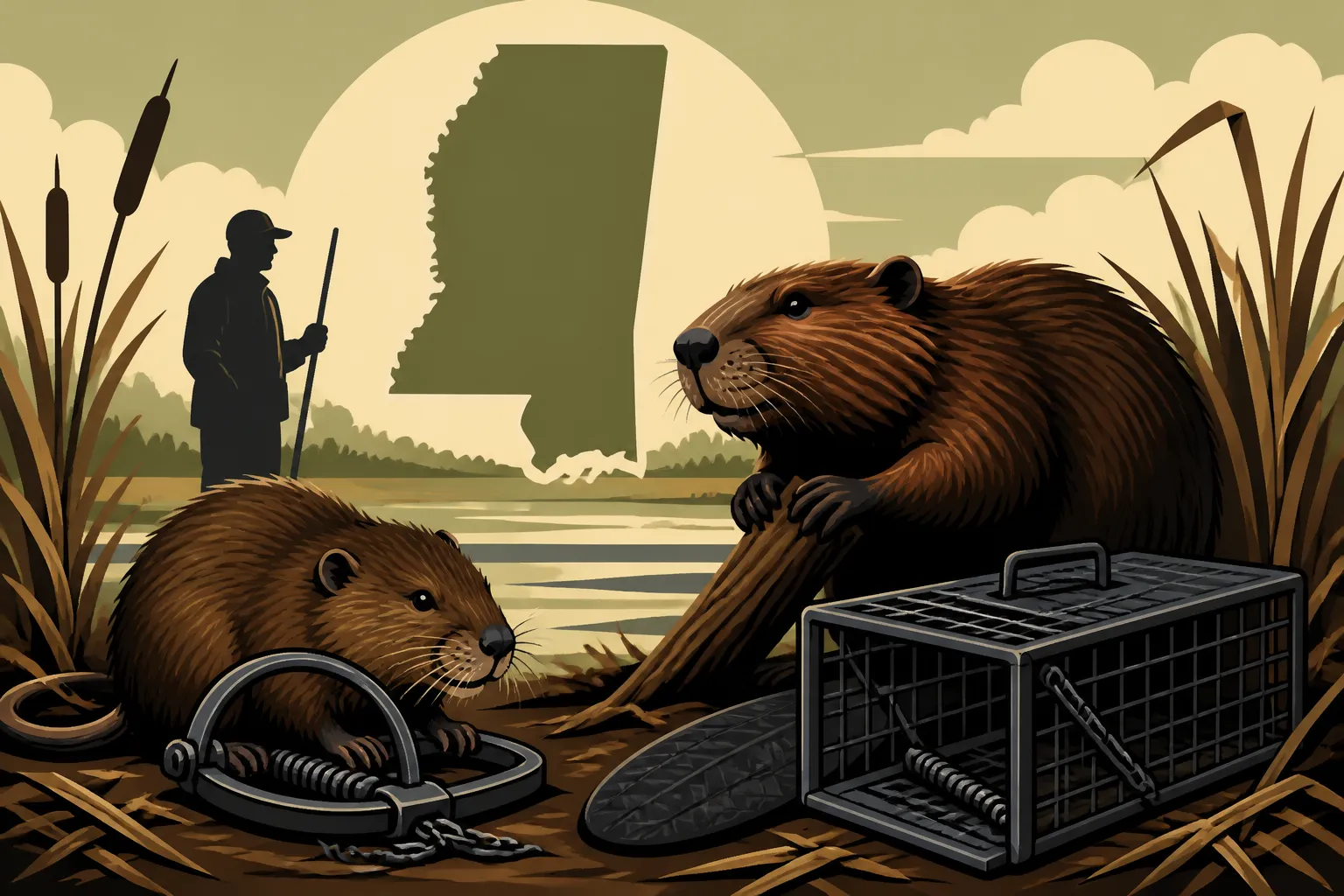
Trapping Mississippi Muskrat and Beaver
Living in Mississippi, you learn pretty quickly that nature is a force to be reckoned with, and sometimes, those forces are a little too close to home. If you've got a pond that's constantly losing water, timber being dropped for no apparent reason, or your drainage ditches are always clogged, chances are you've got some busy beavers or muskrats setting up shop. These industrious critters, while a natural part of our ecosystem, can cause some serious headaches and property damage. This guide is all about equipping you with the knowledge and practical steps to ethically and effectively trap muskrat and beaver in Mississippi, helping you reclaim your property and manage these populations responsibly.
Understanding Mississippi's Muskrat and Beaver Populations
Before you even think about setting a trap, it's crucial to understand the animals you're dealing with. Both muskrats and beavers are semi-aquatic rodents, but their habits, size, and the scale of damage they cause can be vastly different. Knowing what to look for and where these animals prefer to live is your first step toward successful trapping.
The Ever-Present Beaver Menace
Beavers, being North America's largest rodent, are often the primary culprits when you see significant property damage involving water and trees. In Mississippi, their populations are robust, and they thrive in our abundant waterways. You'll find them along major rivers, smaller creeks, bayous, sloughs, and even drainage ditches that connect to larger water bodies. They are incredible engineers, felling trees with impressive efficiency to build dams that flood acres of timber or farmland, and constructing lodges from sticks and mud in the middle of their newly created ponds.
The signs of beaver activity are usually pretty obvious. Look for freshly cut trees or saplings, often with distinctive chisel marks from their large incisors. You'll see their dams, sometimes small and subtle, sometimes massive structures spanning a creek. Lodges, which are their homes, will be visible above the water line. You might also spot their scent mounds—small piles of mud and debris where they deposit castor, a musky secretion used to mark territory. These scent mounds, often found along the water's edge, are prime locations for setting traps. The economic damage from beavers can be substantial, from flooding agricultural fields and cutting down valuable hardwoods to undermining roads and culverts. They are a year-round nuisance for many landowners.
The Stealthy Muskrat
Muskrats are much smaller than beavers, typically weighing only a few pounds, and their impact is generally less dramatic, though still problematic. They prefer slower-moving water, like ponds, marshes, small creeks, and the calmer sections of larger streams, especially those with plenty of emergent vegetation. In the Mississippi Delta, with its network of canals and old oxbow lakes, muskrats can be quite common. Unlike beavers, muskrats usually dig burrows into the banks of water bodies for their homes, with underwater entrances leading to dry chambers. They might also build small, dome-shaped "push-ups" or lodges out of vegetation in shallow water, especially in marshy areas, but these are much smaller than a beaver lodge.
Signs of muskrat activity include narrow trails or "runs" through shallow water or vegetation along the bank. You might see small feeding platforms made of chewed vegetation. Sometimes, their burrows can weaken pond dikes or levees, leading to leaks or collapses, which is a major headache for pond owners. Their diet primarily consists of aquatic vegetation, but they'll sometimes eat small animals too. While they don't fell trees like beavers, their burrowing can cause structural integrity issues in waterways, leading to costly repairs. Understanding these subtle differences is key to identifying which critter you're targeting.
Legal Framework and Licensing for Trapping in Mississippi
Navigating the rules and regulations for trapping can feel like a maze, but it's absolutely essential to stay on the right side of the law. The Mississippi Department of Wildlife, Fisheries, and Parks (MDWFP) sets these guidelines to ensure responsible wildlife management. Don't skip this step; a simple misunderstanding can lead to fines and legal trouble.
Understanding License Requirements
First and foremost, if you plan to trap any furbearers in Mississippi, including muskrat and beaver, you'll need the appropriate license. For residents, this typically means a Resident Trapping License. Nonresidents will need a Nonresident Trapping License. These licenses are separate from your standard hunting or fishing licenses, so make sure you've got the correct one in your pocket. It's easy enough to purchase these online through the MDWFP website, or at many licensed retailers across the state. You can find more detailed information on specific costs and where to buy by checking out resources like Mississippi Hunting Licenses and What They Cost. Remember, even if you're trapping on your own private land, a trapping license is generally required.
For a deeper dive into the specifics of what's mandated, especially for those new to the sport, take a look at Mississippi Trapping License Requirements. This will outline age requirements, any necessary hunter education components (though often not for trapping specifically, it's always good to be informed), and other crucial details.
Season Dates and Land Access Rules
Here's where it gets a bit nuanced. For nuisance animals like beaver and muskrat that are causing damage, Mississippi law offers some flexibility. On private land, if you have the landowner's permission, you can generally trap beaver and muskrat year-round. This is a huge advantage for dealing with persistent problems. However, this exception is specifically for private land and requires explicit permission. It's not enough to just assume you have permission; get it in writing if possible, or at least a clear verbal agreement.
When it comes to public lands, such as Wildlife Management Areas (WMAs) or National Forests, the rules change considerably. On these lands, beaver and muskrat are typically considered furbearers and fall under specific trapping seasons, often running from late fall through late winter. These public land regulations are much stricter, and you'll need to consult the current MDWFP Furbearer Regulations pamphlet or their website for precise dates. Always verify the rules for the specific public land you plan to trap, as WMAs, for instance, often have unique regulations beyond the statewide general rules. You wouldn't want to get caught out of season on a WMA like Malmaison Wildlife Management Area or Yazoo National Wildlife Refuge Hunting Rules. Using a tool like GoHunt can be incredibly useful for scouting these areas and checking land boundaries, helping you understand where public land trapping seasons apply.
Approved Trap Types and Checking Requirements
Mississippi allows a variety of trap types suitable for muskrat and beaver. For muskrats, body-gripping traps (Conibear-style) such as 110s are highly effective, as are small foothold traps. For beavers, larger body-gripping traps like 220s and 330s are standard, along with powerful foothold traps like MB-750s or larger coilsprings. Snares are also legal and can be very effective for beaver, especially in situations where other traps are difficult to set.
A critical regulation is the trap checking requirement. Traps must be checked daily, within a specific timeframe (usually 24 or 36 hours, depending on the trap type and location). This is vital for animal welfare, preventing non-target catches, and ensuring your traps are effective. Always consult the latest MDWFP regulations for exact checking periods. This isn't just a suggestion; it's a legal mandate that emphasizes ethical trapping practices.
| Animal | Preferred Habitat | Primary Damage Caused | Common Trap Types Recommended | Trapping Challenges |
|---|---|---|---|---|
| Muskrat | Ponds, marshes, slow creeks, ditches | Bank burrowing, dike undermining, crop damage | Body-gripping (110), Small Foothold, Cage Traps | Smaller target, can be wary, subtle signs |
| Beaver | Rivers, creeks, sloughs, larger ponds | Damming, tree felling, flooding, culvert blockages | Body-gripping (220, 330), Large Foothold (MB-750), Snares | Strong, heavy animals; drowning sets often required |
Essential Gear and Setups for Trapping Muskrat and Beaver
Stepping into the world of trapping means you'll need more than just a license. Having the right tools and knowing how to use them safely and effectively is paramount. This isn't just about efficiency; it's about ethical animal handling and personal safety.
Choosing the Right Traps
The type of trap you choose is largely dictated by your target animal and the specific set you intend to make.
-
For Muskrats:
- Body-Gripping Traps (Conibear 110s): These are incredibly effective for muskrats. They are designed to kill the animal quickly and humanely. They work best in active runways, den entrances, or in front of feeding platforms.
- Foothold Traps (Size 1 or 1.5): Smaller foothold traps can be used, often with a drowning wire setup, to ensure the animal quickly succumbs in the water. These are versatile for trail sets along banks.
- Cage Traps: While less common for muskrats, small cage traps can sometimes be used in specific situations, especially if you need to relocate an animal (though relocation has its own regulations and challenges).
-
For Beavers:
- Body-Gripping Traps (Conibear 220s and 330s): The 330 is the workhorse for beavers. These powerful traps are designed to dispatch beavers quickly. They are ideal for channel sets, dam breaks, and lodge entrances. The 220 can be used in smaller channels or for less powerful sets.
- Foothold Traps (Size 3 to 5, Coilspring or Longspring): Brands like Bridger, Duke, and especially the heavy-duty MB-750 are popular. These traps are set in trails, scent mounds, or bait sets. For beavers, always use a drowning rod or wire system with foothold traps to ensure a quick and humane dispatch underwater.
- Snares: Steel cable snares, properly constructed and set, are highly effective for catching beavers in channels, runs, or around culverts. They require careful placement and often a kill-pole or drag system to dispatch the animal quickly.
Essential Supporting Gear
Beyond the traps themselves, you'll need an arsenal of supporting gear to make your trapping efforts successful and safe.
- Setting Tools: Body-gripping traps, especially the 220s and 330s, have powerful springs. You'll absolutely need a pair of dedicated setting tongs or setters to compress the springs safely. Never try to set these by hand without proper tools; it's a recipe for injury.
- Waders: You'll be spending a lot of time in and around water. Chest waders are indispensable for staying dry and comfortable, allowing you to get to optimal trap locations without spooking animals.
- Gloves: Heavy-duty gloves protect your hands from cold water, sharp trap edges, and potential diseases. Rubber gloves worn over heavier work gloves are a good combination.
- Wire, Stakes, and Anchors: You'll need plenty of heavy-gauge wire for fastening traps to stakes, securing drowning rods, and attaching snares. Steel stakes (T-bar or rebar) are necessary for anchoring traps in muddy banks. Cable or chain for securing drowning weights is also crucial.
- Pliers/Wire Cutters: For manipulating wire and making adjustments.
- Pack Basket or Bucket: To carry your traps, tools, and harvested animals.
- Safety Glasses: A flying twig or a snapping trap spring can cause serious eye injury.
- Castor or Baits: While muskrats aren't heavily baited, beaver trappers often use fresh cuttings of preferred woods like willow, sweetgum, or poplar, along with commercial beaver lures containing castor.
- Scent-Free Approach: Animals, especially beaver, have an incredible sense of smell. Try to minimize human scent on your traps and around your sets. Clean your traps, and wear gloves to handle them.
Scouting and Placement
Successful trapping is all about location, location, location. You can have the best traps in the world, but if they're not where the animals are traveling, feeding, or living, you won't catch anything. This is where diligent scouting comes in.
Walk the banks of your ponds, creeks, and ditches. Look for fresh sign: muskrats will leave narrow trails in the mud and vegetation, sometimes little "rafts" of chewed plants. Beavers will leave freshly chewed trees, active dams, distinct slides where they enter and exit the water, and those tell-tale scent mounds.
Utilize resources that can help with scouting, such as topographical maps or aerial imagery. Apps like GoHunt can be invaluable for pinpointing waterways, identifying potential pinch points, and understanding the surrounding habitat where these animals might be active. Pay attention to natural funnels, like narrow sections of a creek or where a beaver dam creates a concentrated travel lane. These are ideal spots for setting body-gripping traps or snares. For foothold traps, focus on spots where beavers consistently climb out of the water, or near active scent mounds. Remember that consistent observation before you even set a trap will significantly increase your odds of success.
Effective Trapping Techniques for Mississippi Waterways
Now that you understand the animals and have your gear ready, it's time to talk about putting those traps into action. Successful trapping isn't just about having the right equipment; it's about understanding animal behavior and executing precise, effective sets.
Master the Muskrat Sets
Muskrats, despite their smaller size, can be challenging because their activity can be subtle. The key is to think like a muskrat: where do they feed, where do they travel, and where do they enter and exit the water?
- Runway Sets: This is perhaps the most common and effective muskrat set. Muskrats create distinct, often muddy, underwater trails or "runs" along banks or through dense aquatic vegetation. Identify these active runways, especially where they lead to den entrances or feeding areas. Place a Conibear 110 directly in the center of the runway, ensuring the trap is submerged enough so the muskrat has to swim through it. Secure the trap firmly with stakes on either side to prevent it from being moved or stolen by other animals. You want the trap to be completely stable.
- Feeding Station Sets: Muskrats often establish small platforms of vegetation where they sit and feed. If you find an active feeding platform, place a small foothold trap (like a size 1 or 1.5) on the edge of the platform or directly below the water surface where the muskrat would climb onto it. Always use a drowning wire system with these sets.
- Den Entrance Sets: Look for underwater den entrances along stream banks or pond dikes. Place a Conibear 110 directly in front of the entrance, ensuring it's in line with the muskrat's natural movement in and out of the den. These are highly effective as muskrats regularly use these entrances.
- Blind Sets: Muskrats are not typically lured with bait in the same way beavers are. Most muskrat trapping relies on "blind sets" – placing traps in natural travel routes or activity areas without the use of bait. This emphasizes the importance of good scouting.
Proven Beaver Trapping Strategies
Beavers are larger, stronger, and can be more difficult to dispatch humanely if not trapped correctly. Drowning sets are often essential for ethical beaver trapping with foothold traps.
- Channel Sets: Beavers create distinct, deep channels, especially where their dams are built or where they travel between feeding areas and their lodge. These are prime locations for Conibear 330s. Place the trap in the middle of the channel, completely submerged. Use sturdy stakes (rebar or heavy T-bar) on both sides of the trap to stabilize it and guide the beaver through the trap. You might also create a "fencing" of sticks or logs on either side of the trap to narrow the channel and force the beaver through the trap jaws.
- Dam Break Sets: Beavers are constantly maintaining their dams. If you break a small section of an active dam, they will inevitably come to repair it. This creates a natural pinch point. Set a 330 Conibear directly in the breach, submerged. They'll swim right into it as they approach the break.
- Scent Mound Sets: Beavers actively mark their territory with "casting mounds" – small piles of mud and debris where they deposit castor. These are natural attractants for other beavers. Set a large foothold trap (MB-750 is excellent here) on the bank immediately adjacent to the scent mound. Beavers will climb out to visit the mound.
- For these foothold sets, create a "drowning system." This involves attaching the trap chain to a long wire or heavy cable (e.g., #9 wire or 3/32nds cable) that extends from the trap location into deep water. Secure a heavy weight (concrete block, cinder block) at the deep-water end of the wire. When a beaver is caught, it will dive for deep water, slide down the wire, and drown quickly and humanely. This is a non-negotiable for ethical beaver trapping with foothold traps in Mississippi.
- Bait Sets: Beavers respond well to certain natural baits and lures. Fresh cuttings of preferred trees like willow, sweetgum, or poplar, especially with the bark on, can be placed near a foothold trap to entice a beaver. Commercial beaver lures, often made with beaver castor, can also be highly effective. Place these lures strategically on scent mounds or elevated sticks near your foothold sets.
- Lodge Entrance Sets: If you're dealing with a specific lodge, identifying the underwater entrances can be highly effective. Place 330 Conibears or snares directly in these underwater entrances. This can be tricky and may require getting wet, but it targets beavers where they live.
Remember, patience and persistence are key. Trapping isn't always instant success. Learn from each set, adjust your approach, and always prioritize humane and legal practices as outlined by Mississippi Feral Hog Regulations (which offers general guidance on responsible nuisance animal management) and the MDWFP. Good luck out there, and stay safe!
Disclaimer
The information provided in this guide is for informational purposes only and is not a substitute for professional advice or current legal regulations. Hunting and trapping laws, regulations, and seasons are subject to change. Always consult the most current Mississippi Department of Wildlife, Fisheries, and Parks (MDWFP) regulations, obtain all necessary licenses and permits, and understand local ordinances before engaging in any trapping activities. Always prioritize safety and ethical practices.