Crow Hunting Seasons and Tactics in Mississippi
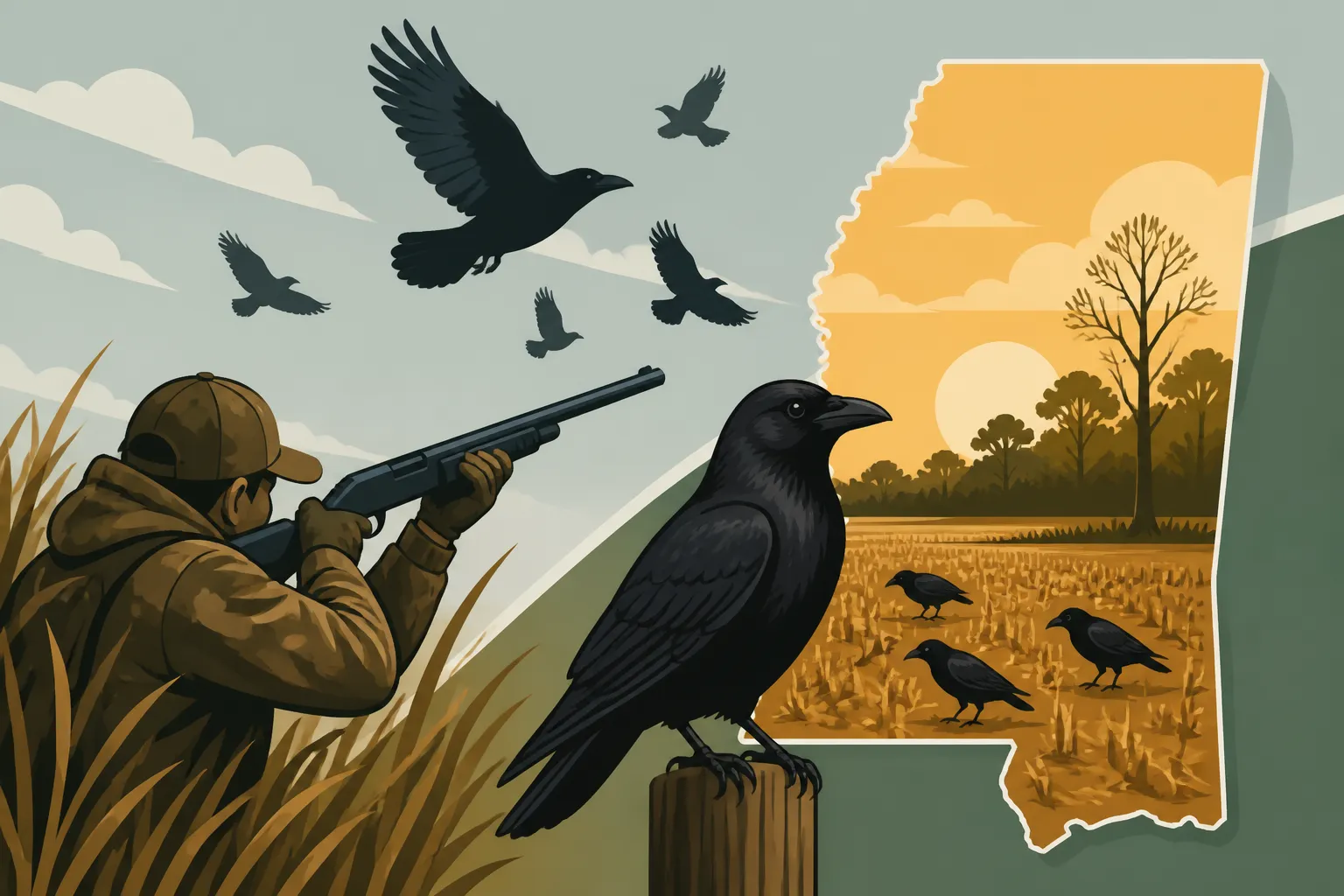
For many folks across Mississippi, crows are more than just a common sight; they can be a real nuisance, especially for farmers trying to protect their crops. While some hunters focus on deer, turkeys, or waterfowl, there's a unique challenge and satisfaction in managing these intelligent birds. Navigating the rules and effective strategies for crow hunting in Mississippi can feel a bit like trying to outsmart a seasoned bird, but this guide is here to unravel the complexities and share some proven tactics to help you become a more effective crow hunter.
Understanding Mississippi's Crow Hunting Seasons
Crow hunting in Mississippi might not get the same fanfare as deer or turkey season, but it offers a fantastic opportunity to sharpen your hunting skills and contribute to wildlife management. The rules, however, aren't always as straightforward as you might think for what some consider a pest species.
Year-Round Opportunities and Exceptions
In Mississippi, American crows are generally considered an unclassified species under state hunting regulations, which means they can often be hunted year-round. This is a huge bonus for hunters looking for off-season action or those wanting to hone their calling and shooting skills when other game animals are out of season. It’s also a way for landowners and farmers to protect their crops from potential damage. Imagine a massive flock of crows descending on a freshly planted field of corn or sunflowers – that's a problem many rural Mississippians face, and crow hunting can be a practical solution.
However, the "year-round" aspect isn't entirely without nuance. While the Mississippi Department of Wildlife, Fisheries, and Parks (MDWFP) typically allows continuous crow hunting, it's crucial to understand that federal regulations for migratory birds can sometimes play a role, even for crows. Crows are indeed a migratory species, and while most states have long seasons, there can occasionally be federal frameworks that influence state-level decisions or specific restrictions tied to migratory bird hunting periods. Always double-check the current year's hunting digest from the MDWFP, as regulations can change. For general small game pursuits, you might find more comprehensive information in a guide like Squirrel and Small Game Hunting in Mississippi, which covers other year-round or extended season opportunities.
Specific Seasonal Regulations to Watch For
While the general rule is year-round hunting, hunters should always be vigilant for any specific seasonal closures or limitations that the MDWFP might implement. For instance, sometimes there are restrictions on Sunday hunting on public lands, or specific Wildlife Management Areas (WMAs) might have their own nuanced rules regarding species not explicitly listed in their quota hunts.
Another area to pay close attention to is the method of take. While shotguns are the primary tool for crow hunting, there might be regulations regarding other firearms, particularly if hunting on public land where deer or other big game seasons are open. For example, during a peak deer season, the use of certain firearms might be restricted to prevent accidental take or disturbance of other game. It's rare for crows, but always worth a quick look at the regulations. Also, remember that baiting for crows, like for most game species, is generally illegal. You can learn more about general hunting regulations and licensing requirements in resources like Mississippi Hunting Licenses and What They Cost to ensure you're always compliant with the law before heading out.
Essential Tactics for Successful Crow Hunting
Crow hunting is a game of wits. These birds are incredibly intelligent, possess excellent eyesight, and can quickly learn from experience. Just walking out into a field and hoping for the best usually won't cut it. You need a strategy, and that often involves careful planning, the right equipment, and a good understanding of crow behavior.
Decoy Setups and Calling Strategies
Crows are highly social birds, and this is where decoys and calls become your best friends. The key is to mimic a distress or feeding scenario that draws them in.
- Decoys: A common and highly effective setup involves an owl decoy, often perched on a stake, surrounded by several crow decoys. Crows absolutely despise owls, viewing them as a major predator. When they see an "owl" being harassed by their "brethren" (your crow decoys), their natural instinct is to mob the predator and drive it away. You'll want to place your decoys in an open area, often near a field edge, and position them so they are visible from a distance. The more realistic the setup, the better. Spread your crow decoys out as if they're actively dive-bombing or circling the owl.
- Calling: This is perhaps the most critical element. There are two main types of calls:
- Hand Calls: These require skill and practice to master but can produce incredibly realistic sounds. You'll want to learn a variety of calls: a basic "caw" for locating birds, a "distress" call (faster, more frantic caws) to imitate a crow in trouble, and a "mobbing" call (loud, aggressive caws) to mimic a group harassing a predator. Consistency and varying your cadence are key.
- Electronic Calls: These are often a go-to for many crow hunters because they can produce a wide range of realistic sounds at varying volumes. Look for e-callers with options for distress calls, fighting calls, and standard caws. Many modern e-callers, like those from FoxPro or Primos, offer specific crow sound libraries. You can really get birds fired up with these. Start with softer calls to locate distant birds, then amp up the volume and intensity with distress or mobbing calls as they approach. It's often a good idea to scout for active roosts or feeding areas beforehand, as this gives you a starting point. Knowing when to use different calls is an art form, and you'll find that experience is the best teacher. For similar predator calling techniques, you might benefit from checking out resources like Coyote Calling in Mississippi Farm Country, as the principles of drawing in an animal with sound are often transferable.
Choosing the Right Gear and Ammunition
Having the right equipment can make a significant difference in your crow hunting success and enjoyment.
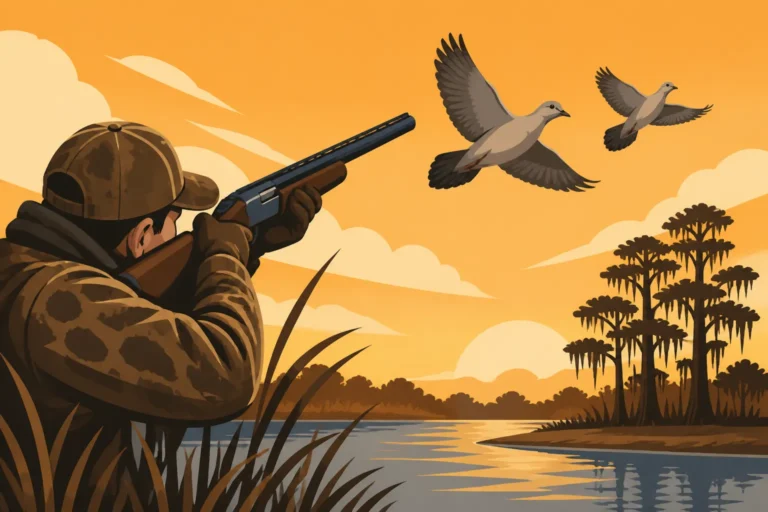
- Shotguns: A 12-gauge shotgun is the undisputed king for crow hunting. The versatility of shotshells and its effective range make it ideal. A semi-automatic or pump-action shotgun will allow for quick follow-up shots, which is often necessary when multiple crows come in at once. You'll want a modified or full choke to keep your pattern tight enough for those longer shots.
- Ammunition: Load up with high-brass shells, typically using 7 ½ or 6 shot. These smaller shot sizes offer a dense pattern, which is crucial for hitting fast-moving birds. You're not looking for massive knockdown power, but rather a wide, effective spread. Carry plenty of shells; crow hunts can be fast and furious, with multiple birds presenting opportunities.
- Camouflage: Crows have incredible eyesight, so concealment is paramount. Full camouflage, including face masks and gloves, is essential. Break up your outline, stay still, and avoid sudden movements. Sitting in natural cover like brush, fence rows, or pop-up blinds is ideal. Think about where you want the crows to focus their attention (on your decoys, not on you!) and position yourself accordingly.
- Other Essentials: A comfortable folding chair or stool for long sits, a good pair of binoculars to spot distant birds, and plenty of water are always a good idea. Remember, stealth and patience are your secret weapons.
Public vs. Private Land Approaches
The approach to crow hunting can vary significantly depending on whether you're on public or private land.
- Private Land: This is often the ideal scenario for crow hunting. Farmers and landowners are usually more than happy to have hunters help control crow populations, especially if they are damaging crops. Getting permission is often easier than for deer or turkey, as crows are considered a nuisance. When hunting private land, you have more freedom to set up blinds, place decoys, and even choose your hunting times without as much competition. Always secure written permission, and be courteous and respectful of the landowner's property. Discuss where you plan to hunt, what times, and any specific concerns they might have. Establishing a good relationship can lead to future hunting opportunities. If you're looking for guidance on how to secure permission, an article like Getting Private Land Permission in Mississippi offers excellent advice.
- Public Land: Hunting crows on public land, such as National Forests or Wildlife Management Areas (WMAs), is certainly possible, but it requires more planning and often means dealing with increased hunting pressure for other species. Always check the specific regulations for the WMA or National Forest you plan to visit. Some WMAs might have restrictions on calling devices, specific hunting hours, or areas where hunting is prohibited. You'll need to be more mobile and potentially hike further to find less pressured areas. Look for clearings, field edges, or areas near agricultural lands adjacent to public property. Scouting these areas before the season is critical to identify potential crow flight paths or roosting sites. Understanding the nuances of Mississippi Wildlife Management Areas will definitely give you an edge.
| Calling Strategy | Call Type | Primary Goal | Typical Scenario | Hunter Skill Level |
|---|---|---|---|---|
| Locating Call | Basic Caw | Find distant crows; announce presence | Early morning, scouting, before setting up. | Beginner |
| Distress Call | Rapid, frantic | Signal a crow in trouble; draw attention | Initial call to pull distant birds towards decoys. | Intermediate |
| Mobbing Call | Loud, aggressive | Mimic crows attacking a predator | Crows are in sight, actively coming towards the owl decoy. | Intermediate |
| Fledgling Distress | Younger, weaker | Elicit a protective response from adults | When initial calls aren't working, or for wary birds. | Advanced |
| Come-Here Call | Series of caws | Coax birds closer; reassure | Used to finish birds the last 100 yards to the setup. | Intermediate |
Safety, Ethics, and Conservation in Crow Hunting
As with any form of hunting, responsible crow hunting goes beyond just pulling the trigger. It involves a commitment to safety, ethical behavior, and understanding the role crow hunting plays in the broader ecological picture.
Adhering to Legal and Ethical Standards
Safety is paramount, especially when hunting with shotguns. Always treat every firearm as if it's loaded, keep the muzzle pointed in a safe direction, be sure of your target and what's beyond it, and keep your finger off the trigger until you're ready to shoot. These are the cornerstones of responsible firearm handling, and they apply just as much to crow hunting as they do to deer or duck hunting.
Ethically, it's important to make clean, humane shots. While crows are often plentiful, you still want to strive for quick, ethical kills. Avoid sky-busting at extreme ranges, which often results in wounded birds that fly off to suffer. Respect property boundaries, even when on public land adjacent to private property. This means knowing where you are at all times, potentially using a GPS or mapping app to confirm boundaries. Remember, even though crows can be pests, they are still wildlife and deserve respectful treatment. Ensure you retrieve any downed birds you shoot, if possible.
Contributing to Crow Management
While crows are not typically a species of conservation concern in terms of population numbers, active hunting can play a role in local management. In areas where crows cause significant agricultural damage, hunting can help alleviate pressure on crops. By participating in regulated hunting, you're not just enjoying a day afield; you're also taking part in a form of wildlife management that can benefit farmers and other wildlife species.
Crow populations are robust, and they adapt well to human-altered landscapes. However, understanding their habits and numbers in your local area can help you be a more informed and effective hunter. Keeping an eye on what other predator hunters are experiencing, perhaps in a discussion about Predator Hunting in Mississippi, might offer insights into general wildlife trends that could impact crow behavior. Ultimately, crow hunting is a unique blend of challenge and opportunity, allowing hunters to engage with nature, sharpen their skills, and contribute to local ecological balance in Mississippi.
Disclaimer
Please remember that hunting regulations, seasons, and licensing requirements can change. Always consult the most current Mississippi Department of Wildlife, Fisheries, and Parks (MDWFP) hunting digest or their official website before planning any hunting trip. This guide is for informational purposes only and does not supersede official state regulations.