Reading a Brake for Deer Movement
Ever felt like deer just vanish into thin air when they hit those impossibly thick patches of woods? You’re not alone. Those dense, tangled areas we call "brakes" in Mississippi can be frustratingly opaque, but they're also prime deer real estate. Understanding how to "read" these almost impenetrable havens for deer movement is a game-changer for any serious hunter, and this guide is going to walk you through exactly how to do it, turning that frustration into a strategic advantage.
What Exactly is a "Brake" in Mississippi Deer Habitat?
When we talk about a "brake" in the context of Mississippi deer hunting, we're not just talking about any old patch of thick woods. We're referring to an area of vegetation so dense and intertwined that it's difficult, if not impossible, for a human to walk through quietly, and often, without a machete. These are deer sanctuaries, places where bucks and does alike feel incredibly secure, making them both challenging and incredibly rewarding to hunt.
Defining Characteristics of a Brake
Imagine a place where every step is a struggle, where briars snag your clothes, and vines trip your feet. That’s the typical experience of trying to penetrate a brake. These areas are characterized by extremely high stem counts – meaning a huge number of young trees, shrubs, and vines growing in a small area. Think of it as nature's ultimate security blanket for deer.
- Vegetation Density: The most obvious characteristic. This isn't just a thick understory; it's often an overhead canopy that blocks sunlight in places, with a mid-story and understory so intertwined you can barely see five feet in front of you. This density makes them incredibly difficult for predators, including hunters, to navigate quietly or effectively.
- Specific Plant Species: In Mississippi, brakes are often composed of specific plant species that thrive in these conditions. You'll commonly find dense stands of greenbriar, muscadine vines, honeysuckle, various forms of cane (especially in bottomland areas), and thickets of young saplings like sweetgum, hackberry, or privet. Sometimes, you'll even encounter incredibly dense patches of regenerating pines after a clear-cut, which can form a different kind of brake.
- Location: Brakes aren't random; they're usually found in specific habitat types. In the Delta, they might be dense cane thickets along sloughs or old river channels, or areas of thick regrowth in Hunting Delta Unit Bottomland Deer. In the Hills and Piney Woods, they could be briar-choked draws, clear-cut edges left to grow, or areas with thick, neglected privet hedges. These locations often provide a combination of security and nearby food sources.
Differentiating Brakes from General Thick Cover
It’s important to distinguish a true "brake" from just "thick cover." A typical mature hardwood forest might have a dense understory, making it challenging to see deer, but you can usually still walk through it. A brake, however, is often impenetrable. It’s where deer go when they want to truly disappear, when they feel pressured, or when they just want to bed down in the safest place imaginable. This extreme density is what makes them so attractive to deer and so difficult for us hunters to figure out. Understanding this difference is the first step in unlocking their secrets.
Why Deer Love Mississippi Brakes So Much
Deer aren't just looking for a place to hide; they're looking for survival. Mississippi's deer population, especially in units like the Hills and Delta, has become incredibly adept at using these dense areas to their advantage. Brakes offer a multifaceted haven that caters to several of a deer's primary needs: security, thermal regulation, and readily available food.
The Ultimate Security Blanket
Let's be honest: deer are prey animals, and their lives revolve around avoiding danger. Brakes provide an unparalleled level of security from both human and natural predators.
- Predator Avoidance: The sheer density of a brake makes it almost impossible for coyotes, bobcats, or even a well-meaning hunter, to navigate quietly or efficiently. A deer can hear a twig snap 50 yards away and slip silently through the labyrinthine tunnels it has created, often unseen. This is especially true for mature bucks, who are notoriously reclusive and use these areas to escape pressure. They know they can bed down in the middle of a brake and hear you coming long before you ever get close.
- Concealment from View: From above, a dense brake looks like an unbroken green carpet. From the ground, it's a visual fortress. A deer bedded just a few yards into a brake can be completely invisible. This visual concealment gives them confidence to move and bed during daylight hours, knowing they are hidden. This is why when you're Still-Hunting Hills Unit Ridges, you often find deer slipping into those adjacent thick draws.
Thermal Regulation and Weather Protection
Mississippi weather can be extreme, from scorching summer heat to damp, cold winter fronts. Brakes play a crucial role in helping deer regulate their body temperature.
- Summer Shade and Cool: During the brutal Mississippi summers, the dense canopy and intertwined vegetation of a brake create a microclimate that can be several degrees cooler than surrounding open woods. The shade is deep, and the air movement is reduced, providing relief from the oppressive heat. Deer will often bed in these areas during the hottest parts of the day.
- Winter Windbreak: Conversely, in winter, a brake acts as a natural windbreak. The thick network of stems and branches significantly reduces wind chill, allowing deer to conserve energy. When a cold front blows through, you'll often find deer tucked deep into the leeward side of a dense brake, sheltered from the biting wind. This makes them crucial late-season bedding areas, especially after a cold front. Learning to hunt Deer After a Cold Front often means focusing on these protected spots.
Abundant Food Sources and Nutrition
While brakes are often thought of purely as bedding and cover, they can also be prime feeding areas, especially during certain times of the year.
- Year-Round Browse: Many of the plant species that make up a brake, like greenbriar, honeysuckle, and young saplings, are highly palatable browse for deer. Unlike mature timber, which might offer limited browse, a brake is a constantly regenerating buffet of tender shoots and leaves. This ensures a consistent food source, especially valuable when other areas are sparse. These areas can be excellent Late-Season Food Sources for Mississippi Whitetails.
- Soft Mast Opportunities: Muscadine vines, a common component of many Mississippi brakes, produce abundant soft mast in late summer and early fall. Deer will actively seek out these areas to feed on fallen muscadines. Other plants within a brake might also offer berries or other soft mast, further enhancing their food value. Young clear-cuts that become brakes also offer a flush of new growth, often more nutritious than mature timber.
Considering these factors, it becomes clear why a brake isn't just "some thick spot." It's a strategic, multi-purpose habitat essential for deer survival and well-being throughout the year, making it a critical area for hunters to understand.
Key Indicators of Deer Movement Within a Brake
Cracking the code of a brake means paying attention to the subtle, and sometimes not-so-subtle, signs that deer leave behind. While penetrating the densest parts can be a challenge, the edges and slightly more open internal pockets will reveal a trove of information if you know what to look for.
The Elusive Deer Trails
Unlike trails in open timber, deer trails within a brake are rarely wide, beaten paths. Instead, think of them as tunnels or narrow, almost invisible pathways.
- Tunnels and Runs: Deer will create "tunnels" through the thickest vegetation, bending and breaking stems to forge a path. These are often just wide enough for a deer's body. Look for disturbed leaves on the ground, fresh tracks in mud if available, or broken, rubbed stems at deer height. Sometimes these tunnels will open into slightly wider "runs" in less dense areas. Use an aerial mapping tool like GoHunt to identify potential entry points into the densest cover; these are often where these tunnels begin.
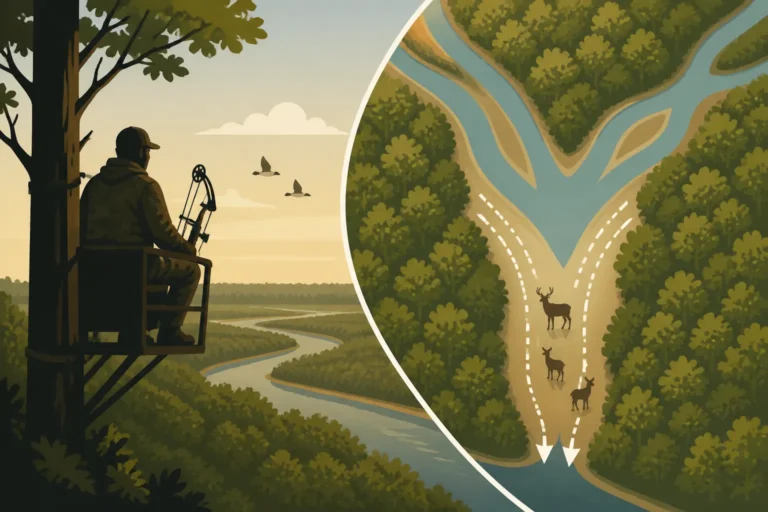
- Entry and Exit Points: The most visible signs of deer movement are usually at the edges of the brake. Look for where deer enter and exit the thicket to access food sources, water, or more open bedding. These transition zones are often funnels and can be excellent spots for a stand. Learning to read Entry Routes Through Standing Soybeans or any field edge adjacent to a brake is key.
- Intersections and Crossroads: Within larger brakes, deer will often establish main arteries where several smaller trails converge. These intersections are high-traffic areas and can be prime spots to focus your scouting efforts.
Rubs and Scrapes Along the Edges
While finding rub lines and scrape lines deep within the most impenetrable part of a brake is rare, they are common features on the periphery.
- Edge Rubs: Bucks will often rub saplings or small trees along the edges of a brake, particularly where the thick cover transitions into more open woods or a field. These rubs act as signposts, indicating that bucks are working these transitional areas. The size and freshness of the rub can tell you a lot about the buck's size and recent activity.
- Scrape Lines: Similar to rubs, scrapes are usually found on the fringe of a brake, often under an overhanging limb that bucks will work. These can be part of a larger scrape line that parallels the edge of the thick cover. Focus on these areas, especially during the pre-rut and rut, as bucks will check these regularly. Understanding Scrape Lines Along a Logging Road can help you identify similar patterns around brake edges.
Beds and Droppings: The Freshest Sign
Finding actual deer beds inside a brake can be tough due to the dense vegetation and often uneven ground. However, when you do, it’s a goldmine.
- Locating Beds: Look for matted-down vegetation, disturbed leaves, and sometimes even deer hair. Beds will often be strategically placed for optimal wind advantage, allowing the deer to scent check downwind for approaching danger while visually scanning upwind. They'll often be on slight rises within the brake or near openings that offer a limited view.
- Fresh Droppings: The presence of fresh droppings is one of the clearest indicators of recent deer activity. The fresher the droppings, the more recently a deer has been in that exact spot. Use a table like this to interpret what you find:
| Sign Type | Appearance | Implication |
|---|---|---|
| Fresh Drops | Dark, moist, shiny, often clumped | Deer very recently active (within hours) |
| Recent Drops | Dark, dull, firm, separate pellets | Deer active within the last 12-24 hours |
| Old Drops | Dry, gray, crumbly, scattered | Deer active days or weeks ago |
| Trails | Disturbed leaves, matted ground, broken twigs | Regular travel route |
| Rubs/Scrapes | Fresh wood exposed, pawed ground | Buck actively working area (pre-rut/rut) |
| Beds | Flattened vegetation, deer hair | Recent bedding site, especially in secure cover |
- Interpreting Droppings: The quantity and distribution of droppings can indicate whether the brake is used for bedding, feeding, or simply as a travel corridor. A concentrated pile likely means a deer was bedded or spent a significant amount of time there, while scattered droppings might suggest feeding or traveling.
By carefully observing these signs, especially at the edges and in any accessible openings, you can begin to piece together the puzzle of deer movement within these challenging but productive areas.
Strategic Tactics for Hunting Mississippi Brakes
Hunting brakes successfully in Mississippi requires a blend of patient scouting, strategic planning, and understanding how deer use these areas for their ultimate safety. It's not a place you just "stumble" into success; it's earned through diligent effort.
Pre-Season Scouting and Digital Reconnaissance
Before you ever set foot in a brake during hunting season, the work should begin. The thick nature of these areas makes in-season scouting too disruptive.
- Aerial Maps are Your Best Friend: Utilize digital mapping applications like GoHunt to identify potential brakes. Look for areas of distinct, dense green on aerial imagery, often adjacent to agricultural fields, mature timber, or water sources. GoHunt can help you visualize elevation changes, which might indicate a slight rise where a deer could bed with a view, or the presence of subtle funnels leading into the brake. Mark these as potential hotspots for further investigation.
- Perimeter Patrol: During the off-season, walk the perimeter of these brakes. Don't dive in yet. Look for those entry and exit points, the subtle trails that lead from the brake into more open feeding areas. Note any rub lines or scrape lines on the edges. These perimeter walks give you crucial intelligence without disturbing the core bedding area.
- Trail Cameras on the Fringe: Place trail cameras on those well-used entry/exit trails, or near prominent rub lines or scrape lines along the edges of the brake. This will give you invaluable information on what deer are using the area, when they're moving, and the direction they're heading. Just be mindful of Trail Camera Rules on Mississippi Public Land if you're on a WMA.
Stand Placement and Wind Considerations
Where you put your stand around a brake is paramount, as is your respect for the wind. One wrong move, and the deer will know you're there.
- Edge of the Brake: The most common and often most effective stand placement is on the edge of a brake, particularly overlooking a trail that leads out to a food source. Position your stand so you can see downwind of the trail, catching deer as they approach or exit the cover. Consider hanging a stand near a Hanging a Stand on a Delta Bottomland Funnel if the brake is part of a larger travel corridor.
- Internal Pockets (Carefully!): For the truly adventurous and scent-conscious hunter, some larger brakes might have slightly more open internal pockets. If you can identify one of these that serves as an internal staging or feeding area, a stand placed strategically within it can be deadly. However, access must be impeccable, and scent control absolutely critical. This is a high-risk, high-reward strategy.
- Wind Direction is Non-Negotiable: When hunting a brake, your wind direction is even more critical than usual. Deer will use the dense cover to their advantage, often bedding in a spot where they can smell danger approaching from downwind. Always approach your stand with the wind in your face, and ensure your scent cone is blowing away from the brake and any known deer trails. A slight thermals shift in the morning or evening can also quickly betray your presence, so understand Wind and Thermals in Delta Bottomland areas.
Still-Hunting the Interiors (Extreme Caution)
For smaller, less dense brakes, or when nothing else is working, a slow, methodical still-hunt can sometimes pay off. This requires immense patience and discipline.
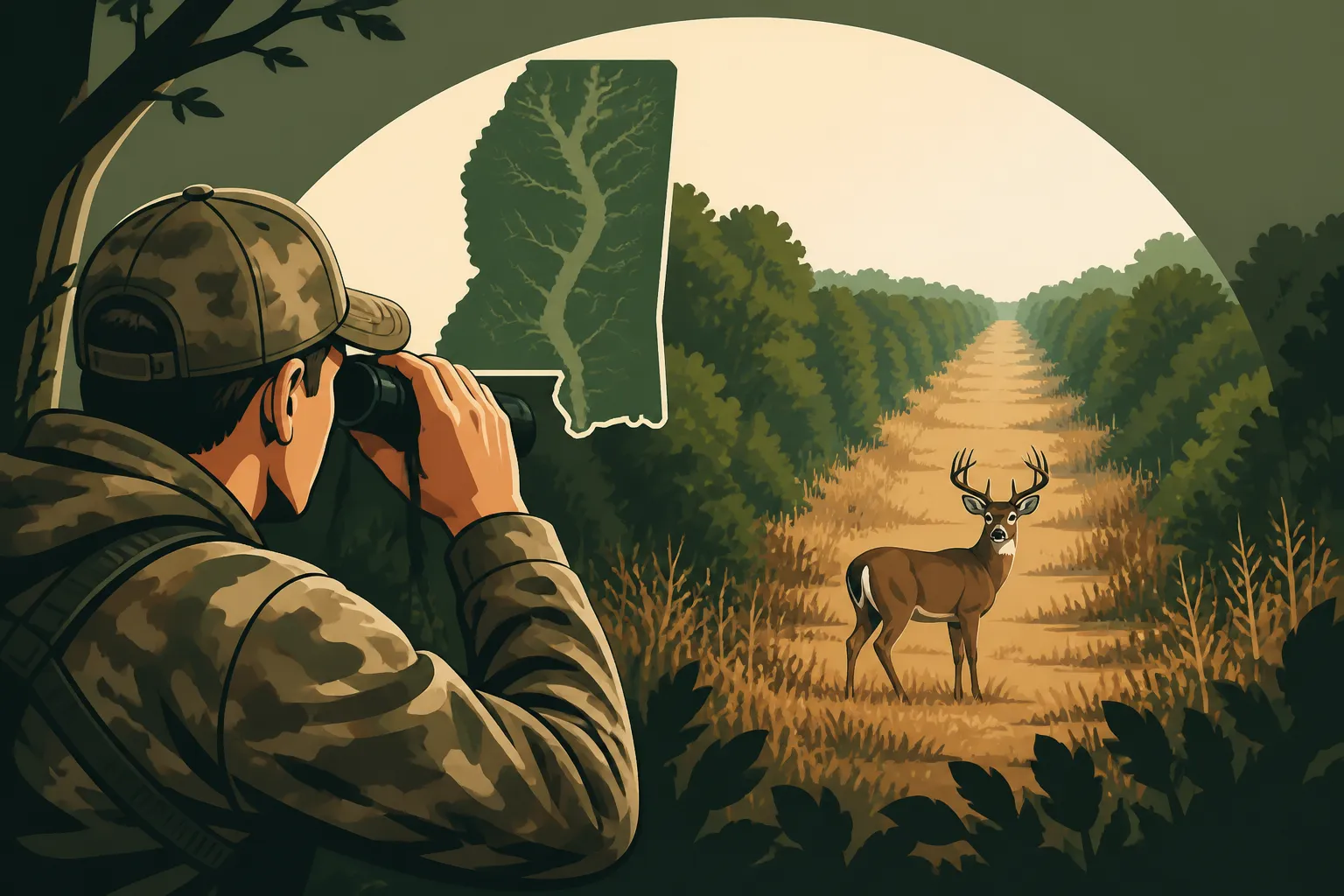
- Slow, Slower, Slowest: If you decide to still-hunt a brake, move at a snail's pace. Take five minutes to move ten yards. Scan every shadow, every cluster of leaves. You are looking for a flick of an ear, a horizontal line in a vertical world, or the glint of an antler. Use binoculars constantly.
- Wind and Stealth: Always hunt with the wind in your face, or quartering to you. Make sure every step is deliberate, checking for twigs or crunching leaves before you commit your weight. Wear quiet clothing. This is not the place for heavy boots or noisy gear. If you're not confident in your stealth, it's better to stay on the perimeter.
- Focus on Openings: Within a brake, even small openings or game trails can feel like highways. Focus your attention on these subtle lanes, as deer will often pause or move more quickly through them. Keep an eye out for any sign of Reading Delta Mud for Fresh Deer Movement within these damp pockets.
Hunting a brake isn't easy, but the rewards—a mature buck that thought he was safe—can be incredibly satisfying. It's about respecting the deer's sanctuary and using every tool and tactic at your disposal to gain a slight, strategic advantage.
Disclaimer
Hunting is an inherently dangerous activity. This article provides information for educational purposes only and is not a substitute for professional instruction, adherence to local laws and regulations, or safe hunting practices. Always prioritize safety, understand and follow all Mississippi Department of Wildlife, Fisheries, and Parks (MDWFP) regulations, and obtain all necessary licenses and permits before hunting. The author and publisher are not responsible for any accidents, injuries, or legal issues that may arise from hunting activities.