Mississippi’s Year-Round Hog Rule on Private Land
Dealing with feral hogs on your private property in Mississippi can feel like an endless battle against a relentless enemy. These destructive animals decimate crops, tear up food plots, and compete with native wildlife, leaving a trail of frustration and damage. Thankfully, Mississippi provides landowners and hunters with a powerful tool to combat this pervasive issue: the year-round feral hog rule on private land. This guide will walk you through everything you need to know to effectively manage these challenging invaders.
Understanding the Year-Round Rule for Feral Hogs
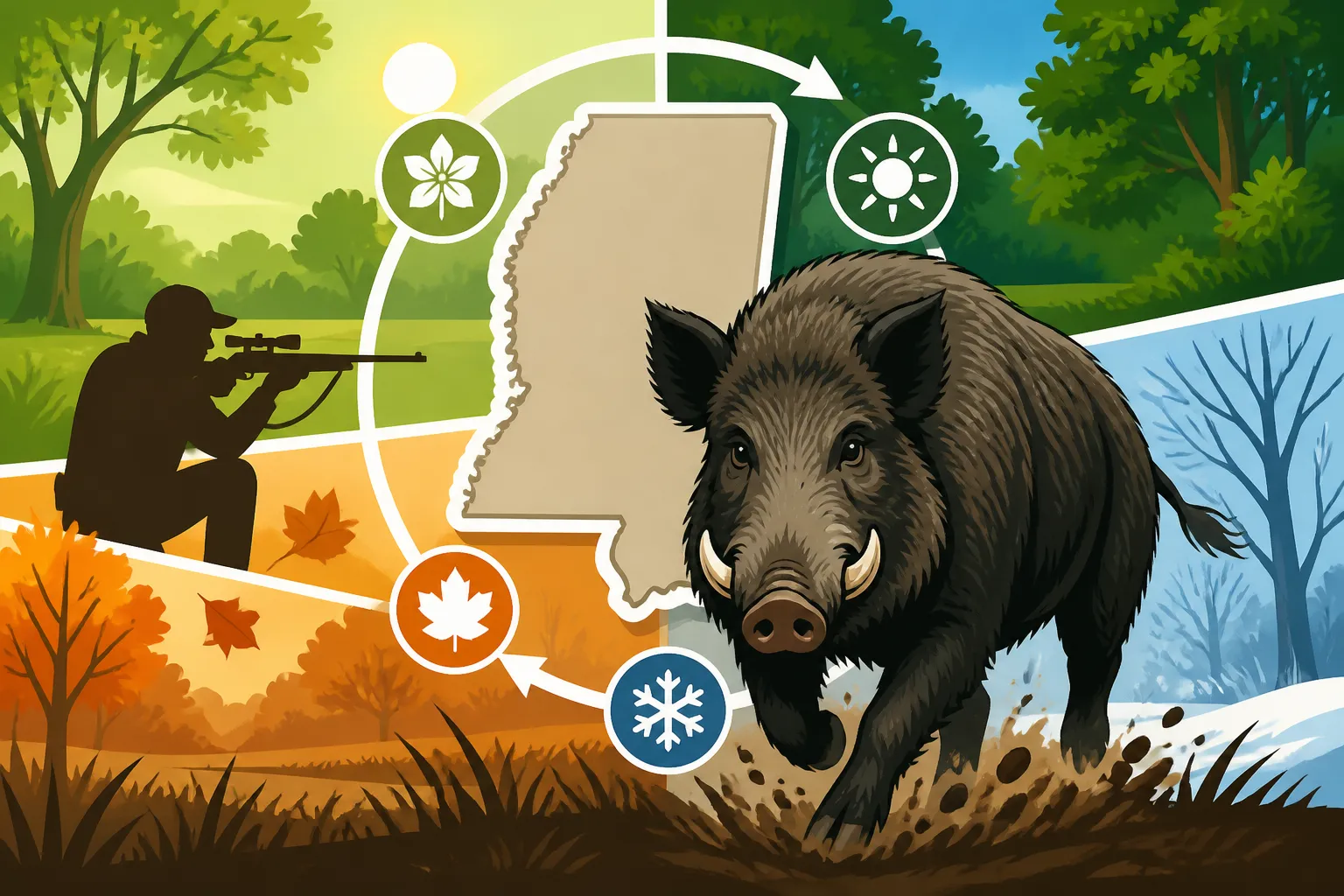
Let's cut right to the chase: Mississippi's stance on feral hogs on private land is clear and unwavering. Unlike deer, turkey, or other game species with defined seasons and bag limits, feral hogs are classified as a nuisance species. This means that if you're hunting on private property, there's no closed season, no specific time of year you have to stop, and no limit on how many you can take. It's a continuous, year-round effort, and for good reason, as anyone who’s had a sounder turn their meticulously prepared food plot into a plowed field can attest.
Defining Private Land for Hog Hunting
When we talk about "private land," it's exactly what it sounds like: property that is privately owned, whether that's your own family farm, a leased hunting club tract, or land where you've secured explicit permission from the landowner. The key here is the "permission" part. While the state gives you the flexibility to hunt hogs year-round, that doesn't override basic trespass laws. You absolutely must have permission from the landowner before stepping foot on their property, even if your sole intention is to remove destructive hogs. For landowners, this rule empowers them to protect their investments without bureaucratic hurdles. For hunters, it means a lot more opportunity to get out in the woods and make a difference.
Key Aspects of the Regulation
The core of the regulation is its simplicity and broad scope. As long as you are on private land and have permission, you can:
- Hunt hogs 365 days a year, 24 hours a day.
- Harvest as many hogs as you can. There are no bag limits.
- Use a wide array of weapons, including firearms, archery equipment, and even spears or knives, as long as it's legal for hunting in general and you're doing so safely and ethically.
- Employ various methods, including baiting, trapping, and using dogs, all without specific state-mandated seasons for these activities when targeting hogs on private land.
This flexibility is designed to give you every possible advantage against a species that reproduces at an alarming rate and causes untold damage. It’s not just about a recreational hunt; it’s about control and mitigation. The goal is to reduce populations and limit their impact on Mississippi's natural resources and agricultural economy. If you're wondering about the specifics, a quick review of the official Mississippi Feral Hog Regulations will confirm these points and often provide additional guidance.
Differences from Public Land Rules
It's absolutely vital to understand that the year-round, no-limit rule only applies to private land. The moment you step onto public land – whether it's a Wildlife Management Area (WMA), National Forest, or National Wildlife Refuge – the rules change dramatically. On public lands, feral hogs are often considered a game animal, and as such, they fall under specific hunting seasons, weapon restrictions, and sometimes even bag limits, just like deer or turkey. For example, many WMAs might restrict hog hunting to coincide with deer or small game seasons, or only allow certain weapons during specific periods.
This distinction is crucial for avoiding violations. You can't just assume the liberal private land rules carry over to public property. Always, always check the specific regulations for the WMA or public land tract you plan to hunt. The Mississippi Department of Wildlife, Fisheries, and Parks (MDWFP) website or their handy mobile app is your best friend for verifying public land rules before you head out. Don't let a misunderstanding about land classification turn a productive hog hunt into an expensive citation.
Why Year-Round Hunting Is Necessary
The continuous pressure allowed by Mississippi's year-round hog rule on private land isn't some arbitrary decision; it's a critical response to an overwhelming problem. Feral hogs are not just a nuisance; they're an ecological and economic disaster in waiting, and in many areas, already fully realized. Understanding why this rule exists helps underscore the importance of every hog taken out of the population.
The Devastating Impact of Feral Hogs
Think about it: these aren't native animals. They're an invasive species, and their presence throws a wrench into the delicate balance of Mississippi's ecosystems. They're omnivores, meaning they'll eat just about anything – acorns, roots, tubers, mushrooms, insects, eggs from ground-nesting birds like turkeys and quail, fawns, and even small livestock. Their signature "rooting" behavior, where they plow through the soil with their snouts in search of food, destroys vast tracts of land. This rooting activity churns up vital topsoil, damages native plant communities, spreads invasive weed seeds, and creates erosion problems, especially near waterways.
I’ve seen entire pecan groves rooted up to the point where the trees are damaged, and acres of pristine bottomland hardwoods look like a rototiller went through them. This kind of destruction impacts everything from the micro-organisms in the soil to the largest deer looking for forage. For wildlife managers, it's a constant headache, as the hogs outcompete native species for food and habitat.
Rapid Reproduction Rates and Population Growth
One of the most mind-boggling, and frankly terrifying, aspects of feral hogs is their incredible ability to reproduce. They hit sexual maturity at a young age, sometimes as early as six months old, and can breed year-round. A sow can have two litters a year, averaging 4-12 piglets per litter. Do the math on that, and you'll quickly realize that a small population can explode into an unmanageable herd in just a few years. It's truly exponential growth.
This biological advantage means that simply hunting them during a short season, like deer, would be utterly ineffective. You could harvest a dozen hogs from a property, and within months, their numbers would be right back where they started, or even higher, if you don't maintain continuous pressure. This biological reality is the primary driver behind the state's year-round private land regulation. It's a recognition that traditional hunting seasons simply aren't enough to make a dent in a problem of this magnitude. It's a continuous war, and the rules reflect that. The sheer number of How Many Feral Hogs Mississippi Has is staggering and only growing.
Economic and Ecological Consequences
The consequences of unchecked feral hog populations ripple through both the economy and the environment. Farmers bear the brunt of the economic impact, with millions of dollars in crop damage annually. Soybeans, corn, wheat, peanuts – you name it, hogs will destroy it. They can also damage irrigation systems, fences, and farm equipment. Beyond agriculture, their rooting behavior can destabilize levees and stream banks, increasing erosion and affecting water quality.
Ecologically, the hogs are direct competitors with native wildlife for food resources. Deer, turkeys, and squirrels all rely on mast crops like acorns and pecans, which hogs consume voraciously. As mentioned, they are also significant nest predators for ground-nesting birds and can prey on fawns. Furthermore, feral hogs are known carriers of numerous diseases, including pseudorabies, brucellosis, and leptospirosis, which can be transmitted to livestock, domestic animals, and even humans. While they don't carry Chronic Wasting Disease (CWD), their presence can exacerbate other wildlife health concerns. The reports of Crop Damage Hogs Cause in the Delta alone are enough to make you understand the severity of the issue.
Practical Implications for Landowners and Hunters
So, you've got the green light to hunt hogs year-round on private land. That's fantastic! But how do you actually put consistent, effective pressure on them? It's not always as simple as just going out and shooting one here and there. Hogs are smart, adaptable, and learn quickly. A strategic approach is key to making a real impact on their numbers and protecting your land.
Strategies for Consistent Pressure
The most important thing to remember when dealing with feral hogs is that consistency is king. Sporadic hunting might remove a few animals, but it won't deter the rest or significantly reduce the population. They'll just adapt and become more nocturnal or move to adjacent properties if the pressure isn't relentless.
One effective strategy is to implement a multi-pronged attack. This could involve regular hunting trips, but also incorporating trapping, and potentially even organized dog drives. For instance, if you have a known hog travel corridor or a favorite feeding area, set up a game camera (check local WMA rules if on public land, but on private, these are generally fine) to monitor their movement patterns. Hogs often operate on a schedule, especially around food sources. Once you have a handle on their routine, you can plan your hunts to intercept them. This might mean sitting a stand over a bait site at odd hours or setting a trap line. Using a reliable mapping app like GoHunt to mark active hog areas, damage, or trap locations helps you maintain a consistent strategy and understand where you're making the most impact.
Tools and Tactics for Year-Round Success
Because you can hunt year-round, you have a vast arsenal of tools and tactics at your disposal.
- Baiting: This is one of the most common and effective methods. Corn, fermented grains, or specific hog attractants can draw them in. Setting up a continuous bait site can habituate hogs to a particular location, making them easier to target. Remember to review Building and Freshening a Hog Bait Site to ensure your attractant is effective and legal.
- Trapping: For population control, trapping is often the most efficient method, especially for capturing entire sounders (groups of hogs). Large panel traps or corral traps can catch multiple hogs at once. Placement is key, usually in heavily traveled areas or near active rooting sites. Check out Mississippi Feral Hog Trapping Rules and What Hog Trappers Use in Mississippi for detailed information on effective trapping strategies.
- Night Hunting: Hogs are largely nocturnal, especially in areas with hunting pressure. Utilizing thermal optics or night vision equipment can dramatically increase your success rate. This also allows you to hunt without disturbing deer and other game during daylight hours. Just be aware of the specific Night Hog Hunting Light Rules in Mississippi to stay legal and safe.
- Still Hunting and Stalking: For a more traditional hunting experience, still hunting through thick cover or stalking along creek bottoms and field edges can be productive. This requires patience, keen observation, and an understanding of wind direction. Consider reviewing techniques for Hunting Hogs Without Bait or Dogs for a challenging and rewarding experience.
- Running Dogs: In some areas, particularly dense cover, running dogs specifically trained for hogs can be incredibly effective. The dogs locate, bay, and hold the hogs, allowing hunters to move in for the shot. This is a specialized tactic, and if you're interested, you'll want to dive into resources like Running Dogs on Mississippi Feral Hogs to understand the nuances and ethical considerations.
No single method is a silver bullet. The best approach often involves combining several tactics based on the specific terrain, hog behavior, and your available time and resources.
Working with Neighbors and Clubs
One hog problem often isn't confined to a single property line. Hogs are constantly on the move, ranging across large areas. For truly effective control, especially on larger tracts or in agricultural regions, collaboration with neighboring landowners and hunting clubs is invaluable. If your neighbor is also fighting hogs, coordinating efforts, sharing information on hog movements, and even conducting joint hunting or trapping operations can yield much better results than going it alone.
Consider forming a small informal cooperative or sharing your observations. Knowing if hogs are being pressured on the next property over can help you predict their movements and adjust your own strategies. Communication is key to creating a buffer zone and limiting re-infestation from adjacent properties. Plus, it's just plain good neighborly relations, which is always a win in the Mississippi outdoors community.
Legal Considerations and Best Practices
While Mississippi's year-round hog rule on private land offers a lot of freedom, that freedom comes with responsibility. It’s important to understand not just what you can do, but what you should do, and what legal boundaries still apply. Adhering to best practices ensures safety, maintains good relationships with landowners and the public, and keeps you on the right side of the law.
Required Permissions and Posted Land
As mentioned earlier, getting explicit permission from the landowner is non-negotiable. Even though hogs are a nuisance, trespassing to hunt them is still a crime. This permission should ideally be in writing, especially if you're not hunting your own land. A simple written note, signed by the landowner, granting you permission to hunt feral hogs on their property from X date to Y date, can save a lot of headaches if a game warden or neighbor has questions. This also helps you understand their specific desires for how the hunting should be conducted, if there are any areas they want avoided, or if they prefer certain methods over others.
Beyond direct permission, always respect "posted" or "no trespassing" signs. These are clear indicators that access is denied, and attempting to pursue a hog onto posted land without prior permission is a legal risk you absolutely should not take. This also means being mindful of your property boundaries, which tools like GoHunt can help clarify, especially when tracking a hog or setting up a stand near a line. Knowing where your land ends and someone else's begins is paramount.
Night Hunting and Thermal Regulations
Night hunting is a hugely effective method for feral hogs, particularly since they often become nocturnal under hunting pressure. Mississippi law generally allows for night hunting of nuisance animals on private land. This is where tools like thermal imaging and night vision optics really shine, giving you an advantage in low-light conditions. However, even with this flexibility, it's crucial to exercise extreme caution and employ best practices for safety.
- Positive Identification: Always be 100% sure of your target and what lies beyond it. In the dark, even with advanced optics, misidentification is a real risk. Never shoot at a sound or a vague shape.
- Backstops: Ensure you have a safe backstop. Bullets can travel long distances, and knowing your terrain and what's behind your target is even more critical at night.
- Neighbors: Inform your neighbors if you plan to hunt at night. The sound of gunshots after dark can be alarming, and a heads-up can prevent unnecessary calls to law enforcement.
- Lighting: While you can use lights, be aware of any specific county ordinances that might regulate their use, though state law is generally permissive for hogs on private land. Always refer to Night Hog Hunting Light Rules in Mississippi for current state regulations.
Responsible night hunting contributes to positive public perception and ensures the privilege isn't abused or revoked.
Carcass Disposal and Meat Handling
Once you've harvested a hog, responsible carcass disposal and meat handling are crucial. While many hunters choose to process hogs for their meat (and wild hog can be delicious when properly handled), there might be times, especially during high-volume trapping operations, when carcass disposal becomes a consideration.
- Meat Processing: If you plan to eat the meat, cool the carcass quickly, especially in Mississippi's warm climate. Field dress the animal promptly and get it on ice or into a cooler. Wild hogs can carry diseases like brucellosis, so wear gloves when field dressing and cook the meat thoroughly to at least 160°F. Always wash your hands and sanitize your equipment after handling. Remember to review proper Shot Placement on a Feral Hog and Handling a Hog After the Shot to maximize meat yield and ensure humane dispatch.
- Carcass Disposal: If you're not keeping the meat, carcasses should be disposed of in a manner that doesn't create a public nuisance or attract other scavengers near populated areas. This often means burying them on the property or dragging them deep into remote, wooded areas. Avoid dumping carcasses near roads, trails, or waterways. Proper disposal helps prevent the spread of disease and maintains the aesthetic quality of the landscape.
Beyond the Basics: Advanced Hog Control
While individual hunting efforts are valuable, sometimes the sheer numbers of feral hogs require more advanced, systematic approaches. These methods are often focused on maximizing efficiency and achieving significant population reduction rather than just harvesting a few animals. For landowners facing severe infestations, incorporating these strategies can be a game-changer.
Trapping as a Primary Strategy
For serious hog management, trapping often proves to be the most effective and efficient method for reducing populations. Unlike hunting, which typically targets one or two animals at a time, a well-placed and properly managed trap can capture an entire sounder. This is critical because removing all individuals from a social group prevents them from quickly repopulating the area.
Modern hog traps range from simple snares to large, elaborate corral traps with remote triggering capabilities. The key to successful trapping lies in:
- Pre-Baiting: Before setting the trap to catch, get the hogs accustomed to feeding freely at the trap site, often for several days or even weeks. This builds their confidence and encourages the entire sounder to enter the trap.
- Trap Design: Use strong, sturdy traps that hogs cannot escape from. Often, a large circular or rectangular enclosure with a gate that trips when multiple hogs are inside is most effective.
- Remote Triggering: Advanced traps can be monitored and triggered remotely via cell signal. This allows you to wait until the entire sounder is inside before dropping the gate, significantly increasing your catch rate.
- Frequency: Check your traps regularly, at least once a day, to minimize the stress on captured animals and ensure humane dispatch.
Trapping requires an upfront investment of time and resources but offers the highest return in terms of population control. For more detailed insights, refer to resources on What Hog Trappers Use in Mississippi.
Using Dogs for Efficient Control
Running dogs for feral hogs is a time-honored tradition in some parts of Mississippi, and for good reason: it’s incredibly effective in certain situations. While not for everyone, a well-trained pack of hog dogs can locate, pursue, and bay (or sometimes catch) hogs in dense cover where human hunters would struggle. This method is particularly useful for rooting out hogs hiding in thickets, swamps, or heavy brush, where they often retreat when pressured.
There are generally two types of hog dogs:
- Bay Dogs: These dogs locate the hogs and "bay" them, meaning they bark loudly and keep the hog cornered in one spot without making physical contact. This allows hunters to move in, assess the situation, and dispatch the hog.
- Catch Dogs: These dogs are specifically trained to engage the hog physically, holding it down by the ear or shoulder. This is a more intense method and requires dogs with exceptional courage and training, as well as hunters who are prepared to move in quickly to secure the animal.
Using dogs requires significant investment in training, equipment (GPS collars are a must!), and a deep understanding of dog behavior and safety. It's often a group activity, and safety for both dogs and hunters is paramount. For those interested in this dynamic method, a comprehensive guide like Running Dogs on Mississippi Feral Hogs can provide essential groundwork.
The Role of Technology: Thermal and Night Vision
We touched on night hunting earlier, but it’s worth emphasizing the game-changing role of modern optics. Thermal imaging and night vision technology have revolutionized hog hunting, transforming what was once a hit-or-miss endeavor in the dark into a highly efficient control method.
- Thermal Optics: These devices detect heat signatures, allowing you to "see" hogs even in complete darkness, heavy fog, or thick brush where traditional night vision might struggle. A hog's body heat stands out brightly against a cool background. Thermal scopes and handheld monoculars are invaluable for scanning fields, identifying hogs, and making accurate shots at night.
- Night Vision: While thermal excels at detection, traditional night vision (image intensifiers) offers better target recognition, especially at closer ranges. Combining a thermal scanner for detection with a night vision scope for identification and shooting is a powerful combo.
The ability to operate effectively after sundown, when hogs are most active and confident, is perhaps the biggest advantage technology offers in the year-round battle. It effectively doubles your hunting hours and allows you to put pressure on hogs when they least expect it. Just remember, as with any advanced equipment, understanding its capabilities and limitations is key to using it safely and effectively. Modern mapping tools like GoHunt can also integrate with some thermal/NV devices or allow you to mark your shot locations and recoveries, which is incredibly useful for post-hunt analysis.
Disclaimer
This article is intended for informational purposes only and does not constitute legal advice. Hunting regulations can change, and it is the responsibility of every hunter to know and adhere to all current Mississippi Department of Wildlife, Fisheries, and Parks (MDWFP) regulations, as well as any local ordinances, before engaging in hunting activities. Always prioritize safety and ethical hunting practices.