Mississippi Duck Zone Split Rules
There's nothing quite like the sound of whistling wings overhead on a cold Mississippi morning, but trying to keep up with the ever-changing duck season dates can feel like a whole different kind of wild chase. Many hunters, especially those new to the state or jumping between different regions, get understandably confused by the duck zone split rules. This guide is here to break down Mississippi's duck hunting zones and their unique split seasons, helping you understand the "why" and "how" so you can plan your hunts effectively and make the most of every opportunity without missing a beat.
Understanding Mississippi's Duck Hunting Zones
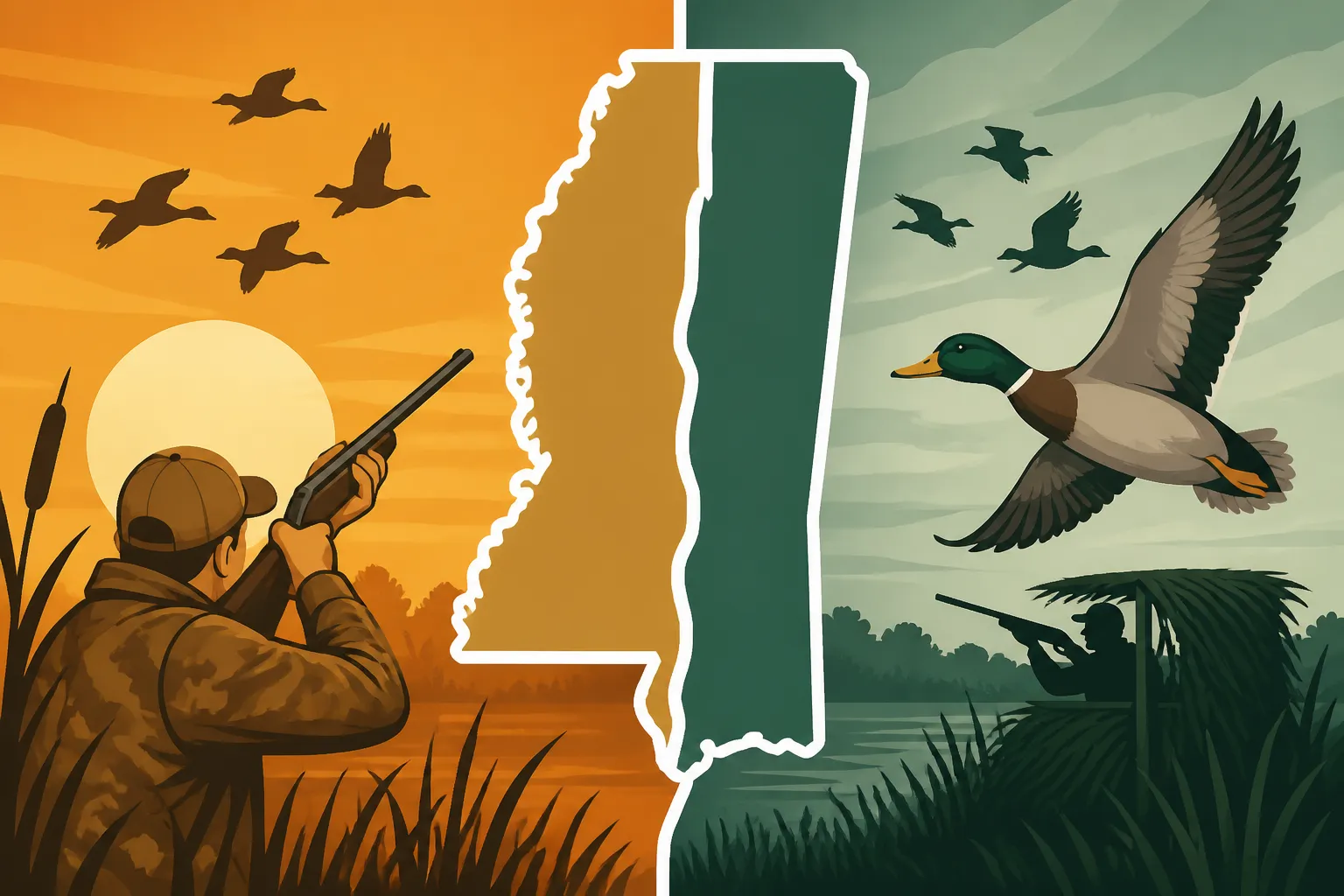
Mississippi, with its incredible position along the Mississippi Flyway, is a prime destination for waterfowl hunters. But it's not a one-size-fits-all situation when it comes to duck season. To maximize hunting opportunities across varied habitats and migration patterns, the state is divided into distinct waterfowl zones, each with its own set of rules and, crucially, its own season "splits." This design is meant to align hunting pressure with the availability of migratory birds, but it can certainly cause a headache if you're not paying close attention.
The North Zone Defined
The North Zone primarily encompasses the northern half of Mississippi, including the vast agricultural lands and rich bottomland hardwoods that draw ducks in droves. Think of the Mississippi Delta region, the heartland of our state's duck hunting reputation, heavily influenced by the mighty Mississippi River and its tributaries. Counties like Bolivar, Coahoma, and Tunica fall squarely into this zone, boasting significant tracts of flooded timber, managed impoundments, and sheet water on cut farm fields.
The duck population here often relies heavily on early migrators in the fall, followed by a steady influx throughout winter. The hunting strategy and timing are dictated by cold fronts pushing birds south, as well as the availability of flooded food sources. Understanding the terrain and typical flight paths within this zone is paramount for consistent success.
The South Zone Defined
Moving further south, you enter the South Zone. This area typically covers the lower half of the state, stretching from the central piney woods all the way to the Gulf Coast marshes. While it might not always boast the sheer numbers of the Delta, the South Zone offers fantastic and often overlooked opportunities, especially for species like wood ducks and teal, and for late-season mallards that have pushed past the colder northern reaches.
Key areas include river systems like the Pearl and Pascagoula, along with coastal estuaries. The habitats are diverse, ranging from smaller flooded timber pockets and cypress swamps to tidal marshes. The migration patterns here are generally later, with birds filtering in as northern waters freeze and often holding longer into the season due to milder temperatures. This means a different approach to scouting and timing your hunts compared to the Delta.
The Rationale Behind Zone Splits
You might wonder why we can't just have one continuous duck season. It would certainly make life easier for hunters, right? Well, the "split" in duck season is a carefully considered biological and management decision designed to benefit both the birds and the hunters. It's a way to spread out hunting pressure and provide fresh hunting opportunities when new flights of ducks arrive, without completely burning out local bird populations.
Adapting to Migration Patterns
Ducks don't migrate on a strict, predictable schedule. They respond to weather fronts, food availability, and water conditions. Having a continuous season, especially in a state as long and varied as Mississippi, would mean that hunters in one part of the state might be hammering birds that haven't even arrived yet, or missing the peak migration entirely. The split season allows wildlife managers to tailor opening and closing dates to better align with the arrival and departure of migratory waterfowl in different regions.
For instance, the North Zone often gets an earlier opener to target early migrants and resident birds before they've been too heavily pressured, while the South Zone might have a later "second split" to take advantage of birds that have wintered over or are just arriving from more northern climes. This approach aims to maximize hunter success across the state while also providing periods of rest for the birds.
Managing Hunting Pressure
Imagine if every duck hunter in Mississippi was out every single day from November to January. The birds would quickly become "educated" and disperse, making hunting incredibly difficult for everyone. The season splits offer a crucial break, allowing ducks to settle into new feeding and roosting patterns without constant harassment. This "rest period" can make a significant difference in how the birds behave when the season reopens.
When the season reopens after a split, particularly if new birds have moved into the area, it can feel like a fresh start. These unpressured birds are often more willing to decoy and less wary. This management strategy helps sustain quality hunting throughout the entire winter, preventing a quick burnout of local populations and ensuring that subsequent waves of migratory birds have a chance to settle in. It's a balance between hunter opportunity and species conservation, and it’s a constant dance for wildlife biologists.
Navigating the North Zone Split
The North Zone's duck season is often characterized by an early, shorter opening segment, followed by a break, and then a longer, more substantial second segment. This structure attempts to capitalize on the first major push of ducks while also accounting for the peak of the migration later in the winter. For hunters eager to get out early, it's a critical window, but the true test often comes after the break. You can always check the latest regulations for Mississippi North Zone Duck Dates to stay up to date.
Early Season Opportunities
The first split in the North Zone usually kicks off in late November or early December. This is your chance to target those early migrants, which can include teal, gadwall, wigeon, and sometimes even some early mallards. Water levels in flooded timber might still be rising, and agricultural fields might have just been cut, offering fresh food sources. The key here is scouting hard before the season to identify which areas have fresh water and new birds. It's a fantastic time to hit those smaller potholes and sheet water areas that might dry up later in the season.
However, conditions can be hit or miss. If there hasn't been significant rain or a strong cold front, the numbers might be lower. Hunters often find success jump-shooting beaver ponds or focusing on flooded low-lying areas that collect water first. It's an opportunity to knock down some birds and shake off the rust, but be prepared for potentially warmer weather and more scattered ducks.
The Main Winter Hunt
After a short break, the North Zone typically reopens for its much longer, main segment, often running from mid-December through January. This is what many Mississippi duck hunters live for. During this period, more severe cold fronts push down the bulk of the mallard migration, as well as pintails, divers, and other species. The Delta's famous flooded timber comes alive, and vast agricultural fields become magnets for hungry ducks.
The hunting can be epic, but it's also when hunting pressure is at its highest. You'll need to employ a variety of tactics, from setting up in flooded timber for mallards to Layout Blind Hunting Delta Farm Fields for puddle ducks and geese. Scout continually, pay attention to weather patterns, and be willing to move if your honey hole isn't producing. Many dedicated duck hunters will use tools like GoHunt, which offers robust mapping and weather overlays, to help predict bird movement and find less pressured spots, especially when focusing on specific areas like Hunting Greentree Reservoirs for Mallards.
Mastering the South Zone Split
The South Zone's duck season often begins a little later than the North, typically in mid-December, and might feature a different split structure, sometimes with a shorter first leg and a prolonged second leg that extends further into January. This later timing is a direct response to the migratory patterns of birds that prefer warmer climes or continue their journey south as the season progresses. It’s crucial to know the specific Mississippi South Zone Duck Dates to plan effectively.
Later Start, Different Birds
The initial push of birds into the South Zone might not be as dramatic as in the Delta. Instead, you're often looking for a more consistent build-up of resident wood ducks, local teal, and early arriving mallards, gadwall, and wigeon. The habitats can be quite different too, with more emphasis on smaller creek bottoms, cypress swamps, and coastal marshes. This means different decoy spreads and calling strategies might be in order.
Don't overlook the potential for quality hunting during this early period, especially if you're targeting wood ducks that tend to stick to tighter cover. Jump-Shooting Mississippi Beaver Ponds for Wood Ducks can be incredibly effective. Pay attention to water levels, as many of these areas are sensitive to heavy rains and can become unfishable quickly or dry out if rainfall is scarce.
Extending the Season into January
The second, longer segment of the South Zone season can often run well into January, sometimes even overlapping with the last days of the North Zone. This provides fantastic opportunities, especially for hunters looking to extend their season or target those late-season ducks that have been pushed further south by extreme cold. By this time, many northern waters are frozen, concentrating birds in Mississippi's relatively warmer southern regions.
You'll find opportunities in tidal marshes along the Gulf Coast, larger river systems, and even some agricultural fields in the central part of the state. These birds have often seen a lot of pressure by this point in the season, so subtle calling, realistic decoy spreads, and excellent concealment become even more critical. Keep an eye on the weather forecasts for cold snaps to our north, as these can drive fresh batches of ducks right into the South Zone.
Practical Strategies for Duck Hunting the Splits
Understanding the rules of the split seasons is one thing, but knowing how to effectively hunt them is another entirely. The key to consistent success during Mississippi's duck season splits lies in adaptability, relentless scouting, and being prepared for varying conditions. You can check out Mississippi Waterfowl Zones and Seasons for a complete overview of the framework.
Pre-Season Scouting and In-Season Adaptations
Scouting isn't just a suggestion for duck hunting; it's a requirement, especially when dealing with split seasons. Before the first split, you should be out looking for water, food, and bird activity. Are the acorns dropping in your favorite timber hole? Are the fields being cut? Has rain filled enough potholes? During the break between splits, don't put your binoculars away! This is a prime time to observe how ducks are using the landscape without hunting pressure. Are they shifting to new feeding areas? Have new birds arrived?
Once the season reopens, be prepared to adapt. What worked on opening day might not work a week later, especially if new birds have arrived or a major weather system has passed through. Being flexible with your setup location, decoy spread, and calling approach is crucial. You might need to move from flooded timber to a field, or vice versa. Having a mapping tool like GoHunt can be invaluable here, allowing you to mark bird observations, potential access points, and alternative hunt locations on the fly.
Weather and Water Level Considerations
The weather dictates duck migration and behavior more than almost anything else. Cold fronts up north push birds south. Heavy rains in Mississippi can flood new areas, dispersing birds, while dry spells can concentrate them in dwindling water sources. Paying close attention to both distant and local weather forecasts is vital. A strong northerly wind can mean fresh birds are coming, and a sudden drop in temperature can get them feeding aggressively.
Water levels, particularly in the Delta's flooded timber and the river bottoms of the South Zone, are equally critical. Many areas rely on rainfall or controlled flooding to be huntable. A low-water year can mean less habitat and more concentrated birds, while a high-water year can spread them out across vast areas, making them harder to find. Always check local river gauges and stay informed about WMA water management plans if you're hunting public ground.
| Zone | Typical First Split Timing | Typical Second Split Timing | Primary Habitat Focus | Key Species |
|---|---|---|---|---|
| North Zone | Late Nov – Early Dec (Shorter) | Mid-Dec – Late Jan (Longer) | Flooded Timber, Agricultural Fields, Sheet Water | Mallards, Teal, Gadwall, Pintails |
| South Zone | Mid-Dec (Shorter) | Late Dec – Late Jan (Longer) | Cypress Swamps, River Bottoms, Coastal Marshes | Wood Ducks, Teal, Mallards, Gadwall |
Note: These are typical timings. Always check the official MDWFP regulations annually for precise dates as they can change.
Licensing and Regulations for Duck Hunters
Navigating Mississippi's duck season splits isn't just about understanding dates and duck behavior; it's also about ensuring you're fully compliant with all state and federal regulations. Missing a crucial license or failing to check a bird could lead to a ruined hunt and hefty fines. Always make sure you understand the rules for Mississippi Duck and Goose Bag Limits.
Required Licenses and Stamps
To legally hunt ducks in Mississippi, you'll need several key items:
- Mississippi Hunting License: Residents and non-residents alike need a valid state hunting license.
- Mississippi Migratory Bird Stamp: This state stamp is specific to migratory bird hunting.
- Federal Duck Stamp: This is a federal requirement for all waterfowl hunters 16 years of age or older. It's often referred to as the "Duck Stamp" and a significant portion of the funds from its sale go directly to wetland conservation. You can find more information about the Mississippi Federal Duck Stamp Requirement through the MDWFP.
- Harvest Information Program (HIP) Certification: Every migratory bird hunter, regardless of age, must be HIP certified annually. This involves answering a few simple questions about your previous year's hunting success, and the data collected is vital for wildlife management. Ensure you have your Mississippi HIP Certification for Bird Hunters before heading out.
Remember, carrying proof of all your licenses and stamps is critical. Many hunters now keep digital copies on their phones, but having physical copies or a reliable digital backup is always a good idea, especially in areas with poor cell service.
Bag Limits and Species Identification
Mississippi, like all states, has strict daily bag limits and possession limits for various duck species. For instance, the general Mississippi Duck Daily Bag Limit usually allows a certain number of ducks per day, but there are often sub-limits for specific species like mallards (often limited to a certain number of hens), pintails, canvasbacks, and wood ducks. These limits are in place to manage species populations and ensure sustainable hunting.
Proper species identification is not just a good skill to have; it's a legal requirement. You need to be able to identify your target before you shoot, especially when sub-limits are in play. If you're unsure, it's always best to err on the side of caution. Consider picking up a good duck identification guide or practicing with flashcards to hone your skills. Remember, hunters are responsible for knowing the rules and identifying their birds correctly, even in low light conditions.
Conclusion: Maximizing Your Mississippi Duck Season
Hunting the Mississippi duck zone splits can be incredibly rewarding, offering a diverse range of experiences from the timber of the Delta to the swamps and marshes of the South Zone. While the regulations and varying season dates might seem a bit daunting at first, understanding the "why" behind them—adapting to migration patterns and managing hunting pressure—can help you appreciate the thought that goes into these seasons. By staying informed, embracing continuous scouting, adapting to changing conditions, and adhering to all licensing and bag limit requirements, you’re not just following the rules, you’re setting yourself up for a truly successful and memorable season. So, get out there, enjoy those early morning flights, and make the most of every split the Magnolia State has to offer!
Disclaimer
Please note that hunting regulations, season dates, and license requirements can change annually. Always consult the official Mississippi Department of Wildlife, Fisheries, and Parks (MDWFP) website or their current hunting guide for the most up-to-date and accurate information before planning any hunt. This guide is for informational purposes only and should not be considered a substitute for official regulations.