Layout Blind Hunting Delta Farm Fields
There’s nothing quite like the sight of a Mississippi Delta sunrise painting the sky, but if you’re a duck hunter, that beauty comes with a challenge: those wide-open farm fields offer zero natural cover. Trying to hide from the sharp eyes of a circling mallard in a vast expanse of cut beans or corn can feel impossible, leaving many hunters frustrated and wondering how to get close enough. This guide is all about mastering the art of layout blind hunting in these challenging Delta landscapes, giving you the tactics and confidence to disappear into the field and bring those birds down.
Understanding the Delta Farm Field Challenge
Hunting waterfowl in the Mississippi Delta’s farm fields is a unique beast. Unlike flooded timber or marsh hunting, where natural cover abounds, you’re often dealing with incredibly flat, open terrain that stretches for miles. This lack of inherent concealment is the primary hurdle that makes traditional blind setups or simply hiding behind a few sparse weeds a losing battle against the incredibly keen eyesight of ducks and geese.
The Open Landscape Dilemma
Imagine standing in a recently harvested soybean field, the stubble barely rising above your ankles. Now picture a flock of mallards, wings cupped, circling high above, their eyes scanning every inch of that landscape. Anything that breaks the natural contour, anything that looks out of place, is immediately flagged by these highly intelligent birds. The Delta, with its rich agricultural history, is a patchwork of these fields, and while they're a magnet for feeding waterfowl, they offer precious little to hide behind. This isn’t like hunting the broken reeds of a marsh or the dense canopy of a greentree reservoir; here, you're exposed. The sky is big, and the ground is flat, putting the odds squarely in the ducks' favor unless you employ specialized tactics.
Waterfowl Vision and Wariness
Ducks and geese aren't just flying stomachs; they're survival machines with exceptional eyesight. Their eyes are positioned to give them a wide field of view, making it nearly impossible to sneak up on them in an open field. They can detect the slightest movement, the gleam of an errant piece of gear, or a human silhouette from hundreds of yards away, often at altitudes where you can barely distinguish them from specks in the sky. As the season progresses and hunting pressure mounts, these birds become even warier. They've seen it all, heard it all, and survived it all, making them incredibly difficult to fool. This is particularly true for migratory birds passing through the Mississippi Flyway; they've been shot at across multiple states, learning valuable lessons about what looks "off." Their wariness is often the biggest frustration for hunters, leading to birds flaring out of range at the last second, leaving you shaking your head in disbelief.
The Layout Blind Advantage
Given the challenges of the open Delta fields, the layout blind isn't just a piece of gear; it's practically a necessity. These blinds are ingeniously designed to get you as low to the ground as possible, making you effectively disappear into the very stubble of the field you’re hunting.
Becoming Part of the Landscape
The core principle of a layout blind is simple: mimic the natural contours of the field. By lying flat on your back, you present a minimal profile, drastically reducing your visibility to overhead birds. Most quality layout blinds feature a low, camouflaged shell, often covered in grass-like material or stubble straps that allow you to brush them in with local vegetation. When done correctly, you literally become part of the landscape. Imagine a freshly cut cornfield; the stubble is uneven, patchy, and often broken. A well-brushed layout blind, especially one like a well-regarded Avery or Final Approach model, melts right into that. This is crucial for fooling wary ducks that might otherwise spot a traditional pit blind or even a carefully built portable blind from high above. It's about blending, not hiding behind something, but becoming part of the ground cover itself. This natural integration is what makes them so effective in the featureless expanse of the Delta.
Comfort and Functionality in the Field
Beyond concealment, modern layout blinds offer a surprising level of comfort and functionality, which is invaluable during long, cold, or wet Mississippi mornings. Most models feature an insulated bottom to keep you warm and dry, lifting you slightly off the often-damp ground. An adjustable headrest ensures you can scan the skies comfortably without craning your neck, and flagging ports allow for easy motion flagging to attract distant birds. Many also have storage pockets for calls, shells, snacks, and water, keeping essential gear within arm's reach. The ability to stay warm and dry, especially when you're out there before first light, makes a huge difference in your endurance and enjoyment. Being able to pop up quickly to shoot, then settle back down without major disruption, means you can focus on the birds and the hunt, not on shivering or fumbling with your gear. This level of comfort allows for longer, more effective hunts, something often overlooked when discussing hunting gear.
Scouting and Setup for Success
You can have the best layout blind in the world, but if you're not in the right spot, it's just an expensive piece of camouflage. Scouting and strategic setup are arguably more critical than the blind itself when hunting Delta farm fields.
Reading the Fields for Roost and Feed
Ducks and geese are creatures of habit, especially when it comes to feeding. They’ll often roost on large bodies of water, then fly out at first light to feed in nearby agricultural fields. Your job as a hunter is to intercept them on their way to or from these feeding grounds. This means driving around the Delta, often at dawn or dusk, observing where birds are flying, landing, and feeding. Look for concentrations of birds, especially in fields with standing water or recent harvest activity. Are they hitting a specific patch of cut corn harder than anywhere else? Are they consistently flying over a particular treeline or ditch? Pay attention to "sign" on the ground: droppings, pushed-over stubble, or even feathers can indicate active feeding areas. Tools like GoHunt can be invaluable here. Using its aerial imagery, you can identify potential water sources, stubble fields, and travel corridors even before you set foot on the ground. This pre-scouting reconnaissance, combined with on-the-ground observation, will drastically increase your chances of setting up in a hot spot. Remember, ducks will fly a mile to feed where they want, not just where it’s convenient for you. Knowing Mississippi Waterfowl Migration Timing can also help you anticipate prime feeding patterns.
Optimal Blind Placement and Brushing In
Once you've identified a promising field, the next step is strategic placement of your layout blind. There are a few key considerations:
- Wind Direction: Always try to set up with the wind at your back. Ducks almost always land into the wind, so this positions them perfectly for a shot as they cup their wings and commit to your spread. If the wind shifts during the hunt, you might need to adjust.
- Sun Position: Early morning hunts mean the sun will be rising in the east. If possible, have the sun at your back, shining into the ducks' eyes as they approach. This not only provides a natural glare for the birds but also helps illuminate them for better shot placement.
- Existing Field Features: Look for any subtle changes in elevation, old terrace lines, fence rows, or even rows of taller stubble that can offer a slight advantage for concealment. These small features, though minor, can make a huge difference in breaking up your outline.
- Brushing In: This is perhaps the most critical step. Your layout blind, no matter how well-camouflaged, will still look like a bump if not properly brushed. Collect local vegetation – corn stalks, soybean stubble, Johnson grass, or even mud – and weave it into the blind's stubble straps. Don't be shy; over-brushing is better than under-brushing. You want it to look like a natural clump of field debris. Some hunters even spread a thin layer of mud on the blind to further dull any artificial sheen. Make sure to cover not just the blind itself, but also the ground immediately around it, blending the edges into the field. This attention to detail is what separates a mediocre hunt from a successful one. If you’re hunting a specific crop, consider how to best blend. For instance, Layout Blind Hunting a Cut Cornfield requires specific stubble.
Decoy Spreads and Calling Tactics
Getting the birds to commit to your spread is the ultimate goal, and it's a combination of visual appeal from your decoys and auditory persuasion from your calls. Both need to work in concert to seal the deal.
Field Decoy Strategies
Field decoy spreads are different from water spreads. You’re trying to replicate a flock of ducks or geese feeding, resting, and interacting on dry land (or very shallow puddles). Here are some common strategies:
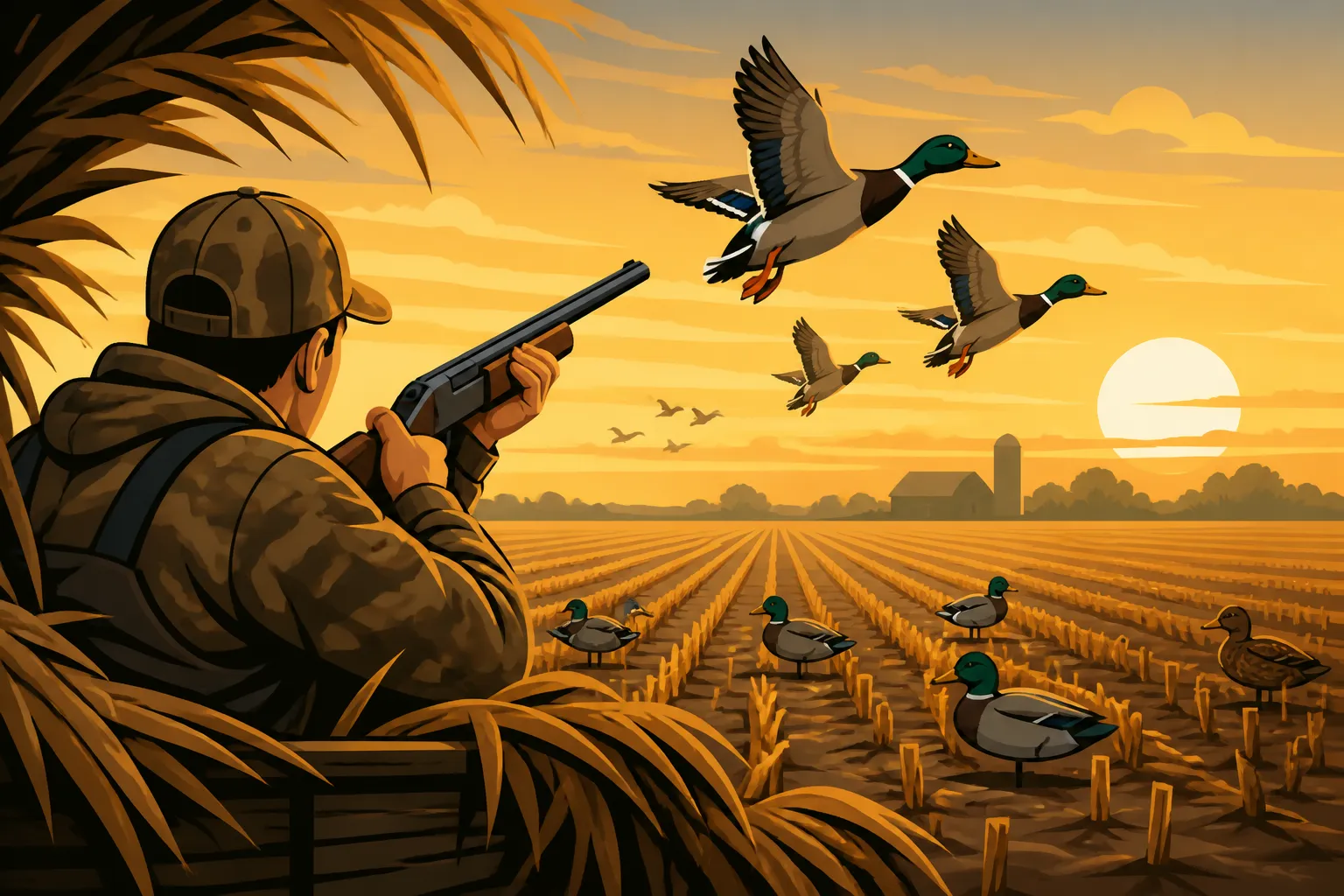
- Numbers Game: More decoys often equal more drawing power in open fields. A spread of 100-200 decoys isn't uncommon for serious field hunters. Mix full-body decoys with shell decoys and even silhouettes to create the illusion of a large, active flock.
- Species Mix: While mallards are often the target, don't forget specklebellies and snow geese also frequent Delta fields. A few dozen goose decoys can add realism and draw in a wider variety of birds. Understanding Mississippi Duck and Goose Bag Limits helps you target legally.
- The "J" or "U" Pattern: This is a classic. Set the bulk of your decoys in a large J-shape or U-shape, creating an open landing zone (the "pocket") directly in front of and downwind from your blinds. This funneling effect guides birds right where you want them.
- Small "Family" Groups: Within your larger spread, arrange decoys in smaller, natural-looking clusters of 3-5 birds. This mimics how ducks naturally feed and rest, adding to the realism.
- Motion Decoys: A few spinning-wing decoys (like a Mojo Outdoors mallard) or a flapping flag can add crucial movement, especially on calm days. Position them on the edges of your pocket to simulate landing birds. Remember, less is often more with spinners in heavily hunted areas; sometimes one or two are enough to create that enticing flicker.
- Water Presence: If there are natural puddles or low-lying areas with a little standing water, place a few floating decoys there. Ducks are always looking for water, and even a small amount can be a huge draw.
| Decoy Type | Best Use | Quantity Suggestion (Field) | Pros | Cons |
|---|---|---|---|---|
| Full-Body Ducks | Primary species, adds realism | 2-3 dozen | Highly realistic, good drawing power | Bulky, expensive, heavy to transport |
| Full-Body Geese | Add size and draw specks/snows | 1-2 dozen | Impressive visual, larger target group | Very bulky, even more expensive |
| Shell Decoys | Boost numbers economically | 5-10 dozen | Lightweight, stackable, affordable | Less realistic than full-bodies |
| Silhouette Decoys | High visibility from a distance, easy to transport | 5-10 dozen | Very lightweight, quick setup, visible | Flat profile, less realistic up close |
| Spinner Decoys | Crucial motion, visible from afar | 1-3 | High drawing power, simulates landing | Can flare wary birds if overused, battery reliance |
| Flags | Manual motion, good for working birds | 1-2 per hunter | Extremely effective, no batteries | Requires active flagging, can be tiring |
Calling for Field Ducks
Calling in ducks over open fields is an art form. You need to read the birds and adapt your calls accordingly.
- Long-Range Attention: When ducks are distant, a loud, clear hail call is your primary tool. It's designed to get their attention and turn them towards your spread. Don’t overdo it; once they turn, tone it down.
- Mid-Range Persuasion: As they circle, switch to softer, more contented calls. A pleading comeback call can work wonders, especially if they appear to be leaving. Cluck, quack, and feed calls mimic a happy, feeding flock, signaling "all clear" to wary birds.
- The Final Approach: When birds are committed and on their final descent, go nearly silent or use very soft, contented clucks and quacks. They’re already sold on the spread; now it’s about not alarming them. Sometimes, no call at all is the best call.
- Goose Calls: For geese, sharp honks and clucks are effective. A single long honk can often get a response, followed by conversational clucks as they approach. Again, less is more on the final approach.
- Reading the Birds: The most important aspect of calling is knowing when to call and when to shut up. If ducks are working well, don't interrupt them. If they seem hesitant, a soft call might seal the deal. If they're flaring, you might be calling too much, or your setup isn't good enough. Practice and experience are your best teachers here. For specific situations, knowing how to approach Hunting the Rut in the Delta Unit or even Hunting a Funnel Between Two Sloughs involves similar principles of reading the land and adapting your technique.
Overcoming Common Layout Blind Challenges
While layout blinds are incredibly effective, they come with their own set of challenges, especially in the often-unpredictable environment of the Mississippi Delta. Being prepared for these can make or break your hunt.
Dealing with Inclement Weather
Delta weather can be fickle. One morning it's calm and chilly, the next you're fighting horizontal rain or a biting north wind. Layout blinds, by their nature, keep you close to the ground, which means you're more exposed to ground-level moisture and cold.
- Rain and Mud: A waterproof layout blind is non-negotiable. Even with insulation, continuous rain can soak through inferior materials. Ensure your blind has a heavy-duty, waterproof bottom. Bring a tarp or large piece of plastic to lay under your blind if the ground is particularly wet or muddy. This extra layer can be a lifesaver for comfort and keeping your blind clean. Also, consider waterproof outer layers for yourself, including waterproof gloves and a hat, to stay comfortable during a downpour. Mud is inevitable, so having a small shovel or scraper to clean off your boots before getting into the blind can prevent a mess.
- Cold and Wind: While blinds offer some protection, they aren't fully enclosed. Layering your clothing is paramount. Start with a moisture-wicking base layer, add insulating layers like fleece or down, and top it with a windproof and waterproof outer shell. Hand warmers and foot warmers are your best friends on bitter mornings. A small, portable heater (used cautiously and with proper ventilation) can also make a huge difference in staying warm and extending your hunt. Don't forget a warm hat and face mask, as most body heat is lost through your head.
Hunting Pressure and Duck Behavior
The Delta is a popular hunting destination, and public lands or easily accessible private fields can see a lot of pressure, especially during opening weekend or peak migration times like Hunting the North Zone Duck Split or Hunting the South Zone Duck Split. Ducks quickly learn to avoid areas where they've been consistently shot at.
- Early Season vs. Late Season: Early in the season, birds might be more naive. As weeks pass, they become "call-shy" and "decoy-shy." This means you need to adjust your tactics. Reduce your calling, make it softer and more realistic, and scrutinize your brushing-in efforts even more.
- Finding Unpressured Spots: This is tough but crucial. It often involves more scouting, walking further from access points on public land, or gaining permission on private tracts that might not get as much attention. Don't be afraid to put in the legwork. Sometimes, the best spots are the ones no one else wants to hike to. Using an app like GoHunt for mapping and identifying remote areas can be incredibly helpful here. Remember, ducks will try to find safe havens, and if you can find those, you're in business.
- Less is More: When birds are pressured, sometimes a minimalist approach works best. Instead of a huge spread, try a smaller, more realistic spread with fewer motion decoys. Call less, and call more subtly. Be absolutely meticulous about your concealment. You might even consider experimenting with different decoy types; sometimes a spread of just silhouettes can fool birds that have learned to distrust spinning wing decoys.
Essential Gear Beyond the Blind
While the layout blind is your core piece of equipment for field hunting, a successful and comfortable hunt requires a host of other essential gear. Thinking ahead about these items can make your day much more enjoyable and productive.
Clothing and Comfort
Being comfortable in the field is paramount, allowing you to focus on the birds and not on shivering or being wet.
- Layering System: This cannot be stressed enough. Mississippi weather, even in winter, can swing wildly from frigid mornings to mild afternoons. A base layer (moisture-wicking synthetic or merino wool) keeps sweat off your skin. Mid-layers (fleece, down, or synthetic insulation) provide warmth. An outer shell (waterproof, windproof, and camouflaged) protects against the elements. You should be able to add or shed layers as conditions change.
- Waterproof Everything: Beyond your blind, your boots, gloves, and outer jacket should be absolutely waterproof. GORE-TEX or similar technologies are worth the investment. Your feet and hands get cold the fastest, so quality waterproof insulated boots and gloves are non-negotiable.
- Camouflage Patterns: Choose patterns that blend with the agricultural fields you're hunting. For cut corn or stubble, patterns like Mossy Oak Bottomland, Realtree MAX-5, or Sitka Gear Elevated II are excellent choices. Ensure your face and hands are covered with a facemask and gloves to break up any skin exposure.
- Eye Protection and Hearing Protection: Always wear shooting glasses to protect your eyes from debris, stray pellets, or even mud. Hearing protection is equally important, especially if you're in a group of hunters. Electronic ear protection allows you to hear calls and approaching birds while still protecting your hearing from gunshots.
Retriever Considerations
If you hunt with a dog, they are an invaluable asset, but they also require specific considerations when hunting from layout blinds in farm fields.
- Dog Blind/Concealment: Your retriever needs to be as hidden as you are. Some layout blinds have integrated dog compartments, or you can use a separate, low-profile dog blind brushed in next to yours. The dog must be completely concealed from overhead birds. Nothing will flare a flock faster than seeing a dog sitting up in the spread.
- Warmth and Comfort: Just like you, your dog can get cold and wet. Ensure their blind has an insulated bottom, or bring a small mat or dog bed for them to lie on. A dog vest can provide extra warmth in frigid conditions. Pack plenty of fresh water, even in cold weather, as working dogs can become dehydrated.
- Training and Control: Your dog needs to be steady to the shot and under absolute control. You don’t want them breaking prematurely or barking at approaching birds. A well-trained dog is a joy; an unruly one can ruin a hunt for everyone. Leash them in the blind until it’s time to send them for a retrieve. Understanding aspects like Hunting Mississippi's Year-Round Feral Hogs also highlights the importance of dog control and specific equipment for different game species.
Planning for Your Delta Field Hunt
A successful hunt is often the result of meticulous planning. From understanding regulations to logistical considerations, every detail matters when you’re heading to the Delta.
Licensing and Regulations
Before you even think about stepping into a Delta farm field, ensure all your ducks (pun intended!) are in a row regarding licensing and regulations. The Mississippi Department of Wildlife, Fisheries, and Parks (MDWFP) has clear rules, and ignorance is no excuse.
- Resident vs. Non-Resident Licenses: Make sure you have the correct type of license. Mississippi offers various options, including annual licenses, multi-day non-resident permits, and even lifetime licenses. You might need a Mississippi WMA Permit Requirement if you plan on public land.
- Federal and State Stamps: Beyond your basic hunting license, migratory bird hunters are required to purchase a federal duck stamp and often a state migratory bird stamp. These funds directly contribute to wetland conservation efforts, so it's money well spent.
- HIP Certification: The Harvest Information Program (HIP) certification is mandatory for all migratory bird hunters in the U.S. It's a quick, free registration that helps wildlife agencies gather vital harvest data.
- Bag Limits and Shooting Hours: Familiarize yourself with the current Mississippi Duck and Goose Bag Limits and shooting hours. These can vary by species and change year to year, so always check the latest MDWFP regulations before each season. Remember, legal shooting hours typically begin 30 minutes before sunrise and end at sunset. Don't be that hunter who gets a ticket for shooting too early or too late.
Location and Access
Knowing where to hunt is half the battle, and securing access is the other half. The Delta offers a mix of private and public land opportunities.
- Private Land: Most of the prime farm fields in the Delta are privately owned. Gaining permission from landowners is often the best way to secure consistent, quality hunting. This means knocking on doors, being polite, and offering to help out in other ways. Building a good relationship can lead to years of access. Sometimes, hunting clubs lease large tracts of land, and joining one might be an option, though they can be costly. You might find information on Finding a Mississippi Hunting Lease for private access.
- Public Land: Mississippi does have public hunting lands within the Delta, such as parts of Delta National Forest or certain Wildlife Management Areas (WMAs). While these areas can offer excellent hunting, they often come with more competition and specific WMA rules. Utilize resources like the MDWFP website or apps like GoHunt to scout public land boundaries, access points, and potential hunting spots. Understanding Reading a Delta Slough for a Morning Flight can be crucial on public lands with varied terrain.
- Scouting Safely: When scouting, always respect private property boundaries. Carry maps (both paper and digital like GoHunt) and know exactly where you are. Inform someone of your plans, especially if you're venturing into remote areas or planning to hunt alone.
Post-Hunt Considerations
The hunt doesn't end when the shooting stops. How you handle your harvest is just as important.
- Game Care: Proper field dressing and cooling of birds are essential, especially in Mississippi's often mild temperatures. Get birds gutted and on ice as quickly as possible to preserve meat quality.
- Reporting Harvest: Be aware of any harvest reporting requirements for specific species, if applicable, in Mississippi. While ducks generally don't require individual reporting, staying informed is vital.
- Clean Up: Always leave the field cleaner than you found it. Pick up all spent shells, discarded packaging, and any trash. Remove all decoys and blinds promptly. This good stewardship is critical for maintaining good relationships with landowners and ensuring continued access for all hunters.
Conclusion
Hunting the wide-open farm fields of the Mississippi Delta from a layout blind offers some of the most challenging yet rewarding waterfowl hunting experiences in the country. It demands meticulous scouting, careful setup, and an unwavering commitment to blending into the landscape. It's not always easy, and those wary birds will humble you more often than not, but when a flock commits to your spread, wings cupped, and you rise from the stubble as one with your hunting partners, there's no feeling quite like it. By mastering the art of concealment, understanding duck behavior, and preparing for the Delta's unique conditions, you'll be well on your way to filling your strap and creating unforgettable memories in Mississippi's rich waterfowl tradition.
Disclaimer
Hunting is an inherently dangerous activity. This guide provides general information and recommendations; however, it is the sole responsibility of each hunter to ensure they are fully compliant with all local, state, and federal hunting regulations. Always prioritize safety, practice ethical hunting methods, and consult official Mississippi Department of Wildlife, Fisheries, and Parks (MDWFP) resources for the most current rules and season dates before engaging in any hunting activities.