Mississippi Duck Daily Bag Limit
It's incredibly frustrating to head out to your favorite flooded timber hole or a prime field edge, have a fantastic morning with ducks working the decoys, only to realize later you might have messed up the bag limits. With all the specific rules and species sub-limits, it's easy to get confused and unintentionally break a regulation. This guide is here to clear up exactly what the Mississippi daily duck bag limit entails, helping you stay legal and ethical while enjoying our state's fantastic waterfowl hunting opportunities.
Understanding the General Daily Duck Bag Limit
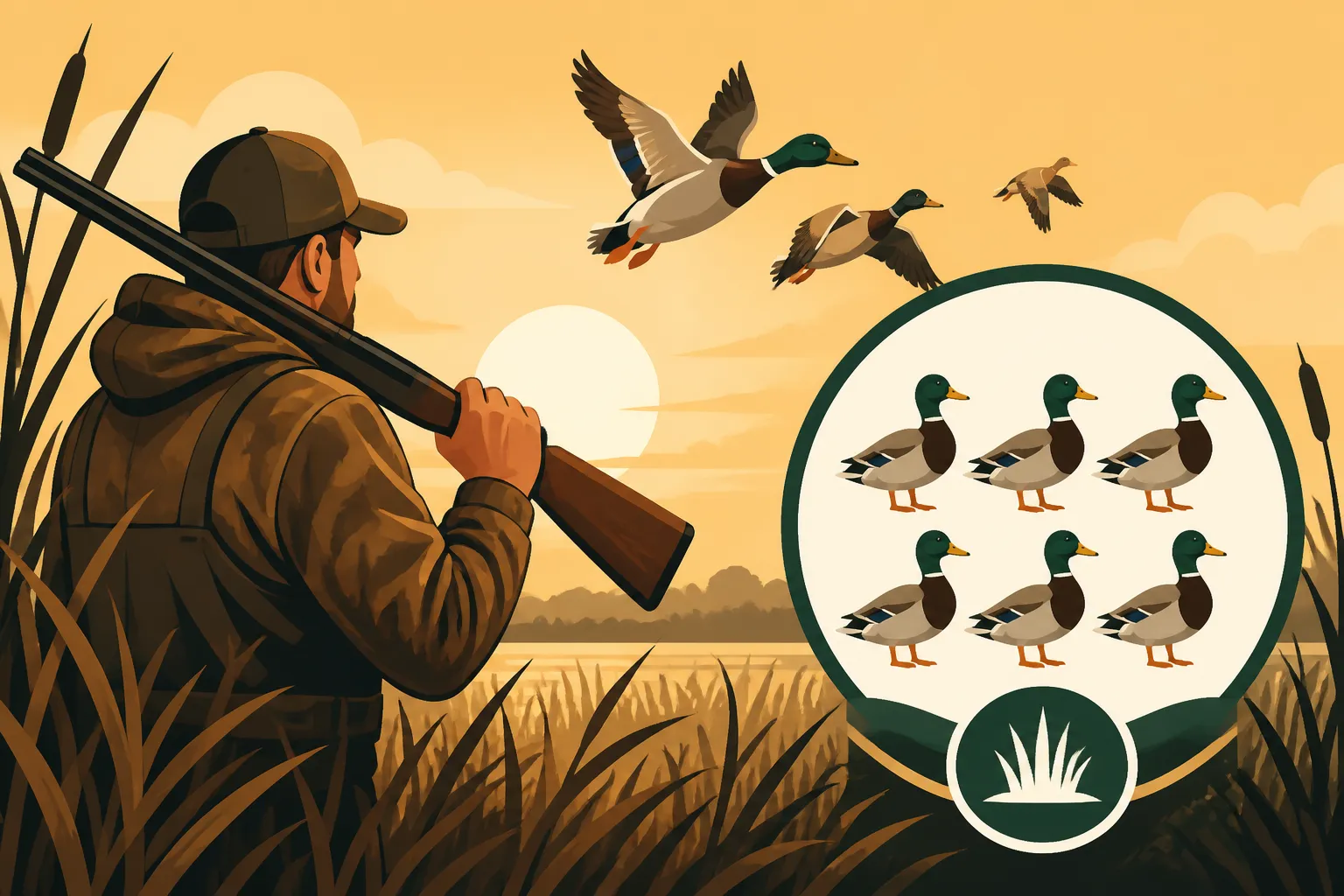
When you talk about duck hunting in Mississippi, one of the first things you hear is "six ducks." And while that's the overall number, it's really just the tip of the iceberg. The daily bag limit isn't a simple "any six ducks" free-for-all; it's a carefully structured set of rules designed to manage specific populations, ensuring that we have ducks to hunt for years to come. Getting this wrong can lead to serious consequences, and nobody wants that kind of stress when they're trying to enjoy a sunrise over the Delta.
The Overall Six-Bird Rule
So, let's start with the foundation: the total aggregate daily bag limit for ducks in Mississippi is generally six birds. This means, no matter what species you harvest, you cannot exceed a total of six ducks in your possession during one calendar day's hunt. This number is set annually by the U.S. Fish and Wildlife Service, in conjunction with flyway councils, and then adopted by states like Mississippi. It's a broad strokes limit that applies to most species, but where it gets tricky is when you factor in the specific species sub-limits. You could, for instance, shoot two mallard drakes, two gadwall, and two wood ducks, and still be perfectly legal within your overall six-bird limit. The key is to remember that the aggregate six-bird limit is your absolute ceiling, and you must also adhere to the individual species restrictions within that total. It’s important to always check the official MDWFP regulations before heading out, as these limits can shift slightly from year to year.
Why the Numbers Matter
These seemingly arbitrary numbers aren't just pulled out of a hat by some distant committee. They're the result of extensive biological research, population surveys, and a deep understanding of migratory patterns. The goal is always sustainability. If a particular duck species has had a tough breeding year up north, or if its population has been declining over several seasons, you can bet that its specific sub-limit will reflect that. Conversely, if a species is thriving, the limits might be more generous. For hunters, understanding that these limits are based on real-world data helps reinforce the responsibility we have to be good stewards of the resource. Every duck retrieved, every bird identified correctly, and every limit respected contributes to the overall health of the migratory bird populations that traverse the Mississippi Flyway. It’s a direct reflection of our commitment to conservation and ensuring that future generations can experience the thrill of a flock of mallards circling a spread.
Species-Specific Sub-Limits You Need to Know
This is where many hunters, especially newer ones, can get tripped up. While you have an overall daily limit of six ducks, certain species have their own, much lower, limits that you must adhere to within that six-bird total. Ignoring these sub-limits can quickly turn a successful hunt into a legal headache, even if your total count is under six. Knowing your ducks in the air and, crucially, in hand, is paramount.
Mallards and Their Restrictions
Mallards are, for many, the quintessential duck, and Mississippi sees a healthy migration of them, particularly into the flooded timber and agricultural fields of the Delta. However, their popularity also means they have specific management rules. Generally, the Mississippi duck daily bag limit for mallards is four total birds, and here's the crucial part: only two of those four can be hens. So, while you could potentially shoot six gadwall, you absolutely cannot shoot six mallards.
Imagine this scenario: you're having an incredible morning, and several groups of mallards are working your setup. You drop two drakes, then another drake, and then, a hen comes in perfectly and you make a clean shot. At this point, you have four mallards, including one hen. You're legal so far. But if another hen comes in and you harvest her, you've now exceeded your two-hen limit, even though you still only have five total ducks. This is a common pitfall. Being able to quickly identify mallard drakes versus hens in flight is an essential skill for any Mississippi duck hunter. This is where scouting and using resources like the GoHunt app for in-field reference become invaluable, especially when you're hunting in areas known for a high concentration of greenheads. For more details on these specific regulations, you might want to check out our article on Mississippi Mallard Sub-Limit Rules.
Wood Ducks and Pintails
Next up are wood ducks and pintails, both beloved by hunters for different reasons. Wood ducks, with their stunning plumage and acrobatic flight, are often found in the cypress brakes and bottomland swamps of Mississippi. Pintails, with their elegant long necks and distinctive tail feathers, are a prized trophy for many. Due to various population factors, both of these species often have very conservative daily sub-limits.
Typically, the daily bag limit for wood ducks is two. This means if you’ve had a great morning in a river bottom, and you've shot two wood ducks, you're done for that species, regardless of how many other ducks you can still legally take. It's easy to fill a wood duck limit in some of Mississippi's prime timber if you're not paying attention. Similarly, pintails often have a limit of just one bird per day. So, if you manage to drop that beautiful pintail drake, you've hit your limit for that species. These lower limits emphasize the need for careful identification and disciplined shooting. Learning to identify these birds quickly in flight, particularly in low light conditions often experienced when Hunting Flooded Timber for Wood Ducks, is crucial to staying legal and making ethical choices.
Other Important Species
Beyond mallards, wood ducks, and pintails, there are a host of other duck species that contribute to Mississippi's diverse waterfowl hunting. Each has its own place in the bag limit structure, and while many fall under a more general category, some have specific, sometimes fluctuating, limits:
- Gadwall, Wigeon, Shovelers, and Scaup: These often have relatively generous limits, usually allowing you to take up to six of any combination within the overall six-bird aggregate. However, scaup (bluebills) sometimes have fluctuating limits depending on federal frameworks, so always double-check.
- Canvasbacks and Redheads: These divers are often restricted to one or two birds per day, respectively, mirroring population trends. They are highly sought after but require careful management.
- Teal: During the regular season (separate from the early teal season), blue-winged, green-winged, and cinnamon teal are lumped together. Their combined limit is usually six, as long as they don't exceed the overall six-duck aggregate.
- Mergansers (Hooded, Common, Red-breasted): These birds have a separate daily bag limit, often five birds, with usually no more than two being hooded mergansers. They don't count towards your regular duck limit.
- Coots: Like mergansers, coots also have a separate daily bag limit, usually 15 birds, and don't count towards your duck limit.
Here's a quick overview of the typical daily bag and sub-limits for Mississippi ducks. Keep in mind these are subject to change annually, so always consult the latest MDWFP regulations.
| Species Category | Daily Bag Limit (Typical) | Sub-Limits (Typical) |
|---|---|---|
| Total Aggregate Ducks | 6 | Cannot exceed 6 total ducks, regardless of species. |
| Mallards | 4 | No more than 2 hen mallards. |
| Wood Ducks | 2 | Specific limit within the total 6. |
| Pintails | 1 | Specific limit within the total 6. |
| Canvasbacks | 1 | Specific limit within the total 6. |
| Redheads | 2 | Specific limit within the total 6. |
| Scaup (Bluebills) | 2 | (Can vary year to year based on population; check current regs). |
| Black Ducks / Mottled Ducks | 1 | Combined limit, specific within the total 6. |
| Other Ducks (Gadwall, Wigeon, Teal, Shoveler, etc.) | Varies | Combined with other "unrestricted" species to reach overall 6-bird limit. |
| Mergansers | 5 | No more than 2 hooded mergansers. Separate from duck limit. |
| Coots | 15 | Separate from duck limit. |
Note: This table provides typical limits. Always consult the most current Mississippi Department of Wildlife, Fisheries, and Parks (MDWFP) regulations for official and up-to-date information before hunting.
Factors Influencing the Daily Bag Limit Decisions
It’s easy to look at the numbers and just accept them, but understanding the intricate process behind how Mississippi’s duck daily bag limits are set gives you a deeper appreciation for the resource and the conservation efforts involved. These aren't just arbitrary figures; they are the culmination of years of data, scientific analysis, and collaborative decision-making between federal and state agencies.
Federal Framework and Flyways
Mississippi falls squarely within the vast Mississippi Flyway, one of four major avian highways stretching across North America. This is a critical concept because migratory bird hunting regulations aren't purely state-level decisions; they begin at the federal level. The U.S. Fish and Wildlife Service (USFWS) is tasked with managing migratory bird populations across national and international borders. Each year, the USFWS, in consultation with the four Flyway Councils (Atlantic, Mississippi, Central, and Pacific), analyzes extensive data from breeding ground surveys, harvest reports, and banding studies.
Based on these findings, the USFWS establishes a "framework" of season lengths and bag limits. States within each flyway then choose their specific seasons and limits within that federal framework. So, while Mississippi has some flexibility, it cannot exceed the maximum limits set by the feds. This ensures a consistent, scientifically-backed approach to waterfowl management across the continent, recognizing that ducks don't respect state lines. This is a big reason why checking the Mississippi Waterfowl Zones and Seasons is so important annually, as these broader decisions trickle down to what we see on our hunting licenses.
Mississippi's Annual Survey Data
While the federal framework provides the overarching guidelines, the Mississippi Department of Wildlife, Fisheries, and Parks (MDWFP) also plays a vital role in refining and implementing these regulations for our state. The MDWFP conducts its own localized surveys and gathers data specific to Mississippi's wetlands and waterfowl populations. This includes aerial surveys of wintering waterfowl, harvest surveys from hunters, and monitoring habitat conditions in key areas like the Delta and the Gulf Coast.
This local data helps MDWFP make informed decisions within the federal framework. For example, if local surveys indicate a strong presence of certain species, or perhaps a decline in others, the state can adjust its season dates or sub-limits accordingly, as long as they stay within the federal parameters. This localized approach allows for a more responsive management strategy that addresses the unique ecological conditions and hunter demands within Mississippi. It's a testament to the fact that the state agency doesn't just pull numbers out of thin air; they're working with real data specific to our home turf to ensure sustainable hunting.
Conservation Efforts and Future Limits
The daily bag limits are more than just rules; they are a cornerstone of waterfowl conservation. Every hunter who buys a state hunting license, a Federal Duck Stamp, or contributes to organizations like Ducks Unlimited is directly funding the habitat work, research, and enforcement that underpin these limits. These funds are vital for restoring wetlands, maintaining critical breeding grounds, and ensuring clean water for waterfowl throughout their migratory journeys.
When hunters adhere to these daily bag limits, they are actively participating in the conservation cycle. Over-harvesting, even unintentionally, can have negative impacts on local and regional duck populations. By respecting the limits, we help ensure that there are enough breeding pairs returning north each spring to replenish the populations, securing hunting opportunities for ourselves and for future generations. It’s a collective responsibility, and it's a powerful reminder that our passion for hunting is intrinsically linked to our commitment to conservation. Understanding the history of Mississippi's Chronic Wasting Disease Zones for deer can also offer a comparative perspective on how disease management and conservation intersect to protect game populations.
Staying Compliant and Ethical in the Field
The ultimate responsibility for knowing and adhering to Mississippi's daily duck bag limits rests squarely on the shoulders of each individual hunter. It’s not just about avoiding a fine; it’s about upholding the integrity of the sport and being a responsible conservationist. No one wants to be that person who inadvertently ruins a hunt or gets in trouble because they didn't do their homework.
Knowing Your Ducks in Hand
This is perhaps the most critical skill for any duck hunter navigating sub-limits. It's one thing to see a duck flying overhead and think you know what it is; it's another entirely to make a positive identification before pulling the trigger, especially when you're getting close to a sub-limit. Weather conditions, distance, and the speed of flight can all make identification challenging.
Spend time studying duck identification guides, watching videos, and even practicing with your binoculars on non-hunting trips. Look for key features: the iridescent green head of a mallard drake, the white belly of a pintail, the distinctive white patches on a wood duck's head. Pay attention to wingbeats, flight patterns, and vocalizations. Many hunters keep a laminated duck ID card in their blind bag. Utilizing modern tools like a comprehensive hunting app, such as GoHunt, on your phone can provide instant visual and auditory references right in the blind. There’s nothing worse than making a beautiful shot, only to retrieve a bird and realize you're over your hen mallard limit or that you just shot your second wood duck when you already had two in the bag. Taking the time to be sure ensures a guilt-free hunt.
Reporting Requirements and Resources
Beyond the daily bag limits, there are other important federal and state requirements that waterfowl hunters must meet. First, all migratory bird hunters are required to be HIP (Harvest Information Program) certified annually. This brief registration helps the USFWS gather data on migratory bird harvests, which in turn informs future regulations. Secondly, you'll need a valid Federal Duck Stamp if you're 16 years or older. The revenue from these stamps goes directly to conserving wetland habitats across the country.
The best resource for official, up-to-date regulations is always the Mississippi Department of Wildlife, Fisheries, and Parks (MDWFP) website or their annual hunting guide booklet. They also often have a mobile app that can be invaluable for quick reference in the field, including details on Mississippi Duck and Goose Bag Limits and even maps of public lands like those referenced in Hunting Greentree Reservoirs for Mallards. Before each season, and even during, take the time to review these resources. Don't rely on word-of-mouth; verify everything. Utilizing tools like the MDWFP app or a robust hunting app like GoHunt can keep you on the right side of the law and make your experience much smoother. Remember to also check the rules for Mississippi HIP Certification for Bird Hunters.
Ethical Hunting Practices
Adhering to the daily bag limit is a fundamental ethical practice, but it's part of a larger picture of responsible hunting. True ethical hunting extends beyond just the legal minimums. It means making every effort to retrieve every downed bird, even if it requires extra effort or a longer walk. Wounded birds should be dispatched humanely and quickly.
It also involves respecting other hunters, giving them ample space, and being mindful of your shot placement to avoid sky-busting or disturbing birds working another spread. Leaving the area cleaner than you found it, picking up spent shells and trash, is another simple yet important ethical consideration. Moreover, being a good ambassador for hunting means educating newer hunters on these practices, leading by example, and fostering a culture of respect for wildlife and fellow outdoorsmen. When we all commit to these high standards, we not only ensure the longevity of our hunting traditions but also present a positive image of hunting to the wider public.
Disclaimer
The information provided in this guide is intended for informational purposes only and serves as a general overview. Hunting regulations, including daily bag limits and sub-limits, are subject to change annually by the Mississippi Department of Wildlife, Fisheries, and Parks (MDWFP) and federal agencies. It is the sole responsibility of each hunter to consult and comply with the most current official MDWFP regulations before participating in any hunting activity. Failure to do so may result in fines or other penalties.