How Many Deer Have Tested CWD-Positive Since 2018
There's a cloud of concern hanging over many deer camps and hunting communities these days, and here in Mississippi, that concern often centers on Chronic Wasting Disease, or CWD. It’s a serious issue that affects our deer herds, and naturally, hunters are anxious to know just how widespread it's become. This guide will walk you through the journey of CWD in Mississippi, specifically looking at the number of positive cases detected since its initial discovery in 2018, its current spread, and what that means for our beloved whitetails and our hunting traditions.
Understanding Chronic Wasting Disease in Mississippi
Chronic Wasting Disease (CWD) is a topic that can feel heavy, and for good reason. It’s a devastating neurological disease that affects cervids, including our white-tailed deer, elk, and moose. It’s always fatal, and unfortunately, there's no cure or vaccine once an animal contracts it. Understanding what CWD is and how it functions is crucial for any hunter who spends time in the Mississippi woods.
What is CWD and Why It Matters to Hunters
At its core, CWD is caused by abnormal proteins called prions. These prions essentially turn an animal’s brain into a sponge-like material, leading to a slow, progressive decline. Deer affected by CWD might exhibit symptoms like drastic weight loss, stumbling, listlessness, excessive drooling, and a general lack of fear of humans. It’s a truly heartbreaking thing to witness, and it’s a death sentence for the deer.
For us hunters, CWD matters on several fronts. First and foremost, it’s about the health of the herd. We want strong, vibrant deer populations, and a disease like CWD threatens that stability. It can reduce herd numbers over time and alter the age structure of bucks, impacting trophy potential and overall hunting opportunities. Beyond that, there are legitimate public health concerns, even though no human cases of CWD have ever been reported. Agencies like the Centers for Disease Control and Prevention (CDC) advise against consuming meat from CWD-positive animals. This means changes to how we process our deer and a higher emphasis on testing, which adds an extra layer of responsibility for every hunter. It's not just about harvesting an animal; it's about doing so responsibly and ethically for the future of the sport and the health of the game we pursue.
When and Where CWD First Appeared in Mississippi
The introduction of CWD into Mississippi was a moment many hunters had dreaded, and it officially happened in January 2018. The very first positive case was confirmed in a white-tailed deer harvested in Pontotoc County, deep in the northeastern part of our state. This discovery immediately triggered alarm bells and a swift response from the Mississippi Department of Wildlife, Fisheries, and Parks (MDWFP).
Before 2018, Mississippi was one of the few states in the southeastern U.S. that had not detected CWD, and there was a collective hope among hunters and wildlife managers that it would stay that way. The initial confirmation meant that the disease had unfortunately breached our borders, likely through natural deer movement from neighboring states where CWD was already established. This single case in Pontotoc County wasn't just a number; it marked the beginning of a challenging chapter for deer management and hunting in Mississippi, forcing us all to adapt and engage in new practices to monitor and mitigate its spread.
Tracking the Numbers: Mississippi's CWD Case Count Since 2018
When CWD first hit Mississippi in 2018, it was a wake-up call. Since that initial discovery, the MDWFP has been incredibly diligent in its surveillance efforts, working tirelessly to track the disease and understand its prevalence across the state. For hunters, knowing these numbers isn't just curiosity; it helps us grasp the scope of the challenge we face and why certain regulations are put into place.
Annual Breakdown of Positive Cases and Trends
Since that first detection in Pontotoc County in January 2018, the number of CWD-positive deer found in Mississippi has steadily grown. It’s not just a static figure; it's an evolving situation that MDWFP monitors closely through mandatory and voluntary testing.
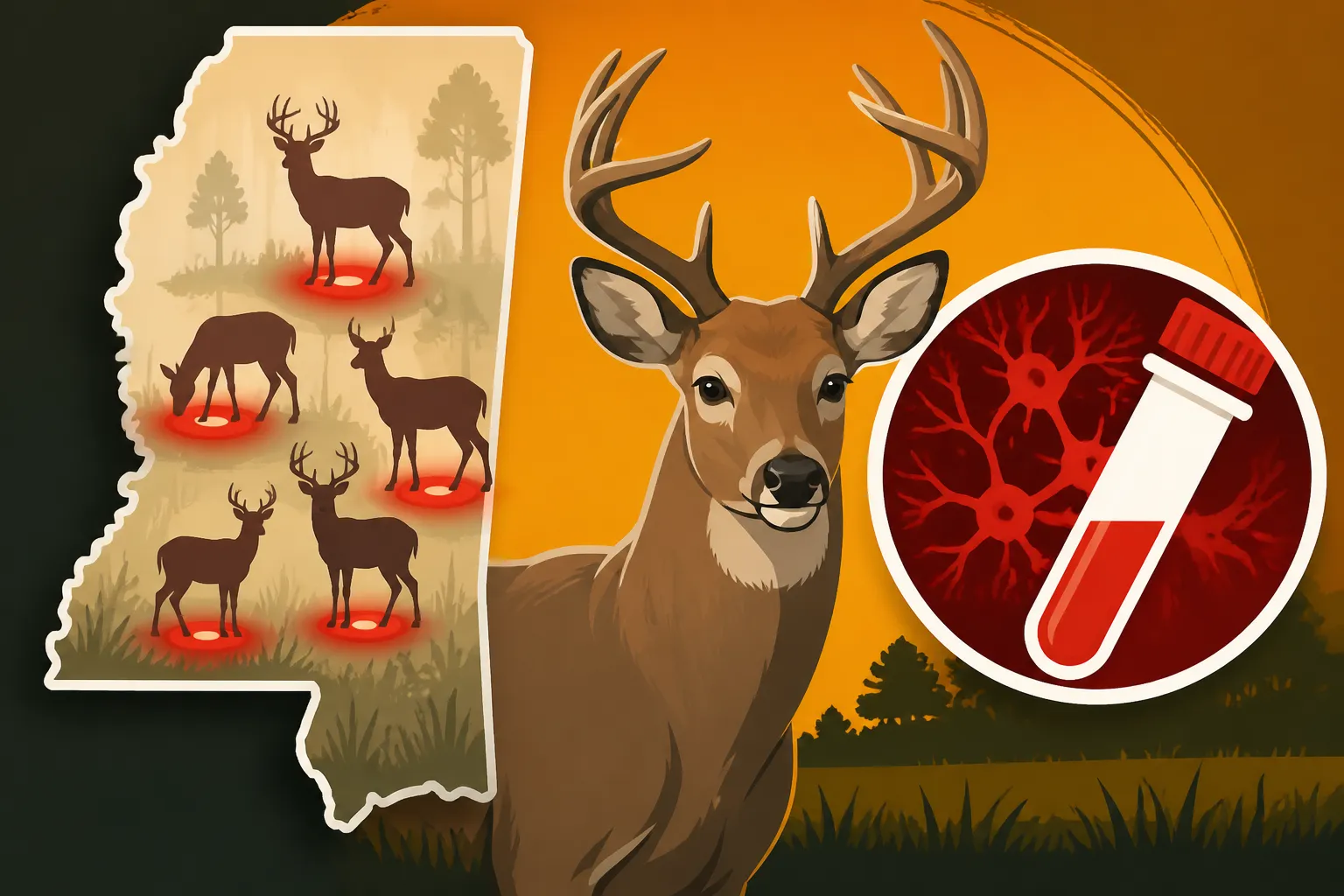
As of early 2024, Mississippi has identified a cumulative total of over 300 CWD-positive deer across multiple counties. The bulk of these cases have been concentrated in the initial areas of discovery, particularly the North CWD Zone, which continues to be the epicenter of the disease in our state. While new cases are detected each year, the pattern tends to follow the existing CWD zones, with occasional outliers popping up that lead to expanded surveillance.
The trend isn't necessarily a rapid explosion across the entire state, which is a small comfort, but rather a slow, persistent creep. Each hunting season brings new samples, and unfortunately, new positive detections. It's a testament to the MDWFP's robust testing program that these cases are being identified, allowing for targeted management strategies. Hunters have a critical role to play in this, as their submitted samples are the backbone of this surveillance. Without widespread participation in efforts like Mississippi CWD Testing for Hunters, getting a clear picture of the disease's spread would be impossible.
Geographical Spread and Affected Zones
The geographical spread of CWD in Mississippi has been primarily driven by the initial discovery in the northeastern part of the state, but it hasn't stayed confined to that single county. Over the years, as more testing has been conducted and cases identified, the MDWFP has delineated specific CWD Management Zones to focus their efforts.
Currently, the most significantly impacted area is the North CWD Zone. This zone encompasses a large number of counties, including Alcorn, Benton, Calhoun, Chickasaw, Clay, Itawamba, Lafayette, Lee, Marshall, Monroe, Noxubee, Oktibbeha, Pontotoc, Prentiss, Tippah, Tishomingo, Union, and Webster counties. This zone consistently accounts for the majority of the new positive cases each year, which is why understanding Why North Mississippi Drives the CWD Count is so important for hunters. These counties are subject to the most stringent regulations, including mandatory testing requirements in certain areas and restrictions on the movement of deer carcasses. For a hunter using mapping tools like those found on GoHunt, visualizing these zones on a map becomes essential for planning any hunt within them.
Beyond the North Zone, CWD has also been detected in other parts of the state, leading to the establishment of additional management zones. The Issaquena-Sharkey CWD Zone emerged in the Delta region, and a Warren-Claiborne CWD Zone was later established further south. More recently, a single case was confirmed in Hancock County, leading to the creation of the Hancock County CWD Zone on the Gulf Coast. While these additional zones have fewer confirmed cases than the North Zone, their establishment highlights the disease's ability to appear in new, sometimes unexpected, areas. This means vigilance is required statewide, not just in the historically affected regions. Each new positive outside of an existing zone triggers an immediate expansion of surveillance and often leads to new restrictions to prevent further spread.
Here's a simplified overview of the confirmed CWD cases and zones since 2018:
| Year of First Detection | Primary Zone(s) | Key Counties First Affected | Cumulative CWD-Positive Deer (Approx.) |
|---|---|---|---|
| 2018 | North CWD Zone | Pontotoc | 1 |
| 2019 | North CWD Zone | Alcorn, Lafayette, Marshall | ~15-20 |
| 2020 | North CWD Zone | Lee, Prentiss | ~50-60 |
| 2021 | North CWD Zone, Issaquena-Sharkey CWD Zone | Union, Issaquena | ~100-120 |
| 2022 | North CWD Zone, Warren-Claiborne CWD Zone | Webster, Warren | ~200-220 |
| 2023 | North CWD Zone, Hancock County CWD Zone | Chickasaw, Hancock | 300+ |
| 2024 (Ongoing) | All Existing Zones | New cases continually added | Continues to rise with new detections |
Note: The cumulative numbers are approximate and represent a general trend, as official MDWFP reports provide precise, updated figures. Always refer to the latest MDWFP publications for the most current data.
The Impact of CWD on Mississippi's Deer Herd and Hunters
CWD isn't just a biological challenge; it's a cultural one for hunters. The discovery and spread of this disease have forced us to re-evaluate how we approach deer hunting, from the regulations we follow to the way we interact with the land and the animals. It’s a stark reminder that we are stewards of the wildlife, and our actions have consequences for future generations of hunters and deer.
Changes to Hunting Regulations and Practices
The most immediate and tangible impact of CWD has been on hunting regulations. The MDWFP, in its effort to curb the spread and better monitor the disease, has implemented a series of crucial changes. Within the established CWD Management Zones, particularly the Mississippi's Chronic Wasting Disease Zones, hunters now face mandatory CWD testing during specific periods of the deer season. This means bringing your harvested deer to an official sampling station or participating in self-sampling programs. Understanding Finding a Mississippi CWD Sampling Location is now a standard part of hunting in these areas.
Beyond testing, significant carcass movement restrictions are in place. If you harvest a deer in a CWD-positive county, you cannot transport the whole carcass out of that county or zone. This is to prevent the physical movement of potentially infected material into unaffected areas. Only deboned meat, antlers, clean skull plates, hides, and taxidermy-ready mounts are permitted to leave the zone. This has dramatically changed how many hunters plan their trips, especially those who hunt across county lines or are non-residents. Learning about Mississippi Carcass Movement Restrictions is non-negotiable for responsible hunting in these areas.
Additionally, regulations regarding baiting and feeding have been tightened in CWD zones. The reasoning is that concentrating deer at bait sites can increase nose-to-nose contact, which is a known way for CWD prions to spread. While baiting is a common practice in Mississippi, these new rules aim to minimize disease transmission. For hunters, this means adapting tactics, perhaps relying more on scouting, natural food sources, or using applications like GoHunt to find prime areas with less human intervention.
Hunter Response and Conservation Efforts
The hunting community's response to CWD in Mississippi has been a mixed bag of frustration, concern, and ultimately, a strong desire to help. Many hunters are understandably worried about the long-term health of our deer herd and the future of hunting itself. However, there has also been an impressive rallying cry from many individuals and hunting clubs, stepping up to assist the MDWFP in its efforts.
Hunters are at the forefront of conservation, and their participation in CWD surveillance is absolutely critical. By complying with mandatory testing, submitting heads for voluntary sampling, and reporting any deer that appear sick or exhibit CWD-like symptoms – which you can learn more about in Reporting a Sick Animal in Mississippi – hunters provide the data that wildlife biologists need to track the disease. This data helps pinpoint new areas of concern and informs management decisions. The sacrifice of time and effort to bring a deer to a check station, especially after a long hunt, demonstrates a genuine commitment to protecting our deer resources.
Furthermore, hunters are educating themselves and their peers about safe handling practices, including Handling Venison From a CWD Management Zone. They are supporting research and conservation initiatives aimed at finding better ways to manage CWD. While the disease presents an ongoing challenge, the resilience and dedication of Mississippi's hunting community offer hope. We're all in this together, striving to ensure that our deer herds remain healthy and that the tradition of deer hunting can continue to thrive for generations to come, even in the face of such a formidable threat.
Disclaimer
The information provided in this article is for general guidance and informational purposes only. Hunting regulations and CWD statistics are subject to change. Always consult the latest official Mississippi Department of Wildlife, Fisheries, and Parks (MDWFP) regulations and advisories before planning or engaging in any hunting activities.