Why Warren and Claiborne Joined the CWD Zone
Waking up to news that your hunting grounds are now part of a new CWD management zone can feel like a punch to the gut. For many hunters in Warren and Claiborne counties, that's exactly what happened when the Mississippi Department of Wildlife, Fisheries, and Parks (MDWFP) announced their inclusion. This guide will walk you through the critical reasons behind this decision, explain what CWD is, and detail the new regulations you’ll encounter.
Understanding the Threat of Chronic Wasting Disease (CWD)
Chronic Wasting Disease (CWD) is a topic that no hunter wants to hear about, but it’s an unavoidable reality for deer populations across North America, including right here in Mississippi. It’s a slow-acting, fatal neurological disease affecting cervids like deer, elk, and moose. The arrival of CWD in a new area is a serious concern, and the decisions made by wildlife agencies, though sometimes inconvenient for hunters, are always rooted in the best available science to protect the long-term health of our deer herd.
What is CWD and How Does It Spread?
At its core, CWD is caused by abnormal proteins called prions. Unlike bacteria or viruses, prions aren't living organisms; they're misfolded proteins that cause normal proteins in the brain to misfold as well, leading to brain damage. Think of it like a zombie apocalypse for deer brains – once it starts, it spreads. These prions accumulate in the brain, spinal cord, and other tissues, eventually leading to symptoms like drastic weight loss, stumbling, listlessness, and other neurological signs. The terrifying part? There's no cure, and it's always fatal.
The disease spreads primarily through direct animal-to-animal contact, but also indirectly through contaminated environments. Deer shed these prions through saliva, urine, and feces. Once shed, these prions can persist in the soil and plants for years, even decades, becoming a source of infection for other deer. This environmental persistence is what makes CWD so incredibly difficult to eradicate once it takes root in an area. This is why when we talk about CWD management, we're not just talking about the deer themselves, but also the ground they walk on and the plants they eat.
The Initial Discovery in Mississippi
Mississippi’s journey with CWD began in February 2018, when the first positive case was confirmed in a white-tailed deer from Benton County in the northern part of the state. This discovery sent ripples through the hunting community and immediately put the MDWFP into action, establishing Mississippi's Chronic Wasting Disease Zones and implementing surveillance and management strategies. Since that initial discovery, the disease has slowly but steadily appeared in other counties, primarily those contiguous with or in close proximity to the original hotspots.
The early spread was heavily concentrated in the northern counties, with the North CWD Zone encompassing areas like Marshall, Fayette, and Tippah counties. This expansion prompted ongoing discussions about How CWD Spread Across North Mississippi. Every new positive test represents not just another infected animal, but a geographical marker of the disease's silent march. For a while, central and southern Mississippi seemed relatively clear, but wildlife diseases, especially those with environmental persistence, rarely stay contained by imaginary lines drawn on a map. Wildlife doesn't respect county boundaries, and deer dispersal means that even a single infected animal traveling a distance can establish a new hotspot.
The Data Driving the Expansion: Why Warren and Claiborne?
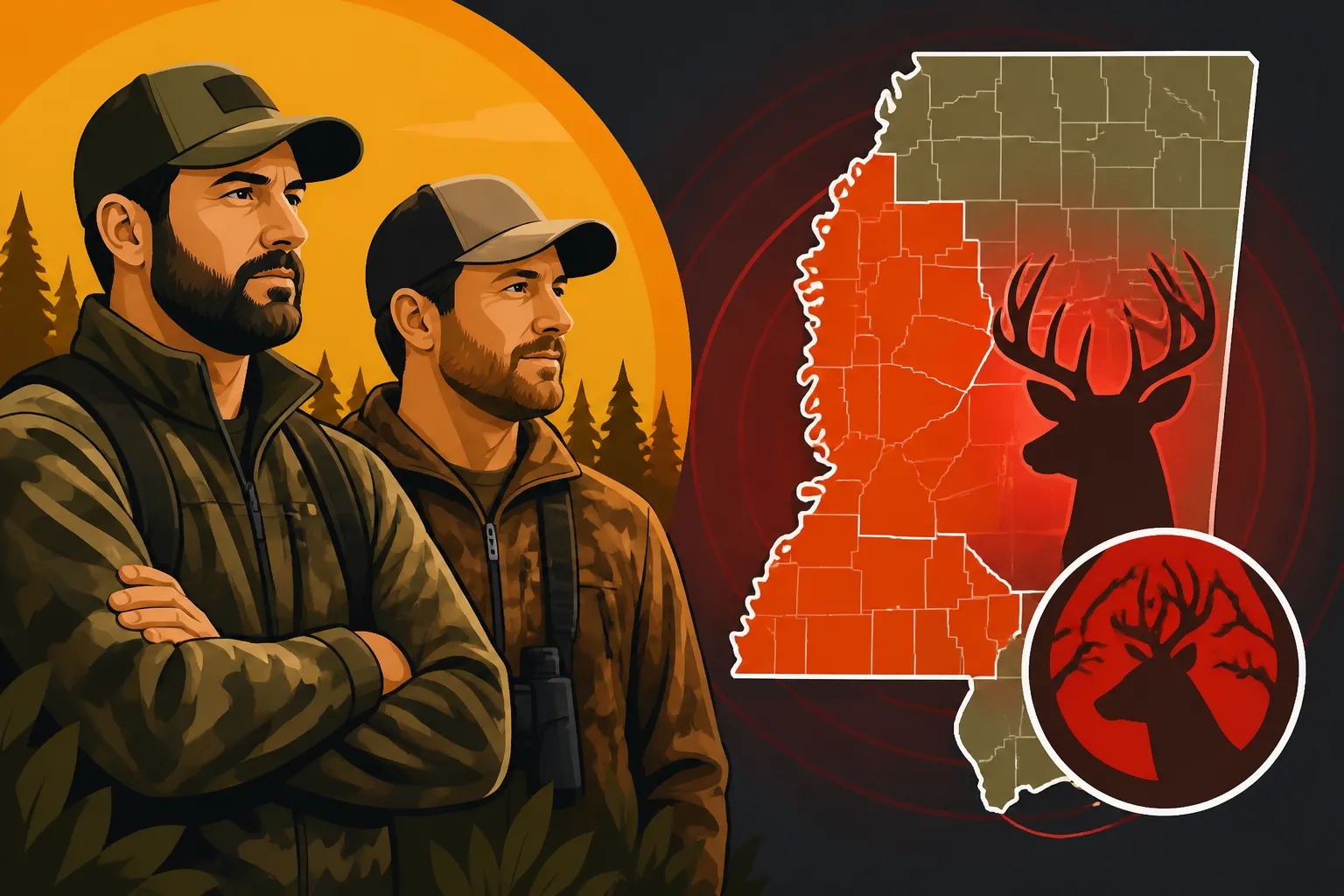
The decision to expand a CWD management zone isn't made lightly. It's a significant undertaking that impacts local economies, hunting traditions, and requires substantial resources from the MDWFP. The inclusion of Warren and Claiborne counties wasn't a random choice; it was a direct response to scientific data collected through rigorous surveillance efforts. When the MDWFP announced Why Warren and Claiborne Joined the CWD Zone, it was the culmination of diligent testing and observation.
Surveillance Efforts and Positive Samples
The MDWFP runs an extensive CWD surveillance program, actively collecting deer samples throughout the state, both from hunter-harvested deer and those found dead or exhibiting neurological symptoms. This proactive approach is critical for detecting the disease in new areas as early as possible. For Warren and Claiborne counties, positive samples of CWD were indeed detected in free-ranging deer. A total of 30 CWD-positive deer have been identified in Warren County and 8 in Claiborne County since 2021 and 2023, respectively. These weren't isolated incidents, but rather confirmed cases indicating the disease had established itself within these deer populations.
The agency tests thousands of deer each year, focusing their efforts in and around known CWD zones, as well as in areas considered high-risk due to proximity or deer movement patterns. When a positive sample is found outside an existing CWD zone, it triggers an immediate and intensive follow-up, increasing testing in that specific area. This is how the presence of CWD was definitively confirmed in Warren and Claiborne. As of early 2024, the cumulative number of How Many Deer Have Tested CWD-Positive Since 2018 has risen significantly across the state, underscoring the disease's persistent spread. Each confirmed case, especially in a new county, serves as a stark reminder of the challenge wildlife managers face.
Geographic Proximity and Deer Movement
Deer are not static creatures; they move, often traveling significant distances, especially during the rut or when dispersing to find new territories. Warren and Claiborne counties sit in a critical geographical location, bordering areas that were already under close watch or adjacent to counties where the disease had been previously detected. For instance, Warren County is adjacent to Issaquena County, which had already seen CWD detections. Claiborne County is south of Warren County, making it susceptible to natural deer movement from an infected area.
This natural movement means that even if a county itself hadn't reported a positive case, its proximity to an infected area makes it highly vulnerable. Deer can easily cross county lines, carrying the prions with them. By expanding the CWD zone to include these counties, the MDWFP is acknowledging the biological reality of disease spread in wildlife. It’s a preventative and reactive measure to contain the spread and manage the disease where it's already present, rather than waiting for it to become more widespread and harder to control. Understanding deer density by Mississippi unit and typical deer movement patterns is crucial for these kinds of decisions.
Impact on Hunters: New Regulations and What They Mean
When new counties are added to a CWD zone, it’s not just an administrative change; it directly affects how you, as a hunter, can operate in those areas. The primary goal of these regulations is to slow the spread of CWD by limiting human-assisted transport of potentially infected carcass parts and by increasing surveillance through mandatory testing. This is about protecting the future of White-Tailed Deer Across Mississippi for generations to come.
Mandatory Testing and Carcass Restrictions
Perhaps the most significant change for hunters in the newly designated CWD zones is the implementation of Mandatory Testing Inside a Mississippi CWD Zone. If you harvest a deer in Warren or Claiborne County, you are now legally required to submit its head for CWD testing. This isn’t optional; it’s a crucial part of the MDWFP's strategy to monitor prevalence and identify further spread. The sampling process is designed to be as straightforward as possible, with designated drop-off locations, taxidermists, and even MDWFP staff at check stations during peak hunting periods. You'll need to know Finding a Mississippi CWD Sampling Location that works for you.
Alongside mandatory testing, stringent carcass movement restrictions are put in place. This means that if you harvest a deer in one of these CWD counties, you cannot transport certain parts of the carcass out of the CWD zone. The parts generally restricted are the brain, spinal cord, eyes, spleen, lymph nodes, and skull plate with antlers attached if brain tissue is present. Essentially, only deboned meat, clean skull plates, hides, and taxidermy-ready capes are allowed to leave the zone. This rule, detailed in Moving a Deer Carcass Out of a CWD Zone, is designed to prevent hunters from unknowingly transporting infectious prions to unaffected areas. It’s an adjustment, for sure, and one that requires hunters to process their deer differently, often requiring field dressing or quartering closer to the kill site or at a local processing facility.
Long-Term Management Goals
The regulations implemented in CWD zones are not just about immediate reactions; they are part of a broader, long-term management strategy to protect Mississippi’s deer herd. The MDWFP's ultimate goal is to slow the geographical spread of the disease and to minimize its prevalence within affected populations. This is a monumental task, especially given the disease's insidious nature and its ability to persist in the environment. Hunters play an absolutely vital role in this effort. By complying with mandatory testing and carcass regulations, you are directly contributing to the state's ability to track and manage CWD.
Another aspect of long-term management often includes targeted harvest recommendations, which can involve encouraging hunters to take more does or even additional bucks to reduce overall deer density in specific areas. Reducing deer density can help slow disease transmission by decreasing direct contact between animals. The MDWFP continuously evaluates Mississippi's CWD Case Count by Zone and Mississippi CWD Prevalence in the North Zone to fine-tune these strategies. For hunters, it also means being extra diligent about Handling Venison From a CWD Management Zone, ensuring proper butchering and disposal of carcass waste to prevent further environmental contamination.
What Hunters in Warren and Claiborne Need to Know Now
Adjusting to new hunting regulations can be a hassle, especially when it involves something as serious as CWD. But understanding the rules and embracing your role as a responsible hunter is paramount. This isn't just about avoiding a citation; it's about protecting the wildlife resource we all cherish. The more informed and compliant we are, the better chance Mississippi has at mitigating the impact of CWD.
How to Comply with New Rules
First and foremost, familiarize yourself with the precise boundaries of the CWD Management Zone. While this article focuses on Warren and Claiborne, it’s crucial to know which specific parts of the counties are included, as these zones can sometimes be drawn around certain areas rather than entire county lines. The MDWFP website and tools like the GoHunt app are invaluable resources for this. The GoHunt app, in particular, often provides updated maps and regulations right in your hand, even in areas with spotty cell service. When you harvest a deer, immediately identify the nearest CWD sampling station or a participating taxidermist. Which Taxidermists Take CWD Samples are often listed on the MDWFP website, so it's a good idea to check that before you even head out to the woods.
Remember the carcass rules: deboned meat, clean skull plates, hides, and capes are generally okay to transport outside the zone, but leave the high-risk parts behind. Many hunters choose to quarter their deer in the field or at camp before heading home. If you use a processor, make sure they are aware of the CWD zone regulations and are set up to handle deer accordingly. Planning ahead for this processing step will save you a lot of headache after a successful hunt.
The Role of Responsible Hunting
Responsible hunting has always been about ethical pursuit and conservation, and in the age of CWD, that responsibility takes on an even greater weight. Beyond compliance, every hunter can contribute to the fight against CWD. If you see a deer that looks sick—emaciated, stumbling, or acting unusually—do not harvest it. Instead, immediately report its location to the MDWFP. These sightings are crucial for active surveillance.
Furthermore, continued hunting, especially of antlerless deer, plays a vital role in managing deer populations within CWD zones. While it might seem counterintuitive to harvest more deer when there's a disease concern, reducing overall deer density can actually help slow the spread by minimizing nose-to-nose contact between animals. Always be mindful of Mississippi Deer Bag Limit Rules and other harvest regulations. The MDWFP relies on hunter participation and cooperation to gather the data needed to understand Mississippi Deer Harvest Records and implement effective long-term management strategies. By understanding and adapting to these changes, hunters in Warren and Claiborne counties are stepping up to protect Mississippi’s cherished deer hunting heritage.
| Regulation Category | Standard Rule (Outside CWD Zone) | CWD Management Zone Rule (Warren/Claiborne) |
|---|---|---|
| Deer Testing | Voluntary | Mandatory for all harvested deer |
| Carcass Transport | Full carcass allowed statewide | Deboned meat, clean skull plate, hide, cape only allowed out of zone |
| Baiting | Allowed (with restrictions) | No specific CWD baiting restriction, but always check MDWFP for any area-specific rules |
| Feeding Deer | Allowed (with restrictions) | No specific CWD feeding restriction, but generally discouraged for disease spread |
Disclaimer
Please note that hunting regulations, including those related to CWD, can change frequently. While this guide is based on the most current information available, it is always the hunter's responsibility to verify all regulations with the Mississippi Department of Wildlife, Fisheries, and Parks (MDWFP) before heading afield. This content is for informational purposes only and should not be considered legal advice.