Reporting a Sick Animal in Mississippi
Spotting a sick or injured animal in the wild can be a really unsettling experience. It pulls at your heartstrings, but it also brings up questions about what you should do, and sometimes, even what it means for the health of our local wildlife populations. This guide is here to walk you through exactly when and how to report a sick or deceased animal to the proper authorities in Mississippi, helping you play a crucial role in wildlife conservation.
Why Reporting Sick or Dead Wildlife Matters in Mississippi
It might feel like a small thing, just one animal, but every report helps paint a bigger picture for wildlife biologists and managers across our state. When you take the time to report what you see, you're contributing to a vital data network that protects both wildlife and, sometimes, even human health.
Understanding Disease Surveillance and Public Health
Think about it: diseases don't just affect one animal. They can spread through entire herds or flocks, impacting the overall health and population numbers of our beloved game species, not to mention other wildlife. When you report a sick animal, especially one exhibiting unusual symptoms, you're essentially acting as an early warning system. Wildlife agencies, like the Mississippi Department of Wildlife, Fisheries, and Parks (MDWFP), rely on these reports for disease surveillance. This means they're constantly monitoring for outbreaks of diseases like Chronic Wasting Disease (CWD) in deer, Eastern Equine Encephalitis (EEE) in various species, or even avian influenza in waterfowl.
Early detection of these diseases is absolutely critical. For instance, knowing if CWD is spreading into new areas helps the MDWFP implement targeted management strategies to slow its progression. Diseases like rabies or tularemia, while less common, are zoonotic, meaning they can be transmitted from animals to humans or pets. Your report could be the first indicator of a public health risk, prompting swift action to protect communities. It's not just about the deer or the turkey; it's about the entire ecological community, including us, our families, and our hunting dogs.
Protecting Wildlife Populations for Future Generations
Beyond immediate public health concerns, reporting sick or deceased animals is a cornerstone of long-term wildlife conservation. Imagine a severe outbreak of EHD (Epizootic Hemorrhagic Disease) sweeping through a local deer population. If these cases go unreported, biologists might miss the opportunity to understand the extent of the die-off, how it impacts fawn survival, or whether certain areas are more susceptible. This information is crucial for future management decisions, such as setting harvest limits, planning habitat improvements, or even adjusting season dates to allow populations to recover.
For waterfowl hunters, a sudden die-off of ducks or geese could signal avian botulism or another issue that impacts migration patterns or nesting success. By contributing to the MDWFP's data, you're providing information that helps these agencies make informed decisions. These decisions ensure healthy, robust populations of game animals continue to thrive, safeguarding the traditions and opportunities we cherish, like Mississippi's Chronic Wasting Disease Zones or understanding how populations are faring overall. A healthy wildlife population today means better hunting and viewing opportunities for your kids and grandkids.
What Constitutes a "Sick" or "Unusual" Animal to Report?
It's easy to get concerned when you see an animal that just doesn't look right. But how do you know if it's truly sick or injured in a way that warrants reporting, versus just behaving naturally or recovering from a minor setback? There's a fine line, and knowing what to look for can make your report more effective and ensure you're not unnecessarily burdening wildlife officials.
Recognizing Common Signs of Illness or Injury
When you're out in the woods, on the water, or even driving down a back road, keep an eye out for behaviors or physical conditions that are clearly abnormal. We're talking about things that go beyond a deer limping slightly from an old injury or a bird that just escaped a predator.
Here are some key indicators that an animal might be seriously ill or injured:
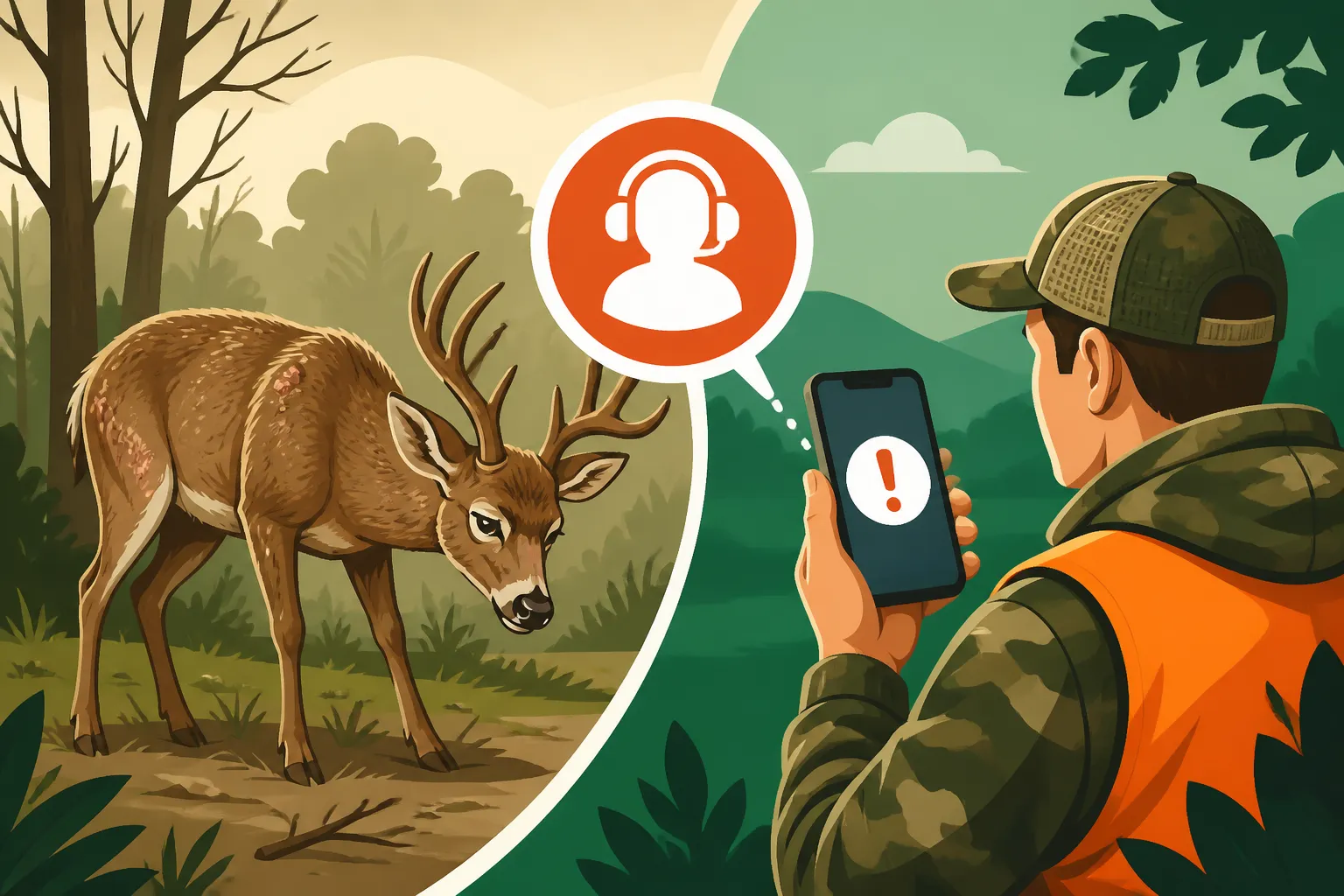
- Extreme Lethargy and Emaciation: An animal that appears unusually weak, unresponsive, or severely underweight (often described as "skinny" or "bony"). For instance, a deer that barely reacts to your presence, is stumbling, or has its head down for long periods. With CWD, this is one of the most prominent signs, though it often takes a long time to manifest.
- Disorientation or Neurological Issues: The animal might be walking in circles, losing its balance, acting confused, or exhibiting tremors or spasms. This can be a sign of rabies, EEE, or advanced CWD.
- Abnormal Secretions or Lesions: Excessive drooling, nasal discharge, bloody feces, or visible tumors, wounds, or severe hair loss (mange) can all indicate serious health problems. Think of a fox or raccoon with wet, matted fur around its mouth, or a deer with large, festering sores.
- Unusual Aggression or Lack of Fear: While rare, an animal that is typically shy or fearful of humans suddenly becoming aggressive, or conversely, showing no fear at all and approaching people, can be a symptom of rabies or other neurological diseases. This is particularly alarming in mammals like raccoons, foxes, or even deer.
- Respiratory Distress: Labored breathing, coughing, or gasping can be a sign of pneumonia or other respiratory infections, especially in waterfowl or birds.
- Bloated Carcass: If you find a deceased animal that is severely bloated, it could indicate certain types of bacterial infections or other factors that are important for disease monitoring.
For deer, specifically, look for the "wasting away" appearance, with ribs and hip bones pronounced, a dull coat, and perhaps drooling. For aquatic birds, signs of botulism can include paralysis of wings or legs, or the inability to hold their head up. Reporting these specific observations helps biologists narrow down potential causes.
When NOT to Intervene (and Why)
This is perhaps the most crucial part of encountering sick or injured wildlife: do not approach or handle the animal. Your safety, and the safety of your pets, is paramount. Many wildlife diseases are transmissible, and a sick or injured animal, even if it appears docile, can be unpredictable and dangerous.
Here's why you should keep your distance:
- Public Safety Risk: Rabies is a deadly disease, and handling an infected animal puts you at direct risk. Even seemingly docile animals can bite or scratch.
- Disease Transmission: You could inadvertently transmit diseases to other animals or even yourself. Always assume an unknown illness could be zoonotic.
- Stress to the Animal: Approaching an already sick or injured animal can cause immense stress, potentially worsening its condition or causing it to flee into a more dangerous situation (e.g., into traffic).
- Legal Implications: In Mississippi, it's generally illegal to possess wildlife without proper permits. Intervening could be seen as interference or illegal possession. Wildlife rehabilitation centers are the only places equipped and legally permitted to care for truly injured or orphaned animals, and they usually operate under strict guidelines.
It's also important to understand that not every unusual sighting warrants intervention. For example:
- Fawns Left Alone: A fawn curled up by itself, especially in spring, is almost certainly not abandoned. The mother is likely nearby, foraging, and will return. Intervention can do more harm than good by causing the mother to abandon it or habituating the fawn to humans.
- Young Birds on the Ground: Fledglings are often on the ground as they learn to fly. Unless they are clearly injured or in immediate danger, it's best to leave them alone.
- Seasonal Behavior: During the rut, bucks can look worn down and act strangely due to the stress of breeding. Similarly, animals may be less active during extreme weather.
- Natural Selection: Sometimes, nature takes its course. Unless there's a widespread outbreak or a clear public safety hazard, wildlife agencies often let natural processes unfold. They can't respond to every single sick animal, and their resources are focused on larger population-level issues, such as those monitored through Mississippi Wildlife Disease Monitoring.
Your role as a responsible outdoors person is to observe safely, gather information, and then make a report.
How to Report a Sick or Dead Animal to MDWFP
Once you've determined that you've seen an animal with suspicious symptoms or a deceased animal in unusual circumstances, the next step is to make a report. It's crucial to get the right information to the right people so they can respond effectively.
The Official Reporting Channels
The Mississippi Department of Wildlife, Fisheries, and Parks (MDWFP) is your primary contact for reporting sick or deceased wildlife. They have dedicated channels to ensure your report reaches the appropriate biologists and enforcement officers.
Here are the main ways to get in touch:
- MDWFP Website: The MDWFP often has specific online forms for reporting wildlife sightings, particularly for CWD surveillance. Look for a "Report Wildlife Sighting" or "Report CWD Suspect" section on their official website. These forms are designed to collect all the necessary information efficiently. When you're using resources like GoHunt to research hunting spots or regulations, it's a good habit to also check if they provide direct links or information on how to access these state-specific reporting forms easily. While GoHunt itself doesn't typically handle direct reporting, it can be a valuable platform for accessing state agency resources.
- Phone Calls to Regional Offices: If you prefer to speak to someone directly, or if the situation feels urgent (e.g., a potentially rabid animal in a residential area), calling an MDWFP regional office during business hours is a good option. They have biologists and conservation officers who can provide guidance or dispatch someone if necessary. It's helpful to have the MDWFP's main number or the number for your specific regional office saved in your phone if you spend a lot of time outdoors.
- MDWFP Mobile App: The MDWFP may also offer a mobile application where you can report sightings directly from your smartphone, often with integrated GPS capabilities. This can be incredibly convenient when you're deep in the woods and cellular service is spotty but you can still access the app's features once you get reception. Learning how to effectively use tools like the MDWFP app for things like Scouting With the MDWFP App or reporting can make a big difference in your outdoor experience.
- Local Law Enforcement (for immediate public safety threats): If you encounter an animal that poses an immediate threat to human life or is clearly rabid and in a populated area, your local sheriff's department or police might be a faster first point of contact, especially outside of MDWFP business hours. They can then coordinate with wildlife officials.
Always remember: your safety first. Make the report from a safe distance and never attempt to capture or engage with a potentially dangerous animal.
Information to Include in Your Report
The more detailed and accurate your report is, the more effectively the MDWFP can respond. Before you make that call or fill out that form, take a moment to gather as much of the following information as possible:
| Information Category | Specific Details to Provide |
|---|---|
| Location | Absolute Critical: Be as precise as possible. GPS coordinates (from your phone, GPS device, or mapping app like GoHunt) are ideal. If no GPS, provide a detailed description: specific road name, nearest mile marker, intersection, landmark (e.g., "1.5 miles north of the Hwy 61/Hwy 8 intersection, near the old red barn on the east side of the road"). If on public land, mention the WMA or National Forest and a trail name or feature (e.g., "Sunflower WMA, about 200 yards off the main logging road near the second creek crossing"). |
| Animal Species | Clearly state what kind of animal it is (e.g., white-tailed deer, feral hog, coyote, gray squirrel, mallard duck, wild turkey). |
| Number of Animals | How many sick or dead animals did you observe? |
| Condition | Is the animal alive or deceased? If alive, describe its behavior. If deceased, note the carcass condition (fresh, decomposed, scavenged). |
| Observed Symptoms | Describe in detail what you saw: "extremely thin, drooling excessively, stumbling, walking in circles," "unusual swelling around the head," "no fear of humans," "obvious broken leg," "visible lesions on the body," "matted fur." Be objective and specific. |
| Date and Time | When exactly did you observe the animal? If you've seen it multiple times, note the dates and times. |
| Your Contact Info | Provide your name and a phone number where you can be reached. Biologists or officers may need to follow up for more details or directions. |
| Photos/Videos (Optional but Recommended) | From a safe distance, if possible and safe, snap a photo or quick video. These can be incredibly helpful for wildlife professionals to assess the situation. Do not risk your safety for a picture, but if you can get one without disturbing the animal or putting yourself in harm's way, it can be invaluable. Make sure the photos are clear and show the animal's condition and the surrounding area. |
Being clear and concise will help the MDWFP respond efficiently and prioritize calls. Your detailed report could be the key to understanding a new disease threat or preventing its spread, impacting Mississippi Deer Population Estimate and other species for years to come.
Common Wildlife Diseases in Mississippi and Their Impact
Mississippi's diverse ecosystems support a wide array of wildlife, but this also means our animals are susceptible to various diseases. Understanding some of the more common ones can help you recognize symptoms and appreciate why your reports are so vital.
Chronic Wasting Disease CWD
Chronic Wasting Disease (CWD) is a neurological disease that affects cervids (deer, elk, moose). It's a fatal and incurable disease that has been a significant concern for Mississippi's deer herd since its discovery in the state. CWD is caused by abnormal proteins called prions that slowly damage the brain and nervous system.
Symptoms in deer often include:
- Drastic Weight Loss: This is the hallmark symptom, giving the disease its "wasting" name. Affected deer become severely emaciated over time.
- Lethargy: The deer appears unusually listless, tired, and shows little fear of humans.
- Drooling: Excessive salivation, often leading to a wet, matted coat around the mouth and neck.
- Uncoordinated Movements: Stumbling, poor balance, head tremors, and an overall lack of coordination.
- Difficulty Swallowing: This can contribute to the drooling and weight loss.
- Unusual Thirst and Frequent Urination: Deer may be seen drinking more than usual.
The implications of CWD for Mississippi's deer herd and hunting regulations are profound. It leads to long-term population decline in affected areas, reduces trophy potential, and creates challenges for hunters regarding carcass movement. This is why understanding Mississippi's Chronic Wasting Disease Zones and actively participating in efforts like Mississippi CWD Testing for Hunters are so important. Your reports of deer showing these symptoms are critical for tracking the spread and density of the disease.
Hemorrhagic Disease EHD and Blue Tongue
Hemorrhagic Disease (HD), often referred to as Epizootic Hemorrhagic Disease (EHD) or Blue Tongue, is one of the most common and devastating diseases in white-tailed deer in Mississippi. Unlike CWD, EHD is caused by a virus transmitted by biting midges (sometimes called no-see-ums). Outbreaks typically occur in late summer and early fall, especially during drought conditions when deer congregate near limited water sources, increasing their exposure to the midges.
Symptoms in deer often include:
- Fever: The deer will run a high fever, leading them to seek out water sources to cool down.
- Swelling: Swelling of the head, neck, tongue, eyelids, and sometimes the legs. This is where the "blue tongue" moniker comes from, as the tongue can become swollen and bluish.
- Lameness: Due to swelling and internal hemorrhages, deer may become lame or stiff, making movement difficult.
- Open Sores/Lesions: Lesions or ulcers may appear in the mouth, on the tongue, or on the feet.
- Lethargy and Disorientation: Similar to CWD, affected deer can appear weak and disoriented.
- Found Near Water: Because of the fever, sick deer often die in or near water sources.
While EHD can cause significant deer die-offs, it's important to note that it's naturally occurring and not transmissible to humans. You cannot get EHD from eating venison from an infected deer, though a severely emaciated or sick deer should not be harvested. Many deer develop immunity and survive, especially in areas where the disease is common. However, large outbreaks can severely impact local deer populations, making reports of EHD Die-Offs in Mississippi Deer vital for population management.
Rabies and Other Zoonotic Diseases
Rabies is perhaps the most well-known and feared zoonotic disease in wildlife, primarily because it is almost always fatal once symptoms appear and is transmissible to humans and all mammals. In Mississippi, rabies is most commonly found in wild carnivores like foxes, raccoons, skunks, and bats, but it can infect any mammal, including deer, feral hogs, and even domestic pets.
Symptoms of rabies in animals can vary, but generally include:
- Behavioral Changes: This is the most telling sign. Animals typically shy of humans may become unusually friendly or aggressive. Nocturnal animals might be seen during the day.
- Disorientation/Stumbling: Lack of coordination, paralysis, and an inability to move normally.
- Foaming at the Mouth: Excessive salivation, often leading to foam around the mouth due to difficulty swallowing.
- Self-Mutilation: In some cases, animals may bite or scratch themselves excessively.
The extreme danger of rabies to humans and pets means that any report of an animal exhibiting these symptoms, especially if it's acting unusually aggressive or bold, should be treated with utmost urgency. Never approach, touch, or handle an animal suspected of having rabies. This is the ultimate "do not touch" rule.
Beyond rabies, other less common but still important zoonotic diseases to be aware of include:
- Tularemia: A bacterial disease found in rabbits, rodents, and sometimes other mammals, transmissible to humans, often through insect bites or handling infected animals.
- Leptospirosis: A bacterial disease shed in the urine of infected animals, which can contaminate water or soil. It affects many mammals and can be transmitted to humans.
- Avian Influenza: While primarily affecting birds, certain strains can transmit to humans or other mammals, making sick bird reports important for monitoring.
Your vigilance in reporting unusual animal behavior, particularly in mammals, helps the MDWFP and public health officials monitor and respond to potential threats. For example, if you see a Mississippi Feral Hog Regulations being discussed, remember that these animals can also carry diseases, and their prolific nature means that monitoring their health is also important for understanding overall ecosystem health. Being informed and cautious is the best approach when encountering sick wildlife in Mississippi.
Disclaimer
This article is for general informational purposes only and does not constitute professional advice. Laws, prices and regulations vary by location and change over time. Consult a qualified professional for guidance on your specific situation.