Night Hog Hunting Light Rules in Mississippi
The destruction caused by feral hogs across Mississippi is a real nightmare for landowners and hunters alike. These intelligent, prolific animals can decimate crops, tear up prime habitat, and make a general nuisance of themselves almost overnight. It's enough to make you pull your hair out! When daytime efforts just aren't cutting it, many hunters turn to the cover of darkness to try and gain an edge. But navigating the rules around night hunting, especially when it comes to using lights, can feel like trying to untangle a mess of fishing line in the dark. This guide will shine a light on Mississippi's specific regulations regarding the use of artificial lights for night hog hunting, ensuring you stay legal and effective.
The Growing Need for Night Hunting in Mississippi
If you live or hunt in Mississippi, you’ve undoubtedly seen the tell-tale signs: rooted-up fields, chewed-up food plots, and tracks everywhere. Feral hogs are, without a doubt, one of the most significant challenges facing our wildlife management and agricultural communities. Their impact is not just a minor inconvenience; it's a full-blown ecological and economic crisis that requires constant attention and varied approaches.
Understanding Feral Hog Impact on Mississippi Lands
Feral hogs are not native to Mississippi, yet they've become an incredibly destructive force, with their population expanding rapidly across the state. They’re like an unwelcome guest who trashes your house and invites all their friends to do the same. These animals are incredibly adaptable and breed at an astonishing rate, with sows capable of having multiple litters a year. This explosive reproductive capacity means that even with significant hunting pressure, their numbers can quickly rebound if not consistently managed. They are truly an invasive species that disrupts everything they touch.
The damage they inflict is widespread and severe. Agricultural producers suffer immense losses as hogs root up fields of corn, soybeans, and other cash crops. This isn't just about a few plants here and there; it can be acres upon acres of destruction, directly impacting a farmer's livelihood. Beyond agriculture, their rooting behavior degrades sensitive habitats, destroying the foraging grounds and nesting sites of native wildlife, including ground-nesting birds like wild turkeys and quail. They compete directly with deer and other game for food sources, and their presence can even deter other animals from using prime areas. If you've ever seen a pristine piece of timber or a carefully managed food plot turned into a muddy, trenched-out wasteland overnight, you understand the sheer frustration. It's a constant battle, and it's why the state has such liberal rules for pursuing them, including year-round hunting with no bag limits. For a deeper dive into the pervasive problem, you can explore more about Feral Hogs Across Mississippi.
Why Night Hunting is So Effective for Hogs
Given their intelligence and adaptability, feral hogs quickly learn to avoid human activity. When hunting pressure is high, they often become primarily nocturnal, especially in areas with significant human presence during the day. Think about it: during the heat of the day, especially in the thick Mississippi summers, it's just too warm for them to be as active as they need to be. The cooler temperatures of the night offer a reprieve, making them more comfortable and thus more prone to moving, feeding, and socializing. This shift to nocturnal behavior is a primary reason why traditional daytime hunting methods often fall short in controlling their populations.
Trying to track down and ambush wary hogs in dense cover during daylight hours can be an exercise in futility. They have an incredible sense of smell and hearing, and they'll often bed down in impenetrable thickets, only to emerge under the cloak of darkness. That’s where night hunting comes into its own. By targeting them when they are most active and least expecting human intrusion, hunters can significantly increase their success rates. Many strategies, such as setting up over a consistent food source or a well-used travel corridor, become exponentially more effective after the sun goes down. This strategic advantage is precisely why the use of artificial lights during night hunts is so critical for many hunters. While some purists might prefer to hunt Hunting Hogs Without Bait or Dogs, combining baiting with night hunting techniques often yields the best results.
Decoding Mississippi's Night Hunting Light Regulations
Alright, let’s get down to the nitty-gritty of what’s legal and what’s not when it comes to shining a light on those pesky pigs after dark. It’s easy to get confused, especially with all the different rules for other game species, but Mississippi has a pretty clear stance when it comes to hogs. Understanding these specifics is paramount for a successful and lawful hunt.
General Rules for Using Lights on Hogs
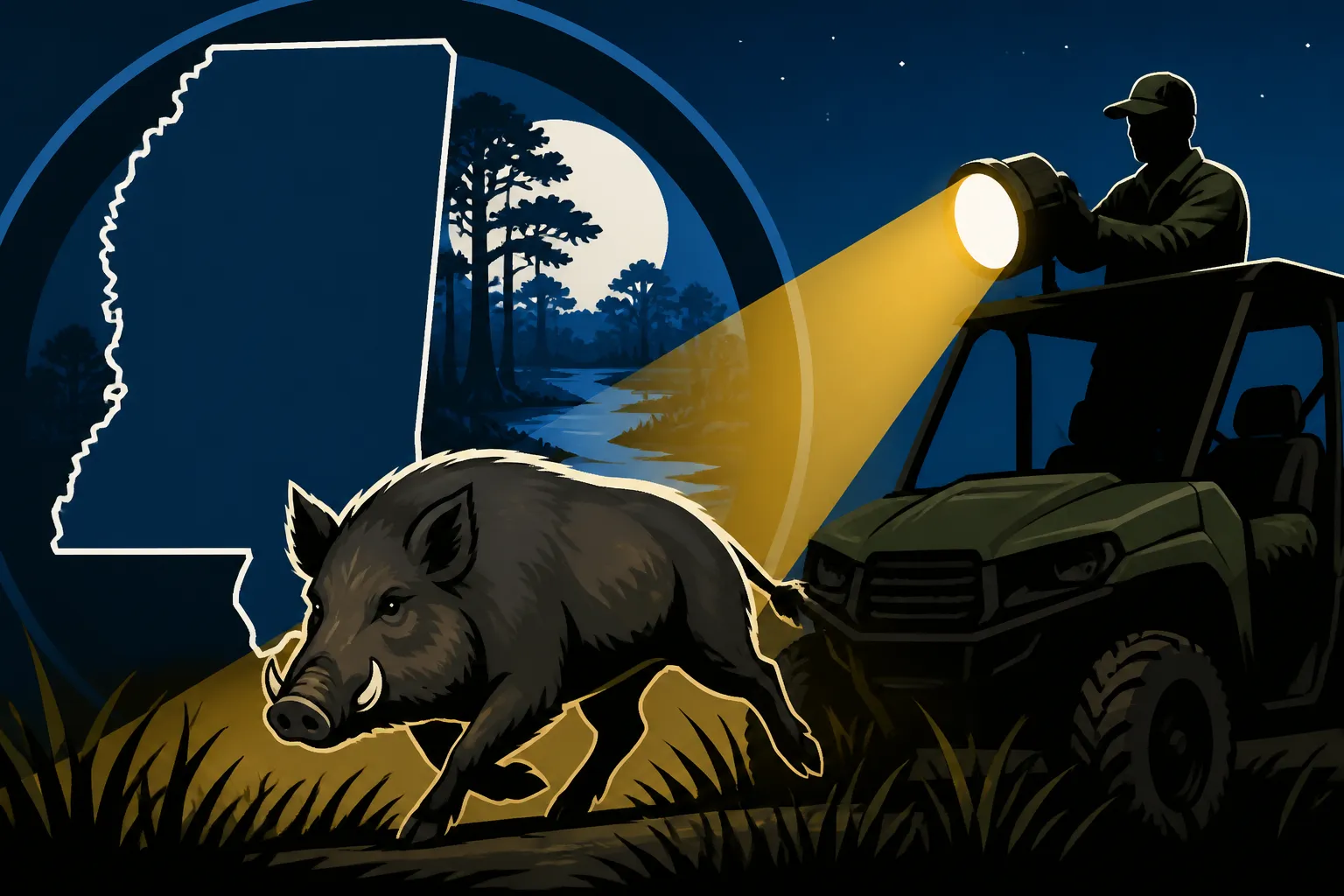
Here's the good news: in Mississippi, it is indeed legal to use artificial lights to hunt feral hogs at night. This isn't some grey area or loophole; it's a specific provision made by the Mississippi Department of Wildlife, Fisheries, and Parks (MDWFP) to aid in the control of this highly destructive invasive species. This means you can break out your spotlights, weapon-mounted lights, or even advanced thermal and night vision gear without fear of violating a state law, provided you are hunting on private land.
When we talk about "artificial light," we're not just referring to your grandpa's old battery-powered spotlight. This umbrella term covers a wide range of devices, including high-powered handheld spotlights, lights mounted directly onto your firearm, or even headlamps that free up your hands. The key is that the light's intent must be to assist you in locating, identifying, and taking feral hogs. This liberal approach is a stark contrast to how other game animals are managed. For instance, attempting to hunt deer or turkey with any form of artificial light at night is strictly prohibited and carries severe penalties. The state recognizes the unique problem presented by feral hogs and provides hunters with every tool necessary to combat them. For all the comprehensive details, always consult the official Mississippi Feral Hog Regulations.
Public Land vs. Private Land Distinctions
This is where you really need to pay attention, because the rules change dramatically depending on whether you're on private property or public land. Generally speaking, night hunting for hogs with artificial lights is not permitted on public lands managed by the state or federal government in Mississippi. This includes Wildlife Management Areas (WMAs), National Forests like the Delta National Forest or Homochitto National Forest, and National Wildlife Refuges. While the state wants to encourage hog removal, they also have broader responsibilities for managing all wildlife species and ensuring public safety on these shared resources.
The reasoning behind this distinction is multifaceted. On public lands, there's a higher concentration of other hunters pursuing different game, and allowing widespread night hunting with lights could lead to dangerous situations and unintended consequences for non-target species. Furthermore, public lands are managed under different objectives, often prioritizing conservation of native species and ecosystems, which sometimes means stricter rules for methods that could disturb other wildlife or create excessive pressure. Imagine the chaos if every hunter could roam a WMA at night with powerful lights; it just wouldn't be safe or sustainable for the overall wildlife population.
So, while you might be itching to hit that WMA where you've seen hog sign, you'll need to confirm the specific regulations for that particular area. MDWFP WMA regulations often have their own unique set of rules that supplement the statewide guidelines, and it's rare to find a WMA that allows night hunting for hogs with lights. Always check the individual WMA's specific guidelines, which are usually available on the MDWFP website or through their mobile app. Tools like GoHunt can be invaluable for quickly accessing these localized rules and confirming property boundaries, helping you avoid accidental trespass or regulation violations. Ignoring these public land rules could lead to hefty fines, confiscation of gear, and loss of hunting privileges. It's simply not worth the risk. Always verify if the land you plan to hunt is public or private, which you can research further in our guide to Public Hunting Land in Mississippi or by reviewing information on Mississippi Wildlife Management Areas.
| Feature | Private Land Hog Hunting (with lights) | Public Land Hog Hunting (with lights) |
|---|---|---|
| Legality of Lights | Generally Permitted | Generally Prohibited |
| Primary Purpose | Feral hog population control | Game management, public safety |
| Permit/License | Standard hunting license required | Standard hunting license + WMA permit |
| Specific Rules | State-wide feral hog rules apply | WMA/NWR specific rules supersede |
| Ethical Concerns | Safety for self & others paramount | Impact on other hunters & wildlife |
Practical Considerations and Best Practices for Night Hunting
Just because you can use lights doesn't mean you should just go out there and blast away. Night hunting for hogs requires a thoughtful approach, careful equipment selection, and an even greater emphasis on safety and ethics. It's a different game entirely, and treating it with the respect it deserves will not only keep you safe but also make you a more effective hunter.
Choosing the Right Lighting Equipment
When it comes to picking your light, you've got a few options, each with its own pros and cons. The goal is to maximize visibility without completely spooking your target. Hogs are smart, and a sudden, bright white light can send them scattering faster than a politician at a town hall meeting.
- Red and Green Lights: These are often the go-to choices for night hunting. Many hunters report that hogs are less reactive to red and green spectrums of light. A dim red or green light can allow you to scan an area, identify targets, and even take a shot without causing a full-blown stampede. They're excellent for close-to-medium ranges, especially if you're set up over a bait site. Brands like Nitecore, Fenix, and Wicked Lights offer fantastic weapon-mounted options that switch between colors and have adjustable brightness.
- White Lights: While incredibly bright and excellent for clear target identification, a sudden blast of white light is more likely to alarm hogs. Some hunters use a white light in conjunction with a red or green light – they'll scan and locate with a less intrusive color, then quickly switch to white right before the shot for maximum clarity. Weapon-mounted white lights are hands-free and keep your aiming point illuminated, which is crucial for accuracy.
- Weapon-Mounted vs. Handheld/Headlamps: Weapon-mounted lights are super convenient because they illuminate exactly where your barrel is pointing, making aiming seamless. Headlamps are great for walking in and out, or for tracking after the shot, but trying to hold a handheld spotlight steady while aiming a firearm can be incredibly challenging. Modern LED technology has revolutionized these lights, offering incredible brightness and battery life in compact packages. Remember, the goal is to get a clean, ethical shot, and the right light is key to making that happen. For more specific tactics related to gear, read about Night Hunting Hogs With Lights on Private Land.
Incorporating Thermal and Night Vision Technologies
Stepping up from traditional visible light, thermal and night vision devices have become game-changers for hog hunters. It's important to understand that these aren't "lights" in the sense of emitting visible light, but rather imaging devices that allow you to see in low-light or no-light conditions. The MDWFP permits their use for hog hunting, and they offer distinct advantages.
- Thermal Imaging: This technology detects heat signatures, allowing you to "see" hogs even in complete darkness, thick fog, or dense brush that visible light cannot penetrate. A hog's body heat stands out like a beacon against a cool background. This means you can spot hogs at incredibly long distances, long before they're close enough to hear or smell you. Thermal scopes and handheld monoculars are excellent for scanning and locating animals. Their main drawback is that they don't provide the same level of detail as traditional optics; distinguishing between a large boar and a smaller sow, or getting a precise shot placement, can be trickier, though modern thermal units are improving rapidly.
- Night Vision: Unlike thermal, night vision amplifies ambient light (starlight, moonlight). It gives you a more traditional "green glow" view of your surroundings, allowing for better identification of features and finer details than thermal. You can see branches, terrain, and often discern sex and size more easily. However, night vision relies on some existing light, so in pitch-black conditions or heavy cloud cover, it may struggle. Many hunters combine these technologies: use a thermal device to locate hogs, then switch to a night vision scope or even a weapon-mounted visible light for positive identification and the shot. While these technologies represent a significant investment, they dramatically increase your effectiveness and safety during a night hunt. GoHunt, among other resources, can help you research the latest models and features.
Safety and Ethical Considerations
Night hunting, especially with powerful lights, brings a heightened set of safety and ethical responsibilities. The stakes are higher when visibility is reduced, and you need to be even more diligent than during a daytime hunt.
- Absolute Target Identification and Backdrop Safety: This cannot be stressed enough. In the dark, it's incredibly easy to misidentify a target or be unaware of what lies beyond your animal. Always use binoculars or a spotting scope to confirm it's a hog and not a deer, another hunter, or livestock. Just as critically, always know your backdrop. Your bullet will travel far beyond your target. Never shoot towards an unknown area, a ridge line, or where you suspect buildings or roads might be. A clear, safe firing lane is non-negotiable.
- Communicate with Your Group: If you're hunting with others, clear and constant communication is vital. Establish shooting zones, safety arcs, and a system for announcing when you're moving or taking a shot. Radios or even hand signals can be life-savers.
- Inform Your Neighbors: If you're hunting private land close to other properties, a courtesy call to your neighbors is always a good idea. Let them know you'll be out hunting hogs at night, and they might hear shots or see lights. This prevents alarm and potential calls to law enforcement.
- Plan for Retrieval: Hogs are notoriously tough animals, and a follow-up shot or a tracking job is not uncommon. Tracking a wounded hog at night, especially through dense Mississippi cover, is incredibly difficult and dangerous. Aim for ethical, well-placed shots. Always have a plan for how you'll retrieve the animal. That might mean waiting until daylight or having a good tracking dog with you. Good shot placement is key, as discussed in detail in our guide on Shot Placement on a Feral Hog, and handling the animal after the shot requires specific considerations, which you can find in Handling a Hog After the Shot.
Ensuring Compliance and Maximizing Success
The legal framework around hog hunting in Mississippi is designed to give you significant leeway to combat these destructive animals. But that freedom comes with the responsibility of staying informed and applying best practices. Ignoring this means you're not just risking a ticket; you're risking your safety and the perception of all hunters.
Verifying Regulations Before Each Hunt
Laws and regulations, even for something as consistent as hog hunting, can change. The Mississippi Department of Wildlife, Fisheries, and Parks (MDWFP) is the ultimate authority, and their website and annual regulations digest are your best friends. Before every hunt, especially if it's been a while since you last checked, take a few minutes to review the current rules. This applies to both statewide regulations and any specific WMA supplements if you're on public land.
Don't ever assume that because a rule was in place last year, it's still current. New legislation, biological data, or public safety concerns can lead to updates. Remember the old adage: "ignorance of the law is not an excuse." Getting caught violating a regulation because you didn't bother to check could result in fines, the loss of your hunting license, and confiscation of your equipment. It's a steep price to pay for laziness. The MDWFP app is a fantastic tool to have on your phone, providing instant access to regulations even when you're in the field. Websites and apps like GoHunt can also provide reliable, up-to-date information, often with map overlays that clearly delineate private and public land, helping you confirm you're in a legal hunting zone and avoiding any issues with Mississippi Feral Hog Trapping Rules or other regulations. Staying informed is the mark of a responsible hunter.
Combining Lights with Other Hog Hunting Strategies
While lights are a powerful tool, they are most effective when integrated into a broader strategy. You're not just trying to spot a hog; you're trying to outsmart an intelligent animal.
- Baiting: This is arguably the most common and effective strategy when combined with night hunting. Hogs are voracious eaters, and a consistent bait site (like shelled corn, sour mash, or commercial hog attractants) can draw them into a predictable area. Setting up a stand or ground blind overlooking a bait site allows you to minimize your movement, let the hogs get comfortable, and then make a calm, ethical shot when they present themselves. For tips on setting up effective bait sites, you can check out our guide on Building and Freshening a Hog Bait Site.
- Stand Placement: Whether you're using a ladder stand, a climber, or a well-brushed ground blind, proper stand placement is crucial. You want to be downwind of your expected approach, with a clear line of sight to the bait or travel corridor. Consider the moon phase; while your lights work in total darkness, some ambient moonlight can assist with navigating to and from your stand and general awareness.
- Wind Direction and Scent Control: Hogs have an incredible sense of smell, far superior to deer. A shift in wind can blow your cover instantly, sending them scattering before you even know they're there. Always hunt with the wind in your face, blowing your scent away from where you expect hogs to appear. Incorporate full scent control measures – showering with unscented soap, washing clothes in scent-free detergent, and using scent-eliminating sprays. Even with lights, if they smell you, the game is over.
- Patience and Observation: Night hunting often involves long stretches of quiet waiting. Don't rush. Let the hogs come in, settle down, and offer a good shot. Take your time to identify the animal clearly, especially if you're targeting specific individuals. Remember, your goal is effective control, and that means making every shot count.
The struggle against feral hogs in Mississippi is a continuous one, but with the right knowledge and tools, hunters can play a significant role in managing their numbers. Understanding and adhering to the light rules for night hunting is a key part of that effort.
Disclaimer
Please remember that hunting regulations can change. It is always the hunter's responsibility to check the most current Mississippi Department of Wildlife, Fisheries, and Parks (MDWFP) regulations before heading afield. This guide provides general information and should not be considered a substitute for official legal documents.