Mississippi Deer Season Overlap With Small Game
It's a familiar scenario for many of us Mississippi hunters: you've spent months dreaming of whitetails, meticulously scouting, hanging stands, and checking your trail cameras, only for another season, often small game, to roll in right alongside it. This overlap can feel like a double-edged sword – more opportunities in the woods, but also more to juggle in terms of gear, strategy, and even safety. This guide is here to help you navigate those exciting, sometimes chaotic, periods when Mississippi's diverse hunting seasons converge, ensuring you're prepared for whatever the woods throw at you.
Navigating Overlapping Seasons: The Hunter's Dilemma
When multiple hunting seasons open simultaneously in Mississippi, it presents both an incredible opportunity and a unique set of challenges. For many, it's a chance to truly immerse themselves in the wild, pursuing different species in a single outing or trip. However, it also demands careful planning and an understanding of how to effectively transition between different hunting styles, or even combine them.
The Allure of Multi-Species Opportunities
Imagine spending the early morning perched in your favorite stand, hoping for a mature buck, and then, as the mid-day lull settles in, seamlessly switching gears to walk some prime bottomland hardwoods for squirrels. This isn't just a fantasy; it's a very real possibility during many of Mississippi's hunting seasons. The appeal of a "mixed bag" hunt is undeniable. It keeps you engaged, offers variety, and can make even a slow deer morning feel productive if you can bag a limit of bushy-tails or a few cottontails. It's about maximizing your time afield and experiencing the full richness of Mississippi's game populations.
Beyond just the harvest, these overlaps add a dynamic layer to the hunting experience. You might be focusing on deer sign and suddenly jump a covey of quail, or hear turkeys gobbling in the distance while still-hunting for a buck. It heightens your awareness of the entire ecosystem, making you a more observant and adaptable hunter. The Mississippi landscape, with its varied terrain from the Delta's rich bottomlands to the Piney Woods, supports a remarkable diversity of game, making these multi-species hunts especially rewarding.
Practical Considerations for Concurrent Hunting
While the idea of a mixed bag is enticing, the reality requires some practical adjustments. The gear you might optimize for deer hunting – heavy scent control, camouflage, and motionless sitting – is often quite different from what's ideal for actively pursuing small game like squirrels or rabbits, which typically involves more movement and potentially less stringent scent management. You might find yourself carrying a shotgun in addition to your deer rifle or bow, adding weight and complexity.
Then there's the challenge of time and terrain. Deer are often most active at dawn and dusk, while small game can be a mid-day pursuit. This might mean you're planning your entry and exit routes not just for deer, but also considering areas where you can effectively transition to small game without disturbing prime deer bedding or feeding areas. Planning becomes paramount; knowing which units have longer archery seasons, for instance, might influence your decision to focus on deer early and then transition to small game later in the day. Using mapping tools like GoHunt can be invaluable here, allowing you to mark prime spots for each species and plan efficient routes between them.
Key Overlaps in Mississippi's Hunting Calendar
Mississippi's hunting regulations are designed to provide ample opportunities, and often, this means certain seasons for different species will run concurrently. Understanding these key overlap periods is crucial for planning your hunting adventures.
Common Deer and Small Game Season Windows
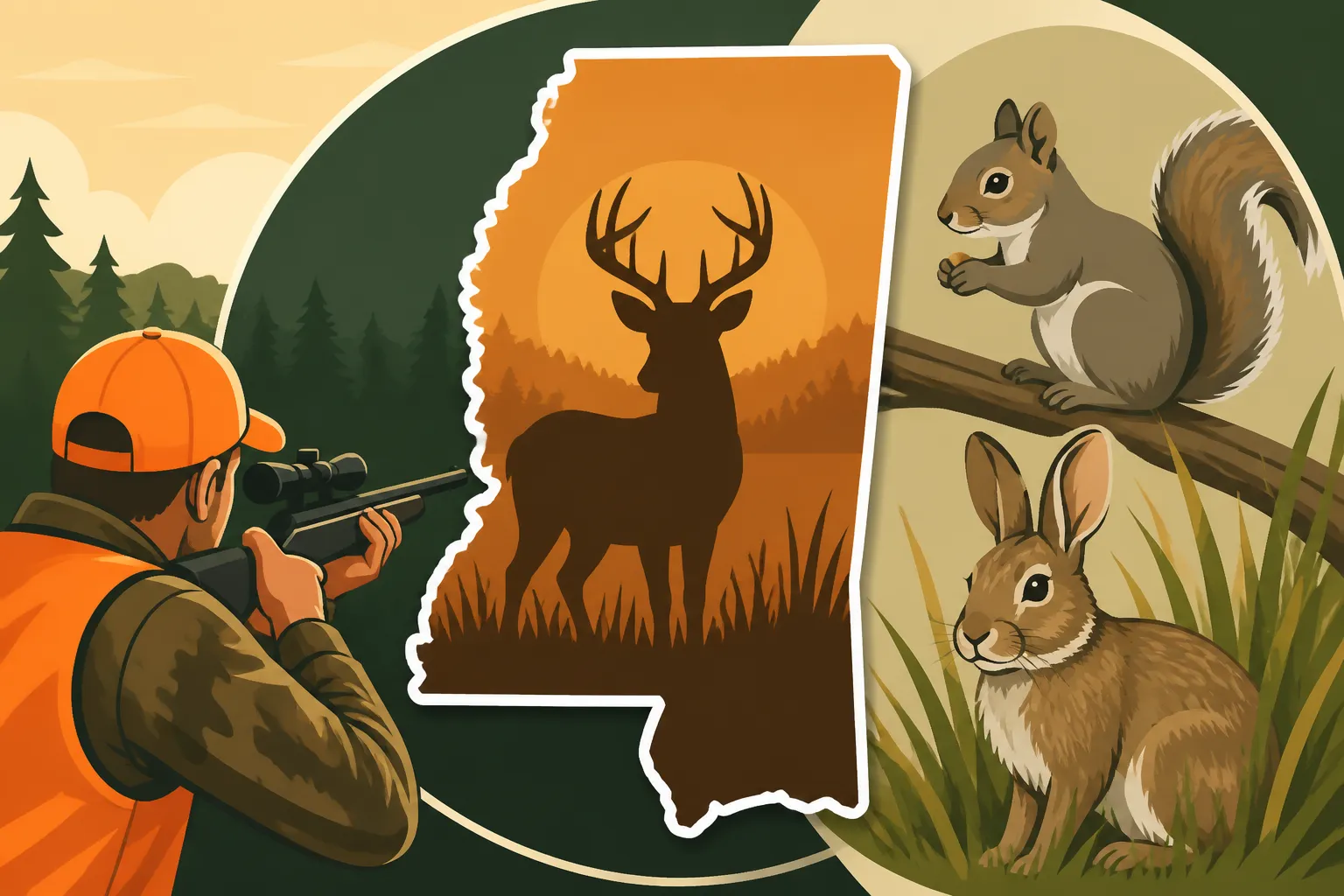
The most significant overlaps generally occur from late October through February, encompassing much of the state's archery, muzzleloader, and gun deer seasons. For instance, squirrel season typically opens in late September/early October, and rabbit season usually begins around the same time or shortly after. These small game seasons often extend well into February, directly coinciding with the peak deer activity across all four of Mississippi's deer management units. You'll find yourself able to pursue squirrels in the Delta Unit's bottomland hardwoods while also looking for that illusive buck, or jump rabbits in a Hills Unit clear-cut while still-hunting for deer.
During the archery season, which in some units like the Southeast, can run particularly long (you can learn more about Hunting the Extended Southeast Unit Archery Window), you have maximum flexibility. You can be silently still-hunting with your bow, and if deer movement is slow, switch to a more active small game approach. When gun season opens, often around Thanksgiving for many units, the woods become even more alive with hunters, and being prepared for multiple species helps you adapt. Remember, checking the current year's Mississippi Deer Season Structure Explained and Mississippi Small Game Season Rules is always the first step to confirm specific dates and unit regulations.
Regional Differences in Overlap Opportunities
Mississippi's diverse geography plays a huge role in how these overlaps manifest. In the flat, fertile Delta, you might find prime squirrel habitat in vast bottomland hardwood tracts managed by the Delta National Forest or specific WMAs. Here, the emphasis might be on hunting squirrels during mid-day in between deer sits on field edges or along sloughs. The relatively open nature of some Delta areas, especially after crops are harvested, can also make rabbit hunting more productive.
Move to the Hills Unit, and the terrain changes dramatically to rolling hills, pine plantations, and mixed hardwoods. Here, the challenge of pursuing small game might involve navigating steeper terrain, but the opportunities remain. Rabbit populations thrive in areas with thick brush and fencerows, often adjacent to prime deer habitat. Similarly, squirrels are abundant in mature hardwood bottoms and along creek drainages where acorns and other mast crops are prevalent. The Southeast Unit, with its mixed pine and hardwood forests, offers yet another unique blend, where deer often move through pine flats and turkeys might be heard, all while you're also looking for squirrels in a hardwood draw. Always cross-reference your specific county with a reliable resource to see Finding Which Deer Unit Your County Sits In to ensure you're aware of the correct dates and regulations for your hunting area.
Equipment, Strategy, and Safety for Mixed Bag Hunts
Successfully tackling overlapping seasons means being smart about your gear, developing flexible strategies, and always, always prioritizing safety. It’s not about bringing everything but about bringing the right things and using them wisely.
Gear Adjustments for Dual-Purpose Hunting
When you're heading out with the potential to pursue both deer and small game, your gear choice becomes critical. For deer, many hunters opt for a centerfire rifle, a shotgun with slugs, or their trusty bow. For small game, a .22 rifle, a shotgun with birdshot, or even a .17 HMR are common choices. You might choose to carry two separate firearms, like a deer rifle during prime time and then switch to a lightweight .22 for a mid-day squirrel stroll. If you're a bowhunter, you might stick with your bow for both, as archery equipment is certainly legal for small game. However, a shotgun gives you more versatility for fast-moving targets.
Clothing is another consideration. While deer hunting often demands quiet, warm layers and effective camouflage, small game hunting, particularly if it involves more walking and pushing through brush, might call for slightly more durable, breathable attire. The key is finding a balance. Companies like GoHunt offer a wide range of gear, and their detailed product descriptions can help you find versatile clothing and equipment that can pull double duty. Don't forget the essentials for both: a good sharp knife, game bags for deer, and a squirrel vest or small game pouch.
Strategic Approaches to Maximize Success
The beauty of overlapping seasons lies in the flexibility they offer. A common strategy is to prioritize deer during their most active periods—early morning and late evening. Set up in your deer stand or execute a patient still-hunt during these times. As the sun climbs higher and deer activity wanes, you can then transition to small game. This might involve carefully exiting your stand, changing into more active hunting attire, and heading to a nearby hardwood bottom to chase squirrels, or working a thick fencerow for rabbits. This approach ensures you're putting yourself in the best position for a mature buck, while also making the most of the slower mid-day hours.
Another strategy, especially on public land where you might encounter other hunters, is to use your small game pursuit as a form of scouting. While walking for squirrels or rabbits, you'll naturally cover more ground, potentially discovering fresh deer sign, new bedding areas, or overlooked travel corridors that you can target on a later deer hunt. Remember to move slowly and deliberately, constantly scanning for both your intended small game and any deer movement. This is where detailed scouting and mapping come into play. Tools that allow you to layer different habitat types can help identify prime areas for both species. Consider the timing; for example, Mississippi Squirrel Season Opening Day or Mississippi Rabbit Season Opening Day might offer less pressured small game opportunities when deer hunters are at their peak.
| Feature | Typical Deer Hunting | Typical Small Game Hunting | Overlapping Season Strategy |
|---|---|---|---|
| Movement | Minimal, patient sitting/still-hunting | Active walking, flushing, dog work | Deer at prime times (dawn/dusk), small game mid-day |
| Gear Focus | Rifle/Bow, scent control, warm layers | Shotgun/.22, durable layers, game vest | Versatile clothing, multiple firearms (if desired), good backpack |
| Time of Day | Early morning, late evening | Mid-day, late morning | Prioritize deer windows, fill mid-day with small game |
| Habitat | Food plots, travel corridors, bedding areas | Thick cover, fencerows, hardwood bottoms | Target varied habitats based on time of day |
| Stealth | High importance, quiet movement | Moderate, often more noise acceptable | Be mindful of noise, especially near prime deer areas |
Crucial Safety Measures and Legalities
When hunting multiple species, safety and adherence to regulations become even more paramount. One of the most critical aspects is blaze orange. Mississippi law requires hunters to wear a minimum of 500 square inches of solid unbroken hunter orange (or hunter pink) visible from all sides during gun seasons for deer, elk, or bear. While small game hunting might not always require blaze orange outside of those specific deer gun seasons, if you are hunting during a concurrent deer gun season, you must wear it, regardless of what species you're targeting. Always check the specific requirements for Mississippi Blaze Orange Requirements to ensure compliance.
Beyond orange, be acutely aware of your surroundings and other hunters. More activity in the woods means more potential for encounters. Positively identify your target and know what's beyond it before taking any shot. Understand the specific Mississippi Deer Bag Limit Rules for your unit and ensure you're also aware of the daily and season limits for small game, such as the Mississippi Squirrel Daily Bag Limit or Mississippi rabbit daily bag limit. Feral hogs, which can be hunted year-round in Mississippi, often present another opportunistic target during these overlaps; however, always be aware of specific regulations for Hunting Mississippi's Year-Round Feral Hogs if you plan to pursue them. Always check your licenses, ensure you have the appropriate stamps (like a small game license if you don't have an all-game), and report your harvests as required.
Making the Most of Mississippi's Diverse Offerings
The true joy of Mississippi hunting lies in its diversity. When deer season overlaps with small game, it's an invitation to broaden your horizons and enjoy the woods in a more comprehensive way.
Balancing Priorities: Deer Versus Small Game Focus
Deciding whether your primary focus is deer or small game during an overlap period is a personal choice, but one that directly impacts your strategy. If it's a dedicated deer hunt, small game might serve as a relaxing bonus during a mid-day break or an opportunity to explore new areas after you've filled your deer tag. You might carry a small game firearm just in case, but your main focus remains on deer movement, sign, and stand locations.
Conversely, if you're primarily aiming for a small game limit – say, chasing Squirrel and Small Game Hunting in Mississippi in a particularly productive creek bottom – spotting a deer might be a pleasant surprise rather than the main event. In this scenario, you might move more frequently, cover more ground, and prioritize prime small game habitat. The key is to be intentional with your focus. You can't effectively pursue both species at 100% intensity simultaneously, so choose your primary goal for each hunt or segment of the day. Don't forget that Mississippi offers diverse game, and the active pursuit of Rabbit and Upland Hunting in Mississippi can be incredibly rewarding.
Enhancing Your Experience with Technology
Modern technology has revolutionized how we approach hunting, and overlapping seasons are no exception. Mapping applications, like those offered by GoHunt, become indispensable. They allow you to mark potential deer bedding areas, small game hot spots, and important travel corridors. You can use satellite imagery to identify different timber types, thickets, and field edges that might hold various species. During an overlap, you can plan specific routes that transition from prime deer locations to high-density small game areas.
Beyond mapping, apps can also provide real-time weather updates, moon phases, and other crucial data that influence animal movement. They help you stay aware of public land boundaries (crucial when Scouting Mississippi Public Land Before Season) and private property lines, preventing accidental trespass. Utilizing these tools allows you to be more efficient, safer, and ultimately more successful, whether you're targeting a trophy buck or simply enjoying a bountiful small game harvest during Mississippi's generous season overlaps.
Disclaimer
Hunting is an inherently dangerous activity. Always prioritize safety, understand and adhere to all local, state, and federal hunting regulations. The information provided here is for general guidance and educational purposes only and should not be considered legal advice. Always consult the most current Mississippi Department of Wildlife, Fisheries, and Parks (MDWFP) regulations before engaging in any hunting activities.