The Mississippi Deer Reporting Deadline
One of the most common headaches for Mississippi deer hunters, especially for those new to the game or folks just getting back into it, isn't necessarily finding that perfect stand location or making the shot. More often than not, the real frustration comes after the harvest: trying to figure out the exact rules and, more importantly, the critical deadline for reporting your deer. It can feel like a maze, but don't worry, we're going to break down everything you need to know about the Mississippi deer reporting deadline so you can hunt with confidence and stay on the right side of the law.
Understanding Mississippi's Deer Reporting Mandate
Hunting in Mississippi is a cherished tradition, but it also comes with responsibilities. One of the biggest is accurately reporting your deer harvest. This isn't just busywork; it's a crucial part of managing our state's incredible deer population.
Why Reporting Matters for Deer Management
When you take the time to report your harvested deer, you're actually contributing to a massive, statewide conservation effort. The Mississippi Department of Wildlife, Fisheries, and Parks (MDWFP) relies heavily on the data collected from hunter reports. Think about it: every reported deer helps the MDWFP biologists track population trends, understand harvest rates, and assess the overall health of the herd. This information is vital for setting future season dates, bag limits, and antler restrictions. Without this collective effort, they'd be flying blind, and that could have serious long-term implications for the future of deer hunting in our state. It helps them understand the Mississippi Deer Herd Size and make informed decisions. It's a fundamental part of how MDWFP monitors and protects this valuable resource for all of us.
Who Needs to Report and What to Report
Simply put, if you harvest a deer in Mississippi, you are responsible for reporting it. This applies to every single deer, whether it's an antlered buck or an antlerless doe, taken with any legal weapon during any open season. It's not just for trophy bucks; even that management doe you took for the freezer needs to be documented.
When you report, you'll typically need to provide several key pieces of information. This usually includes the date and approximate time of the harvest, the county where the deer was taken (or the specific Wildlife Management Area if you were hunting public land), the sex of the deer, and if it was an antlered buck, the number of antler points. Sometimes they'll ask for more specific location details, like the nearest major town or GPS coordinates, especially if you're using a mapping app like GoHunt that can log your location. This detailed data helps the MDWFP pinpoint localized trends and manage specific areas more effectively.
The Mississippi Deer Reporting Deadline Explained
Alright, let's get down to brass tacks: the deadline itself. This is where a lot of hunters get tripped up, and it's absolutely vital to understand.
The Immediate 24-Hour Rule
Here's the critical piece of information: all harvested deer in Mississippi must be reported to the MDWFP within 24 hours of the kill. That's right, not by the end of the day, not when you get home from deer camp on Sunday night, but within a 24-hour window from the moment the deer hits the ground. This immediate reporting requirement is designed to ensure the most accurate data collection possible, minimizing the chances of forgetting details or misplacing information.
Let's run through a couple of scenarios to make this crystal clear. Say you're out Bowhunting Mississippi's Long Archery Season and you drop a nice buck at 7:00 AM on a Saturday morning. You've got until 7:00 AM on Sunday morning to get that deer reported. Or, if you punch your tag on a doe during Mississippi's Gun Deer Season by Unit at 4:30 PM on a Tuesday afternoon, you need to report it by 4:30 PM on Wednesday. The clock starts ticking the second you recover that animal. This can be tricky if you're deep in the woods or on a multi-day hunt, which is why planning ahead is so important. Apps like the MDWFP's official app or other hunting platforms like GoHunt that track your harvest details can make this process incredibly smooth, even allowing for offline data entry that syncs later.
What Happens If You Miss the Deadline
Missing the 24-hour reporting deadline might seem like a minor oversight, but it can actually lead to some pretty significant issues. The MDWFP takes compliance seriously because, as we discussed, this data is essential for managing our deer herds. If you fail to report a deer within the allotted time, you could be cited for a violation. Penalties can range from fines to even the suspension of your hunting privileges, depending on the circumstances and whether it's a repeat offense. It's truly not worth the risk. The state has clear Mississippi Wildlife Violation Penalties for such infractions.
While it's always best to report within 24 hours, if you somehow genuinely forget or are unable to, it's generally better to report it late than not at all. However, understand that reporting late does not exempt you from potential penalties, especially if a game warden discovers the unreported harvest. Your best bet is always to prioritize that report. Don't assume you can just let it slide. Game wardens are out there, and they can and do check.
How to Report Your Deer Harvest in Mississippi
The MDWFP has made it relatively straightforward to report your deer harvest, primarily through digital channels. Gone are the days of tearing off a paper tag and mailing it in or driving to a check station, at least for general reporting.
Using the MDWFP App for Seamless Reporting
Hands down, the easiest and most recommended method for reporting your deer in Mississippi is through the official MDWFP mobile app. This app is a game-changer for modern hunters. Here’s why it’s so convenient and how to use it:
First, download the app (it’s available for both iOS and Android devices). Once installed, you'll need to create an account or log in with your MDWFP customer ID. The beauty of this app is its user-friendliness. When you're ready to report, you simply open the app, navigate to the harvest reporting section, and input the required details. Many times, the app can even use your phone's GPS to automatically fill in the county and specific location, which is a huge time-saver when you're cold and tired after a successful hunt. The app also works offline; you can enter your harvest details even without cell service, and it will automatically submit the report once you regain a connection. This feature is a lifesaver when you're deep in areas like the Delta National Forest or Homochitto National Forest where signal is spotty at best. You can even check your license status and purchase additional permits right from your phone. Learn more about the specific steps in our guide on Reporting a Deer Through Mississippi's App.
Online Reporting Through the MDWFP Website
If you're not keen on using a smartphone app or prefer a larger screen, you can also report your deer harvest directly through the MDWFP's website. The process is very similar to the app. You'll log into your account using your customer ID, find the harvest reporting section, and manually enter all the pertinent details about your kill.
This method is particularly useful if you're back at camp or at home with a reliable internet connection and prefer to take your time to ensure all information is accurate. While not as immediate as whipping out your phone at the kill site, it still meets the 24-hour requirement as long as you have internet access. Many hunters use a combination: logging initial details with a platform like GoHunt to remember everything, then using the MDWFP website for the official submission once they're settled. This dual approach ensures both accuracy and compliance.
Phone Reporting and Manual Methods
While the MDWFP strongly encourages using the app or online portal, in exceptional circumstances, or if you encounter issues with the digital platforms, you can always contact the MDWFP directly for assistance. Their customer service lines are available during business hours, and they can guide you through the process or help troubleshoot any problems you might be having with the online systems.
It's important to note that direct phone reporting is generally not the primary method and should be considered a backup for troubleshooting or unique situations, rather than your go-to. The efficiency and accuracy of the digital systems are designed to benefit both hunters and wildlife managers, so embracing them is usually the path of least resistance. Always remember to carry your Mississippi Resident Sportsman's License Cost or appropriate nonresident license, along with your driver's license, whenever you're afield, regardless of your reporting method.
Navigating Common Reporting Challenges
Even with streamlined digital reporting, real-world hunting situations can throw a wrench into the best-laid plans. It's smart to anticipate these challenges and have a strategy.
Dealing with No Cell Service in Remote Areas
Ah, the classic dilemma: you've just taken a deer, you're pumped, and then you look at your phone – no service. This is a common frustration, especially when you're hunting vast public lands like the Delta National Forest or DeSoto National Forest. The key here is proactive planning and leveraging offline capabilities.
Remember, the 24-hour clock starts at the moment of harvest. So, if you're in an area with notoriously bad reception, your plan needs to account for getting to a place where you can report within that timeframe. Many hunters use apps like GoHunt or the MDWFP app, which allow you to enter all the harvest data even when you have no signal. The app then saves this information and automatically uploads it the moment your phone reconnects to a network. This is incredibly valuable. If your app doesn't have this feature, or you prefer not to use it, you might need to drive to the nearest town or a specific "hot spot" you know has service. Some hunters keep a satellite communicator like a Garmin inReach or Zoleo for emergencies, and these can sometimes be used to send very basic text messages, though full reporting through them is unlikely. The bottom line: don't wait until the last minute if you know you'll be in a connectivity dead zone.
Reporting in CWD Management Zones
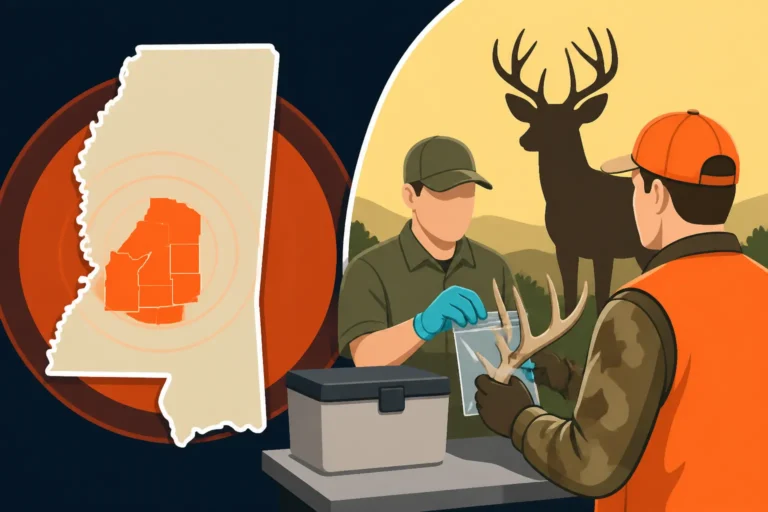
Chronic Wasting Disease (CWD) is a serious concern for Mississippi's deer herd, and it adds another layer of complexity to reporting in designated CWD Management Zones. If you harvest a deer within one of these zones, there are often additional requirements beyond the standard 24-hour reporting.
For example, hunters in CWD zones may be subject to Mandatory Testing Inside a Mississippi CWD Zone for their harvested deer. This usually means dropping off a lymph node sample or the deer's head at a designated CWD sampling station. These stations are critical for monitoring the spread of the disease and are usually located at specific MDWFP offices, private processors, or self-serve kiosks. You'll also need to be aware of Carcass Movement Restrictions when hunting in a CWD zone, as certain parts of the deer cannot be moved outside the zone to prevent further spread. Your standard harvest report, combined with these CWD-specific actions, helps the MDWFP track both individual harvests and disease prevalence. Always check the current MDWFP regulations for the specific CWD zone you are hunting in, as rules can change. For a broader overview, you can reference our guide on Mississippi's Chronic Wasting Disease Zones.
Youth and Apprentice Hunter Reporting
Introducing new hunters, especially youth, to the sport is a fantastic tradition in Mississippi. However, when a young hunter or an apprentice hunter takes their first deer, it can raise questions about who is responsible for the reporting.
Generally, for youth hunters (those participating in specific youth hunting opportunities like the Mississippi Youth Gun Weekend Dates), the adult mentor or guardian supervising the hunt is ultimately responsible for ensuring the deer is reported correctly and on time. This is part of the mentor's role in guiding and educating the new hunter on ethical and legal hunting practices. Similarly, for apprentice hunters operating under an Mississippi Apprentice Hunter License Rules, the supervising licensed hunter is responsible for overseeing the reporting process. It's an excellent opportunity to teach young hunters about the importance of reporting and conservation, making it a valuable part of their learning experience. Always double-check the current regulations for any specific rules regarding youth or apprentice hunter reporting, as these can occasionally have unique provisions.
Key Mississippi Deer Reporting Information
Here's a handy table summarizing the crucial details about reporting your deer harvest in Mississippi:
| Reporting Aspect | Details | Important Notes |
|---|---|---|
| Deadline | Within 24 hours of harvest | The clock starts ticking the moment the deer is recovered. Plan accordingly for remote areas. |
| Who Must Report | Every hunter who harvests a deer (antlered or antlerless) | Applies to all legal harvests, regardless of weapon type or season. Mentors are responsible for youth/apprentice reports. |
| Required Information | Date/Time of harvest, County/WMA, Sex of deer, Number of antler points (if applicable) | Accurate details are crucial for MDWFP data collection. GPS auto-fill in apps can help. |
| Primary Methods | MDWFP Mobile App (iOS & Android) or MDWFP Website | Both offer seamless digital reporting. The app has offline capabilities. |
| Consequences for Missed Deadline | Fines, potential loss of hunting privileges, citations | Ignorance is not an excuse. It's better to report late than not at all, but late reports may still incur penalties. |
| CWD Zone Specifics | Mandatory testing and carcass restrictions may apply | Always check current MDWFP regulations for CWD zones before you hunt. These are additional requirements on top of the 24-hour reporting. |
| Best Practice | Report immediately via the app, even if offline, and verify when connected | Utilize technology like the MDWFP app or hunting companions like GoHunt to streamline the process and ensure compliance. Keep a physical copy or screenshot of your license and confirmation number. |
Hunting in Mississippi is a privilege we all share, and by understanding and adhering to the deer reporting deadline, we play an active role in ensuring healthy deer populations for generations to come. It’s a small effort that yields big returns for conservation. Remember to stay updated on the Mississippi Deer Season Structure Explained and all current regulations from the MDWFP.
Disclaimer
The information provided in this guide is for general informational purposes only and is not a substitute for official regulations. Hunting laws and regulations in Mississippi are subject to change. Always consult the most current Mississippi Department of Wildlife, Fisheries, and Parks (MDWFP) regulations before engaging in any hunting activities.