Mange in Mississippi Coyotes and Foxes
It can be incredibly disheartening to encounter a wild animal, whether it's a sleek coyote or a stealthy fox, that's clearly suffering. In Mississippi, one of the most visible and concerning ailments affecting our canid populations is mange. This guide will walk you through what mange is, how to identify it, its impact on our wild predators, and what you, as a hunter or concerned landowner, should know about this frustrating skin condition.
What is Mange? Unpacking the Skin Condition Affecting Mississippi's Canids
Mange is a nasty, highly contagious skin disease caused by microscopic mites that burrow into an animal's skin, leading to intense itching, hair loss, and secondary infections. It's not just an unsightly problem; for many wild animals, especially our coyotes and foxes, it can be a death sentence if left untreated. When you're out hunting or even just driving through rural Mississippi, seeing an animal ravaged by mange is a stark reminder of the challenges wildlife faces.
Sarcoptic Mange vs. Demodectic Mange: The Key Differences
When folks talk about "mange" in wildlife, they're usually referring to sarcoptic mange, which is the most common and severe form seen in our coyotes and foxes. But there's another type, demodectic mange, and understanding the difference can help you grasp the scope of the problem.
Sarcoptic mange, also known as scabies, is caused by the Sarcoptes scabiei mite. These tiny arachnids burrow into the skin, laying eggs and causing an incredibly intense allergic reaction. The itching is so severe that animals will scratch and bite themselves relentlessly, leading to significant hair loss, especially around the face, ears, legs, and tail. The skin thickens, wrinkles, and develops crusty scabs. It's transmitted primarily through direct contact with an infected animal or, less commonly, through contact with contaminated bedding or burrows. The mites can survive for a limited time off a host, making environmental transmission a possibility, though direct contact is the main culprit. This form of mange can quickly debilitate an animal, making it difficult to hunt, find food, and evade predators, ultimately leading to starvation, exposure, or secondary infections like pneumonia. It's heartbreaking to witness.
Demodectic mange, on the other hand, is caused by Demodex mites. These mites live naturally in the hair follicles of most mammals, including dogs and often wildlife, without causing any problems. They're typically passed from a mother to her pups shortly after birth. Issues only arise when an animal's immune system is compromised, allowing the mites to multiply out of control. The symptoms are similar to sarcoptic mange – hair loss, scabbing, and thickened skin – but the itching is usually less intense, and the lesions might be more localized. While less common and generally less severe in wild canids than sarcoptic mange, it can still contribute to an animal's overall decline, especially if they're already stressed or malnourished. It's often an indicator of an underlying health issue.
Here's a quick comparison to keep the two straight:
| Feature | Sarcoptic Mange (Scabies) | Demodectic Mange |
|---|---|---|
| Mite Type | Sarcoptes scabiei | Demodex species |
| Location | Burrows into skin epidermis | Lives in hair follicles |
| Itching | Extremely intense, severe pruritus | Mild to moderate, sometimes none |
| Hair Loss | Widespread, starts on face, ears, legs, tail | Localized patches, can become generalized |
| Skin Appearance | Thickened, crusty, wrinkled, scabs | Reddened, scaly, sometimes greasy, hairless |
| Contagious | Highly contagious (animal-to-animal, some environmental) | Not typically contagious (mother-to-pup only) |
| Severity | Often severe, potentially fatal in wildlife | Usually less severe, indicates compromised immunity |
The Life Cycle of the Mite: How it Spreads and Persists
Understanding how these tiny mites operate is crucial to appreciating why mange is such a persistent problem in our wildlife. For sarcoptic mange, the cycle is alarmingly efficient. A female mite burrows into the outer layer of the skin, creating tunnels where she lays 2-4 eggs per day for up to three weeks. These eggs hatch into larvae within 3-10 days, which then mature into nymphs and finally adults, all within the skin. The entire life cycle, from egg to adult, can be completed in as little as 10-17 days.
This rapid reproduction means an infestation can escalate quickly. As the mites burrow and feed, they cause intense irritation. The animal's constant scratching and biting spread mites to new areas of its own body and sheds them into the environment. While the mites can't survive indefinitely off a host, they can persist for several days to weeks in cool, moist conditions in burrows, bedding, or dense cover. This allows for indirect transmission, though direct, prolonged contact between animals is the primary driver of spread.
Think about a dens of coyotes or a fox family group – if one animal gets infected, it's highly likely to spread throughout the entire group due to close contact, especially during denning season. This is why you often see multiple animals from the same area showing signs of mange. This cycle of infestation, itching, scratching, and spreading makes mange a tenacious foe for our wild canids and a concern for those of us who appreciate the health of Mississippi's ecosystem.
Recognizing Mange in the Field: What Hunters and Landowners Should Look For
Spotting a mangy animal in the wild isn't always easy, especially if the infestation is in its early stages. However, as the disease progresses, the signs become unmistakable. Being able to identify these symptoms is not only important for reporting sick animals but also for making informed decisions if you encounter one while hunting.
Visual Cues and Behavioral Changes in Affected Animals
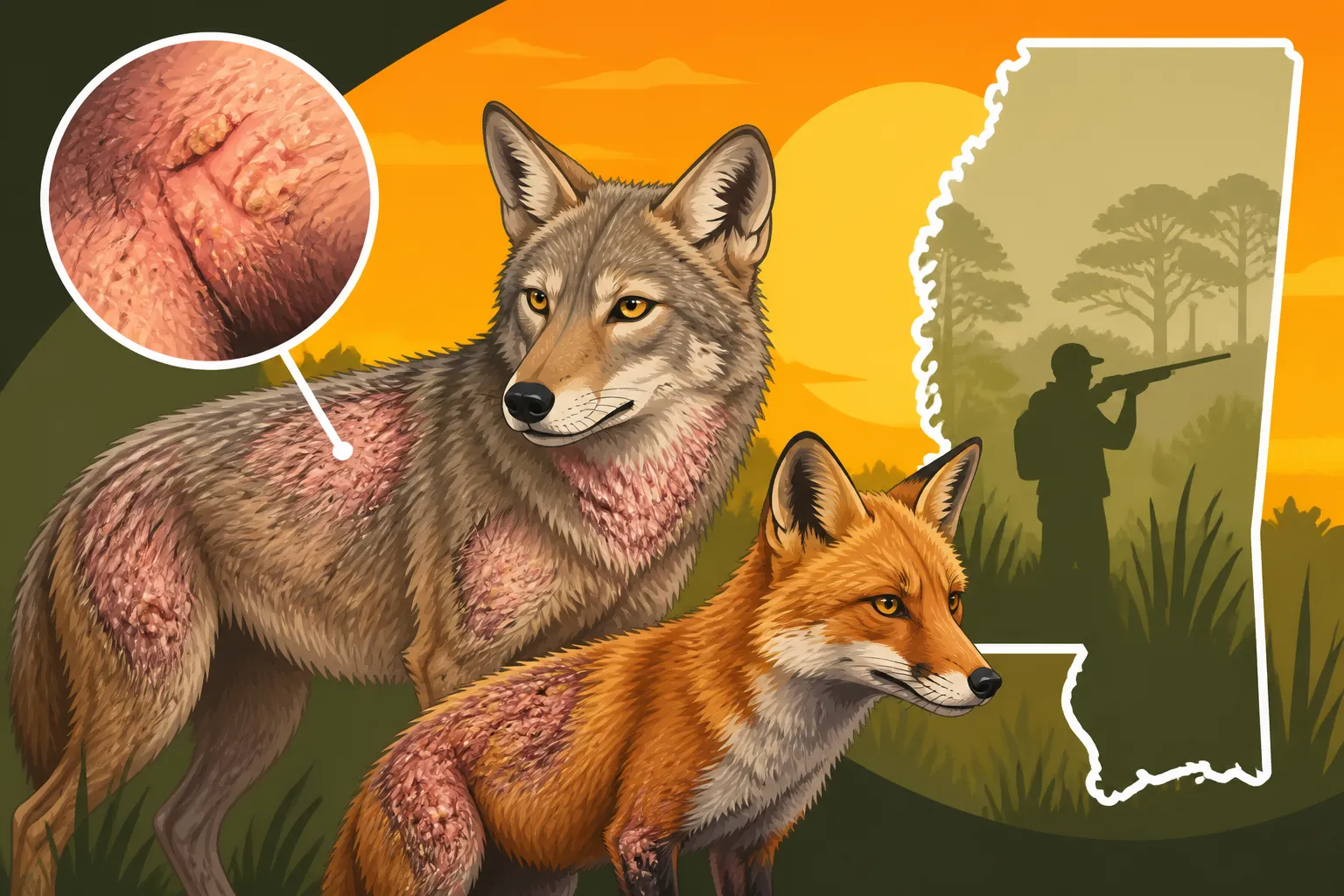
The most obvious visual cue of mange is hair loss. This typically starts around the eyes, ears, muzzle, and elbows, spreading across the shoulders, flanks, and tail. The animal might look moth-eaten or patchy, eventually progressing to almost complete baldness in severe cases. The exposed skin often appears reddened, thickened, and wrinkled, sometimes looking like elephant hide. You'll likely see crusty scabs and open sores from constant scratching and secondary bacterial infections. The tail might look skinny and almost rat-like due to hair loss.
Beyond the physical appearance, mangy animals often exhibit distinct behavioral changes. The intense itching causes them to scratch, bite, and rub themselves constantly against trees, rocks, or the ground. This constant irritation means they're not spending enough time hunting or foraging, leading to lethargy, emaciation, and weakness. A severely affected coyote or fox might look noticeably underweight, with its ribs and hip bones protruding. Another tell-tale sign is unusual daytime activity. While coyotes and foxes are typically more active at dawn, dusk, and night, an animal suffering from severe mange might be so desperate for food or so debilitated that it becomes active during broad daylight, often appearing disoriented or unafraid of humans. If you spot a coyote looking unusually skinny, with patchy fur and constantly scratching in the middle of the afternoon, it's a strong indicator of mange. You can learn more about these animals in Coyotes and Predators in Mississippi.
Differentiating Mange from Other Wildlife Ailments
It's important to remember that not every skinny, scruffy-looking animal has mange. Other factors can lead to similar appearances, and knowing the differences can help you provide accurate information if you need to report a sighting.
One common source of confusion is seasonal fur changes. Many animals, especially foxes, can look a bit rough during their spring and summer shedding periods. Their winter coats might come out in clumps, giving them a patchy appearance. However, healthy shedding typically doesn't involve the raw, crusty skin, intense itching, or emaciation seen with mange. The skin underneath shedding fur usually looks healthy.
Another possibility is physical injury or illness unrelated to mites. An animal might have a wound that causes hair loss or a localized infection. Tumors or other skin conditions can also cause lesions, though they often lack the widespread, symmetrical nature of mange. For instance, a coyote that got into a fight might have patches of missing fur and scabs, but it won't typically exhibit the systemic hair loss and intense, unending itch of mange. Using tools like GoHunt's robust mapping features can help you track potential animal movement patterns, but it won't diagnose an ailment.
Malnutrition alone can also make an animal look thin and have a dull coat, but generally won't cause the specific skin lesions and severe hair loss characteristic of sarcoptic mange. A key differentiator for mange is that relentless, visible scratching combined with significant hair loss and thickened, crusty skin. If you're unsure, it's always best to err on the side of caution and consider Reporting a Sick Animal in Mississippi to the MDWFP. They have the expertise to assess and monitor wildlife health.
Impact on Mississippi's Coyote and Fox Populations and the Hunting Community
Mange isn't just a grim sight; it has tangible effects on the populations of our furbearers and, by extension, on the hunting community and ecosystem health in Mississippi. When these diseases take hold, they can alter dynamics in ways we might not immediately perceive.
How Mange Affects Individual Animals and Population Dynamics
For an individual coyote or fox, severe mange is almost always a death sentence. The constant itching, pain, and secondary infections weaken the animal to such an extent that it can't hunt effectively, especially given their Mississippi Coyote Diet in Farm Country. This leads to starvation and hypothermia, particularly during colder months when a thick fur coat is essential for survival. Their immune systems become severely compromised, making them highly susceptible to other diseases. Even if they don't starve, they might succumb to pneumonia or other opportunistic infections.
At a population level, persistent outbreaks of mange can lead to localized declines in coyote and fox numbers. While these species are generally resilient and reproduce quickly, a widespread, severe mange outbreak can significantly impact reproduction and survival rates, particularly among younger animals. When a large percentage of a population is sick and dying, their ability to successfully breed and raise pups is severely hampered. This can create a vacuum, potentially leading to shifts in other prey populations or even allowing other predators, like bobcats, to become more dominant in certain areas. It's a complex ecological ripple effect, and MDWFP monitors these trends as part of Mississippi Wildlife Disease Monitoring.
What it Means for Hunters and Wildlife Management
For hunters, encountering mangy animals presents a few challenges. Ethically, no one wants to take an animal that is clearly suffering from a debilitating disease, and it's important to understand the regulations around harvesting diseased game. Moreover, the quality of the fur from a mangy animal is severely degraded, making it undesirable for trapping or pelt harvest. If you're hunting predators for population control or sport, targeting healthy animals is generally preferred. While GoHunt is invaluable for scouting healthy hunting grounds and understanding terrain, it won't tell you about individual animal health. However, understanding where mangy animals are being sighted can help inform your hunting strategy, perhaps steering you away from areas with known outbreaks or prompting you to use precautions if you're trapping.
From a wildlife management perspective, mange outbreaks are closely monitored by the Mississippi Department of Wildlife, Fisheries, and Parks (MDWFP). While treating individual wild animals for mange on a broad scale is impractical, understanding the prevalence and distribution of the disease helps inform management decisions. They might track hotspots, assess potential impacts on localized populations, and educate the public on reporting sightings. The general consensus is that mange is a natural, albeit brutal, form of population regulation for wild canids. While it's tough to watch, it often culls weaker animals from the population, though at a significant cost to those individuals. Hunters can contribute to this monitoring by reporting any visibly sick animals they encounter, helping MDWFP get a clearer picture of the disease's reach.
Management and Prevention: What Can Be Done (and What Can't)
When it comes to widespread wildlife diseases like mange, the reality is that options for direct intervention are often limited. It's a different ballgame than managing disease in domestic animals. However, there are still crucial roles for public reporting, research, and responsible practices by landowners and hunters to help mitigate the impact.
The Challenges of Treating Wild Animals
The sheer scale of Mississippi's wild landscapes and the natural behavior of coyotes and foxes make mass treatment programs for mange virtually impossible. Unlike a domestic dog, you can't simply catch every wild canid, administer medication, and monitor its recovery. Attempting to do so would be incredibly expensive, logistically daunting, and highly stressful for the animals, potentially causing more harm than good. Furthermore, repeated exposure to medicated bait could lead to bait shyness or unintended consumption by non-target species. Even if an individual animal could be treated, it would likely be reinfected shortly after returning to an affected population.
Wildlife agencies, like the MDWFP, typically focus on population-level health and ecological balance rather than individual animal welfare in widespread disease scenarios. Their resources are often better spent on monitoring disease prevalence, studying its impact on overall populations, and educating the public. It's a harsh truth, but for a wild coyote or fox with severe mange, nature often runs its course, a difficult but natural part of the ecosystem.
Role of Public Reporting and Research
While direct treatment is challenging, public reporting is an incredibly valuable tool in the fight against mange. When hunters, landowners, and outdoor enthusiasts Reporting a Sick Animal in Mississippi to the MDWFP, they provide crucial data points that help wildlife biologists understand the geographical spread and intensity of mange outbreaks. These reports, especially when combined with photos or specific locations, allow the MDWFP to map disease hotspots, identify trends, and assess the potential impact on local populations. This data is vital for Mississippi Wildlife Disease Monitoring efforts.
Ongoing research also plays a critical role. Scientists continually study the mites themselves, their resistance to certain treatments, the immune responses of different canid species, and environmental factors that might influence outbreaks. Understanding these complex interactions can lead to better management strategies in the future, even if those strategies are more about habitat management or reducing stress factors rather than direct medication. Every piece of information, every reported sighting, contributes to this larger scientific understanding.
Best Practices for Landowners and Hunters
Even without direct treatment options, landowners and hunters can adopt best practices to help minimize the spread and impact of mange.
- Reduce Congregation Points: If you're feeding wildlife, be mindful that concentrated food sources can also concentrate animals, increasing the likelihood of direct contact and disease transmission. This is especially true for supplemental feeding sites. Similarly, when using bait sites for predator hunting, ensure you're following all regulations and consider the potential for disease transmission.
- Carcass Disposal: Proper disposal of harvested animal carcasses, especially if the animal showed signs of illness, is important. While mange mites typically die quickly off a host, disposing of carcasses responsibly can help prevent scavengers from potentially carrying mites or other diseases. Burying or rendering carcasses is generally recommended.
- Handling Precautions: If you must handle a visibly mangy animal, wear gloves and take precautions. While sarcoptic mange can cause temporary itching in humans (a condition sometimes called "scabies" in humans, but the mites are host-specific and can't complete their life cycle on people), it's always wise to minimize direct skin contact and practice good hygiene. Clean any tools or equipment that came into contact with the animal thoroughly.
- Observe and Report: As mentioned, your eyes and ears in the field are invaluable. If you see an animal that you suspect has mange, make a mental note of its location, appearance, and behavior, and report it to the MDWFP. Take a photo if you can do so safely and without disturbing the animal. This information helps biologists track the disease.
- Understand Local Populations: Knowing the general health of the coyote and fox populations in your specific hunting area can help you make informed decisions. Using a resource like GoHunt can help you understand terrain and potential travel corridors, but combining that with local observations of animal health paints a fuller picture. If you're calling coyotes in Mississippi's farm country or pine plantations, as detailed in Predator Calling Mississippi Pine Plantations, keep an eye out for these visual cues.
By being informed, vigilant, and responsible, you contribute to the overall health and understanding of Mississippi's incredible wildlife.
Disclaimer
This article is for general informational purposes only and does not constitute professional advice. Laws, prices and regulations vary by location and change over time. Consult a qualified professional for guidance on your specific situation.