Sunflower WMA Inside Delta National Forest
Hunting in Mississippi can be a truly rewarding experience, but navigating the vast and often challenging public lands, especially in the unique environment of the Delta, can feel overwhelming. Many hunters struggle to pinpoint exactly where to go, what to expect, and how to successfully pursue game in areas like Sunflower Wildlife Management Area, which sits right within the sprawling Delta National Forest. This guide aims to pull back the curtain on Sunflower WMA, offering a comprehensive look at its unique landscape, abundant opportunities, and the essential details you need to plan a successful hunt in this iconic Mississippi hunting ground.
The Heart of the Delta: What Makes Sunflower WMA So Unique?
Sunflower Wildlife Management Area isn't just another patch of public land; it's a cornerstone of Mississippi's hunting heritage, nestled within the only bottomland hardwood national forest in the United States. This designation alone should tell you it's a special place. For generations, hunters have ventured into its thick woods and flooded timbers, drawn by the promise of big Delta bucks and migrating waterfowl. But its uniqueness also presents particular challenges that require a hunter to be well-prepared and flexible.
Bottomland Hardwood Legacy
Imagine towering cypress, water oaks, pecan, and sweetgum trees, their roots often submerged, forming a dense, almost primeval forest canopy. That's the ecosystem of Sunflower WMA, a living testament to the vast bottomland hardwood forests that once dominated the Mississippi Delta. This incredibly fertile habitat provides rich mast crops for deer, squirrels, and hogs, while the standing water in sloughs and low areas creates ideal conditions for waterfowl. Understanding this environment—how water flows, where the higher ground is, and what tree species are dominant—is key to unlocking its secrets. It’s not your typical pine plantation hunt; it’s a deep dive into an ancient, water-influenced woods.
The intricate network of sloughs, oxbow lakes, and cypress brakes within the WMA provides distinct travel corridors and bedding areas for game, especially white-tailed deer. During periods of high water, deer movement becomes highly concentrated on the few remaining dry ridges and higher ground, making these pinch points prime locations for stand setups. Conversely, when water is low, deer disperse, but they still rely on these diverse habitat features for food and cover. Knowing how to read this dynamic landscape, often with the help of satellite imagery on mapping apps like onX Hunt, can be the difference between a frustrating day and a successful one.
Waterfowl Paradise
For many, Sunflower WMA is synonymous with duck hunting. Its location within the Mississippi Flyway, combined with its unique greentree reservoirs (GTRs) and natural sloughs, makes it a magnet for migrating ducks, particularly mallards and wood ducks. The sight of mallards cupped over flooded timber on a crisp Delta morning is an experience etched into the memory of many a waterfowler. The WMA actively manages these GTRs, manipulating water levels to provide optimal feeding and resting areas for waterfowl throughout the season. This management, however, also means hunters need to stay updated on water conditions and specific regulations for these areas. Hunting Greentree Reservoirs for Mallards is a skill honed by understanding the timing of these water releases and how they influence bird activity.
Beyond the managed greentree reservoirs, the unmanaged sloughs and cypress breaks also offer fantastic opportunities. These natural water bodies can hold birds when the GTRs are pressured, or when high river stages flood vast areas of the forest. The challenge here often lies in access and concealment, as these spots require more scouting and often more strenuous efforts to reach. Nevertheless, for the adventurous hunter, the rewards can be significant, offering a more wild and less predictable hunting experience compared to the often-bustling GTRs.
Deer and Other Game
While ducks often steal the spotlight, Sunflower WMA is also home to a healthy population of white-tailed deer, feral hogs, and various small game. Hunting deer here is a true test of woodsmanship, as the dense cover and often wet conditions make spotting deer a challenge. Bucks here have ample cover to grow old, leading to some impressive animals, though the terrain means you're more likely to encounter them in thickets than open fields. Hunting Delta Unit Bottomland Deer takes a special kind of dedication, focusing on understanding how deer use the dense cover and navigate the wet landscape.
Feral hogs are another persistent presence and offer year-round hunting opportunities, providing an additional target for those who want to extend their time in the woods beyond traditional deer and duck seasons. Squirrels are abundant, particularly around the mast-producing oaks and pecans, offering a fun and often overlooked hunting experience, especially for younger hunters or those looking for a relaxed outing. The diverse habitat supports a variety of species, making Sunflower WMA a true multi-faceted hunting destination, if you're willing to put in the effort.
Navigating the Delta National Forest & Sunflower WMA
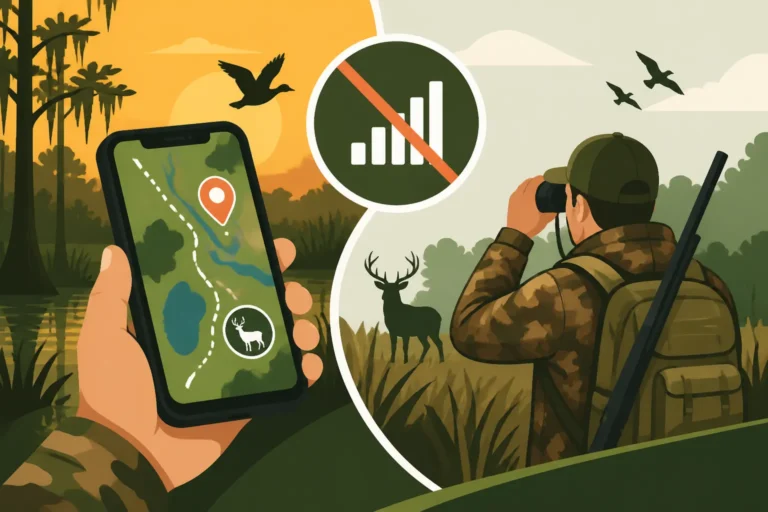
The sheer size and wild nature of the Delta National Forest, encompassing Sunflower WMA, can be intimidating for first-timers. It's easy to get turned around in the dense bottomlands, and cell service can be spotty at best. Proper preparation and the right tools are absolutely critical for a safe and effective hunt here. Knowing your access points, understanding the lay of the land, and embracing modern navigation techniques will drastically improve your experience.
Access Points and Roads
Access into Sunflower WMA is primarily via a network of forest roads that crisscross the Delta National Forest. Many of these roads are gravel or dirt and can become impassable during wet weather, which is a frequent occurrence in this part of Mississippi. It's not uncommon for roads to be closed seasonally or after heavy rains, so always check with the local MDWFP office or the National Forest Service for current conditions before you head out. These roads often serve as starting points for foot travel into the deeper woods or for launching small boats into sloughs and GTRs. Parking is usually along these roadsides, but be mindful of blocking access for other hunters or emergency vehicles.
There are several main access points, but knowing which ones lead to the type of habitat you're looking for (e.g., deeper timber vs. GTR access) is vital. Relying solely on a paper map can be tough given the dynamic nature of the environment and the subtle changes in elevation that dictate game movement. Sometimes, the easiest way in isn't always the best way to get to where the game is. A bit of pre-trip reconnaissance, even on Google Earth, can save you hours of driving around in circles once you're on the ground.
The Role of Mapping Apps
In a place like Sunflower WMA, a good mapping app isn't a luxury; it's practically a necessity. Traditional paper maps are useful, but modern digital tools like onX Hunt or GoHunt provide invaluable layers of information that can transform your hunting strategy. These apps offer detailed satellite imagery, property boundaries (which are crucial on public land bordering private tracts), topographical maps that reveal subtle elevation changes, and the ability to mark waypoints for your stand locations, game sightings, or even parked vehicles. With limited cell service in many areas, downloading offline maps before you leave home is an absolute must. Using the MDWFP Map Tool can also be a complementary resource, offering WMA-specific boundaries and rules.
Think about it: you can scout from your couch, identifying potential funnels, bedding areas, or oak flats that would be impossible to see from a forest road. Once in the field, you can track your movements, ensuring you don't wander onto private land and always know how to get back to your vehicle. For duck hunters, understanding water depths and the contours of a flooded timber block can be critical for decoy placement and blind setup, information often accessible through these advanced mapping platforms.
Understanding Water Levels
The Delta National Forest and Sunflower WMA are intimately tied to water. The Mississippi River and its tributaries dictate much of the landscape, and water levels can fluctuate dramatically throughout the year and even within a single hunting season. High water can flood vast tracts, pushing deer to higher ridges and concentrating ducks in new areas. Low water can make many sloughs inaccessible by boat and open up new areas for foot travel, changing where deer might browse or bed. Always check river gauges for the region (e.g., Yazoo River, Mississippi River) as these will give you a good indication of general water conditions.
This constant flux means that a spot that was phenomenal last week might be bone dry or completely underwater this week. Flexibility is key. Have multiple backup plans, especially for duck hunting, where flooded timber depends entirely on water. Understanding how these water levels impact game movement is crucial. Deer, for example, will often move along the highest available ground during floods, creating predictable travel corridors that can be excellent ambush points. For waterfowl, a rising or falling water level can either concentrate birds or disperse them widely across the landscape.
Hunting Opportunities and Challenges in Sunflower WMA
Sunflower WMA offers a diverse range of hunting opportunities, but it's important to approach each species with a realistic understanding of the unique challenges this environment presents. It's not a place for the faint of heart; expect mud, mosquitoes, and dense cover, but also expect the potential for truly memorable encounters with game.
Deer Hunting Dynamics
Deer hunting in Sunflower WMA often requires a different mindset than hunting in open fields or pine forests. The dense bottomland hardwoods mean visibility is often limited to short distances, making still-hunting or carefully selected stand placements crucial. Deer here are often more wary due to hunting pressure, and their movements are heavily influenced by water levels and food availability. Acorn crops, particularly from the various oak species, are a major draw, and scouting for these mast producers is essential. Hunting the Rut in the Delta Unit will show you that Mississippi's rut can offer some incredible action, but you'll need to be in the right place at the right time.
Success often comes down to patience, quiet movement, and understanding how deer navigate the wet, thick terrain. Focus on pinch points created by sloughs, subtle ridges, or changes in vegetation. Using a climbing stand or hang-on can be challenging with the often-dense canopy and irregular tree growth, but it's not impossible. Ground blinds, especially well-brushed-in ones, can be very effective in areas with limited shooting lanes. Dragging a deer out of these woods can be a monumental task, so plan your extraction strategy before you even pull the trigger.
Duck Hunting Strategies
Duck hunting in Sunflower WMA is a quintessential Delta experience. Whether you're slogging through flooded timber in waders, poling a pirogue through cypress knees, or setting up a layout blind on the edge of a managed field, it's an immersive waterfowl hunt. The greentree reservoirs are popular, and hunters often compete for prime spots, especially on weekends and during peak migration. Getting there early is essential, and understanding the specific GTR draw or check-in rules is critical. Mississippi Duck Daily Bag Limit and specific species regulations must be strictly followed.
Beyond the GTRs, the natural sloughs and open water bodies can offer excellent hunting, often with less pressure. Decoy spreads here can be simple or elaborate, depending on the conditions. Calling can be very effective, but understanding the subtle nuances of Mississippi duck calling, especially in timber, is an art form. Be prepared for mud, cold, and wet conditions. Waterproof gear, good waders, and a dependable shotgun are non-negotiables. And always be aware of your surroundings; other hunters may be nearby, and safety is paramount.
Feral Hogs and Small Game
Feral hogs are rampant throughout Sunflower WMA, offering year-round hunting opportunities with very generous bag limits. Mississippi Feral Hog Regulations allow for flexible methods, and pursuing hogs here can be an exhilarating experience. Many hunters will target hogs opportunistically while deer or duck hunting, but dedicated hog hunts, often involving thermal imaging at night on private lands (check specific WMA rules for night hunting), or with dogs, are also popular. Hogs damage the forest floor, rooting up habitat, and their eradication is a conservation priority.
Small game, particularly squirrels, provides a different pace of hunt. The abundant acorn and pecan crops sustain healthy squirrel populations, making for a fun and often action-packed hunt. It's a great way to introduce new hunters to the sport or just enjoy a peaceful morning in the woods. Rabbit hunting, though perhaps less common here than in some other areas of Mississippi, can also be productive in brushy edges or clearings within the WMA.
| Game Species | Primary Season Focus | Common Habitat Areas | Challenges & Tips |
|---|---|---|---|
| White-tailed Deer | Fall/Winter | Ridge tops, slough edges, oak flats | Dense cover, mud, water levels, scent control, physical demand |
| Waterfowl (Ducks) | Fall/Winter | Greentree reservoirs, sloughs, cypress brakes | Water levels, competition, weather, early starts, calling skills |
| Feral Hogs | Year-round | Anywhere, especially near food/water | Elusive, intelligent, scent control, shot placement |
| Squirrels | Fall/Winter | Mature hardwoods, mast trees | Spotting in canopy, quiet movement, identifying food sources |
Key Regulations & Important Considerations
Hunting on any WMA in Mississippi comes with its own set of rules and regulations that go beyond statewide hunting laws. Sunflower WMA is no exception. Ignorance of these rules is not an excuse, and a violation can quickly ruin your hunt and potentially lead to fines or loss of privileges. Always double-check the latest regulations booklet provided by the Mississippi Department of Wildlife, Fisheries, and Parks (MDWFP) for the specific WMA.
Permits and Check-in Requirements
Before you even step foot into Sunflower WMA to hunt, you need to ensure you have the proper licenses and permits. This typically includes a valid Mississippi hunting license and a WMA user permit. For non-residents, Mississippi Hunting Licenses and What They Cost can vary, so be sure to get the correct package. Many WMAs, including Sunflower, also require a daily or seasonal check-in/check-out procedure, often through an online system or kiosks at designated access points. This system helps the MDWFP monitor hunter pressure and harvest data, which is vital for wildlife management. Failing to check in or out can be a serious violation.
These check-in procedures are not just bureaucratic hurdles; they serve a real purpose in managing the resource and ensuring hunter safety. They allow WMA staff to track who is in the woods and provide critical information in case of an emergency. Always carry proof of your licenses and permits, ideally on your phone (if service allows for digital display) or as a printed copy. Even if you don't encounter a warden, being prepared is part of being a responsible hunter.
CWD Zone Impact
Sunflower WMA, like many areas in Mississippi, is located within a Chronic Wasting Disease (CWD) Management Zone. This means there are specific regulations concerning deer harvest, carcass movement, and mandatory testing that all hunters must adhere to. Mississippi's Chronic Wasting Disease Zones outlines these areas and the associated rules, which are designed to monitor and slow the spread of this fatal neurological disease in deer. Typically, this involves mandatory CWD testing of harvested deer during specific periods and restrictions on moving certain parts of a deer carcass out of the CWD zone.
These regulations are critical for protecting the future of Mississippi's deer herd. While it might seem like an extra step, participating in CWD testing and following carcass movement restrictions is a vital part of responsible wildlife stewardship. Make sure you know the locations of official CWD sampling stations within or near the WMA, and understand which parts of the deer can and cannot be transported. Hunters often feel frustrated by these additional rules, but they are a necessary measure to combat a serious threat to our deer.
Treestand and Blind Rules
Public lands often have specific rules regarding the type of treestands and ground blinds that can be used, how they can be attached to trees, and when they must be removed. In Sunflower WMA, permanent stands are generally prohibited, and portable stands must be removed at the end of each hunt or within a specific timeframe (e.g., within 24 hours of the season closing). Attaching stands with nails, screws, or any method that damages the tree is typically forbidden. Always consult the WMA rules to ensure your setup complies. Treestand Rules on Mississippi Public Land delves into these specifics.
For ground blinds, regulations usually cover their construction and removal, especially on WMAs. Often, natural vegetation can be used for camouflage, but cutting live trees or vegetation is almost always prohibited. Whether you're using a store-bought pop-up blind or building a natural hide, ensure it doesn't leave a permanent footprint and is removed when you leave. Respecting these rules helps maintain the integrity of the habitat for everyone and ensures public land remains accessible for future generations of hunters.
Making the Most of Your Sunflower WMA Hunt
Hunting Sunflower WMA successfully isn't just about showing up; it's about preparation, adaptability, and a deep understanding of the environment. The Delta bottomlands demand a bit more from hunters, but they also reward that effort with incredible experiences.
Pre-Season Scouting Tips
Scouting is paramount for success in Sunflower WMA. The dense cover and often dynamic water levels mean that what was a good spot last year might be totally different this year. Start with digital scouting using satellite imagery from apps like onX Hunt or GoHunt. Look for subtle elevation changes, sloughs, natural funnels, potential food sources like oak flats, and travel corridors. Identify areas that might offer a natural advantage or be less accessible, potentially reducing pressure. Scouting Mississippi Public Land Before Season is an invaluable starting point.
Once you have some target areas, dedicate some time to boots-on-the-ground scouting before the season opens, if permitted. Look for fresh sign: rubs, scrapes, tracks, and hog rooting. Pay attention to how game trails intersect with changes in terrain or water bodies. During this time, you can also identify potential stand trees or blind locations and plan your entry and exit routes. This pre-season work will save you countless hours of aimless wandering during the actual hunt.
Leveraging Weather and Water
The weather and water levels are your two most important allies (or adversaries) when hunting Sunflower WMA. A cold front pushing through can trigger increased deer movement as they feed actively before or after the temperature drop. Similarly, a significant drop in temperatures will often push more migratory ducks into the Delta. Rain can make roads impassable and turn the forest floor into a muddy slog, but it can also soften the leaf litter, allowing for quieter movement.
Understanding how water levels impact game is critical. As discussed, high water concentrates deer. For ducks, a rising water level can open up new feeding areas and bring birds into previously inaccessible timber. Conversely, falling water can leave ducks stranded or push them to deeper sloughs. Monitor local forecasts and river gauges, and be prepared to adjust your plans accordingly. Flexibility is key to success in this fluid environment.
Embracing the Public Land Ethos
Hunting public land, especially a challenging but rewarding WMA like Sunflower, requires a certain ethos. It means respecting other hunters, adhering strictly to all regulations, leaving no trace, and being prepared for self-reliance. You'll encounter other hunters, especially in popular areas like the GTRs during duck season or prime deer spots. A friendly nod and a shared understanding of common courtesy go a long way. This is our shared resource, and it's up to all of us to maintain its quality and accessibility.
Being self-reliant means having appropriate gear, knowing basic first aid, and having reliable navigation tools. The remote nature of much of Sunflower WMA means help isn't always around the corner. By embracing this approach, you not only ensure your own safety and success but also contribute to a positive public land hunting culture that benefits everyone. Whether you're chasing deer, ducks, or hogs, Sunflower WMA offers a unique and challenging experience that truly embodies the wild heart of Mississippi hunting.
Disclaimer
This article is for general informational purposes only and does not constitute professional advice. Laws, prices and regulations vary by location and change over time. Consult a qualified professional for guidance on your specific situation.