Booking a Guided Mississippi Hog Hunt
Feral hogs are a real nuisance and a challenging quarry across Mississippi, often making their presence known through ruined fields and vanishing deer feed. For many hunters, the thought of trying to track down these intelligent, nocturnal animals on unfamiliar land can feel overwhelming, leading to missed opportunities or frustratingly empty nights. This comprehensive guide is here to walk you through everything you need to know about booking a guided hog hunt in Mississippi, from understanding the different hunting styles available to vetting the perfect outfitter, so you can transform that frustration into a successful and thrilling adventure.
Why Consider a Guided Hog Hunt in Mississippi?
Mississippi's landscape offers a unique challenge when it comes to feral hogs. While they are abundant, finding and successfully harvesting them often requires local knowledge, specialized equipment, and access to private lands where they thrive. For many hunters, especially those traveling from out of state or those with limited local connections, a guided hunt isn't just a luxury; it's a strategic advantage that significantly boosts the chances of a successful and enjoyable experience.
The Elusive Nature of Feral Hogs
Feral hogs are notoriously intelligent, wary, and often nocturnal, making them a formidable opponent for even the most seasoned hunter. They learn quickly from pressure, adapting their patterns and movements to avoid human detection. In Mississippi, these animals thrive in dense cover, from the bottomland hardwoods of the Delta to the pine thickets of the southern regions, often making visual tracking and still-hunting incredibly difficult without intimate knowledge of their habits and bedding areas. Their destructive nature means landowners are often eager to have them removed, but pinpointing their exact location day after day, or night after night, is a full-time job.
A guide brings years of experience observing these animals on specific tracts of land. They know the subtle signs of recent activity—the freshly rooted ground, the rubs on trees, the crossings through thick brush. They understand how hog behavior changes with weather patterns, moon phases, and hunting pressure. Without this deep, hyper-local understanding, you could spend days walking through prime hog habitat and never even see a pig, let alone get a shot opportunity. This expertise is particularly invaluable when trying to target specific sounders or individual hogs that are causing significant damage.
Maximizing Success and Minimizing Frustration
Let's be honest, few things are more frustrating than investing time, money, and effort into a hunt only to come up empty-handed. Feral hogs, with their keen senses and adaptability, can certainly lead to that outcome if you're not equipped with the right strategy. A guided hunt dramatically increases your odds of success by putting you in the best possible position at the right time. Guides spend countless hours scouting, setting up bait sites, deploying trail cameras, and understanding the specific movements of hogs on their leased properties.
This isn't just about finding hogs; it's about finding huntable hogs. A good guide isn't just driving you around; they're actively managing the hog population on their land, understanding the pressure points, and strategizing how to intercept these animals. They handle the complex logistics, from baiting strategies to setting up stands or blinds, allowing you to focus solely on the thrill of the hunt. This specialized knowledge saves you precious hunting time, reduces guesswork, and turns what could be a frustrating wild goose chase into a focused and productive pursuit. Whether your goal is to harvest a meat hog or simply experience the adrenaline rush of a night hunt, a guide can steer you toward that success.
Access to Prime Hog Country
One of the biggest hurdles for any hunter looking to target feral hogs in Mississippi is gaining access to land. While Mississippi has plenty of public land, the most productive hog hunting often occurs on private agricultural properties or timberlands where hogs congregate to feed and take refuge. Securing permission on these private tracts can be incredibly difficult, especially for non-residents or those without established connections. Many of the most consistent hog populations are found on large farms or timber company lands, which often require extensive leases or are managed by outfitters.
Outfitters typically lease thousands of acres of prime hog habitat, giving them exclusive access to areas with high hog densities and low hunting pressure. These lands often include row crops like corn and soybeans, vast expanses of timber, and river bottomlands—all ideal environments for hogs. By booking a guided hunt, you're essentially buying a seat at the table in these highly productive areas that would otherwise be off-limits. This access often extends to specialized setups like baited areas, elevated shooting houses, or strategically placed ground blinds designed for optimal shot opportunities. It removes the stressful and often fruitless process of cold-calling landowners or navigating public land crowds. For those interested in year-round hog control, understanding Mississippi's Year-Round Hog Rule on Private Land is key, and guides leverage this flexibility.
Understanding Different Guided Hog Hunt Styles
Feral hog hunting isn't a one-size-fits-all endeavor. Mississippi outfitters offer a variety of hunting styles, each with its own unique appeal, challenges, and success rates. Understanding these different approaches will help you choose the guided hunt that best matches your expectations, physical capabilities, and desired experience.
Day Hunts Versus Multi-Day Packages
The choice between a single day hunt and a multi-day package often comes down to budget, travel logistics, and how immersive an experience you're seeking. Day hunts are generally more economical and can be a great option for hunters who live relatively close to an outfitter or are simply looking for a quick, intense experience. They typically involve an early morning or late afternoon hunt, sometimes both, with the guide focusing on active areas identified through recent scouting. However, hogs can be unpredictable, and a single day might not always align with their peak activity or movement patterns.
Multi-day packages, on the other hand, offer a more comprehensive experience. They often include lodging, meals, and multiple hunting opportunities over two, three, or even four days. This extended time allows for greater flexibility if weather patterns shift, or if initial scouting reveals hogs have temporarily moved. It also provides more chances to encounter different sounders or target specific animals, increasing your overall success rate. Guides can adapt tactics based on previous hunt results, and you'll have more time to learn the terrain and truly immerse yourself in the environment. Many outfitters offer different price points for these extended stays, and it's worth asking Questions to Ask Before Booking a Mississippi Hunt to understand what exactly is included in each package.
Traditional Stalking and Still-Hunting
Traditional stalking and still-hunting for hogs during daylight hours require immense patience, keen observation skills, and the ability to move silently through thick cover. This style of hunting is often employed in timbered areas, along creek bottoms, or near agricultural fields where hogs might be moving between bedding and feeding areas. Your guide will typically lead you through known hog travel corridors, fresh rooting areas, or near active bait sites, always keeping the wind in mind. The goal is to spot hogs before they spot you, allowing for a strategic approach and a clean shot.
This method appeals to hunters who enjoy the challenge of a more primal hunting experience, relying on woodsmanship and stealth. It can be physically demanding, involving a fair amount of walking and navigating uneven terrain. While challenging, the reward of outsmarting a wary sounder in broad daylight is incredibly satisfying. Guides employing this method will spend significant time scouting, perhaps Finding Sign in Big Delta Timber or reading tracks along a creek bank. Success here often hinges on the guide's ability to interpret subtle signs and lead you into an ambush.
Night Hunting with Thermal and NVG
One of the most effective and popular methods for controlling Mississippi's nocturnal feral hog population is night hunting, often employing advanced thermal imaging and night vision (NVG) equipment. Hogs are frequently more active after dark, especially in areas with significant hunting pressure during the day or during warmer months. Guided night hunts typically involve specialized vehicles, often UTVs or trucks, outfitted with powerful lights and, crucially, high-tech thermal scopes or binoculars to locate animals in complete darkness. Once hogs are spotted, a stealthy approach is made, often on foot, to get into shooting range.
This experience is incredibly exhilarating and offers unique challenges and opportunities. The use of thermal gear allows hunters to see hogs clearly, even in thick cover or at long distances, providing clear shot placement. It's a highly efficient method for reducing hog numbers and can result in multiple hogs being harvested in a single outing. Many outfitters offer specific Thermal-Assisted Hog Guide Packages that include the use of their equipment, making it accessible even if you don't own your own expensive thermal gear. Be sure to understand Night Hog Hunting Light Rules in Mississippi if you plan to partake, as guides will always adhere to local regulations.
Dog-Assisted Hunts
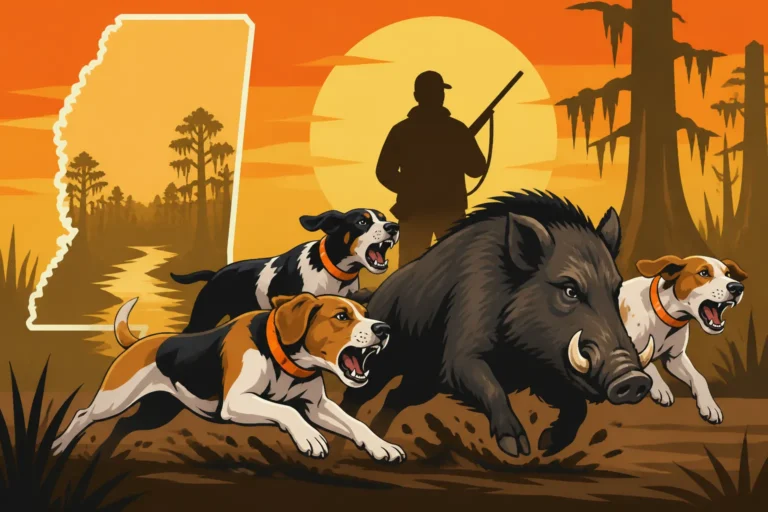
For an adrenaline-pumping, action-packed experience, a dog-assisted hog hunt is hard to beat. This traditional method involves a team of well-trained bay dogs and catch dogs working in concert to locate, bay, and then hold hogs for the hunter. The bay dogs, often larger, tougher breeds, will locate a hog and bark (bay) to keep it from running, allowing the catch dogs, usually smaller and more agile, to move in and secure the hog. The hunter then moves in to dispatch the animal, often with a knife or pistol at close range.
This style of hunting is incredibly physical and fast-paced, requiring hunters to keep up with the dogs through potentially dense and rugged terrain. It’s not for the faint of heart, but it provides an incredibly visceral and hands-on experience. Guides who run dogs are highly skilled at managing their pack, reading their behavior, and anticipating hog movements. If you're looking for a truly unique and challenging hunt that taps into a rich hunting tradition, a dog-assisted hunt might be exactly what you're after. Many resources cover Running Dogs on Mississippi Feral Hogs, which is a testament to its popularity. Be prepared for exertion and excitement if you choose this path.
What to Expect from a Mississippi Hog Outfitter
When you're shelling out good money for a guided hunt, you want to know what you're getting. A reputable Mississippi hog outfitter will be transparent about their services, ensuring you have a clear understanding of what's included and what's not. This helps manage expectations and prevents any unwelcome surprises once you arrive.
Typical Inclusions in a Guided Hunt Package
Most guided hog hunt packages in Mississippi include the essential elements required for a successful hunt. This almost always starts with the professional guide service itself—the individual or team who will be leading your hunt, sharing their knowledge, and putting you on hogs. Access to the hunting grounds, typically private land leased by the outfitter, is a primary inclusion, guaranteeing you a place to hunt with a high likelihood of hog activity. Transportation in the field, often via UTVs, ATVs, or specially equipped trucks, is standard, getting you to and from hunting locations efficiently.
For night hunts, the use of thermal imaging or night vision equipment is frequently part of the package, as this gear is expensive and specialized. Some packages might also include meals and lodging, especially for multi-day trips, providing a comfortable camp experience. Baiting and scouting activities are usually handled entirely by the outfitter beforehand, ensuring the areas you hunt are actively being used by hogs. While trophy care and basic field dressing are often included, it's vital to clarify the extent of these services. Always review what's explicitly stated; for example, understanding What a Guided Night Hog Hunt Costs or Thermal-Assisted Hog Guide Packages will give you a baseline for what to expect.
Gear and Equipment Considerations
When booking a guided hog hunt, one of the most common questions revolves around what gear you need to bring. While the outfitter provides the expertise and land access, you are generally responsible for your personal hunting equipment. This includes your firearm or archery equipment, ammunition, and any personal hunting apparel. Mississippi allows a wide range of firearms for hog hunting, but it's always smart to confirm any caliber or weapon restrictions with your specific outfitter, as some may have preferences or rules related to their specific properties or hunting styles (e.g., archery-only areas).
For thermal or night vision hunts, while the outfitter might provide the optics for spotting, you'll still need your own weapon equipped with a suitable scope or sights. Comfortable, durable clothing appropriate for Mississippi's varied weather is crucial, along with good hunting boots. Remember, you might be walking through muddy bottomlands or thorny thickets. Other essentials include a headlamp, a good knife, and a backpack for personal items. Always ask the outfitter for a detailed packing list before your trip, as they know best what to expect from their specific hunting grounds and the time of year. Don't forget your hunting license, which is a non-negotiable item.
Post-Hunt Logistics: Processing and Trophy Care
The hunt doesn't end when the shot is fired. Post-hunt logistics, particularly game recovery and processing, are critical. Reputable outfitters will assist with game recovery, which can be challenging with a large hog, especially in dense cover or after dark. They'll have the means to transport the animal back to camp or a processing area. Basic field dressing, such as gutting, is typically included. However, the extent of further processing varies widely. Some outfitters may offer basic quartering services, while others might have arrangements with local butchers for more extensive processing at an additional cost.
If you plan to keep the meat, discuss how it will be kept cool and transported. Mississippi's warm climate means proper cooling is essential immediately after the kill. For hunters wanting a European mount or a full shoulder mount, discuss options with your guide. They often work with local taxidermists and can provide caping and initial preservation services, or at least guide you on how to prepare the hide for transport. Always clarify these details upfront to avoid any disappointment or unexpected costs. Knowing how to manage Handling a Hog After the Shot is useful, but your guide will lead the way.
Finding and Vetting the Right Mississippi Hog Guide
Choosing a hog guide isn't something you should rush into. Just like any significant investment, it requires careful research and due diligence to ensure you're booking with a reputable professional who can deliver the experience you're looking for. The Mississippi hunting community is tight-knit, but quality can vary, so it pays to be thorough.
Researching Outfitters and Reading Reviews
The internet is your friend when it comes to initial research. Start by searching for "Mississippi hog hunting guides" or "Mississippi feral hog outfitters." Websites like BookYourHunt and GoHunt are excellent starting points, acting as directories where you can browse multiple outfitters, often with photos, detailed descriptions of their packages, and, crucially, client reviews. Pay close attention to these reviews, looking for consistent themes regarding guide professionalism, quality of land, equipment, success rates, and overall client satisfaction. Don't just read the glowing ones; look for patterns in any negative feedback and how the outfitter responds.
Beyond directory sites, check the outfitter's dedicated website. A professional website that is regularly updated, with clear pricing and package details, is a good sign. Look for social media presence as well, which can offer more recent photos and direct interaction. While not all outfitters are tech-savvy, a complete lack of online presence might be a red flag. Also, reach out to hunting forums or social media groups dedicated to Mississippi hunting; sometimes, fellow hunters can offer candid recommendations or warnings based on their own experiences. The more information you gather, the clearer picture you'll have of an outfitter's reputation and operational style.
Key Questions to Ask Before Booking
Once you've narrowed down your choices, it's time to pick up the phone. A direct conversation with the outfitter is indispensable. This isn't just about getting information; it's about getting a feel for their personality, their communication style, and their passion for what they do. Here are some critical questions to ask:
- Availability and Pricing: Confirm exact dates and the total cost for your preferred package, including any hidden fees or additional charges.
- What's Included (and Excluded): Get a detailed breakdown of what's covered (guide, land access, lodging, meals, equipment use like thermals, field dressing) and what you're responsible for (licenses, processing, taxidermy, tips).
- Success Rates and Expectations: Ask about their typical success rates for the type of hunt you're interested in. Be wary of anyone promising a 100% guarantee; hunting is hunting, and animals are wild. Instead, ask about opportunity rates and what factors might influence success.
- Hunting Styles Offered: Clarify the primary hunting methods (stalking, stand hunting, night thermal, dog hunts) and if you'll have options to try different approaches.
- Land Access: Ask about the size of their leased land and whether it's private or public, and the nature of the terrain. This gives you an idea of the environment you'll be hunting in.
- Guide-to-Hunter Ratio: Understand how many hunters one guide will typically manage. A lower ratio often means more personalized attention.
- Equipment Provided: If booking a thermal hunt, confirm they provide the optics and if there's an extra charge. If a dog hunt, ask about the dogs and their experience.
- Processing and Meat Handling: Get specific about what happens after the kill: field dressing, cooling, transport, and options for full processing or shipping meat home.
- References: Ask for contact information for past clients you can speak with. This is one of the most powerful vetting tools you have.
- License Requirements: Confirm what specific Mississippi licenses and stamps you'll need and whether they can assist in purchasing them.
- Deposit and Cancellation Policy: Understand the terms for booking, payment schedules, and what happens if you need to cancel or if the guide needs to reschedule. This is crucial for protecting your investment.
Having these conversations will not only give you concrete answers but also build a level of trust with your chosen outfitter.
Understanding Deposits, Payments, and Cancellations
Financial agreements are a critical part of booking any guided hunt. Reputable outfitters will typically require a non-refundable deposit to secure your dates, with the balance due a certain period before the hunt, or upon arrival. The amount of the deposit can vary, often ranging from 25% to 50% of the total hunt cost. It's essential to get all payment terms in writing, detailing due dates and accepted payment methods.
Cancellation policies are equally important, as unforeseen circumstances can always arise. Understand what happens if you need to cancel—will you forfeit your deposit? Is there a possibility of rescheduling? What if the outfitter needs to cancel due to unforeseen circumstances (e.g., severe weather, guide illness, or significant changes in hog activity)? Will you receive a full refund or an opportunity to rebook? Some outfitters offer hunt insurance or recommend third-party travel insurance that can cover cancellations for covered reasons. Don't assume anything; ask for clarity on all financial terms before you commit. It's better to be overly cautious than to lose your hard-earned money.
Preparing for Your Mississippi Guided Hog Hunt
Once you've booked your guided hog hunt, the anticipation truly begins! But don't just sit back and dream of hogs; use the time leading up to your trip to prepare effectively. Proper preparation can significantly enhance your enjoyment and success in the field.
Physical Fitness and Mental Readiness
Mississippi hog hunts, especially those involving stalking, still-hunting, or dog drives, can be physically demanding. You might find yourself walking significant distances through uneven terrain, dense brush, or muddy bottomlands. Carrying your rifle, a pack, and potentially dragging a hog out can take a toll. While you don't need to be an Olympic athlete, a reasonable level of fitness will make the experience much more enjoyable and allow you to keep up with your guide. Consider incorporating some regular walking, light jogging, or strength training into your routine in the weeks leading up to your hunt.
Mental readiness is also key. Hunting is inherently unpredictable. There will be periods of intense action, and there will be long stretches of quiet waiting. Maintaining patience, staying focused, and being ready to react quickly when an opportunity arises are all crucial. Be prepared for early mornings and late nights, especially on thermal hunts. The ability to adapt to changing conditions and trust your guide's judgment will contribute greatly to a positive experience. Remember, feral hogs are smart and tough, so a positive, resilient attitude will serve you well.
Essential Gear and Clothing Checklist
Having the right gear is paramount for comfort and success. While your outfitter will provide specialized equipment like thermal optics, your personal kit needs to be dialed in.
Clothing:
- Layering System: Mississippi weather can be highly variable, often swinging dramatically between morning and afternoon, and throughout the season. Pack moisture-wicking base layers, insulating mid-layers (fleece or down), and a waterproof/windproof outer shell.
- Durable Pants: Opt for tough, brush-resistant pants. Jeans might not cut it in thick briars.
- Hunting Boots: Waterproof, comfortable, and broken-in boots with good ankle support are essential. You might be slogging through mud or water.
- Headwear: A warm hat for cool mornings and a brimmed hat for sun protection.
- Gloves: Light gloves for warmth and protection from thorns.
- Blaze Orange: While not always mandatory for hog-only hunts, it's a good safety practice, especially during overlapping deer seasons. Check with your guide.
Other Gear:
- Firearm/Archery Equipment: Your chosen weapon, sighted in and thoroughly cleaned. Bring ample ammunition.
- Optics: Binoculars are always useful for scouting and identifying targets.
- Headlamp/Flashlight: With extra batteries. Essential for moving in the dark.
- Knife: A good sharp hunting knife for field dressing or general use.
- Backpack: A comfortable daypack for carrying water, snacks, extra layers, and personal items.
- Cooler: If you plan to take meat home, a good quality cooler with ice is crucial, especially for longer drives.
- Insect Repellent: Mosquitoes, ticks, and gnats are a real factor in Mississippi.
- Personal First-Aid Kit: For minor cuts, blisters, etc.
- Camera: To capture memories!
Before you pack, always consult your specific outfitter's recommended gear list, as they'll have the most current and localized advice.
Understanding Mississippi's Hog Regulations
While feral hogs are considered a nuisance species in Mississippi, and generally can be hunted year-round without bag limits on private land, it's still crucial to be aware of the specific regulations, especially regarding hunting methods and public vs. private land. Your guide will be well-versed in these rules, but as the hunter, you are ultimately responsible for compliance.
- Hunting Licenses: You will need a valid Mississippi hunting license. Non-residents have specific license options, such as a Mississippi Nonresident License Options or a Mississippi Seven-Day Nonresident License. Ensure you have the correct one for your hunt duration.
- Weapon Restrictions: While hogs can be taken with almost any legal firearm, ensure your weapon choice adheres to any specific rules for the property or WMA if applicable.
- Night Hunting: As mentioned, night hunting is legal on private land, but there are rules regarding the use of artificial lights. Your guide will be experienced with Night Hog Hunting Light Rules in Mississippi.
- Private Land Permission: Guides operate on private land, which simplifies access, but you should still understand Do Feral Hogs Need Landowner Permission? and how that applies to the outfitter's operations.
- CWD Zones: Be aware if you're hunting in or near any of Mississippi's Chronic Wasting Disease (CWD) management zones, as there may be specific carcass movement restrictions. Your guide should inform you if this applies to their area.
Always trust your guide's knowledge of the regulations, but a quick review of the MDWFP website or a call to their office can provide peace of mind.
Making the Most of Your Guided Experience
Booking a guided hunt is an investment in an experience. To ensure you get the absolute most out of it, focus on good communication, adaptability, and showing appreciation for your guide's hard work.
Communication with Your Guide
Effective communication with your guide starts long before you even set foot in Mississippi. As discussed, asking thorough questions during the booking process sets clear expectations. Once you arrive, continue that open dialogue. Share your hunting goals and expectations: Are you primarily after meat? Do you want to try for a truly large boar? Is the experience itself more important than the harvest? Your guide needs to know this to tailor the hunt to your preferences.
In the field, listen intently to your guide's instructions. They know the land, the hogs, and the safest approaches. Ask clarifying questions if anything is unclear, but avoid second-guessing or arguing with their strategy. Provide feedback on what you're seeing, hearing, or smelling. If you're uncomfortable with a particular shot angle or physical demand, speak up. Good communication fosters a collaborative environment, making the hunt more enjoyable and productive for everyone involved. Remember, they are there to help you succeed, and your input can be valuable.
Adaptability in the Field
Hunting feral hogs, especially in a dynamic environment like Mississippi, often requires a high degree of adaptability. Hogs are masters of survival, and their patterns can change rapidly due to weather, feeding opportunities, or hunting pressure. Your guide might have a meticulously planned strategy, but if conditions shift, they might need to call an audible and try a different approach. Be open to these changes, whether it means switching from a stand hunt to a stalk, moving to a different property, or even altering your target species if an unexpected opportunity arises.
Sometimes, the ideal shot opportunity might not present itself exactly as you envisioned. Your guide might instruct you to take a shot you weren't expecting, or to hold fire. Trust their judgment, as they often have a better understanding of the animal's potential movement, the terrain, and what constitutes a safe and ethical shot in that particular moment. Flexibility and a willingness to adjust your expectations can turn a potentially disappointing situation into a memorable success story. The best hunts are often those where both guide and hunter can adapt to what nature throws their way.
Tipping Etiquette and Appreciation
Tipping your guide is a standard practice in the hunting industry and a crucial way to show your appreciation for their hard work, dedication, and expertise. Guides often work long, irregular hours, putting in significant effort well before and after you arrive at camp, from scouting and maintaining properties to preparing meals and handling game. A typical tip for a hunting guide usually falls in the range of 15-20% of the total hunt cost. However, this is a guideline, not a strict rule.
Consider the following when deciding on your tip: the quality of the service, the effort your guide put in, their professionalism, their knowledge, and whether they went above and beyond. Even if you don't harvest an animal, a good guide still deserves a fair tip for their time and effort. If multiple guides or support staff (like dog handlers or lodge cooks) were involved, ask your head guide about appropriate distribution or if you should tip them individually. Handing the tip directly to your guide in a discrete manner at the end of the trip is generally preferred. For more details, consult resources like Tipping Guides and Dog Handlers. This small gesture goes a long way in acknowledging their tireless efforts.
Common Misconceptions About Guided Hog Hunts
For those new to booking guided hunts, or even seasoned hunters trying a different species, there can be a few common misunderstandings about what the experience entails. Dispelling these myths can help you go into your Mississippi hog hunt with realistic expectations.
The "Guaranteed Kill" Myth
One of the biggest misconceptions about any guided hunt, including those for feral hogs, is the idea of a "guaranteed kill." While outfitters work incredibly hard to put you in a position to be successful, hunting is still hunting, and animals are wild. There are no guarantees when it comes to free-range game. Hogs can change patterns overnight, weather can become uncooperative, and sometimes, despite everyone's best efforts, the hogs just don't cooperate.
A good outfitter will talk about "opportunity rates" rather than kill guarantees. They'll tell you the percentage of hunters who got a shot opportunity, which is a much more realistic measure of success. If an outfitter does promise a 100% kill rate, be very wary. It might imply a highly controlled environment that isn't truly representative of fair chase hunting, or it could simply be an inflated claim. Focus on finding an outfitter with a strong track record of providing opportunities and a high level of client satisfaction, rather than a questionable guarantee. The thrill is in the chase, not just the outcome.
High Cost vs. Value Proposition
Many hunters balk at the cost of a guided hunt, seeing it as an unnecessary expense compared to a DIY public land trip. While it's true that guided hunts represent a significant investment, it's essential to view it through the lens of value rather than just raw cost. The value proposition of a guided hog hunt in Mississippi is substantial, especially when you factor in all the variables it eliminates.
Consider the cost of travel, scouting unfamiliar land, potentially buying or leasing your own property, and investing in specialized equipment like thermal optics. Add to that the time commitment, the trial and error, and the frustration of unsuccessful self-guided attempts. A guide provides immediate access to prime, managed land, years of local expertise, expensive specialized equipment, and a dramatically increased chance of success—all packaged into a streamlined experience. For non-residents or those with limited vacation time, the efficiency and likelihood of success offered by a guide can easily outweigh the upfront cost. It’s about buying efficiency, expertise, and access that would be incredibly difficult or expensive to replicate on your own.
DIY vs. Guided: When to Choose Each
The decision to go DIY or guided largely depends on your individual experience level, budget, available time, and specific hunting goals. A DIY hog hunt on public land in Mississippi, or with permission on local private land, is certainly an option for experienced hunters who have the time to scout, understand hog behavior, and navigate unfamiliar territory. It's often a more budget-friendly approach and can be incredibly rewarding for those who enjoy the challenge of figuring it all out themselves. If you're looking for Hunting Mississippi's Year-Round Feral Hogs on your own terms and have the resources, it's a valid choice.
However, if you're new to hog hunting, unfamiliar with Mississippi's terrain, have limited time off, want to use specialized methods like thermal night hunting, or are specifically targeting a high-success experience, a guided hunt becomes a compelling option. It removes much of the guesswork, provides immediate access to productive areas, and often includes the use of expensive gear. A guided hunt also offers a valuable learning experience, allowing you to observe seasoned professionals at work and pick up tips that can benefit your future hunting endeavors. Ultimately, both have their place, and choosing the right one for your current situation is the key to a fulfilling hunt.
| Hunt Style | Key Characteristics | Pros | Cons | Recommended For |
|---|---|---|---|---|
| Day Stalk/Still-Hunt | Traditional, active hunting on foot, stealth-focused | Immersive, woodsmanship-intensive, satisfying challenge | Physically demanding, hogs can be very wary, lower success rate than night | Hunters who enjoy traditional methods and physical challenge |
| Night Thermal/NVG | Hunting after dark with specialized optics, often from vehicle/blind | Highly effective, exhilarating, good for multiple hogs, unique experience | Expensive gear (often provided), limited daylight visibility | High success focus, trophy hogs, modern tech enthusiasts |
| Dog-Assisted Hunt | Fast-paced, intense chase with trained dogs | Adrenaline-filled, high action, traditional method for big boars | Very physically demanding, can be chaotic, close-range engagement | Thrill-seekers, those seeking a unique, visceral experience |
| Stand/Blind Hunt | Waiting over bait or travel routes from fixed positions | Less physically demanding, comfortable, good for observation | Can be slow, requires patience, hogs can be unpredictable | Hunters preferring comfort, less mobility, or with physical limitations |
Disclaimer
This article is for general informational purposes only and does not constitute professional advice. Laws, prices and regulations vary by location and change over time. Consult a qualified professional for guidance on your specific situation.