Thermal-Assisted Hog Guide Packages
There's nothing quite like the frustration of knowing feral hogs are tearing up your fields or timberland, but trying to hunt them during the day feels like chasing ghosts. These intelligent, prolific critters are primarily nocturnal, moving under the cover of darkness to avoid human pressure and the heat of the Mississippi sun. This makes traditional daytime hunting incredibly challenging and often ineffective for significant population control. This guide delves into thermal-assisted hog guide packages, offering a powerful solution for those serious about tackling Mississippi's rampant hog problem by meeting them on their own terms, after dark.
Understanding the Thermal Advantage for Mississippi Hogs
Feral hogs are a scourge across the Mississippi landscape, causing millions of dollars in agricultural damage annually and decimating native wildlife habitat. Their ability to reproduce rapidly and adapt to pressure makes them a formidable foe for any hunter. When you realize how much of their activity happens after sundown, the appeal of specialized night hunting gear becomes crystal clear.
Why Night Hunting is Crucial for Feral Hogs
If you've spent any time hunting hogs in Mississippi, you've probably noticed they're most active during the cooler hours of the night, especially in warmer months. The intense heat of a Mississippi summer day often drives them into thick cover, where they spend their time wallowing in mud and resting. As soon as the sun dips below the horizon, and the temperatures become more forgiving, they emerge to feed and travel. This nocturnal behavior is a primary reason why traditional daytime hunts, while still fun, often only scratch the surface of population control.
Beyond just comfort, hogs quickly learn to associate human activity and hunting pressure with daylight hours. They are incredibly intelligent and wary creatures. This means that after a few encounters, they become even more strictly nocturnal, retreating to the deepest, densest parts of the swamps and thickets during the day. Hunting them successfully then requires a different approach, one that leverages technology to penetrate the darkness they rely on for safety. Many guides focus exclusively on these twilight and nighttime hours because that's simply when you'll find the most consistent hog movement. Mississippi Feral Hog Regulations allow for night hunting with artificial lights and thermal devices on private land, making guided thermal hunts a perfectly legal and effective strategy.
How Thermal Imaging Works in the Field
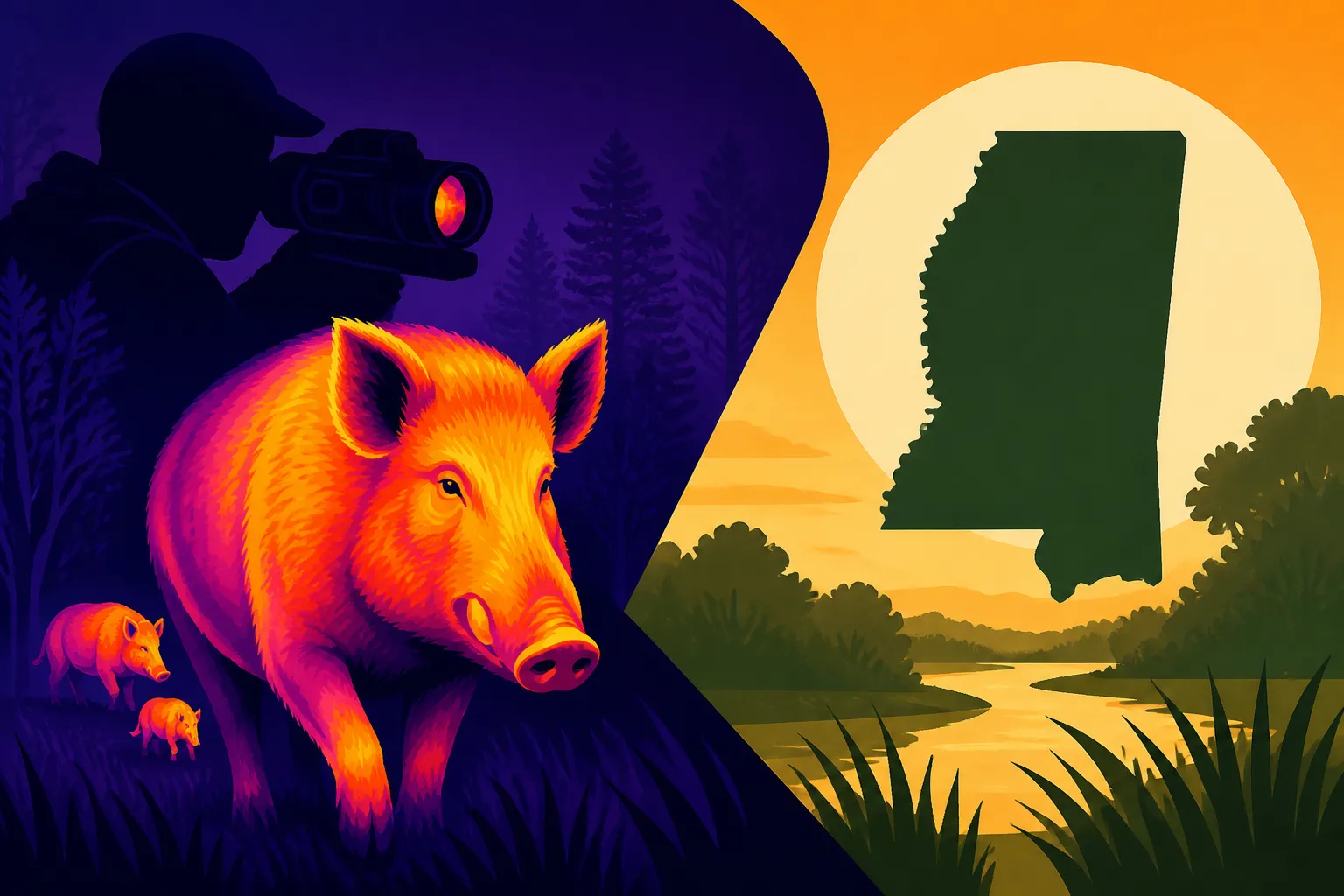
Thermal imaging technology isn't about amplifying ambient light like traditional night vision. Instead, it detects infrared radiation, which all objects emit as heat. Essentially, it "sees" heat signatures, allowing you to spot warm-blooded animals like hogs even in complete darkness, heavy fog, or thick brush where visible light or even infrared illuminators would struggle. Imagine seeing a hog's body glowing against a cooler background of trees and fields – that's the thermal advantage.
This technology is a game-changer for night hunting in Mississippi. Whether you're navigating the dense bottomland hardwoods of the Delta, scouting sprawling agricultural fields, or stalking through the pine plantations of the southern counties, thermal optics cut through the dark. You can easily differentiate hogs from inanimate objects, assess their numbers, and identify their movement patterns from a distance. The contrast it provides, especially when a sounder is bedded down in a shadowed creek bottom or moving through tall grass, is unparalleled, significantly increasing your chances of a successful and ethical harvest compared to hunting blind in the dark or relying solely on limited visible light.
What a Thermal-Assisted Hog Package Typically Offers
Booking a guided thermal hog hunt isn't just about gaining access to a piece of property. It's about entering a specialized world where advanced technology meets expert knowledge to provide a highly effective and exciting hunting experience. These packages are designed to maximize your success against Mississippi's prolific feral hog population.
Equipment Provided: Rifles, Optics, and More
One of the biggest advantages of a guided thermal hog hunt is that the outfitter provides all the highly specialized and expensive equipment you need. This typically includes modern sporting rifles, often chambered in effective hog calibers like .308, 6.5 Creedmoor, or even pistol calibers with high-capacity magazines. Critically, these rifles are usually outfitted with top-of-the-line thermal scopes, which can cost thousands of dollars on their own. Many guides also utilize suppressors, which significantly reduce the report of the rifle, making for a more comfortable shooting experience, reducing disturbance to neighboring properties, and often allowing for follow-up shots on multiple hogs within a sounder.
In addition to the primary shooting setup, guides often provide handheld thermal monoculars or binoculars for scanning and spotting. These devices allow for quick detection of heat signatures across wide areas before you even shoulder your rifle. Some packages might also include night vision goggles for enhanced situational awareness or powerful spotlights for specific situations, though thermal remains the star of the show. The outfitter handles all the maintenance, zeroing, and battery management for this sophisticated gear, allowing you to focus solely on the hunt. This eliminates the huge upfront investment for hunters who might only participate in a few night hunts a year, making it accessible to many more enthusiasts. You can usually discuss caliber preferences with your guide beforehand, ensuring you're comfortable with the provided firearm.
The Guided Experience: From Briefing to Recovery
The guided thermal hog hunt is a structured experience designed for both safety and success. It typically begins with a thorough safety briefing, covering not just general firearm safety but also the specific protocols for operating thermal optics and hunting at night. Your guide will ensure you're familiar with the equipment, how to effectively scan, identify targets, and make ethical shots in low-light conditions. Often, there's a quick zero-check with the thermal scope at dusk or earlier to ensure everything is spot-on.
Once darkness falls, the hunting strategy kicks into gear. Depending on the terrain and known hog activity, this could involve driving slowly along field edges in a specially equipped vehicle, using the thermal to spot hogs rooting in cornfields or pastures. Other times, it's a more traditional spot-and-stalk approach, where the guide leads you on foot through timber or along creek bottoms, leveraging their intimate knowledge of the property and hog movement. You might set up over a known Building and Freshening a Hog Bait Site or ambush hogs moving between bedding and feeding areas. After the shot, the guide assists with locating and retrieving the hog, which can be surprisingly challenging in the dark, even with thermal. They handle the messy work of tracking and often quartering the animal if you plan to take the meat home, ensuring a full-service experience.
The Benefits of Booking a Guided Thermal Hog Hunt
Hunting feral hogs at night with thermal optics is an exhilarating and incredibly effective way to manage these destructive animals. While you can attempt this on your own private land, the advantages of a guided hunt are numerous, especially for those new to the experience or looking to maximize their impact.
Maximizing Success and Safety
Let's face it, hunting in the dark presents unique challenges, and adding high-tech optics to the mix can feel daunting. A guided thermal hog hunt drastically increases your chances of success because you're tapping into an outfitter's specialized knowledge and dedicated resources. These guides spend countless hours scouting, monitoring hog movement, and learning the specific patterns on their properties. They know where the hogs are feeding, where they're bedding, and the most effective approaches. This local expertise, combined with their proficiency in using thermal equipment, means less wasted time and more opportunities. You can often find reputable outfitters through platforms like BookYourHunt, which vets guides and provides client reviews, giving you a good starting point for your research.
Beyond just finding hogs, safety is paramount. Hunting at night carries inherent risks, from navigating unfamiliar terrain in the dark to ensuring proper target identification. Guided hunts mitigate these risks significantly. Guides are trained professionals who prioritize safety. They provide instruction on the proper use of the thermal optics, ensure you have a safe backdrop for your shots, and assist with navigating the property. They're also well-versed in Night Hunting Hogs With Lights on Private Land rules and local regulations, ensuring your hunt is fully compliant. This expert oversight allows you to focus on the thrill of the hunt, knowing you're in capable hands.
Learning Specialized Night Hunting Techniques
For many hunters, a thermal hog hunt is their first foray into hunting after dark with advanced optics. This guided experience offers an invaluable opportunity to learn specialized techniques that would take years to master on your own. Your guide isn't just pointing out hogs; they're teaching you how to use the equipment effectively. This includes tips on quickly scanning large areas with a handheld thermal, identifying heat signatures in varying terrain and cover, distinguishing hogs from other animals, and making precise shots under the unique visual conditions of thermal imaging.
You'll also learn critical fieldcraft skills tailored for nocturnal operations. This might involve understanding how to move quietly in the dark, using the wind to your advantage when stalking, and interpreting subtle sounds that might indicate hog presence. Guides often share insights into hog behavior, explaining why they're in a certain area at a specific time, helping you build a deeper understanding of these animals. This educational aspect is a huge benefit, as the skills you gain can be applied to future hunts, whether guided or self-guided, making you a more versatile and effective hog hunter overall. It's a fantastic way to level up your hunting acumen.
Choosing the Right Thermal Hog Guide in Mississippi
Mississippi has a significant hog problem, which means there are quite a few guides and outfitters offering thermal hunts. However, not all operations are created equal. Taking the time to do your homework will ensure you book a safe, ethical, and successful hunt that meets your expectations.
Key Questions to Ask Potential Outfitters
When you're considering a thermal hog hunt, don't be shy about asking a lot of questions. A reputable outfitter will be transparent and happy to provide detailed answers. First, inquire about the guide-to-hunter ratio. A lower ratio (e.g., 1:1 or 1:2) often means more personalized attention and better safety. Ask about the specific equipment they provide: what rifles, calibers, thermal optics (brand and model if possible), and whether suppressors are used. Understanding their gear ensures you'll be using effective tools. You should also ask about their typical hunting methods – do they primarily spot and stalk, hunt from blinds over bait, or use vehicles? This helps manage your expectations for the experience.
Another crucial line of questioning revolves around success rates and post-hunt services. While no hunt guarantees a kill, a guide should be able to discuss their typical success rate honestly. Ask what happens after a hog is harvested: do they assist with Handling a Hog After the Shot, quartering, or even processing? Will they provide coolers for transport? It's also wise to ask about the hunt duration, how many hogs are typically harvested per hunt, and what safety protocols are in place for night operations. Don't forget to inquire about the physical demands of the hunt – some involve more walking than others. Researching on platforms like GoHunt can provide reviews and additional information to help you narrow down your choices.
Location-Specific Considerations for Mississippi Hunts
Mississippi's diverse landscape means that hog hunting can vary significantly from one region to another. The dense bottomland hardwoods and vast agricultural fields of the Delta region, for example, present different challenges and opportunities than the rolling piney woods and oak flats of the Hills Unit. When choosing a guide, consider where they operate and if that location aligns with your desired experience. Guides in the Delta might specialize in large sounders moving through vast corn or soybean fields, while those in the more forested areas might focus on smaller groups near creek drainages. Knowing Which Mississippi Counties Have the Most Hogs can give you a clue as to where to look for high-impact guides.
Some outfitters might even offer a combination of hunting styles, perhaps a thermal stalk followed by a Running Dogs on Mississippi Feral Hogs hunt, which is another incredibly effective method, though typically a daytime pursuit. Confirming that the guide operates on private land, where night hunting is legal and often less pressured, is also key. Public land rules typically prohibit night hunting with thermal, so make sure your guide has legitimate access to substantial private acreage. Discussing these regional nuances with potential guides will help you select an outfitter whose expertise and property best suit the type of thermal hog hunt you're envisioning in the Magnolia State.
Preparing for Your Thermal Hog Adventure
You've booked your thermal hog hunt in Mississippi, and now the excitement is building! To ensure you have the best possible experience, a little preparation on your end can go a long way. This isn't your typical daytime deer hunt; night hunting presents its own unique set of circumstances.
Physical and Mental Preparation
While thermal hog hunting might not always involve strenuous hiking, it certainly demands a different kind of physical and mental readiness. You'll be operating in the dark, often for extended periods, which requires heightened senses and focused attention. Mentally, be prepared for patience. Hogs are unpredictable, and there can be long periods of waiting, scanning the darkness, and quiet observation before an opportunity arises. The mental discipline to stay alert, focused, and ready to act quickly when a sounder appears is crucial. It’s also important to be prepared for the cold; even on warm Mississippi days, nights can get surprisingly chilly, especially when you're sitting still for hours. Layering your clothing is always a smart move.
Physically, ensure you're comfortable with the idea of moving silently and deliberately in low-light conditions. While your guide will lead the way, you’ll need to navigate uneven terrain, potentially through brush or over ditches. Comfortable, quiet footwear is a must. If you have any physical limitations, discuss them openly with your guide beforehand so they can tailor the hunt to your capabilities. This isn't a safari where you just sit in a truck; it's an immersive experience that benefits from your active participation and readiness for the unexpected. A little pre-hunt stretching or a few walks around your local park can help get you in the right mindset for the physical demands of a night hunt.
What to Bring and What to Expect
Packing for a thermal hog hunt requires a slightly different approach than a typical daytime hunt. While the outfitter provides the specialized optics and firearms, you'll need to focus on personal comfort and essentials. Layered clothing is critical – think moisture-wicking base layers, an insulating middle layer, and a quiet, dark outer layer that can withstand potential dew or light rain. Avoid anything noisy that might rustle or snag on branches. A good headlamp with a red or green light option is invaluable for moving to and from the vehicle or skinning sheds without ruining your night vision or alerting game. Don't forget bug spray, especially during warmer months, as Mississippi mosquitoes and gnats can be relentless.
Expect an intense and exciting experience. The quiet of the night, broken only by the chirping of crickets or the rustling of leaves, can be incredibly immersive. When hogs appear on the thermal, the adrenaline rush is immense. Your guide will provide real-time coaching, directing your attention, and helping you acquire targets. You might see multiple hogs in a sounder, and quick, decisive action might be needed for follow-up shots. Be ready for diverse weather conditions; even if the forecast seems clear, things can change quickly. Finally, prepare for the satisfaction of making a real impact on a destructive species while enjoying a truly unique hunting adventure that Mississippi offers. If you're doing your research, you might find valuable insights and reviews on various outfitters by checking hunting-specific community platforms.
Disclaimer
This article is for general informational purposes only and does not constitute professional advice. Laws, prices and regulations vary by location and change over time. Consult a qualified professional for guidance on your specific situation.