Finding Sign in Big Delta Timber
Hunting the vast, often impenetrable bottomland hardwoods of the Mississippi Delta can feel like searching for a needle in a haystack. The dense cover, dynamic water levels, and sheer scale of places like Delta National Forest make it incredibly challenging to pinpoint where deer are living, feeding, and traveling. This guide is dedicated to helping you decipher the subtle, and sometimes not-so-subtle, clues that deer leave behind in this unique environment, ensuring your scouting efforts are productive and your hunting season more successful.
Understanding the Delta Timber Ecosystem for Deer
The Mississippi Delta is unlike any other hunting ground in the state, characterized by its fertile, alluvial soils, and massive tracts of bottomland hardwood timber. This creates a specific set of conditions that influence how deer live and move, which means your approach to finding sign here needs to be tailored.
The Unique Challenges of Bottomland Hardwoods
When you step into a place like the Delta National Forest, you're immediately struck by the towering oaks, hickories, and cypress trees, often intertwined with a thick understory of palmettos, briars, and cane. This isn't your typical pine plantation. The ground can be soft, muddy, and often holds standing water for extended periods, especially after heavy rains or river overflows. This constant moisture impacts everything from food sources to travel routes. Deer are masters of adaptation, and in the Delta, they've learned to navigate these wet, tangled landscapes with incredible efficiency.
The sheer density of the vegetation means visibility can be extremely limited, making visual scouting from a distance nearly impossible. You often have to get down and dirty, walking through the thickest stuff to find those hidden gems. This also means that deer sign, when you find it, can be concentrated in specific, often hard-to-reach areas. Understanding these challenges is the first step; accepting them and learning to work with them is the next. We're talking about a landscape where a few inches of elevation change can mean the difference between dry ground and ankle-deep muck, and deer know exactly where those slight rises are. For a deeper dive into these unique challenges, you might find "Hunting Delta Unit Bottomland Deer" a valuable read.
Seasonal Influences on Deer Movement
Deer activity in the Delta ebbs and flows dramatically with the seasons, heavily influenced by water levels and food availability. During the late summer and early fall, as acorns begin to drop, deer will key in on specific oak flats. White oaks are often preferred early on, with red oaks becoming more important as the season progresses. If it's been a "Hunting After a Poor Acorn Year", you'll see deer relying much more heavily on browse and agricultural fields bordering the timber.
As winter approaches and water levels might rise, deer will seek out higher ground within the timber, congregating on ridges or even slight humps that remain dry. This is especially true during the rut, which in the Delta Unit tends to peak in mid-December. Bucks will expand their ranges dramatically, looking for does, and their sign will reflect this increased activity. Early season sign might be concentrated around summer food sources and bedding areas, while rut sign will be more widespread, often following major travel corridors between bedding and feeding. Understanding these seasonal shifts helps you anticipate where to find the freshest sign.
Key Deer Sign to Look For and Where to Find It
When you're slogging through the Delta timber, every little detail matters. Deer sign isn't just about tracks; it's a whole language, and you need to learn to read it fluently.
Rubs and Scrapes in the Delta
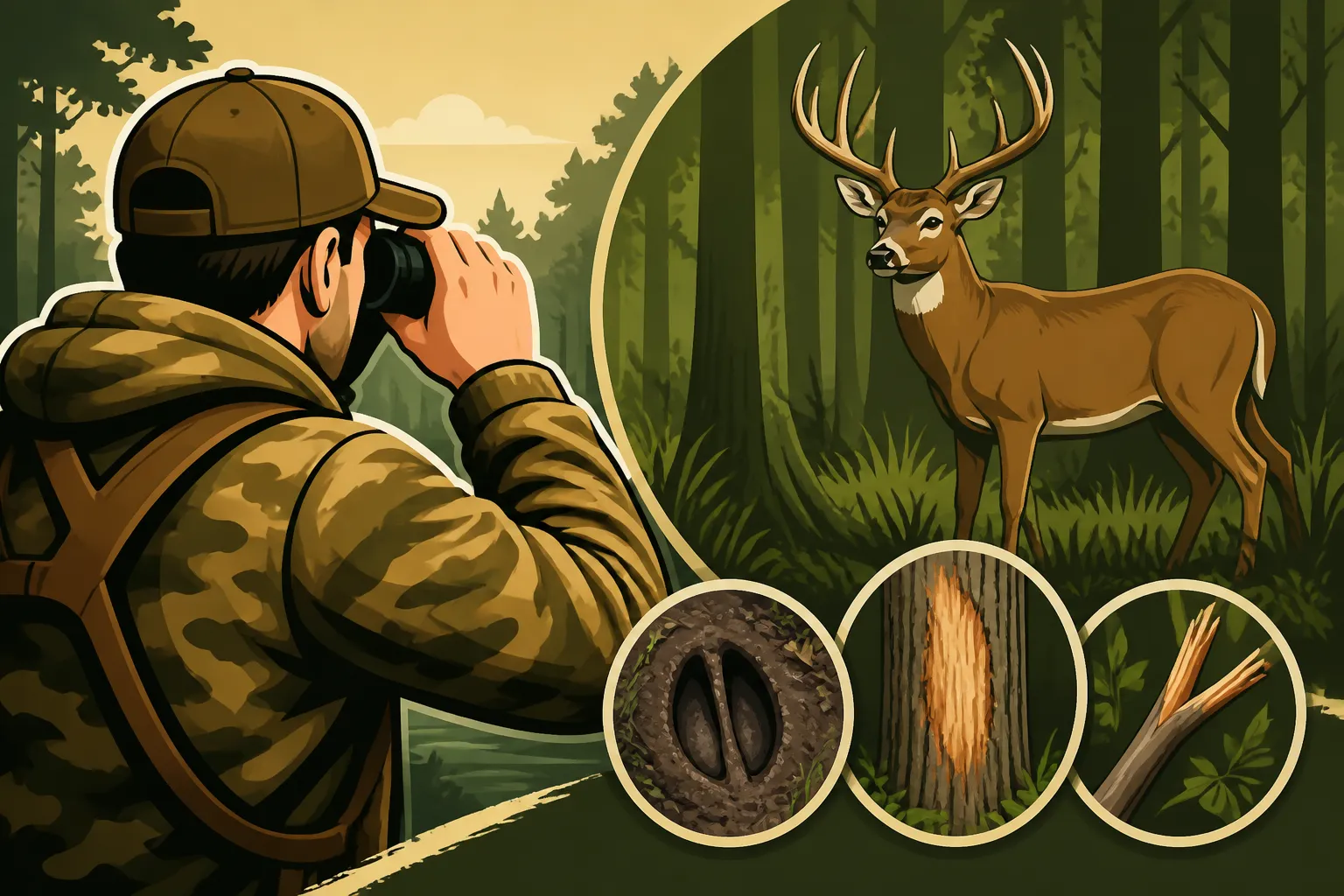
Rubs are probably one of the easiest signs to spot, especially in the pre-rut and rut. A rub occurs when a buck scrapes the velvet off his antlers and then continues to rub them against small trees or saplings. In the Delta, these are typically found on smaller diameter trees, often sweet gums, hackberries, or young oaks. Look for rubs along travel corridors, edges of thick cover, and especially near bedding areas. A single rub is interesting, but a line of rubs, often increasing in size, indicates a well-used travel route or a buck's assertion of territory. Pay close attention to the height of the rubs; taller rubs usually mean a more mature buck.
Scrapes are another vital piece of the puzzle, primarily active during the rut. These are areas where a buck paws away leaves and debris, often urinating in the bare earth, and typically features an "overhanging limb" that the buck chews and rubs his preorbital glands on. Finding a fresh scrape, particularly one with a pungent odor, tells you a buck is actively working that area. In the Delta, scrapes can sometimes be harder to find because of the constant leaf litter and mud, which can obscure them. However, focus on areas where the ground is slightly firmer, perhaps on a small rise or along the base of a large tree. Funnels between thickets or along old logging roads are prime locations for scrapes. When you find multiple scrapes clustered together, or a "scrape line," you've hit a jackpot indicating significant buck activity.
Trails, Beds, and Browse
Deer trails in the Delta can be subtle or incredibly defined, depending on the frequency of use and the softness of the ground. Look for worn paths through the underbrush, often winding around trees, through briar patches, or along the edges of sloughs. Main trails often connect bedding areas to feeding zones or water sources. Sometimes, these trails might be just faint depressions, while other times, they'll be muddy highways. Learning to distinguish between heavily used primary trails and fainter secondary trails is crucial. Primary trails are the deer's equivalent of an interstate highway, offering efficient movement.
Bedding areas in the Delta are typically found in the thickest cover imaginable – dense palmetto flats, cane brakes, or incredibly tangled briar thickets that most hunters avoid. Deer seek security cover, especially during daylight hours. Look for depressions in the leaves or grass, often with droppings nearby. These areas might be surprisingly close to feeding areas but are almost always situated in places where a deer can detect approaching danger from multiple directions. Figuring out "Where Delta National Forest Bucks Bed" is paramount to understanding deer movement patterns.
Browse is another significant indicator. Deer are browsers, meaning they eat leaves, twigs, and shoots of woody plants. Look for bitten-off stems, particularly on young saplings or bushes like greenbrier, honeysuckle, or various sprouts. The height of the browse can give you an idea of the size of the deer. Fresh browse means deer are actively feeding in that area, and combining this with rub and scrape lines will help you narrow down your hunting spot.
Understanding Droppings and Tracks
Deer droppings, or scat, are often overlooked but incredibly valuable. Fresh droppings are typically moist, dark, and soft, while older droppings are dry, hard, and lighter in color. The consistency and shape can tell you about their diet: pelleted droppings are common when deer are eating acorns and browse, while clumped, softer droppings might indicate a diet high in lush green forage. Finding a concentration of fresh droppings in a particular area points directly to a current feeding or bedding location.
Tracks are perhaps the most common sign, but interpreting them correctly is key. In the soft, muddy soils of the Delta, tracks can be everywhere, but you need to differentiate between old and fresh. Fresh tracks will have sharp, distinct edges, often with a clear impression of the dewclaws (the two small toes on the back of the leg). Older tracks will have rounded, crumbled edges, and may show signs of drying or being partially filled with water or debris. Size matters too; larger, deeper tracks often indicate a bigger, heavier deer. Observing "Reading Delta Mud for Fresh Deer Movement" is a skill that takes time to develop but is invaluable. If you can follow a fresh track, even for a short distance, it can lead you to other significant signs.
Here's a quick reference to help distinguish between fresh and old sign:
| Type of Sign | Fresh Characteristics | Older Characteristics |
|---|---|---|
| Tracks | Sharp, distinct edges; clear dewclaw marks in mud; often moist | Rounded, crumbled edges; partially filled with debris; dry or faded |
| Droppings | Dark, moist, soft, often shiny | Dry, hard, lighter in color, brittle, may be covered in mold or debris |
| Rubs | Inner wood is light, sometimes still sappy; bark shavings nearby | Inner wood is dark, weathered, dry; bark shavings scattered or gone |
| Scrapes | Bare, dark, moist earth; strong odor; fresh urine stain possible; broken twigs on overhanging branch | Faded earth, re-covered with leaves; faint or no odor; weathered branch |
| Browse | Clean, sharp breaks or tears on twigs; inner wood still green | Broken ends are dry, brown, weathered |
Advanced Scouting Techniques and Tools
Finding deer sign in big Delta timber requires more than just walking around; it demands a strategic, methodical approach, often incorporating modern tools and an understanding of the deer's natural instincts.
Using Technology for Efficient Scouting
In a vast, often featureless landscape like the Delta, technology can be your best friend. Before you even step foot in the woods, pull up your GoHunt app or other mapping software and start studying those satellite images. Look for subtle elevation changes, old logging roads, creek bottoms, sloughs, and any breaks in the timber canopy that might indicate a small clear-cut or field edge. These are often natural travel corridors and congregation points for deer. Identify potential funnels between thickets or areas where dense cover meets more open timber. Tools like GoHunt can be invaluable for pinpointing historical travel corridors, marking potential bedding spots, and even understanding property lines, which is crucial for ethical hunting.
Once on the ground, a GPS unit or your phone's mapping app (like GoHunt) is essential for marking sign. Don't just rely on memory; drop pins for every rub, scrape, concentrated bed, or fresh droppings you find. Over time, these pins will start to form patterns, revealing buck movement patterns, preferred feeding areas, and security zones. This digital record is far more effective than trying to remember every detail in such a large, homogenous environment. For more tips on leveraging technology, consider reading "Scouting With the MDWFP App" or "Reading Aerial Photos for Hills Unit Deer" for transferable skills.
Interpreting Old vs. Fresh Sign
This is where the art of scouting truly comes into play. As covered in the table above, distinguishing fresh sign from old is paramount. An old rub from last season might be interesting, but a fresh, bleeding rub tells you a buck is actively working that area right now. The same goes for tracks and droppings. During the season, you're not just looking for any sign; you're looking for fresh sign that indicates current deer activity.
Pay attention to multiple layers of sign. If you find fresh tracks leading to a fresh rub line, culminating in a freshly worked scrape, you've hit a highly active zone. Conversely, if you only find old, faded tracks and weathered rubs, it might indicate that deer have moved on or aren't as active in that specific spot. Understanding the timeline of the sign helps you decide where to focus your hunting efforts. Sometimes, a lack of fresh sign in a promising-looking spot is just as informative as finding a ton of it – it tells you to keep moving.
Strategic Entry and Exit for Minimal Disturbance
One of the biggest mistakes hunters make, especially in high-pressure areas, is blowing out their hunting spots before they even get a chance to hunt them. This is particularly true in thick Delta timber where deer rely on cover for security. When scouting, always approach potential hotspots from downwind, move slowly, and be as quiet as possible. Think about the path a deer would take and try to avoid it. Your entry and exit routes to and from your stand or scouting area should minimize disturbance to the bedding and feeding areas.
If you find a concentration of fresh sign, don't just trample all over it. Observe, mark it on your GoHunt app, and then back out quietly. The goal is to gather information without alerting the deer to your presence. Remember, deer in the Delta are incredibly attuned to their environment. A careless entry or exit can negate all your diligent scouting work. This careful approach is also crucial for successful "Treestand Setups in Delta National Forest".
Developing a Game Plan and Adapting to Conditions
Once you've spent the time finding and interpreting sign in the Delta timber, the next step is translating that knowledge into a successful hunting strategy.
Developing a Game Plan
All that marked sign on your GoHunt app isn't just for show; it's the foundation of your hunting strategy. Look for convergence points – where multiple rub lines, trails, and scrapes come together. These are often natural funnels. In the Delta, these funnels might be subtle changes in elevation, a narrow strip of dry ground between two sloughs, or the junction of different timber types. Identifying these high-traffic areas is where you want to focus your stand placement.
Consider prevailing winds and thermals. In bottomland timber, thermals can be tricky, often sinking in the morning and rising in the evening. You need to position yourself so your scent doesn't blow into potential bedding or feeding areas. A good understanding of "Wind and Thermals in Delta Bottomland" is vital for any successful hunt. For example, if you've identified a promising funnel, think about where deer will be coming from and where your scent will be carried. You might need multiple stand sites for different wind directions, or even a ground blind if the cover is suitable for "Using a Ground Blind on Mississippi Public Land".
Adapting to Changing Conditions
The Delta is a dynamic environment. What worked last week might not work this week. Rising water levels can completely change deer travel patterns, forcing them onto higher ground or pushing them out of their usual haunts. A sudden cold front can make deer more active and send them scurrying to food sources. Conversely, warm weather might make them more nocturnal.
Always be ready to adapt. If you check a trail camera and realize deer patterns have shifted, don't stubbornly hunt your old spot. Be prepared to move your stand, or even scout new areas based on recent conditions. This flexibility, combined with your detailed knowledge of deer sign, will significantly increase your odds of success in the challenging but rewarding big Delta timber.
Disclaimer
Hunting is an activity with inherent risks. Always prioritize safety, adhere to all local and state hunting regulations set by the Mississippi Department of Wildlife, Fisheries, and Parks (MDWFP), and respect private property. The information provided is for educational purposes and general guidance only. Conditions in the field can vary greatly.