DeSoto County CWD Zone Public Ground
Hunting public land in Mississippi, particularly in areas like DeSoto County that fall within a Chronic Wasting Disease (CWD) management zone, can feel like navigating a maze with extra steps. You're trying to find a good spot, avoid crowds, and then you've got the added layer of disease management regulations to consider. This guide is here to help you understand the specific challenges and opportunities for hunting public ground in DeSoto County, outlining what to expect and how to prepare for a responsible and successful hunt.
Understanding DeSoto County's CWD Status and Its Impact on Hunting
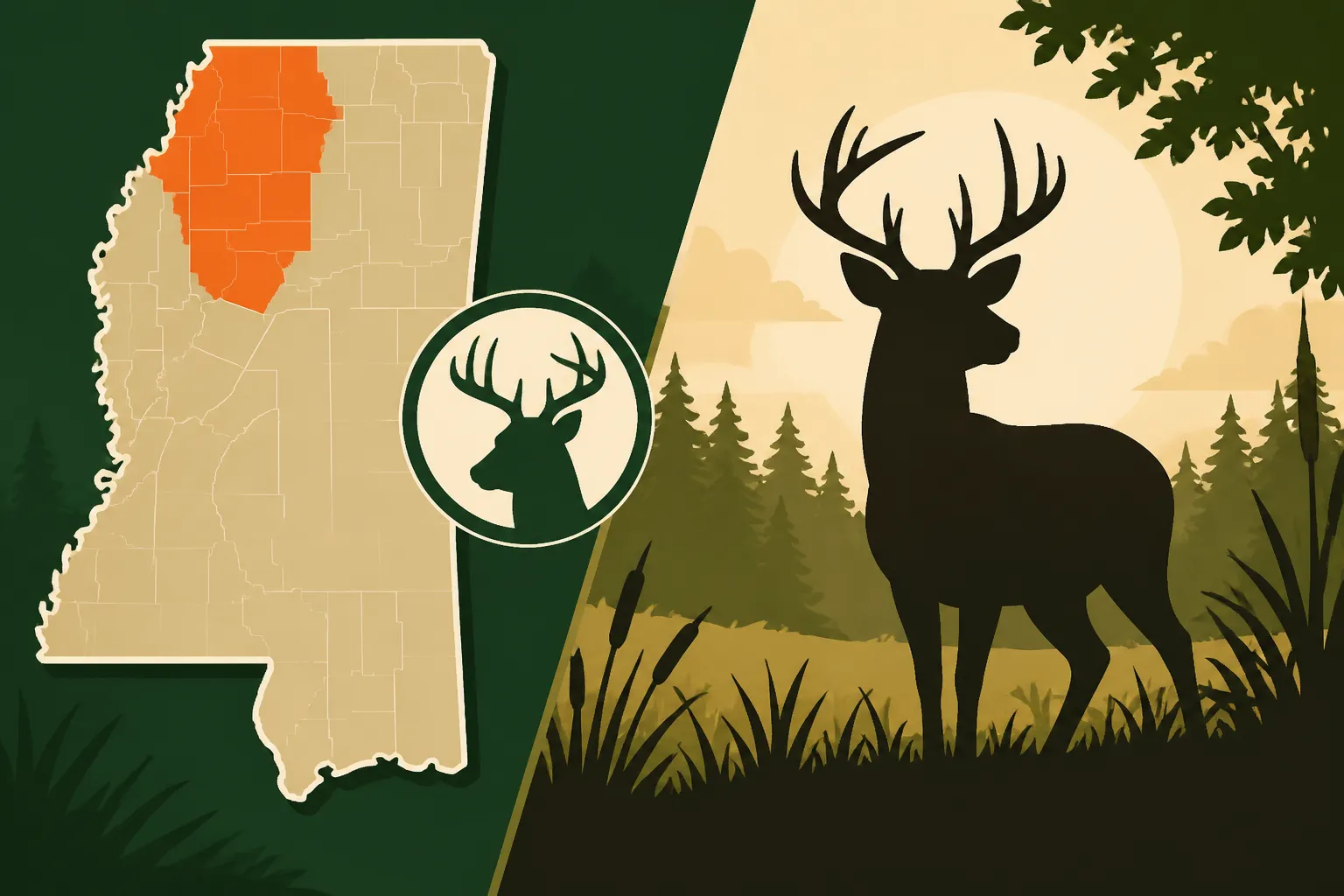
Being a hunter in Mississippi means staying informed, and nowhere is that more crucial than when dealing with Chronic Wasting Disease. DeSoto County is unfortunately part of Mississippi's North CWD Zone, a designation that comes with important responsibilities and changes to how we approach deer hunting. It's not just about the hunt itself anymore; it's about being a steward of the herd and helping manage the spread of this serious disease.
What Being in a CWD Zone Means for Hunters
When a county like DeSoto is declared part of a CWD management zone, it’s not just a casual label. It means the Mississippi Department of Wildlife, Fisheries, and Parks (MDWFP) has detected CWD in the deer population there, and specific rules are put in place to monitor and hopefully mitigate its spread. For hunters, this immediately translates into mandatory testing requirements for harvested deer and strict regulations on how deer carcasses or parts can be moved, both within and out of the zone. You can't just harvest a deer, throw it in the truck, and head home without thinking twice. There are protocols to follow, and it’s critical to understand them before you ever step foot in the woods. This might feel like an extra burden, especially if you're used to simpler times, but it’s a necessary measure for the long-term health of our deer herd. You can learn more about the specific counties affected in Mississippi's North Zone CWD Counties.
The frustration of these added rules is something many Mississippi hunters can relate to. It’s an adjustment, requiring more planning and a shift in mindset. Before, you might have field-dressed your deer, loaded it up, and been on your way. Now, you need to know where the CWD sampling stations are, understand the timelines for submitting samples, and be mindful of where you can and cannot take certain parts of the deer. It adds a layer of logistical complexity that can certainly take some of the spontaneity out of a hunt. However, these steps are vital for collecting data that helps biologists understand the prevalence and distribution of the disease, guiding future management decisions. Compliance isn't just about avoiding a fine; it's about protecting the future of hunting in our state.
Navigating Carcass Movement and Testing Requirements
The rules around carcass movement and testing are probably the most significant changes for hunters in DeSoto County. First and foremost, any deer harvested within the CWD zone must be submitted for CWD testing. This isn't optional; it's a mandatory step. The MDWFP typically sets up designated drop-off locations or works with local taxidermists and processors to collect samples. You need to know these locations and their operating hours before you head out, because dragging a deer around trying to find a testing station after dark isn is not how you want to end a successful hunt. This means some careful planning on your part, perhaps even mapping out your route from your hunting spot to the nearest sampling point.
Beyond testing, there are strict regulations on how you can transport a deer carcass. Generally, only deboned meat, clean skull plates, hides, and taxidermy-ready skulls can leave a CWD zone. Whole carcasses, spinal columns, and other high-risk parts cannot be transported out, or even across, certain county lines. This is designed to prevent the physical spread of the prions that cause CWD. Imagine you harvest a buck and want to take it to your camp in another county outside the zone; you'll need to process it extensively at or near the harvest site, removing the brain and spinal cord, before transport. This requires equipment, knowledge, and time, so it's not a decision to make on the fly. Detailed information on this can be found in resources like Mississippi CWD Testing for Hunters and Mississippi Carcass Movement Restrictions. It truly changes the dynamics of post-harvest handling, so having a plan is paramount.
Public Land Opportunities in DeSoto County
DeSoto County, nestled right below Memphis, Tennessee, is known more for its suburban growth and agricultural fields than vast tracts of untouched wilderness. This means public hunting opportunities are often more limited and different from what you might find in some of our more rural counties. However, "limited" doesn't mean "non-existent," it just means you have to be smarter about finding and utilizing what's available.
Identifying Available Public Hunting Lands
Finding viable public hunting ground in DeSoto County requires a bit more detective work than simply pointing to a national forest on a map. While you won't find expansive national forests within its borders, there might be smaller state-managed areas, certain Wildlife Management Areas (WMAs), or even smaller designated hunting parcels. These smaller tracts can be gems, but they often require diligent scouting and may experience higher hunting pressure due to their accessibility and limited size. It’s not like the wide-open spaces of the Delta National Forest, for sure. Knowing exactly what's available and where is your first step.
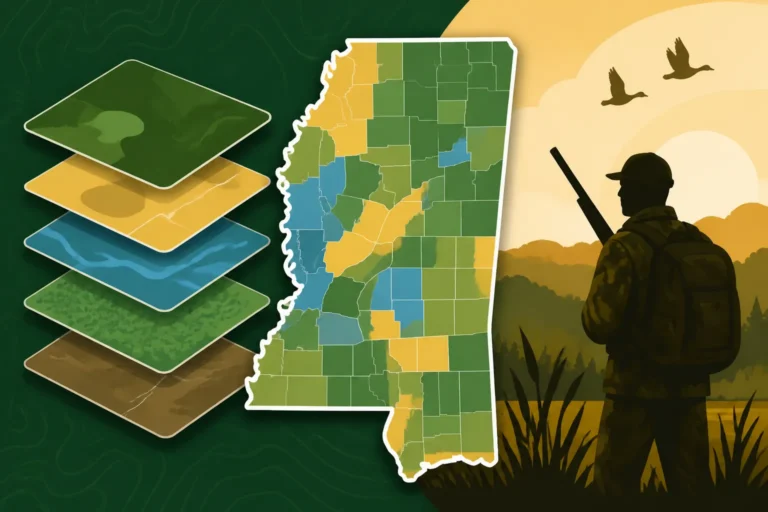
This is where modern technology truly shines. Hunting apps like onX Hunt or GoHunt become indispensable tools. They allow you to overlay property lines, showing you precisely where public land begins and ends, which is crucial in areas with a patchwork of private and public parcels. You can identify potential access points, scout satellite imagery for cover, food sources, and travel corridors, all from your couch. Don't underestimate the power of these tools for uncovering those overlooked corners that other hunters might pass by. The MDWFP also offers invaluable resources, and knowing how to use their Using the MDWFP Map Tool can save you countless hours of scouting. Layering this with commercial apps like onX Hunt, you can often find those slivers of opportunity that make a difference.
Challenges of Hunting Public Ground Near Urban Areas
Hunting public land in a county like DeSoto, which borders a major metropolitan area and has significant development within its own boundaries, comes with a unique set of challenges. The most obvious is hunting pressure. More people means more hunters vying for the same limited spots. This can lead to crowded parking areas, disturbed game, and the need to walk further or hunt harder to find undisturbed animals. It’s not uncommon to hear highway noise or see signs of human activity, which can definitely impact deer behavior. This isn't the tranquil, remote experience some dream of, but it can still be rewarding for the dedicated hunter.
Another significant challenge is simply the size and nature of the public parcels. They might be smaller, irregularly shaped, or fragmented, making it harder for deer to find consistent refuge. This means deer are often more nocturnal or stick to the densest cover. You'll also encounter more residential areas, farms, and roads, which necessitate an even greater focus on safety and being aware of your surroundings and shooting lanes. Developing a strategy for these smaller, often high-pressure zones means understanding how deer use every available piece of cover, no matter how small, and exploiting those overlooked pockets. Sometimes, the most pressured public lands can offer great hunting to the hunter willing to go the extra mile, literally, into areas others bypass.
Strategies for Hunting Deer in DeSoto County's CWD Zone Public Ground
Hunting effectively in a CWD zone, especially on public land that might see considerable pressure, requires a thoughtful and adaptable approach. You can't just rely on old habits; you need to be strategic, thorough, and ready to adjust your plans on the fly. This isn't just about bagging a deer; it's about engaging with the landscape and the regulations in an informed way.
Scouting and Pre-Season Preparation
Before any season opens, your boots (or your digital scouting tools) need to hit the ground. For DeSoto County's public lands, this pre-season legwork is absolutely crucial. Start by studying aerial maps. Look for changes in elevation, natural funnels created by timber edges or creek bottoms, and potential bedding areas in thickets that might offer sanctuary from human intrusion. Identifying these features can help you predict deer movement. Then, compare these findings with actual ground scouting. Are there fresh rubs or scrapes? What kind of forage is available? Are the food sources consistent or sporadic? Even subtle clues can tell a big story about deer activity. You can get a leg up on this process by using resources like Scouting Mississippi Public Land Before Season.
Remember, deer in pressured areas are often incredibly sensitive to human disturbance. Your scouting should be as stealthy as your hunting. Go in during off-peak times, minimize your scent, and observe from a distance. Look for specific food sources that might draw deer, such as acorn flats, persimmon trees, or browse in clear-cuts. Understanding the local food patterns is key. For example, a poor acorn year might mean deer are concentrated more heavily on other browse, making those areas high-priority. By reading the landscape and the subtle signs deer leave behind, you can start to form a picture of their daily routines and identify potential stand locations or still-hunting routes. Tools that help you with Reading Aerial Photos for Hills Unit Deer can be applied even outside the Hills Unit to understand terrain and cover in DeSoto.
Adapting Hunting Tactics for Pressured Areas
When you're hunting public land, especially those smaller tracts in DeSoto County, you're almost guaranteed to encounter other hunters. This means deer are likely to be more wary and less predictable. Your hunting tactics need to adapt. Sitting over a well-worn trail in plain sight might work in less pressured areas, but here, you need to be more subtle and often more aggressive in your approach to finding undisturbed deer. Think about still-hunting very slowly through thick cover, rather than just waiting in a stand. This technique allows you to cover ground quietly, observing and listening, taking advantage of any deer movement you stumble upon.
Consider using a ground blind. They offer excellent concealment, help contain your scent, and can be set up quickly in strategic locations that might not be ideal for a treestand. Brushing in a blind properly can make it practically invisible. However, ensure you understand Using a Ground Blind on Mississippi Public Land rules on public property. Focus on access points that other hunters might overlook, such as crossing a small slough or navigating a patch of briars that deters others. Sometimes, simply walking an extra half-mile beyond where most hunters stop can put you into an entirely different class of undisturbed game. Finding Ground Others Walk Past is often the key to success on pressured public lands.
| Challenge | Public Land Strategy | CWD Zone Consideration |
|---|---|---|
| High Hunter Pressure | Hunt deep, use overlooked access, focus on thick cover, hunt mid-week. | Be mindful of others' CWD compliance; don't assume anything. |
| Wary Deer | Scent control is paramount, still-hunting, ground blinds, patience. | Fewer direct disease impacts on behavior, but general wariness is high. |
| Limited Public Access | Utilize mapping apps (onX Hunt), scout relentlessly, focus on edges. | Check for specific access restrictions related to CWD or local ordinances. |
| Carcass Transport & Testing | Plan logistics before the hunt: know drop-off points, have processing gear. | Essential compliance step; failure to plan can lead to significant issues post-harvest. |
| Noise & Development | Hunt during quiet times (early morning/late evening), adapt to deer patterns. | Not directly CWD related, but part of the DeSoto County context. |
Responsible Hunting and Conservation in a CWD Zone
Hunting in DeSoto County, especially with the shadow of CWD, carries a greater responsibility than ever before. It's not just about exercising your right to hunt; it's about actively participating in the management and conservation efforts that will protect our deer herd for future generations. Our actions in the field directly impact the health of the wildlife and the future of hunting.
Best Practices for Ethical Hunting in a CWD Zone
Ethical hunting always means adhering to all regulations, and in a CWD zone, this takes on an even more critical dimension. For instance, while baiting might be permitted in some areas, it is often discouraged or even prohibited in CWD zones because it can concentrate deer and potentially increase disease transmission. Always check the latest MDWFP regulations for DeSoto County before deploying any attractants. Beyond baiting, focus on clean, ethical kills to prevent unnecessary suffering and to make post-harvest handling easier. A wounded deer that travels far can complicate carcass recovery and testing efforts.
When it comes to field dressing, remember the carcass movement rules. It's often best to field dress at the kill site or a designated cleaning station within the CWD zone. Dispose of high-risk parts (brain, spinal cord, spleen, lymph nodes) properly, ideally in a permitted landfill or by burying them deeply on the property where the deer was harvested, if private land. On public land, follow specific disposal guidelines provided by the MDWFP or land managers. Never leave carcasses or parts exposed where scavengers might spread potential CWD prions. This diligent practice is a cornerstone of being a responsible hunter in a CWD-affected area.
Contributing to CWD Management and Herd Health
As hunters, we are frontline conservationists. In the context of CWD, your active participation in testing is one of the most significant contributions you can make. By submitting your harvested deer for CWD testing, you are providing invaluable data to the MDWFP. This data helps biologists track the disease's prevalence, identify areas where it's spreading, and inform management strategies. Without hunter cooperation, the state's ability to monitor and respond to CWD would be severely limited. It’s a collective effort, and every sample counts. The more data they have, the better equipped they are to make informed decisions. Learn more about Mississippi CWD Prevalence in the North Zone to understand the impact of these efforts.
Beyond testing, simply being observant and reporting any sick or unusually behaving deer can also aid management efforts. While not every sick deer has CWD, reporting such observations allows wildlife officials to investigate and gather more information. Our role as hunters extends beyond the harvest; it encompasses stewardship of the entire ecosystem. By understanding the science behind CWD, diligently following regulations, and actively participating in testing and reporting, we help ensure that Mississippi's deer herd remains healthy and huntable for generations to come. It's a long game, and our commitment today shapes tomorrow's hunting landscape.
Disclaimer
This article is for general informational purposes only and does not constitute professional advice. Laws, prices and regulations vary by location and change over time. Consult a qualified professional for guidance on your specific situation.