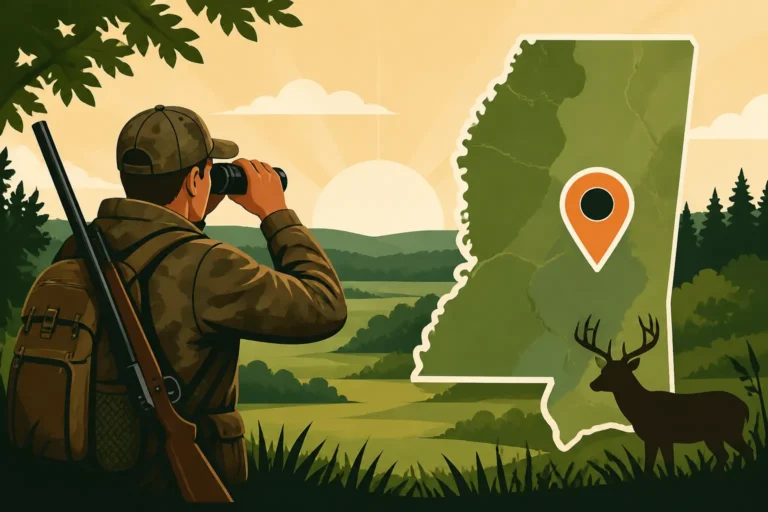
Winston County Public Hunting Ground
Finding quality public hunting ground in Mississippi can feel like a daunting task, especially when you're looking beyond the well-known Delta spots. If you've been yearning for a more rugged, diverse landscape where you can truly connect with the forest, Winston County offers some fantastic, though often overlooked, opportunities. This guide will walk you through what to expect when hunting public land in Winston County, covering everything from the unique terrain to essential regulations and effective hunting strategies.
The Unique Landscape of Winston County Public Hunting Ground
Winston County, nestled in the east-central part of Mississippi, offers a distinctly different hunting experience compared to the sprawling bottomlands of the Delta. This isn't flat, open country; instead, you'll find rolling hills, mixed pine-hardwood forests, and a network of creeks and drains that create varied terrain. It's a place where hunters need to be prepared for some walking, a bit of elevation change, and truly understanding forest dynamics.
Diverse Habitat and Topography
The dominant feature of public hunting in Winston County is its extensive coverage by the Tombigbee National Forest. This national forest is a patchwork of pine plantations, mature hardwood drains, and mixed stands that provide an incredible array of habitat for various game species. You'll encounter dense undergrowth in some areas, particularly in younger pine stands, which offers excellent bedding cover for deer and escape routes for small game. Conversely, the mature hardwoods, especially along creek bottoms, serve as crucial food sources, dropping acorns and other mast that draw in deer and turkeys.
The topography here is characterized by gentle to moderate hills, often cut by small, clear streams. These natural features create funnels, pinch points, and thermal currents that experienced hunters can learn to read. For example, a saddle between two hills might be a natural travel corridor for a buck moving between bedding and feeding areas. Understanding these subtle elevation changes and how they influence animal movement is key to success. Unlike the vast, flat expanses elsewhere, you'll find more opportunities for strategic stand placement that capitalizes on contours and cover. Hunting the Piney Woods Region provides a great overview of these types of areas.
Primary Game Species and Opportunities
Winston County's public lands are primarily known for excellent deer and turkey hunting, alongside abundant small game. Whitetail deer thrive in the mixed forest environment, utilizing the varied cover and food sources. While the sheer size of Delta bucks might not be as common here, Winston County offers consistent opportunities for healthy, mature deer. Hunters can expect to encounter deer that are accustomed to forested environments, often requiring more stealth and patience than those found in agricultural settings.
Wild turkeys are also a major draw, with strong populations throughout the national forest. The mix of open pine forests for strutting and dense hardwood bottoms for roosting provides ideal turkey habitat. Spring turkey season can be fantastic for those willing to put in the legwork and learn the gobblers' patterns. Beyond big game, squirrel and rabbit hunting can be incredibly productive. The abundant hardwoods support healthy squirrel populations, and brushy edges and clear-cuts offer prime rabbit habitat. For those looking for something different, feral hogs are present in some areas, offering a year-round hunting opportunity, though they can be elusive.
Key Public Hunting Areas in Winston County
When we talk about public hunting in Winston County, the conversation overwhelmingly centers around the Tombigbee National Forest. This vast federal land offers the most significant and diverse public hunting opportunities within the county. While smaller, less publicized tracts might exist, Tombigbee is where most hunters will focus their efforts.
Tombigbee National Forest
The Tombigbee National Forest stretches across several counties in east-central Mississippi, with a substantial portion falling within Winston County. It's managed for multiple uses, including timber production, recreation, and wildlife habitat. This management approach directly impacts hunting. You'll find active timber operations, resulting in areas of clear-cuts, regenerating pine plantations, and thinned stands. These areas, while sometimes appearing messy, are often wildlife magnets, providing new food sources and thick cover.
Hunting in the Tombigbee National Forest requires diligence in understanding boundaries. While it's federal land, it's often interspersed with private tracts. Using a reliable mapping app, like onX Hunt, is absolutely essential to stay on public ground and avoid accidental trespass. Tombigbee National Forest Hunting offers a deeper dive into hunting this specific national forest. The terrain varies from relatively flat creek bottoms to steep hillsides, demanding a good pair of boots and a willingness to hike. Don't expect manicured food plots or easy access to every corner; success often comes to those who are willing to go a little further than the average hunter.
Understanding the WMA Landscape
While Tombigbee National Forest is the primary public land, it's important to understand if there are specific Wildlife Management Areas (WMAs) that overlap or are immediately adjacent to Winston County that might also offer unique opportunities or stricter regulations. Some WMAs are actually within national forest boundaries but have their own set of rules. For hunters, it's crucial to check the Mississippi Department of Wildlife, Fisheries, and Parks (MDWFP) website or app for the latest regulations specific to any WMA you intend to hunt. These areas often have different season dates, bag limits, and specific rules regarding ATVs, camping, and even stand placement. Always cross-reference the state-wide general seasons with any WMA-specific rules, as the WMA regulations always supersede general regulations when you're inside its boundaries.
Navigating Regulations and Access for Winston County Public Land
Hunting public land in Mississippi, and specifically in a county like Winston, means you need to be dialed into the regulations. Ignorance of the law is never an excuse, and a simple mistake can lead to fines or worse. It's not just about knowing the season dates; it's about understanding the nuances of public land etiquette and access.
Essential Licenses and Permits
Before you even step foot in the woods, you'll need the proper licenses. For residents, a comprehensive Mississippi Resident Sportsman's License or an All-Game Hunting/Fishing license will cover most of your needs for deer, turkey, and small game. Non-residents have a few options, including annual or 7-day non-resident licenses. Beyond the basic hunting license, anyone hunting a WMA, even if it's within the national forest, will often need an additional WMA permit. Always check the current MDWFP guidelines for what permits are required. For migratory birds like doves or ducks, you'll also need state and federal migratory bird stamps and HIP certification.
It's paramount to carry proof of your license and any required permits with you while afield. While paper copies are always safe, the MDWFP app allows you to display your licenses digitally on your phone, which is incredibly convenient. Just remember that cell service can be spotty in the more remote parts of Winston County, so a screenshot or downloaded version is a good backup.
Leveraging Mapping Tools for Success
Modern hunting has been revolutionized by mapping applications, and they are an absolute necessity for hunting public land in Winston County. Tools like onX Hunt and GoHunt provide invaluable layers that show property boundaries, public land ownership, and even features like logging roads, topography lines, and water sources. These apps are critical for:
- Identifying Public/Private Boundaries: This is arguably the most important function. The Tombigbee National Forest is often a mosaic of public and private land, and without an accurate map, it's easy to inadvertently trespass. These apps clearly mark the lines, helping you stay legal.
- Navigating Without Cell Service: Many of these apps allow you to download maps for offline use. This is a game-changer in areas with poor or no cell reception, ensuring you can still see your location relative to boundaries and features. Using the MDWFP App Without Cell Service is a similar concept worth exploring.
- Scouting and Planning: Before you even leave home, you can use these apps to identify potential access points, analyze topography for funnels and bedding areas, and locate key habitat features.
- Tracking Your Movement: Many apps record your tracks, helping you navigate back to your vehicle in the dark or dense cover, and allowing you to analyze your hunting routes.
Beyond mapping apps, always double-check the MDWFP website for specific WMA rules or any temporary closures. Timber operations, prescribed burns, or other management activities can sometimes lead to temporary area closures.
Understanding WMA and National Forest Specific Rules
While the Tombigbee National Forest falls under federal management, state hunting regulations, including those for general gun or archery seasons, still apply. However, if any part of Winston County's public land is designated as a WMA, there will be an additional layer of rules. These can include:
- Weapon Restrictions: Some WMAs might restrict certain firearms during specific seasons.
- Vehicle Access: Roads may be gated, or ATVs might only be allowed on designated trails.
- Tree Stand Regulations: Many public lands have rules about damaging trees, requiring climbing stands or ladder stands that don't use screw-in steps. Some areas may even restrict leaving stands overnight or for extended periods.
- Hunter Orange Requirements: Always know when Mississippi Blaze Orange Requirements are in effect, particularly during gun seasons.
- Camping: Specific guidelines for camping on National Forest land or within a WMA.
- Deer Reporting: Mississippi has a Mississippi Deer Reporting Requirements system that hunters must adhere to.
It’s your responsibility to review the MDWFP’s current Hunting and Fishing Guide and any specific WMA handouts or online documents before each hunt.
Here’s a simplified overview of typical season dates and bag limits for common game species in Winston County's public lands (always verify current year regulations with MDWFP):
| Game Species | Typical Season Dates (General, Varies by Unit/WMA) | Bag Limit (Daily/Season, Varies) |
|---|---|---|
| White-Tailed Deer | Archery (Oct-Jan), Gun (Nov-Jan), Muzzleloader (Late Nov) | Varies by Unit (e.g., 3 bucks, 5 does total) |
| Wild Turkey | Spring (Mid-March to Early May) | 1 gobbler per day, 3 per season (youth 1) |
| Squirrel | Early Fall – Late Winter | 8 per day |
| Rabbit | Fall – Late Winter | 8 per day |
| Feral Hog | Year-round (private land), Varies by WMA/NF | No limit |
Note: The dates and bag limits above are highly generalized. Always consult the current Mississippi Hunting & Fishing Guide for precise dates, unit-specific rules, and WMA regulations.
Strategic Hunting Approaches for Winston County
Hunting in Winston County is often about adapting to the varied forest environment and understanding how game animals use it. It's a different game than open fields or swampy bottoms, requiring different tactics and a good dose of patience.
Deer Hunting Tactics for the Piney Woods
Deer in Winston County's Tombigbee National Forest are masters of using the available cover. They won't typically be found walking wide-open lanes unless it's during the peak rut. Instead, focus your scouting on:
- Transition Zones: Look for areas where dense pine thickets meet mature hardwoods, or where a clear-cut abuts an older forest. These edges are natural travel corridors and often offer both food and bedding. Bucks will cruise these edges, especially during the breeding season.
- Creek Bottoms and Drains: These low-lying areas often hold richer soil, producing more desirable mast crops (acorns, persimmons) and providing natural travel routes through the terrain. They also offer thermal cover during cold weather.
- Logging Roads and Old Skid Trails: While not always primary travel routes, deer will often use less-traveled logging roads for easy movement, especially if they offer some cover along the edges. Scout for fresh tracks and rub lines along these paths.
- Scouting for Sign: Focus on finding fresh rub lines, scrape lines, and bedding areas. Don't be afraid to walk deep into the woods. Scouting Mississippi Public Land Before Season is crucial for pinpointing these areas. Pay close attention to subtle terrain changes that create natural funnels, such as narrow saddles on ridges or bottlenecks where two drainages converge.
- Stand Placement: Given the hilly terrain and mixed cover, consider both treestands and ground blinds. Treestands offer a wider view and help with scent dispersion, but ground blinds can be extremely effective in dense cover where a deer might walk by at close range. Remember Treestand Rules on Mississippi Public Land to stay legal.
Mississippi's deer season structure often includes archery, muzzleloader, and gun seasons, each with its own set of challenges and opportunities. Understanding how deer react to pressure and weather throughout these seasons is vital. The Mississippi Deer Season Structure Explained gives a great overview.
Turkey Hunting in Winston County's Forests
Spring turkey hunting in Winston County can be rewarding, but it demands persistence. Turkeys here are often a bit more wary due to hunting pressure, and the terrain can make run-and-gun tactics challenging.
- Roosting: Early morning listening is key. Try to locate gobblers on the roost before legal shooting hours. Focus on mature hardwood stands along creek drainages or on high ridges where trees offer good visibility.
- Calling Strategy: Be patient with your calling. Often, less is more. Start with soft tree yelps or fly-down cackles, and then gauge the bird's interest. If he's hot, you can be more aggressive, but if he's hesitant, soft calling and clucking might eventually draw him in.
- Setups: Try to set up with some natural cover behind you, breaking up your silhouette. Look for a large tree or a thick brush pile. When setting up on a gobbler, try to get ahead of him and position yourself between him and a likely strutting or feeding area. Be mindful of potential visual barriers that might keep a gobbler from committing.
- Mid-Day Hunting: Don't give up after the morning fly-down. Turkeys often regroup and become active again later in the day. Many hunters find success by walking logging roads and creek bottoms, stopping to call every few hundred yards. Listen for distant gobblers, hen yelps, or even drumming. Mississippi Spring Turkey Season Rules will guide you on dates and specific regulations.
Small Game and Other Opportunities
Winston County offers excellent opportunities for small game hunters. Squirrels are abundant, especially in mature hardwood bottoms where oaks and hickories drop their nuts. Early morning hunts, especially after a cold night, can be very productive as squirrels move to feed. Still-hunting slowly through these areas, or finding a good spot to sit quietly, often yields results. Squirrel and Small Game Hunting in Mississippi covers the details.
Rabbit hunting is also popular, especially along field edges, clear-cuts, and briar thickets that dot the landscape. A good pack of beagles can turn a rabbit hunt into a truly exciting experience, but even still-hunting or carefully walking up rabbits in dense cover can be productive.
Feral hogs are another target that can be hunted year-round on private land, and often with extended seasons or no limits on public land. While not as concentrated as in the Delta, hogs are present. Scouting for rooting sign, wallows, and tracks near water sources or food plots (if present) is a good starting point. Night hunting hogs with lights is legal in some scenarios on private land, but always check specific WMA or National Forest rules, as public land restrictions can be much stricter regarding night hunting.
Remember, hunting in Winston County's public lands is a deeply rewarding experience for those who appreciate a challenge and the beauty of Mississippi's rolling timber country. It's about putting in the work, understanding the land, and respecting the wildlife.
Disclaimer
This article is for general informational purposes only and does not constitute professional advice. Laws, prices and regulations vary by location and change over time. Consult a qualified professional for guidance on your specific situation.