Hog Hunting Outfitters and Night Hunts
Feral hogs are a relentless problem across Mississippi, causing immense damage to crops, timber, and native wildlife habitats. For many hunters, tackling these destructive animals isn't just a sport, but a necessary act of conservation, yet finding consistent access and employing effective strategies can feel overwhelming. This guide will walk you through the world of hog hunting outfitters and the exciting, often misunderstood, realm of night hunting for feral hogs in Mississippi, helping you navigate the options and make an informed decision for your next hunt.
Why Consider an Outfitter for Mississippi Hog Hunting?
Hunting feral hogs in Mississippi can be incredibly challenging. They're intelligent, elusive, and their populations explode quickly, often leaving hunters feeling like they're fighting a losing battle. This is where a good outfitter often comes into play, providing resources and expertise that are difficult for the average hunter to replicate on their own.
Navigating the Hog Epidemic
Mississippi's landscape, from the rich agricultural fields of the Delta to the dense pine forests and river bottoms, provides ideal habitat for feral hogs. Their numbers are staggering, and they reproduce at an alarming rate, making them a year-round menace. For many landowners and farmers, controlling these animals is paramount, but the sheer scale of the problem can be daunting. As a hunter, you might feel the urge to help, but simply walking into a random patch of woods isn't likely to yield consistent results. You need to understand their movement patterns, preferred food sources, and bedding areas, which often shift with the seasons and agricultural cycles. Hunting Mississippi's Year-Round Feral Hogs dives deeper into this persistent challenge.
An outfitter often has boots on the ground daily, monitoring hog activity, damage, and migration paths. They've invested time and money into understanding the local hog populations, their habits, and how they react to pressure. This intimate knowledge is invaluable, transforming a potentially frustrating wild goose chase into a targeted, effective hunt. They know which fields are being rooted up, which bedding areas hold the most pigs, and how to approach them without spooking the entire sounder. This local expertise is perhaps the most significant advantage an outfitter offers.
Access to Prime Hog Country
One of the biggest hurdles for any hunter, especially those from out of state or without extensive local connections, is gaining access to land where hogs are truly abundant. Feral hogs thrive in areas with plenty of food and cover, which often means private agricultural land, remote river bottoms, or vast timber tracts. Securing permission on these properties can be a multi-year effort of networking and relationship-building. Many of the most heavily infested areas are private, and landowners are often overwhelmed by the damage.
Outfitters have often spent years cultivating relationships with landowners, leasing thousands of acres of prime hog territory. This grants them, and by extension their clients, access to locations that consistently hold large numbers of hogs, often with minimal hunting pressure from others. Imagine hunting a sprawling soybean field at night that's been hammered by hogs for weeks, or slipping into a dense river cane thicket where they've been bedding down during the day. This kind of access is precisely what allows outfitters to offer a higher probability of success, putting you directly in the path of these destructive creatures.
Specialized Gear and Expertise
Feral hog hunting, especially at night or with specific methods, often requires specialized equipment that can be expensive and complex for a casual hunter to acquire and master. Night hunting, for instance, typically involves thermal optics or night vision, powerful lights, and suppressed firearms. Not only is the equipment costly, but learning how to use it effectively in the field under pressure takes practice and experience.
An outfitter provides not just the access but often the necessary gear and the know-how to use it. They'll have high-quality thermal scopes, night vision binoculars, powerful spotlights, and even specialized vehicles for navigating rough terrain at night. More importantly, they provide guides who are expert in using this equipment, can track hogs in the dark, understand their behavior, and position you for the best shot. This saves you the significant upfront investment in gear and reduces the learning curve, allowing you to focus on the thrill of the hunt. This is particularly true for specialized hunts like Thermal-Assisted Hog Guide Packages which require significant equipment.
Understanding Guided Hog Hunt Packages
When you decide to book a guided hog hunt, you'll quickly realize there's a range of options available, each with its own style and potential for adventure. Understanding these differences is key to choosing a hunt that aligns with your expectations and budget.
Types of Guided Hog Hunts
Mississippi outfitters cater to different preferences and hunting styles, so it’s important to know what you’re signing up for. The most common methods you'll encounter are stand hunting over bait, spot-and-stalk, and the high-octane dog drives.
- Baited Stand Hunts: This is a very popular and often highly effective method. Outfitters scout specific areas where hogs are active and establish bait sites, often using corn or other attractants. Hunters then sit in comfortable ground blinds or elevated stands overlooking these sites, typically in the evening or early morning, or under the cover of darkness with appropriate night vision or thermal gear. This method is excellent for those who prefer a more stationary hunt and offers a high success rate, especially when Building and Freshening a Hog Bait Site is done effectively. It's a prime setup for night hunts because hogs are often most active around bait after dark.
- Spot-and-Stalk: This method involves actively seeking out hogs, often by covering large tracts of land, either on foot, from a vehicle, or sometimes even from an airboat in marshy areas. Guides will use binoculars, spotting scopes, and increasingly, thermal optics to locate groups of hogs in fields, along treelines, or in dense cover. Once spotted, the stalk begins, demanding stealth, patience, and good wind awareness. This is a more active and physically demanding hunt, but it can be incredibly rewarding as you match wits with these cunning animals. It's also fantastic for daylight hunting or when using thermal gear at night across open fields.
- Dog-Drive Hog Hunts: For a truly exhilarating and traditional Southern hog hunting experience, dog drives are hard to beat. This involves a team of highly trained dogs – often bay dogs and catch dogs – working with handlers to locate, corner, or "bay" hogs in thick cover. Once the dogs have a hog bayed, hunters move in, often with knives or spears for a close-quarters kill, though firearms are also used. This is an incredibly physical and intense hunt, not for the faint of heart, but it offers a unique thrill and often yields multiple hogs. Running Dogs on Mississippi Feral Hogs is a deep dive into this particular method. When booking, ask about the specific breed and training of the dogs, as well as the outfitter's preferred method of dispatch.
What to Expect from an Outfitter
When you book with a Mississippi hog hunting outfitter, you're not just paying for a chance to shoot a hog; you're investing in an experience, a service that bundles access, expertise, and equipment.
Typically, an outfitter will provide a professional guide who knows the hunting area like the back of their hand. This guide will often be responsible for transport to and from hunting locations, explaining the day's plan, identifying target animals, and ensuring your safety. They'll have pre-scouted areas, possibly with trail cameras, to maximize your chances. On a night hunt, they'll often provide the thermal or night vision equipment and instruct you on its use, helping you scan for heat signatures and make accurate shots in the dark.
Beyond the hunt itself, many outfitters offer additional services. This might include basic field dressing of harvested hogs, assistance with recovering animals, and transportation of carcasses. Some larger lodges will also offer meals and lodging as part of an all-inclusive package, turning your hunt into a full-service retreat. It's always best to clarify exactly what's included when you book, as "all-inclusive" can mean different things to different operations. Will they help quarter your hog? Do they have walk-in coolers? These are details worth asking about upfront.
Planning for Costs and Logistics
Guided hog hunts can vary widely in price depending on the duration, the services included, the hunting method, and the reputation of the outfitter. A single-day, basic hunt might be one price, while a multi-day package with lodging, meals, and specialized night hunting gear will naturally cost more. It’s crucial to get a detailed quote that outlines everything included and any potential extra fees.
- Deposits and Payment: Expect to pay a deposit upfront to secure your booking. Cancellation policies vary, so understand them clearly before committing. Many outfitters will ask for final payment upon arrival or before the hunt begins.
- Licenses and Permits: While hunting feral hogs on private land in Mississippi often doesn't require a traditional hunting license if you're a resident landowner or have permission, if you're a non-resident or hunting on specific public lands (which isn't typically where outfitters operate, but always good to know), you'll need the appropriate Mississippi Hunting Licenses and What They Cost. Always confirm this with your outfitter, as regulations can sometimes be nuanced.
- Tipping: Guides work hard to ensure you have a successful and enjoyable trip. Tipping your guide is customary and appreciated, typically based on the quality of the experience and their effort. A general range might be 15-20% of the hunt cost, but always tip what you feel is appropriate for the service received.
- Travel and Accommodation: If lodging isn't included, factor in the cost of hotels or cabins. Consider travel time and arrangements, especially if you're coming from out of state. Many outfitters operate in rural areas, so plan for appropriate vehicle access.
The Thrill and Strategy of Night Hunting for Hogs
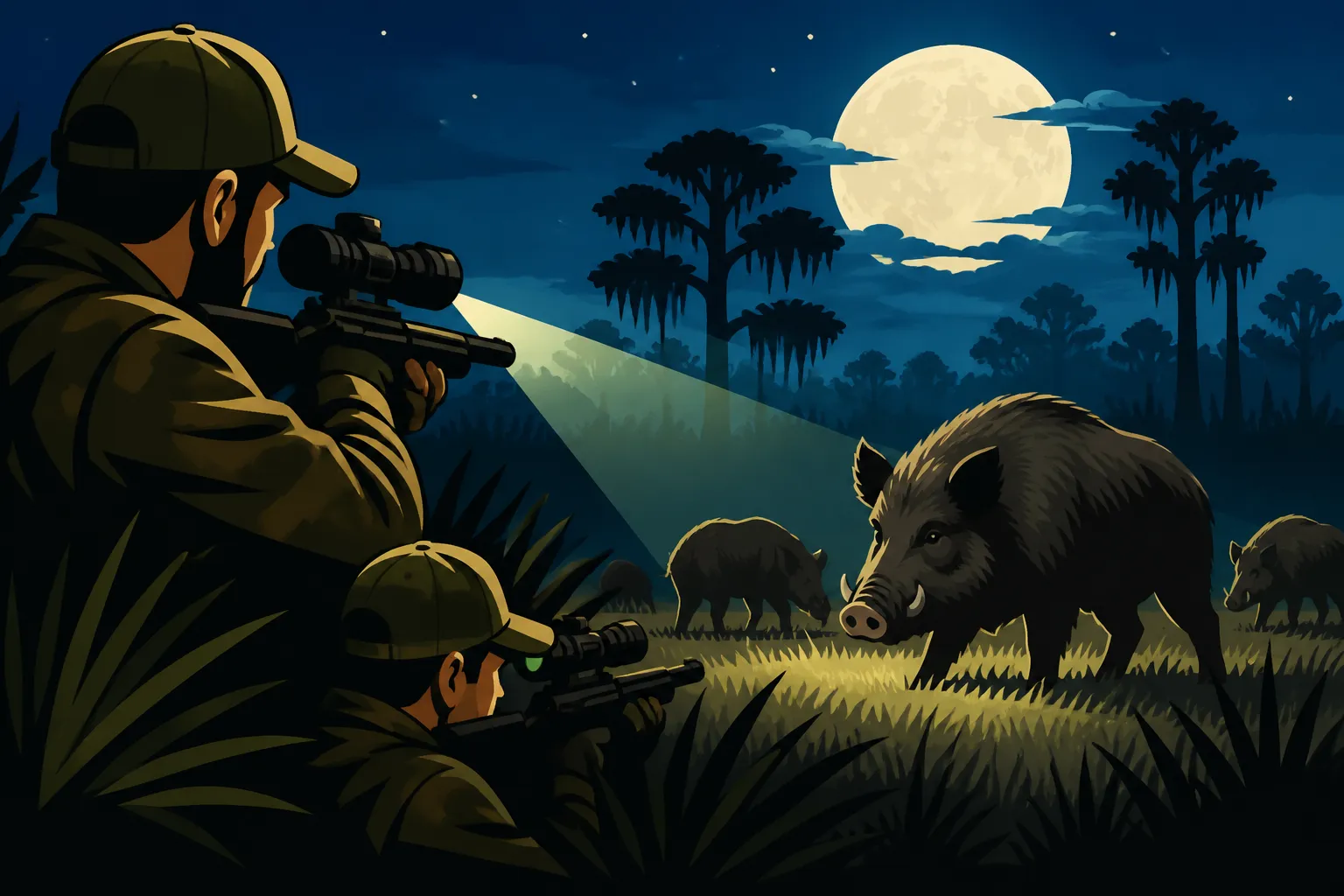
Night hunting for feral hogs is a rapidly growing segment of the hunting world, offering a unique set of challenges and an unparalleled adrenaline rush. It's also incredibly effective, leveraging the nocturnal habits of these cunning animals.
Why Hunt Hogs at Night?
The primary reason to hunt hogs at night is simple: that's often when they're most active. In many parts of Mississippi, especially during warmer months or in areas with high daytime pressure from humans, feral hogs become almost exclusively nocturnal. They'll bed down in dense cover during the day, only emerging under the cover of darkness to feed in fields, root up pastures, and travel.
Hunting at night allows you to exploit this behavior. Instead of trying to bust through thickets hoping to jump a hog during the day, you can catch them out in the open, often in agricultural fields, making them more vulnerable. The cool night air also provides a more comfortable hunting experience for both hunter and guide, especially during Mississippi's long, hot spring, summer, and fall. The added challenge of limited visibility, relying on specialized optics, and the sudden appearance of a dark silhouette adds an entirely new dimension to the hunt, making it incredibly exciting. Plus, for landowners, it's often the only effective way to protect crops from constant nighttime damage.
Essential Gear for Night Hunts
Night hunting is not like daylight hunting; it demands specific equipment. If you're going with an outfitter, they will likely provide the high-end gear, but it's good to understand what you'll be using.
- Thermal Optics: These are the game-changers for night hog hunting. Thermal imagers detect heat signatures, allowing you to "see" hogs (and other animals) clearly in absolute darkness, fog, or even light cover that would render night vision useless. They come in various forms: binoculars for scanning, monoculars for handheld use, and scopes that mount directly to your rifle. High-quality thermal scopes provide incredible clarity and range, but they come with a significant price tag. Your outfitter will often supply a quality unit.
- Night Vision Devices (NVDs): While thermal sees heat, night vision amplifies ambient light (starlight, moonlight) to create a green-tinted image. NVDs are excellent for navigation and identifying specific features once a heat signature is located. Some hunters prefer a combination, using thermal for detection and NVD for identification.
- Night Hunting Lights: Although thermal and night vision are primary tools, powerful spotlights (often with red or green filters that hogs struggle to see as well as white light) are still essential, especially for recovery or confirming a shot. Night Hog Hunting Light Rules in Mississippi details specific legal requirements, so it's vital to be aware of what's allowed. Some setups integrate lights directly into the optic system.
- Suppressors: While not mandatory, suppressors are a huge asset for night hunting. They reduce muzzle blast, protecting your hearing and, more importantly, reducing the disturbance to other hogs in the sounder. Often, you can take multiple hogs from a single group if the first shot is suppressed, as the animals struggle to pinpoint the source of the noise. If your outfitter offers suppressed rifles, take advantage of it.
- Appropriate Clothing: Dark clothing is essential, of course, but also consider layers. Even if it's warm during the day, Mississippi nights can get cool, especially in open fields. Durable, quiet fabrics are always a plus.
Night Hunting Tactics and Safety
Night hunting introduces unique tactical considerations and heightened safety protocols. Your outfitter will guide you through these, but being prepared makes a difference.
- Slow and Deliberate Movement: In the dark, every sound is amplified. Hogs have incredible hearing and a keen sense of smell. Movement should be slow, deliberate, and quiet. If approaching a bait site, always ensure the wind is in your favor.
- Teamwork with Your Guide: Your guide is your eyes and ears in the dark. They'll be scanning constantly with their optics, communicating hog locations, distances, and shot angles. Trust their judgment and follow their instructions precisely. They might be spotting with a handheld thermal while you're on the rifle with a scope, working in tandem.
- Shot Placement: Identifying vital areas can be trickier through thermal or night vision. Your guide will often help confirm the target. Aim for the ear, the base of the ear, or the shoulder to ensure a clean kill. Shot Placement on a Feral Hog remains critical.
- Recovery Challenges: Tracking a wounded hog at night, even with thermal, can be difficult. It's often best to wait a short period if the shot isn't immediately fatal, but sometimes immediate pursuit is necessary to prevent loss. Powerful lights are crucial here, and good communication with your guide is paramount. Blood Trailing After Dark in Mississippi emphasizes the importance of a plan.
- Safety First: The dark can disguise hazards. Uneven terrain, holes, fences, and venomous snakes are all more dangerous at night. Always keep your firearm pointed in a safe direction, be absolutely certain of your target and what is beyond it, and never separate from your guide without a clear plan.
Vetting Potential Outfitters and Booking Your Hunt
Choosing the right outfitter is paramount for a successful and enjoyable hog hunt. Not all operations are created equal, and doing your homework is crucial. Websites like BookYourHunt and GoHunt can be great resources for finding outfitters, but direct vetting is key.
Researching Reputable Outfitters
Start your search by looking for outfitters with a strong online presence and positive reviews. A simple web search for "Mississippi hog hunting outfitter" will yield several results. Look for outfitters that specialize in hog hunting or have dedicated hog hunting packages, as this suggests a deeper understanding of the animal and specific land access.
- Online Reviews and Testimonials: Check Google Reviews, Facebook pages, and hunting forums. Look for consistent themes in positive reviews (e.g., knowledgeable guides, abundant hogs, good facilities) and pay close attention to how any negative feedback is addressed. Websites like BookYourHunt often feature client reviews, which can be a valuable starting point.
- Photos and Videos: Reputable outfitters will showcase their operations, success photos, and even videos of their hunts. Look for authentic content, not just generic stock photos. Are the hogs they're showing consistent with what you're hoping to hunt? Do the facilities look well-maintained?
- Years in Business: An outfitter with many years of experience in the same location is often a good sign of reliability and established relationships with landowners.
- Licensing and Insurance: While Mississippi doesn't have a specific "hog guide" license, ensure they operate legally and carry appropriate liability insurance. This protects both you and the outfitter in case of an unforeseen incident. Don't hesitate to ask about their insurance policy.
Key Questions to Ask Before Booking
Once you've narrowed down your choices, prepare a list of specific questions to ask each outfitter. Don't be shy; a good outfitter will be happy to answer your concerns.
- What is the typical success rate for hog hunts? Be realistic. No outfitter can guarantee a kill, but they should be able to give you an honest appraisal of client success.
- What hunting methods do you primarily use for hogs (baited stands, spot-and-stalk, dog drives, night hunting)? This helps confirm the style of hunt.
- What kind of terrain will we be hunting? Understanding if it's open fields, dense timber, or swampy bottomland helps you prepare physically and with appropriate clothing.
- What's included in the package price? Be specific: guide, transportation to hunting areas, meals, lodging, field dressing, equipment (especially thermal/night vision for night hunts), ammunition. What are the not included costs (license, tips, taxidermy, meat processing)?
- What are your policies for wounded animals? A responsible outfitter will have a clear policy for recovering wounded game, even if it means searching into the next day.
- What is your hog limit? Is it per day or per trip? Some outfitters offer "all you can shoot" while others have limits to manage their populations and ensure everyone gets an opportunity.
- What is your refund or rescheduling policy if weather or other unforeseen circumstances disrupt the hunt? This is particularly important for weather-dependent hunts, like those after heavy rains.
- Can you provide references from past clients? Speaking directly with previous hunters can offer invaluable insights into the outfitter's operation. Websites like GoHunt might have community forums where you can ask for references.
- What is the nearest town for supplies or emergencies? Good to know for planning.
Common Red Flags to Watch For
While most outfitters are legitimate, some might overpromise or underdeliver. Be aware of these warning signs:
- Vague Answers to Specific Questions: If an outfitter is evasive about prices, success rates, or what's included, proceed with caution.
- Demanding Full Payment Upfront with No Deposit Option: A reputable outfitter will typically take a deposit to hold your spot, with the remainder due closer to the hunt.
- No Online Presence or Bad Reviews: In today's digital age, a legitimate business will have some online footprint. A complete lack of reviews or a slew of consistently negative ones is a major red flag.
- Unrealistic Promises: If an outfitter guarantees a "trophy hog" or promises impossibly high numbers of animals, be skeptical. Hunting is never a guarantee.
- Lack of Proper Documentation or Insurance: As mentioned, asking about insurance and legal operation is important. If they brush it off, reconsider.
- Difficulty Communicating: If it's hard to get a hold of them, or they don't return calls or emails promptly, imagine what communication will be like if an issue arises during your hunt.
Mississippi Regulations and Best Practices for Hog Hunters
Mississippi's approach to feral hogs reflects the severity of the problem: they want them gone. Understanding the regulations and employing best practices ensures a legal, ethical, and effective hunt.
State Laws for Feral Hog Hunting
The good news for hog hunters in Mississippi is that the regulations are generally very permissive, reflecting the state's aggressive stance on controlling these invasive pests.
- Year-Round Hunting: On private lands, feral hogs can be hunted year-round, day or night, with no closed season or bag limits. This offers incredible flexibility for scheduling a hunt. This is the core of Mississippi's Year-Round Hog Rule on Private Land.
- No License Required (Private Land): If you are a resident landowner, a member of their immediate family, or have landowner permission to hunt on private land, you generally do not need a hunting license to harvest feral hogs. However, non-residents will need a hunting license. Always confirm the latest requirements with the MDWFP or your outfitter to be safe.
- Night Hunting and Lights: Night hunting for hogs on private land is legal. There are specific rules regarding the use of artificial lights, which generally allow for lights that are carried on your person, attached to a firearm, or attached to a vehicle. This is specifically outlined in Night Hog Hunting Light Rules in Mississippi. However, always ensure your setup complies with current regulations.
- Trapping: In addition to hunting, trapping is another highly effective method for controlling hog populations, and Mississippi has very flexible Mississippi Feral Hog Trapping Rules to facilitate this. While not directly "hunting," outfitters may combine trapping with hunting efforts.
- Public Land Rules: While most guided hunts occur on private land, it's worth noting that public lands like Wildlife Management Areas (WMAs) may have specific seasons, methods, and restrictions for hog hunting that differ from private land. Always check WMA regulations if you plan to hunt public ground.
Ethical Considerations and Carcass Handling
Even though feral hogs are an invasive species, ethical hunting practices are still paramount. This means striving for clean, quick kills and responsible handling of harvested animals.
- Clean Kills: Always aim for a vital area to ensure a humane dispatch. Shot placement on a feral hog, especially at night, is crucial to minimize suffering and prevent a wounded animal from escaping. Your guide will assist you in making the best shot possible.
- Carcass Disposal: After the hunt, especially if you harvest multiple hogs, you'll need a plan for carcass disposal. If you're not keeping the meat, the outfitter will typically handle this. Responsible disposal prevents the spread of disease and avoids attracting other scavengers to unwanted areas. Often, this involves burying the carcasses or placing them in designated areas away from human habitation and water sources. Handling a Hog After the Shot also covers initial field dressing.
- Meat Utilization: Feral hog meat is excellent table fare, lean and flavorful. Don't let it go to waste! Many hunters field dress their hogs and take the meat to a processor. Your outfitter can often recommend local processors. If you're concerned about trichinosis or other parasites, ensure the meat is cooked thoroughly to safe internal temperatures.
Maximizing Your Chances on a Guided Hunt
Even with an excellent outfitter, your preparation and approach can significantly impact your success.
- Communicate Clearly: Don't hesitate to communicate your expectations, physical capabilities, and any questions you have with your guide before and during the hunt.
- Practice Your Shooting: Practice shooting from various positions, especially in low light conditions if you'll be using a spotlight, or with your chosen rifle if it's different from your usual setup. If the outfitter provides a rifle with thermal, ask if you can practice a few shots to get comfortable with it before the actual hunt.
- Dress Appropriately: Mississippi weather can be unpredictable. Layered clothing is always a good idea, as are comfortable, durable boots. Remember, even summer nights can get chilly, and you might be walking through dew-laden fields.
- Be Patient and Alert: Hunting, especially at night, requires patience. Hogs can appear suddenly. Remain quiet, vigilant, and ready when your guide signals.
- Listen to Your Guide: Your guide knows the land, the hogs, and the equipment. Trust their experience and follow their instructions. They are there to put you in the best position for a successful hunt.
Hunting feral hogs in Mississippi, particularly with a knowledgeable outfitter and the exciting dimension of a night hunt, offers a truly unique and impactful outdoor experience. Not only is it a thrilling challenge, but you'll also be contributing to the critical effort of controlling an invasive species that poses a significant threat to Mississippi's natural resources and agricultural economy. Choose wisely, prepare thoroughly, and get ready for an unforgettable adventure under the Southern stars.
Disclaimer
This article is for general informational purposes only and does not constitute professional advice. Laws, prices and regulations vary by location and change over time. Consult a qualified professional for guidance on your specific situation.