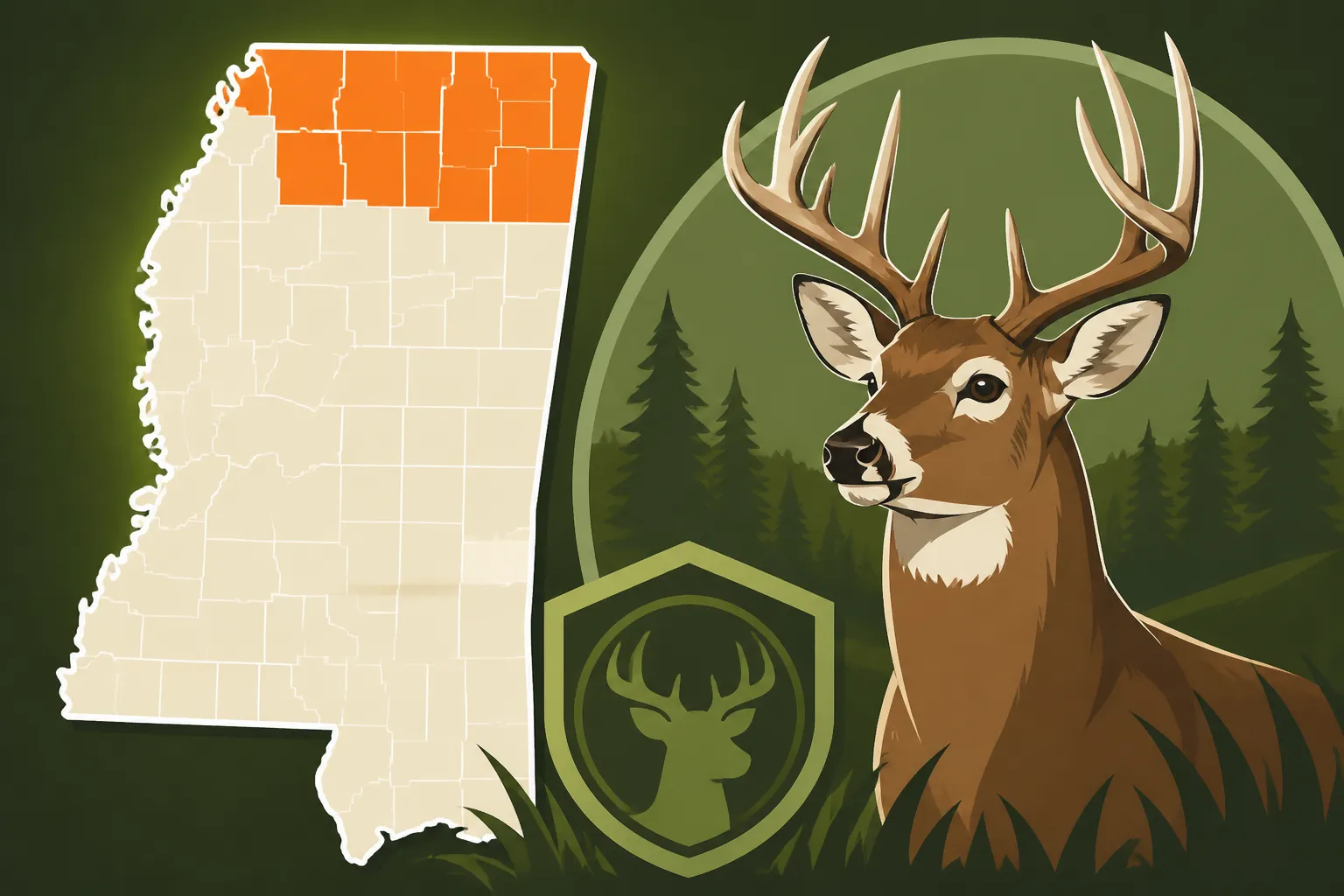
Which Eleven Counties Sit in the North CWD Zone
It's no secret that the presence of Chronic Wasting Disease (CWD) has added a whole new layer of complexity to hunting in Mississippi. Trying to keep up with which counties are in a CWD zone, what the specific rules are for each, and how that impacts your hunt can be downright confusing and, frankly, a bit stressful. This guide aims to clear up some of that confusion, specifically focusing on the eleven counties that form the core of Mississippi's North CWD Zone, outlining the necessary regulations, and offering practical advice for hunters navigating these challenging but still vibrant hunting grounds.
Navigating the Landscape of Chronic Wasting Disease in Mississippi
The conversation around CWD can be heavy, but it's a reality we hunters must face head-on to protect our deer herds and preserve our hunting heritage. Understanding the disease and how our state wildlife agency is addressing it is the first step toward responsible hunting in affected areas.
The Stark Reality of CWD and Its Management
Chronic Wasting Disease is a nasty neurological disease that affects deer, elk, and moose. It's caused by abnormal proteins called prions that slowly degrade the animal's brain, leading to emaciation, abnormal behavior, and ultimately, death. What makes CWD particularly insidious is its ability to persist in the environment for years, making it incredibly difficult to contain once established. It's not just a deer problem; it's a profound concern for the long-term health of our wildlife populations and the traditions we hold dear. The Mississippi Department of Wildlife, Fisheries, and Parks (MDWFP) is working tirelessly, utilizing scientific data and implementing strict protocols to monitor and mitigate its spread, often under challenging circumstances. We, as hunters, are vital partners in this effort, and our cooperation makes all the difference.
Delineating Mississippi's CWD Zones
Mississippi has, unfortunately, seen CWD spread to various parts of the state since its initial detection. To combat this, the MDWFP has established specific CWD Management Zones. These aren't arbitrary lines on a map; they are strategic boundaries drawn based on confirmed CWD cases, surveillance data, and geographical factors to help contain the disease. While the zones can evolve as new information becomes available, the primary goal is consistent: to prevent further spread, monitor herd health, and manage deer populations within affected areas. Beyond the North CWD Zone, you'll also find the Warren/Claiborne CWD Management Zone and the Hancock CWD Management Zone, each with its own set of rules tailored to local conditions. Understanding these zones is paramount for any hunter stepping into the woods. You can read more about Mississippi's Chronic Wasting Disease Zones to get a broader perspective on the statewide situation. The way How CWD Spread Across North Mississippi offers a sobering look at the disease's movement through our landscapes.
Pinpointing the North CWD Zone's Eleven Counties
When CWD first reared its head in Mississippi, particularly in the northern part of the state, it sparked a flurry of concern and new regulations. While the full North CWD Management Zone has expanded over time to include more counties based on ongoing surveillance, there was a crucial period where a specific cluster of eleven counties formed its defined boundary, representing the core area where enhanced monitoring and management were first implemented. It's a testament to the ongoing battle that these areas continue to be focal points.
Identifying Each Affected County
These eleven counties represent a significant portion of the northern Mississippi landscape, each contributing to the unique challenges and opportunities for deer hunting in the region. They are:
- Alcorn County: Located in the far northeast corner, bordering Tennessee, Alcorn County is characterized by rolling hills and mixed forests, popular for deer and turkey hunting.
- Benton County: Situated just west of Alcorn, also along the Tennessee border, Benton County's diverse terrain of timber and agricultural lands provides prime deer habitat.
- DeSoto County: As one of the most populated counties in the state, directly south of Memphis, DeSoto County still offers significant hunting opportunities, particularly in its eastern and southern reaches, despite suburban sprawl.
- Lafayette County: Home to Oxford and the University of Mississippi, Lafayette County blends urban growth with vast tracts of timber and agricultural fields, making it a critical area for CWD monitoring.
- Marshall County: Located directly south of the Tennessee border, Marshall County is a mix of hardwood bottoms, pine plantations, and agricultural land, offering diverse hunting experiences.
- Panola County: Stretching south from the DeSoto line, Panola County covers a large area with a variety of habitats, including portions of the Holly Springs National Forest.
- Pontotoc County: Significantly, Pontotoc County was the site of Mississippi's first confirmed CWD positive deer in 2018, making it a pivotal point in the state's CWD management efforts. Its landscape is a mix of farmlands and wooded areas.
- Prentiss County: East of Union and south of Alcorn, Prentiss County is another northeastern gem with good deer numbers and diverse habitat.
- Quitman County: Nestled in the Delta, Quitman County's bottomland hardwoods and agricultural fields are crucial for waterfowl but also hold a strong deer population.
- Tate County: Just south of DeSoto, Tate County mirrors many of the landscape characteristics of its northern neighbor, with a blend of timber and agricultural operations.
- Union County: Located centrally in the northern part of the state, Union County offers a mix of hills and agricultural river bottoms, providing varied deer habitat.
These counties are where the MDWFP has concentrated its efforts, conducting extensive surveillance and research to understand the disease's progression. It's worth noting that the actual CWD prevalence can vary even within these counties, but the designation ensures a unified approach to management. You can often find detailed breakdowns of Mississippi's CWD Case Count by Zone which help illustrate the severity and distribution of the disease within these areas.
The Geographic and Ecological Impact
The topography and land use across these northern Mississippi counties are incredibly diverse, and this diversity plays a critical role in how CWD can spread and how it's managed. In the westernmost counties like DeSoto, Tate, and Panola, you find a mix of development near the Memphis metropolitan area giving way to agricultural fields and significant timber blocks. Deer here might travel along river corridors or through fragmented patches of woods, bringing them into contact with different populations. Further east, in counties like Lafayette, Pontotoc, and Union, the landscape shifts to more rolling hills, interspersed with productive farmlands and a higher density of pine and hardwood forests.
This mosaic of habitats, from dense river bottomlands to upland pine plantations, means deer movement patterns can vary significantly. River systems, for example, can act as natural highways for deer, potentially aiding in the spread of prions through water sources or shared foraging grounds. Agricultural practices can also concentrate deer, especially during certain times of the year when they flock to food sources like corn and soybeans. The challenges here are immense because the disease doesn't respect county lines or habitat types. The MDWFP must consider all these factors when implementing their management strategies, like targeted removals or increased testing efforts, making the local community's understanding and participation absolutely crucial. Hunters in these areas understand that the game is changing, and staying informed is part of the responsibility. Recent data on Mississippi CWD Prevalence in the North Zone highlights the ongoing nature of this battle.
Navigating the Hunting Season in CWD-Affected Areas
Hunting in a CWD zone adds specific responsibilities and adjustments to your routine. It's not just about following the law; it's about being a conscientious hunter and doing your part to protect the future of Mississippi's deer herd.
Mandatory Testing and Carcass Regulations
One of the most significant changes for hunters in the North CWD Zone is the requirement for mandatory testing. During specific timeframes, often opening weekend of gun season, hunters harvesting deer in designated counties must submit their deer for CWD testing at an MDWFP sampling station. This might sound like a hassle, but it's arguably the single most important tool we have for tracking the disease and understanding its spread. You'll usually find MDWFP personnel at check stations, ready to collect samples and answer questions. The information gathered from these mandatory tests guides future management decisions.
Beyond testing, strict regulations are in place regarding carcass movement. You generally cannot transport whole deer carcasses harvested in a CWD zone out of that zone. This is to prevent the inadvertent spread of prions to unaffected areas. Typically, you can only move deboned meat, clean antlers, hides, or skull plates with no brain matter attached. This means field dressing and processing procedures often need to be adapted. It’s a change from the old ways, but it’s a necessary one. Make sure you're crystal clear on the rules before you head afield; penalties for non-compliance can be stiff. For comprehensive details, you should definitely review the guidelines on Mississippi CWD Testing for Hunters, the rules around Mandatory Testing Inside a Mississippi CWD Zone, and critically, Carcass Movement Restrictions and Moving a Deer Carcass Out of a CWD Zone.
Here's a quick overview of the eleven core counties of the North CWD Zone and key regulations:
| County Name | General Location | Initial CWD Detection (Approx.) | Mandatory Testing Seasons | Carcass Movement Restriction |
|---|---|---|---|---|
| Alcorn | Northeast Mississippi | Post-2018 | Yes (Designated Dates) | Yes, out of Zone |
| Benton | Northwest Mississippi | Post-2018 | Yes (Designated Dates) | Yes, out of Zone |
| DeSoto | Northwest Mississippi | Post-2018 | Yes (Designated Dates) | Yes, out of Zone |
| Lafayette | North Central Mississippi | 2018 | Yes (Designated Dates) | Yes, out of Zone |
| Marshall | Northwest Mississippi | Post-2018 | Yes (Designated Dates) | Yes, out of Zone |
| Panola | Northwest Mississippi | Post-2018 | Yes (Designated Dates) | Yes, out of Zone |
| Pontotoc | North Central Mississippi | 2018 (First Case) | Yes (Designated Dates) | Yes, out of Zone |
| Prentiss | Northeast Mississippi | Post-2018 | Yes (Designated Dates) | Yes, out of Zone |
| Quitman | Northwest Mississippi | Post-2018 | Yes (Designated Dates) | Yes, out of Zone |
| Tate | Northwest Mississippi | Post-2018 | Yes (Designated Dates) | Yes, out of Zone |
| Union | North Central Mississippi | Post-2018 | Yes (Designated Dates) | Yes, out of Zone |
Note: "Mandatory Testing Seasons" refers to specific weekends or periods designated by MDWFP, typically at the start of gun season. Always check the latest MDWFP regulations for exact dates and locations.
Practical Hunting Adjustments for the North Zone Hunter
Hunting in a CWD zone requires a few smart adjustments to your normal routine. First and foremost, always, and I mean always, check the latest MDWFP regulations before you head into the field. These rules can change from season to season as biologists gather more data. Websites and mobile apps like GoHunt are invaluable tools for staying current on land boundaries, regulations, and even locating CWD sampling stations. You want to make sure you're up-to-date.
When you're out there, pay extra attention to deer behavior. While CWD symptoms can be subtle early on, deer exhibiting neurological signs – extreme emaciation, drooling, lack of fear of humans, or stumbling – should be reported to the MDWFP immediately. Do not harvest these animals unless instructed by MDWFP. Additionally, consider your field dressing practices. If you're planning to take your deer to a processor, make sure they are aware it came from a CWD zone and understand the carcass handling protocols. Many hunters opt to debone their deer in the field to comply with transport regulations. Knowing where to find a Mississippi CWD Sampling Location is also crucial for compliance. Even your scouting might need adjustment, perhaps using tools like Scouting With the MDWFP App to identify potential areas of concern or designated public lands that might have different rules. After the harvest, you'll need to remember Mississippi Deer Reporting Requirements and how to effectively be Checking a Mississippi Deer Harvest Online. It's a team effort to manage this disease, and every hunter's responsible actions contribute to the greater good of the herd.
Disclaimer
The information provided in this guide is for general informational purposes only and does not constitute legal advice. Hunting regulations, CWD zones, and associated rules are subject to change by the Mississippi Department of Wildlife, Fisheries, and Parks (MDWFP). Hunters are solely responsible for knowing and abiding by all current laws and regulations. Always consult the official MDWFP website or their official publications for the most up-to-date and accurate information before participating in any hunting activity.