Mississippi Opossum and Skunk Trapping
Nothing can be quite as frustrating as waking up to your trash cans ransacked, garden dug up, or worse, that unmistakable musky odor wafting from under your porch. Dealing with nuisance wildlife like opossums and skunks is a common headache for many Mississippi homeowners and rural residents, and it can feel like a losing battle if you don't know where to start. This guide is here to walk you through the practical, legal, and humane steps for trapping these common critters, helping you reclaim your space without unnecessary stress.
Understanding Opossums and Skunks in Mississippi
Before you even think about setting a trap, it's really helpful to understand a bit about the animals you're dealing with. Opossums and skunks, while both common nocturnal visitors, have distinct behaviors and characteristics that influence how you approach their management. Knowing their habits can save you a lot of time and frustration. For a broader look at the state's diverse wildlife, you might want to check out Mississippi Small Game and Furbearers.
Why They're a Nuisance
Let's be real, no one enjoys finding a torn-up garbage bag on their front lawn or catching a whiff of skunk spray near their pet's water bowl. Opossums and skunks are often labeled as nuisances for very good reasons.
Opossums, with their adaptable diets, are notorious for raiding trash cans, pet food bowls left outdoors, and even compost piles. They're opportunistic omnivores, meaning they'll eat just about anything, which makes our homes and yards prime targets for their nightly foraging. While generally not aggressive, they can sometimes carry diseases, and their presence can attract other predators. You might find your garden newly excavated for grubs, your bird feeder cleaned out, or even damage to foundations as they seek shelter.
Skunks, on the other hand, bring their own unique set of problems, primarily that unforgettable, pungent spray. While they're generally shy and prefer to avoid confrontation, a surprised skunk or one feeling cornered will not hesitate to deploy its potent defense mechanism. This can be devastating for pets, frustrating for property owners, and can linger in the air (and on fabrics!) for days. Skunks are also adept diggers, often creating burrows under sheds, decks, and even foundations, which can compromise structures and create unsightly holes in your lawn as they hunt for insects and grubs. They can also carry rabies, making close encounters particularly risky.
Their Role in the Ecosystem
It's easy to see these animals as nothing more than problems, but it's important to remember that opossums and skunks do play a part in Mississippi's ecosystem. Opossums, for example, are often credited with eating ticks, consuming many of these parasites throughout their lives. They're also scavengers, helping to clean up carrion and decaying matter, which can prevent the spread of certain diseases.
Skunks are excellent pest control agents, feasting on a variety of insects like grubs, crickets, and grasshoppers, which can be beneficial for gardens and lawns. They also eat rodents, like mice and voles, helping to keep those populations in check. So, while their presence can sometimes be inconvenient or downright stinky, they do contribute to the natural balance. Our goal isn't to eliminate them entirely from the landscape, but rather to manage their interactions with our homes and property in a way that minimizes negative impacts for both us and the animals.
Mississippi Trapping Regulations for Opossums and Skunks
Navigating the rules and regulations for trapping wildlife in Mississippi can feel a bit like wading through thick swamp mud if you're not sure where to look. It's absolutely crucial to understand the state's specific guidelines to ensure you're acting legally and responsibly. This isn't just about avoiding fines; it's about ethical wildlife management.
General Trapping Season and Licensing
First things first: Mississippi does have specific seasons for furbearers, which includes opossums and skunks. Generally, these seasons run through the cooler months, typically from late fall into early spring. However, the Mississippi Department of Wildlife, Fisheries, and Parks (MDWFP) often makes provisions for nuisance animals causing damage to private property. This means that if an opossum or skunk is actively destroying your property, posing a health risk, or threatening pets, you might be able to trap them outside of the official season.
For residents, a valid trapping license is usually required, even for nuisance animals if you intend to remove and relocate or dispatch them. There are various license options available, and it's always best to check the MDWFP website or consult with a local conservation officer for the most up-to-date information. If you're new to trapping, you'll also want to familiarize yourself with Mississippi Trapping License Requirements. It's not like going after a deer where you might have specific unit rules, but knowing the furbearer framework is key. Keep in mind that specific rules might apply if you are trapping on public lands, and it's always good practice to carry proof of your license.
Legal Trapping Methods and Equipment
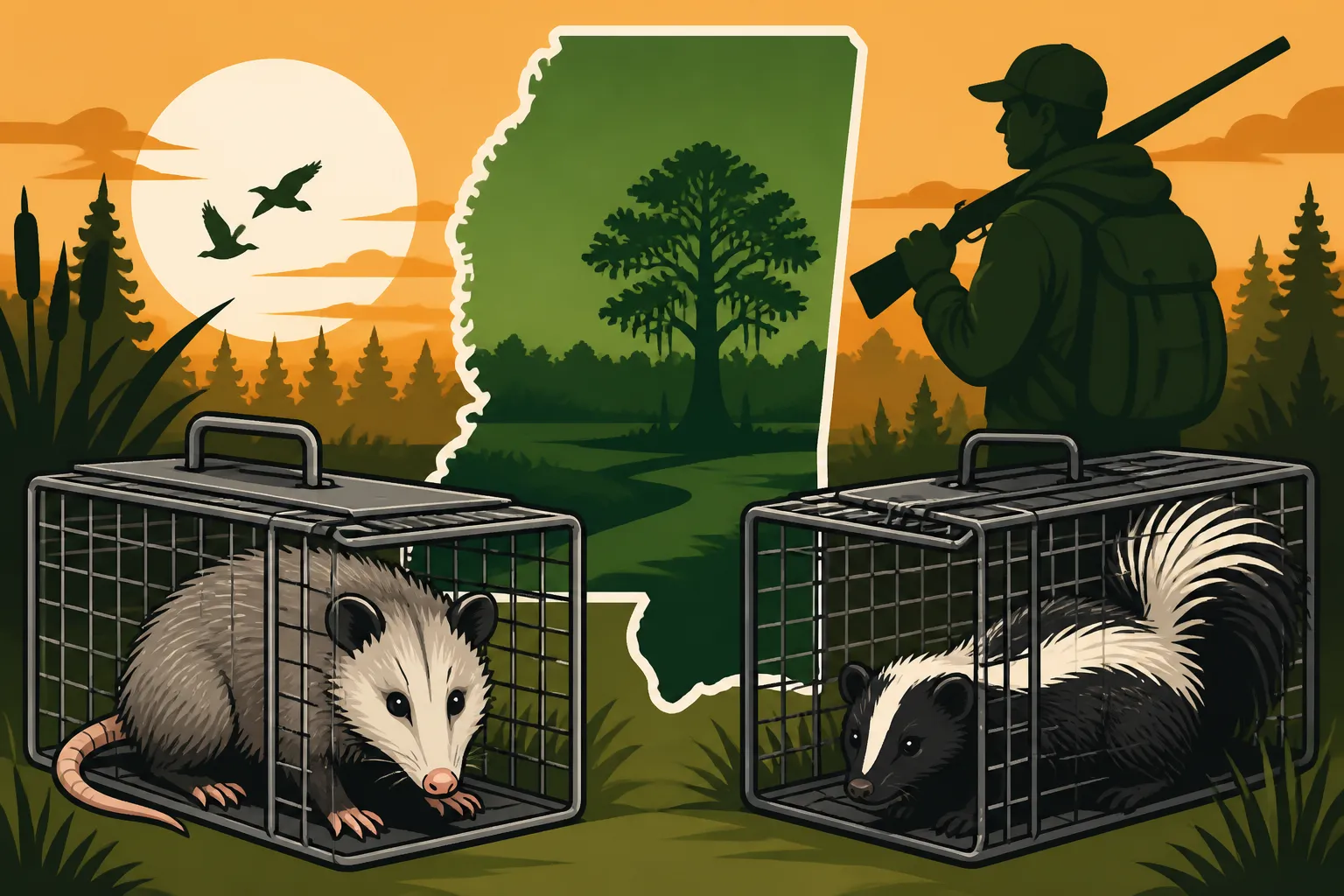
Mississippi law specifies what types of traps are legal for furbearers. For opossums and skunks, the most commonly used and generally accepted traps are live traps, often called "cage traps" or "box traps." These are designed to capture the animal alive and unharmed, allowing for relocation or other humane disposal. They come in various sizes, but for opossums and skunks, a medium-sized trap (around 10"x12"x30") is usually sufficient.
Other types of traps, like foothold traps or conibear (body-gripping) traps, are legal for furbearers during the designated season, but they require a higher level of skill and knowledge to set safely and humanely, and their use may be restricted in certain areas or for nuisance animals. For most homeowners dealing with a skunk under the house or an opossum in the attic, a live cage trap is the safest and most practical choice. It's essential to check your traps regularly – at least once every 24 hours, but ideally more often – to minimize stress to the animal and prevent unintended captures.
What to Do After the Catch
This is where things can get a little tricky and require careful thought. Once you've successfully trapped an opossum or skunk, you have a few options, each with its own considerations and legal requirements.
- Relocation: While often seen as the most humane option, relocation isn't always straightforward or legal. In Mississippi, it is generally illegal to transport and release live nuisance animals on public lands or another person's private property without their express permission. Releasing an animal in an unfamiliar territory can also lead to it becoming disoriented, struggling to find food or shelter, or spreading disease to existing populations. If you do consider relocation, it must be on suitable private land where you have permission, and generally, within a short distance from the capture site. Be very careful with skunks here, as a stressed skunk in a cage is a recipe for disaster.
- Dispatch: If relocation isn't a viable or legal option, or if the animal is sick or severely injured, humane dispatch may be necessary. This is a serious responsibility and requires proper knowledge and equipment to be done quickly and painlessly. This isn't a task for the faint of heart, and if you're uncomfortable with it, consider contacting a professional wildlife control operator. Always follow safety protocols for firearm use or other methods, and ensure you are in a safe and appropriate location, away from populated areas.
- Reporting/Disposal: After dispatch, the carcass must be disposed of properly. This typically means burying it deeply on your property if allowed by local ordinances, or taking it to an approved landfill. Never leave carcasses exposed where they can attract other scavengers or spread disease. In cases where the animal might be rabid or show signs of other diseases, contact your local MDWFP office or county health department for specific instructions on testing or disposal. Understanding these post-capture procedures is just as important as setting the trap itself. It also helps contribute to Mississippi Wildlife Disease Monitoring efforts.
Effective Trapping Techniques and Baits
Alright, now that we've covered the why and the how-to-stay-legal, let's talk about the nitty-gritty of getting those critters into a trap. Effective trapping is less about brute force and more about strategic placement, the right bait, and a little patience.
Live Trapping Methods
For most nuisance opossum and skunk situations, a live cage trap is your best friend. These traps are designed to catch the animal without causing injury, allowing for relocation (if legal and appropriate) or humane dispatch. Here’s a basic breakdown of how to set them up for success:
- Trap Placement: Think like the animal. Where are they traveling? Look for signs of activity: tracks in the mud, droppings, dug-up areas, or entry points under porches or sheds. Place the trap directly in their path, along a fence line, near a garbage can, or at the entrance to their den. A good mapping tool like GoHunt can help you identify property boundaries and potential travel corridors on your land, ensuring your traps are in prime locations and not on a neighbor's property. Always place the trap on a flat, stable surface.
- Camouflage and Stability: While not strictly necessary for opossums and skunks, covering the trap with some natural brush, leaves, or a tarp can make it seem less intimidating and more like a natural shelter. This can increase the chances of the animal entering. Also, make sure the trap is stable and won't rock or tip easily, which could spook the animal.
- Setting the Trigger: Follow the manufacturer's instructions for setting the trigger mechanism. You want it sensitive enough to trip easily but not so sensitive that it goes off with a gust of wind. Some traps allow you to adjust the trigger plate tension.
- Safety First: When handling a live trap, especially with a trapped animal, always wear thick gloves. For skunks, you'll want extra precautions, which we'll cover next. Check your traps frequently. A good rule of thumb is to check at dawn and dusk, or more often if possible, to minimize the time an animal spends in the trap, especially during extreme weather.
Dealing with Skunks Safely
Ah, the skunk. The creature that strikes fear into the hearts of pet owners and anyone who's ever accidentally triggered their defense. Trapping a skunk requires a special approach to avoid that unmistakable odor.
The key to dealing with a trapped skunk is minimizing stress and sudden movements. Here's a trick:
- Cover the Trap: Before you even approach the trap, have a thick blanket, old tarp, or piece of cardboard ready. Approach the trapped skunk very slowly and calmly. Do not make eye contact or sudden noises. Gently drape the cover over the entire trap. Skunks are less likely to spray what they can't see, and covering them often calms them down significantly.
- Slow and Steady Removal: Once the trap is covered, the skunk will likely feel more secure and be less inclined to spray. Carefully, slowly, and steadily, pick up the covered trap. Keep it level to avoid jostling the animal.
- Transportation: Transport the covered trap in the back of a truck or in an area of your vehicle where you can air it out easily, just in case. Drive slowly and smoothly.
- Release/Dispatch: If you are relocating (remembering the legal restrictions!), choose a release site well away from homes and roads. Uncover the trap partially, pointing the open door away from you, and then, from a safe distance, open the door. The skunk will usually scurry out quickly. If humane dispatch is the chosen method, keep the trap covered during the process to contain any potential spray.
Having a gallon of a skunk odor removal solution (hydrogen peroxide, baking soda, and dish soap) on hand is always a good idea, just in case.
Target-Specific Baits
The right bait is absolutely critical to successful trapping. Opossums and skunks, while both omnivores, do have preferences.
-
Opossum Baits: Opossums are less picky, but they do have favorites.
- Cat food or dog food: Wet pet food is often irresistible due to its strong smell.
- Overripe fruit: Think bananas, apples, or berries. The sweeter, the better.
- Leftovers: Scraps of chicken, bacon, or greasy foods are highly attractive.
- Marshmallows: Believe it or not, these sweet treats are very effective.
- Peanut butter: A classic, especially smeared on bread or a cracker.
For opossums, you want something smelly and appealing. Place the bait at the very back of the trap, ideally under the trigger plate, so the animal has to step inside fully to reach it.
-
Skunk Baits: Skunks often prefer insect-based or strong-smelling baits.
- Canned sardines or tuna: The oily, fishy scent is incredibly attractive to skunks.
- Peanut butter: Again, a reliable choice.
- Chicken scraps or bacon: Cooked meat can be very effective.
- Insect larvae: If you can get your hands on some, skunks love grubs and mealworms.
For skunks, aim for something with a strong, lingering aroma. Don't overbait; a small amount is usually sufficient. Remember, you're trying to lure them, not feed them for a week.
| Animal | Preferred Baits | Notes |
|---|---|---|
| Opossum | Wet Cat/Dog Food, Overripe Fruit, Marshmallows, Bacon | Opportunistic, attracted to strong-smelling, sweet, or fatty foods. |
| Skunk | Canned Fish (sardines/tuna), Peanut Butter, Chicken | Attracted to strong, meaty, or fishy odors. |
When setting bait, make sure it's placed in a way that prevents the animal from "stealing" it without entering the trap fully. Often, placing it on a small plate under the trigger or securing it with a wire can help. And while you're focused on trapping, consider how this fits into your broader property management. Tools like GoHunt offer land overlays that can help you visualize how your bait sites relate to natural cover or animal travel routes, improving your odds.
Preventing Future Encounters
Successfully trapping a nuisance opossum or skunk is a huge win, but it's often just one part of the battle. If you don't address why they were attracted to your property in the first place, you might find yourself in a perpetual cycle of trapping. The real solution lies in making your home and yard less appealing to these critters.
Habitat Modification
This is by far the most effective long-term strategy for managing nuisance wildlife. It's about making your property as uninviting as possible for opossums and skunks.
-
Secure Food Sources: This is priority number one.
- Trash Cans: Invest in heavy-duty trash cans with tight-fitting, locking lids. Consider securing them with bungee cords or keeping them in a shed or garage until collection day.
- Pet Food: Never leave pet food bowls outside, especially overnight. Feed your pets indoors or bring their bowls in immediately after they finish eating.
- Compost Piles: If you have a compost pile, ensure it's in a sturdy, enclosed bin that animals can't access. Avoid composting meat or dairy products, which are particularly attractive.
- Gardens and Fruit Trees: Harvest ripe fruits and vegetables promptly. Clear any fallen fruit from the ground. Consider fencing off valuable garden beds with mesh or wire that extends into the ground to prevent digging.
- Bird Feeders: While lovely for birds, spilled seeds are a banquet for opossums and skunks. Place feeders strategically away from structures, and clean up spilled seed regularly. Consider using seed catchers.
-
Exclusion and Entry Points: These animals are looking for shelter as much as food.
- Seal Openings: Inspect your home's foundation, crawl spaces, and attic vents. Seal any openings larger than a golf ball with hardware cloth, concrete, or sturdy metal flashing. Skunks and opossums are surprisingly good at squeezing into small spaces.
- Under Decks and Sheds: Skunks, in particular, love to burrow under these structures. Install wire mesh (at least 1/4 inch gauge) around the perimeter, extending it at least 6-12 inches into the ground and bending it outward at a 90-degree angle to deter digging.
- Chimneys: Ensure your chimney has a sturdy cap to prevent animals from falling in or nesting.
- Wood Piles: Keep wood piles neatly stacked and elevated off the ground, away from your house. These can be prime hiding spots.
By eliminating easy access to food and shelter, you dramatically reduce the appeal of your property. This also makes your property less attractive to other unwanted guests, from rats to raccoons.
Repellents and Deterrents
While habitat modification is the long-term solution, repellents and deterrents can sometimes offer a temporary fix or supplement your exclusion efforts. However, it's important to have realistic expectations; their effectiveness often varies greatly.
- Scent Repellents: Some commercial repellents use the scent of predators (like fox urine) or strong, unpleasant odors to deter animals. These can sometimes work in the short term, but animals often habituate to them, and they need to be reapplied frequently, especially after rain. You might place these near known entry points or foraging areas.
- Taste Repellents: Products containing capsaicin (the active ingredient in chili peppers) can deter animals from chewing on certain items, but they're not really applicable for preventing general foraging or denning.
- Motion-Activated Lights or Sprinklers: These can startle nocturnal animals and make them feel unsafe in your yard. A sudden burst of light or water can be surprisingly effective at making a critter think twice about lingering. Position them in areas where you've seen activity, like near garbage cans or garden beds.
- Noise Deterrents: Some people swear by battery-operated radios or ultrasonic devices, but evidence for their effectiveness with opossums and skunks is largely anecdotal. Animals tend to ignore constant, non-threatening noises fairly quickly.
The biggest takeaway here is that repellents are rarely a standalone solution. They work best as part of a multi-pronged approach that primarily focuses on making your property less attractive through sealing entry points and securing food sources. For broader considerations on managing various species, understanding Mississippi Feral Hog Trapping Rules can give you an idea of how much regulation goes into nuisance animal control, even for species that are year-round problems. Ultimately, consistency is key, and tools like GoHunt can help you map out your "deterrent zones" and exclusion efforts, making your strategy more organized and effective.
Disclaimer
This article is for general informational purposes only and does not constitute professional advice. Laws, prices and regulations vary by location and change over time. Consult a qualified professional for guidance on your specific situation.