How Wild Hogs Spread Across Mississippi
If you've spent any time in the Mississippi outdoors lately, you know the explosion of wild hogs isn't just a nuisance – it's a full-blown crisis for our ecosystems and farmers. These invasive animals are wreaking havoc across our beloved state, from the Delta farmlands to the Piney Woods, causing millions in damage annually. Understanding how they managed to spread so rapidly is the first critical step toward effective management and reclaiming our natural resources.
The Roots of the Invasion: A Look Back at Mississippi's Hogs
To truly grasp the magnitude of the wild hog problem, we have to rewind a bit and understand where these critters came from. They didn't just appear overnight; their presence is a story of historical introductions and a remarkable ability to adapt.
Early Introductions and Escapes
The history of pigs in North America, and specifically in the Southeast, dates back centuries. Spanish explorers like Hernando de Soto brought domestic pigs to what would become the southeastern United States in the 1500s as a food source. These animals, often left to forage freely, inevitably escaped and established wild populations. Fast forward through the colonial era, and many settlers continued the practice of allowing their hogs to roam, only rounding them up when needed. Escapes were common and contributed significantly to the growing populations of free-ranging swine. These weren't necessarily the wild boars we think of today but were the ancestors of what we now call feral hogs – domestic pigs that have reverted to a wild state.
The Feralization Phenomenon
What sets feral hogs apart is this process of "feralization." When domestic pigs escape captivity and begin living independently in the wild, they quickly shed many of their domesticated traits. Over generations, they develop thicker coats, longer snouts, larger tusks, and a more aggressive disposition, all crucial for survival in a natural environment. They also regain many instincts lost in domestication, becoming incredibly wary and resourceful. Mississippi’s diverse habitats, from dense bottomland swamps to thick pine plantations, provided the perfect proving ground for these animals to become truly wild. The mild climate and abundant food sources meant that these early feral populations thrived, forming the foundation of the pervasive problem we face today.
The Perfect Storm: Why Hogs Exploded Across the Magnolia State
The sheer numbers of wild hogs we see today aren't just due to their historical presence; a confluence of biological advantages, environmental factors, and human influence created a "perfect storm" for their unchecked proliferation.
Remarkable Reproductive Prowess
One of the primary drivers behind the rapid spread of wild hogs is their astonishing reproductive rate. Unlike many other game animals, sows can breed at a very young age, sometimes as early as six months old. They can have multiple litters in a single year, typically one to two, with each litter averaging four to six piglets, though litters of up to ten or more are not uncommon. This means a single sow can contribute significantly to population growth in a short amount of time. When you consider that their offspring can then start reproducing within a year, the exponential growth potential becomes painfully clear. This biological advantage makes traditional population control methods, often designed for animals with much slower reproductive cycles, incredibly difficult to keep up with.
Adaptable and Opportunistic Survivors
Wild hogs are the ultimate generalists, capable of thriving in an incredible array of habitats and consuming almost anything. Their diet is diverse, ranging from acorns, roots, and tubers to agricultural crops, insects, eggs, and even small animals. This adaptability means they aren't limited to specific ecological niches; they can exploit virtually any environment Mississippi offers. From the row crops of the Delta to the mixed forests of the Hills Unit, they find food and shelter. Their keen sense of smell, robust build, and nocturnal habits also make them exceptionally good at evading detection and surviving adverse conditions. A hunter using mapping tools like GoHunt might notice hog sign in various terrains, highlighting their widespread adaptability across different ecosystems.
A Landscape Ripe for Expansion
Mississippi’s landscape itself has inadvertently contributed to the rapid spread. The state's vast expanses of rural and undeveloped land, crisscrossed by river systems, offer ideal habitat for hogs to travel and establish new territories. The patchwork of agricultural fields, dense timber stands, and swampy bottomlands provides ample food, cover, and water. Furthermore, the mild winters in Mississippi mean that piglets born late in the year have a much higher survival rate compared to colder climates, further boosting population numbers. The consistent availability of food sources, whether natural mast crops like acorns or planted agricultural fields, ensures that hogs rarely face significant food scarcity, allowing them to maintain high reproductive output year-round. This is part of the reason why counties in the Delta region tend to have incredibly high numbers, as discussed in the article, Which Mississippi Counties Have the Most Hogs.
Human Hands in the Spread: Unintentional and Intentional Factors
While nature certainly played a role, it's impossible to discuss the spread of wild hogs without acknowledging the significant and often detrimental impact of human activities.
Illegal Translocation and Stocking
One of the most frustrating and impactful human contributions to the spread of wild hogs has been illegal translocation – the deliberate capture and release of hogs into new areas by humans. Historically, and even in some isolated cases today, individuals have moved hogs to new locations for hunting purposes, hoping to establish new populations or augment existing ones. This practice has been a major factor in expanding their range, particularly into areas where they previously didn't exist or were scarce. Despite strict Mississippi Feral Hog Regulations aimed at preventing this, it remains a challenge to fully stop. The consequences are dire, as a small number of translocated hogs can quickly multiply and establish a thriving population, introducing all the associated problems to an unprepared ecosystem.
Agricultural Practices and Habitat Alteration
Modern agricultural practices, while vital for our economy, have also provided unintended benefits for wild hogs. Vast fields of corn, soybeans, and other crops serve as an irresistible buffet, offering an abundant and easily accessible food source that can support large populations. Beyond direct food, these fields also provide excellent cover, especially during the growing season, allowing hogs to hide, rest, and raise their young largely undisturbed. Similarly, certain forestry practices, such as clear-cutting followed by replanting, can create dense, brushy regrowth that offers ideal cover for hogs, while also exposing fresh soil that makes rooting for tubers and insects easier. These human alterations of the landscape create highly favorable conditions for hog survival and expansion, essentially rolling out the welcome mat for them to set up permanent residence.
The Pervasive Impact: Where Hogs Stand Today in Mississippi
The cumulative effect of historical introductions, biological advantages, and human activities has led to a widespread problem, touching almost every corner of Mississippi. The consequences are far-reaching and costly.
Widespread Geographic Distribution
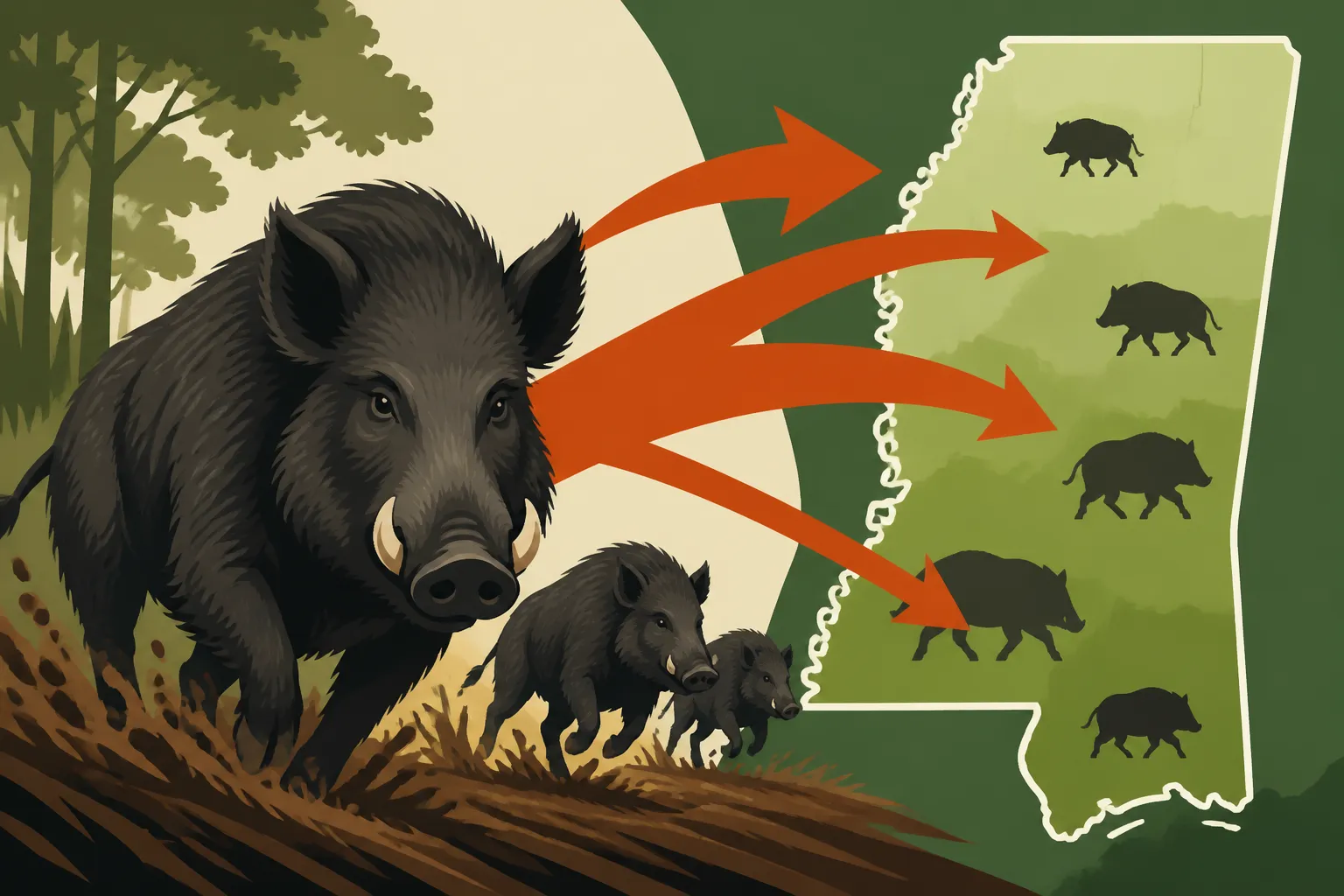
Today, wild hogs are present in all 82 counties of Mississippi. While their density varies, with some areas like the Delta experiencing particularly severe infestations, no region is truly safe from their presence. Their adaptability has allowed them to colonize vastly different landscapes, from the swamps and river bottoms to the upland pine forests and suburban fringes. This widespread distribution makes containment incredibly difficult. Even as hunters focus on Hunting Mississippi's Year-Round Feral Hogs, eradicating them from one area often sees new hogs migrating in from adjacent, less pressured territories. According to MDWFP data, Feral Swine Sightings in Central Mississippi have increased significantly, demonstrating their continuous push into new areas.
Devastating Agricultural and Ecological Damage
The financial and environmental costs of wild hogs are staggering. For farmers, the damage to crops, fences, and irrigation systems runs into millions of dollars annually. They root up fields, contaminate water sources, and destroy planting beds, directly impacting crop yields and farmer livelihoods. The article on Crop Damage Hogs Cause in the Delta details just how severe this can be in Mississippi's agricultural heartland.
Ecologically, wild hogs are bulldozers. Their rooting behaviors destroy native vegetation, degrade soil quality, and can even facilitate the spread of invasive plant species. They prey on ground-nesting birds, such as wild turkeys and quail, and consume the eggs of reptiles, including threatened species. Their competition for food sources also impacts native wildlife like deer, squirrels, and bears. Furthermore, they are known carriers of diseases, including brucellosis and pseudorabies, which can be transmitted to livestock, pets, and even humans, posing a significant public health and economic threat. The absence of natural predators, a factor explored in Why Mississippi Hogs Have No Natural Predator Check, further compounds their ecological impact, allowing their numbers to grow unchecked.
Fighting an Uphill Battle: Challenges in Hog Management
Given their pervasive nature and destructive capabilities, managing wild hog populations is one of the biggest challenges facing wildlife agencies and landowners in Mississippi. It's a complex problem with no single, easy solution.
The Endless Cycle of Reproduction
We've already touched on their impressive reproductive rate, but it bears repeating: it's the single biggest hurdle in population control. Even if hunters and trappers remove a significant number of hogs from an area, the remaining population can quickly rebound. To achieve population reduction, an estimated 70% or more of the hog population needs to be removed annually, a target that is incredibly difficult to meet consistently across large landscapes. This high reproductive capacity means that sustained, intensive effort is required year after year, which can be resource-intensive and often disheartening for those on the front lines.
Elusive Nature and Leary Behavior
Wild hogs are intelligent and quickly learn to associate human presence with danger. They become largely nocturnal in response to hunting pressure and are adept at utilizing dense cover to avoid detection. This elusiveness makes them incredibly difficult to locate and remove. Trapping, while effective, requires careful planning, consistent baiting, and strategic placement, as hogs can quickly become "trap-shy" if they have negative experiences. Hunting, too, presents its own challenges. While Night Hunting Hogs With Lights on Private Land can be effective, it often requires specialized equipment and is limited by regulations and land access. Hunters who rely on apps like GoHunt for aerial imagery and mapping can sometimes identify travel corridors and bedding areas that might be overlooked, but even with advanced tools, these animals are formidable adversaries.
The Scale of the Problem Versus Resources
The sheer number of wild hogs across Mississippi (the article How Many Feral Hogs Mississippi Has dives into this further) far outweighs the resources available for their control. State wildlife agencies, private landowners, and even federal initiatives have limited budgets, personnel, and time. Coordinated efforts are crucial, but achieving widespread, synchronized removal across diverse private and public lands is a monumental task. This disparity between the scale of the problem and the available resources means that management often feels like playing whack-a-mole – you address one area, and the problem simply resurfaces or intensifies elsewhere. This is why multi-faceted approaches, including Mississippi Feral Hog Trapping Rules and allowing various hunting methods, are essential.
Moving Forward: What Hunters and Landowners Can Do
Despite the daunting challenges, there are effective strategies and continuous efforts being made to manage and, hopefully, mitigate the impacts of wild hogs in Mississippi. Success often lies in a combination of methods and persistent effort.
Embracing Diverse Control Methods
No single method will solve the wild hog problem. Effective management requires an integrated approach that combines various tactics. Trapping is widely considered the most effective method for removing large numbers of hogs, especially when utilizing large corral traps that can capture entire sounders. Education and proper technique, as detailed in Trapping Mississippi Feral Hogs, are key to success. Hunting, while less effective for population control on its own due to the high reproductive rate, plays a vital role in reducing numbers and dispersing sounders, creating opportunities for further removal. Methods like Running Dogs on Mississippi Feral Hogs can be highly efficient in certain terrains, flushing hogs from dense cover. Additionally, specialized hunting techniques, such as night hunting with thermal optics or lights where legal, are proving increasingly effective. Landowners should familiarize themselves with Mississippi Hog Hunting Permit Requirements and regulations to ensure legal and effective practices.
The Power of Community and Information
Perhaps one of the most powerful tools in fighting the spread of wild hogs is community involvement and the sharing of information. Landowners working together to implement control measures across contiguous properties can achieve far greater success than individual efforts. Wildlife agencies like the Mississippi Department of Wildlife, Fisheries, and Parks (MDWFP) provide valuable resources, educational workshops, and guidance on best management practices. Utilizing mapping and scouting technologies, like GoHunt’s detailed satellite imagery and property line overlays, can help hunters and landowners identify hog travel patterns, damaged areas, and potential trap locations more efficiently. Reporting hog sightings and damage to local extension offices or wildlife agencies helps researchers and managers better understand population dynamics and spread, leading to more targeted and effective interventions. By collaborating, sharing knowledge, and committing to sustained effort, we can make meaningful progress in the ongoing battle against wild hogs.
Disclaimer
This article provides general information about wild hogs in Mississippi. Hunting regulations, seasons, and management guidelines can change. Always consult the latest Mississippi Department of Wildlife, Fisheries, and Parks (MDWFP) official regulations and advisories before engaging in any hunting or trapping activities. Landowners should also verify all local ordinances and obtain necessary permits.