Nonresident Access to Mississippi Public Land
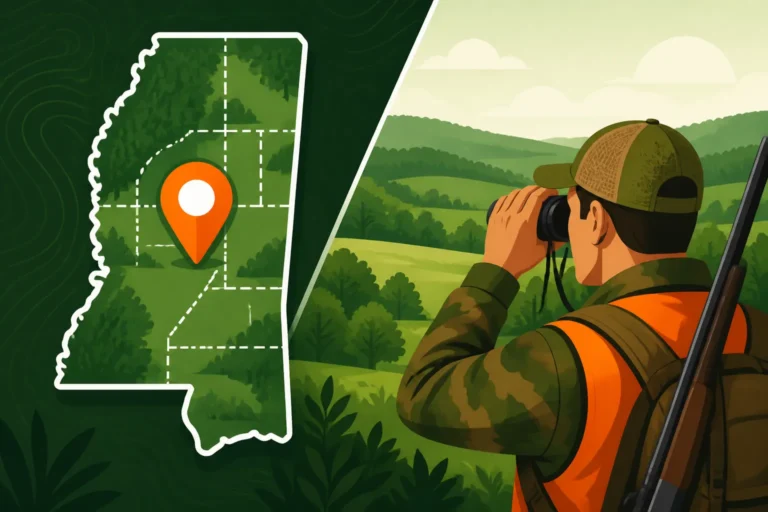
It's easy to look at Mississippi on a map, see all that green, and assume public hunting land is abundant and easily accessible for anyone, including nonresidents. But the reality on the ground can be a bit different, often leading to frustration for hunters who aren't familiar with our state's unique landscape and regulations. This guide is here to cut through the confusion and provide you, a nonresident hunter, with a clear understanding of how to find and access public hunting land in Mississippi, what to expect, and how to maximize your chances of a successful hunt.
Understanding Mississippi's Public Land Landscape for Nonresidents
When you're coming in from out of state, the idea of "public land" might conjure images of vast, contiguous blocks of National Forest or BLM land like you'd find out West. Mississippi, however, presents a different picture. Our public land, while rich in biodiversity and hunting opportunities, is often fragmented, interspersed with private holdings, and comes with a patchwork of rules that can make it tricky to navigate.
The Reality of Limited Public Acreage
Let's be honest, Mississippi isn't known for its sprawling public lands in the same way some other states are. While we do have fantastic areas, they require a bit more homework to locate and understand. Nonresidents often feel overwhelmed by the sheer amount of private timberland, agricultural fields, and family holdings that dominate much of our landscape. This isn't to discourage you, but rather to set realistic expectations. You won't just stumble upon thousands of acres of open access. Instead, you'll be looking for specific pockets, whether they are federal lands like National Forests or state-managed Wildlife Management Areas (WMAs). Understanding this from the outset will save you a lot of headache and windshield time.
These public areas are often islands in a sea of private ground, making property boundaries absolutely critical. It's not uncommon to find a beautiful piece of huntable public land completely surrounded by private tracts where access might be denied. That's why having good maps and doing your homework before you ever set foot on the ground is paramount.
Essential Licenses and Permits for Nonresidents
Before you even think about scouting a particular piece of public land, you need to make sure your paperwork is in order. Mississippi has specific requirements for nonresidents, and they are generally more comprehensive than what a resident needs. You can't just buy a basic hunting license and expect to be covered everywhere.
First and foremost, you'll need a nonresident hunting license that covers the game you intend to pursue. For deer, that typically means a nonresident all-game license, and often a specific nonresident deer permit on top of that. If you're looking for waterfowl, small game, or turkeys, separate stamps or endorsements might be required. It’s a good idea to visit the Mississippi Department of Wildlife, Fisheries, and Parks (MDWFP) website well in advance to review the current regulations and purchase the correct licenses. You can also get a good overview by checking out our guide on Mississippi Hunting Licenses and What They Cost.
Beyond the general state licenses, many of our most productive public lands, especially Wildlife Management Areas (WMAs), require an additional WMA permit. This permit helps fund the management of these areas and is non-negotiable for hunting on a WMA. It's crucial to understand that buying a WMA permit doesn't automatically grant you access to all WMAs without further research; each WMA still has its own set of rules and seasons. For a deeper dive into your options, take a look at Mississippi Nonresident License Options.
Navigating Specific Public Land Types
Mississippi's public lands come in a few different flavors, each with its own set of rules and characteristics. Knowing these distinctions is key to planning a successful nonresident hunt.
National Forests: A Common Starting Point
Mississippi is home to several National Forests, which often represent the largest contiguous blocks of public hunting land available. These include the Delta National Forest, Homochitto National Forest, Bienville National Forest, DeSoto National Forest, and Tombigbee National Forest. For many nonresident hunters, these are often the go-to locations due to their size and generally more liberal access compared to WMAs.
Hunting within National Forests typically follows statewide seasons and bag limits, though local rules can sometimes apply. You'll still need your appropriate state hunting licenses, but generally, a separate WMA permit isn't required unless a specific WMA is located within the National Forest (like Sunflower WMA inside Delta National Forest). These areas can offer diverse hunting experiences, from the bottomland hardwoods of the Delta to the pine and hardwood uplands of the Homochitto. If you're thinking about chasing deer in the thick river bottoms, Delta National Forest Hunting is a great resource. For those more interested in the rolling hills and pine forests, Homochitto National Forest Hunting offers valuable insights.
When hunting National Forests, be mindful of general regulations regarding vehicle use, camping, and the placement of treestands. Many national forests have designated roads and trails, and venturing off-road can be strictly prohibited. Always check the specific forest's motor vehicle use map (MVUM) and hunting regulations. While some National Forests have designated camping areas, primitive camping is often allowed in certain zones, which can be a huge bonus for nonresidents looking to immerse themselves in the hunt without breaking the bank on lodging.
Wildlife Management Areas (WMAs): Rules and Quota Hunts
Wildlife Management Areas (WMAs) are tracts of land managed specifically for wildlife and public recreation by the MDWFP. While many WMAs offer fantastic hunting opportunities, they also come with the most specific and often restrictive regulations. This is where nonresidents really need to pay attention, as WMAs are where you'll frequently encounter special seasons, reduced bag limits, and the dreaded "quota hunt" system.
A WMA permit is almost always required to hunt on a WMA, on top of your standard state licenses. But that's just the beginning. Each WMA will have its own detailed public hunting brochure that outlines specific opening and closing dates for various species, legal weapons, daily hunting hours, and often, antler restrictions that might differ from the broader unit rules. For instance, Mississippi's Four Deer Management Units sets the general framework, but a WMA within one of those units might have even tighter restrictions.
The biggest hurdle for nonresidents on many WMAs can be the quota hunt system. For high-demand hunting periods, especially during prime deer or turkey seasons, access is limited to a certain number of hunters who must apply for and be drawn for a permit. These draws can be competitive, and the application windows are typically well in advance of the season. If you're planning a WMA hunt, checking the MDWFP website for quota hunt dates and application periods is non-negotiable. Our article on Mississippi Wildlife Management Areas will give you a broader overview of these areas, and Mississippi WMA Permit Requirement explains what you need to get one.
It's common for WMAs to have rules about stand placement (sometimes requiring them to be removed daily), specific entry/exit points, and even check-in/check-out procedures. Never assume WMA rules are the same as National Forest rules. Always download and read the current brochure for the specific WMA you plan to hunt.
National Wildlife Refuges (NWRs) and Other Federal Lands
Similar to WMAs, National Wildlife Refuges (NWRs) like Panther Swamp or Yazoo NWR are federal lands managed by the U.S. Fish and Wildlife Service, primarily for wildlife conservation. They often offer public hunting opportunities, but usually under extremely tight regulations. NWRs almost always have their own distinct permit systems, draw hunts, and very specific rules that deviate significantly from state or even National Forest regulations.
For example, hunting on an NWR might involve mandatory daily check-ins, specific weapon types allowed only on certain days, or areas that are permanently closed to hunting. Nonresidents interested in NWRs must visit the specific refuge's official website or contact their office directly to obtain the most current hunting regulations and permit information. Expect these hunts to be highly managed and often require advance planning and a bit of luck in a draw.
Strategies for Successful Nonresident Public Land Hunting
Hunting Mississippi as a nonresident on public land is absolutely doable, but it requires a strategic approach. It's not a place where you can just show up and expect to find prime hunting instantly.
Thorough Pre-Season Scouting and Research
Your success as a nonresident on Mississippi public land will hinge almost entirely on your pre-season homework. Since you likely can't do extensive physical scouting, virtual scouting becomes your best friend. Start with online maps and resources months before your trip.
Here's what you should be looking for:
- Public vs. Private Boundaries: Identify every inch of public land you might consider hunting. This is where apps like onX Hunt are absolute game-changers. They overlay property ownership data, so you know exactly where public land begins and ends, preventing accidental trespassing. GoHunt also offers similar robust mapping features that can be invaluable.
- Access Points: How will you get to the public land? Are there legal parking areas? Walk-in access points? Some public lands might have limited entry points, so knowing these ahead of time is vital.
- Topography and Habitat: Use satellite imagery to identify key terrain features like ridge lines, creek bottoms, sloughs, and varying timber types. Look for natural funnels, pinch points, and areas where different habitat types meet. These are often high-traffic zones for deer and other game. Our piece on Scouting Mississippi Public Land Before Season provides excellent tips for this.
- Food and Water Sources: While you can't see specific food plots on public land, you can identify areas likely to hold natural food sources (hardwood ridges for acorns) or water. In the Delta, old oxbow lakes and sloughs are critical water sources and travel corridors.
- Pressure Points: Look for areas that are easily accessible from roads or existing trails. These areas often receive the heaviest hunting pressure. As a nonresident, seeking out spots that require a longer walk or are harder to reach can significantly increase your odds.
Once you have a few potential spots identified, cross-reference them with the specific regulations for that public land area. Download the WMA brochure or National Forest rules. Verify seasons, weapon restrictions, and any check-in requirements. The MDWFP app is another fantastic tool for this, as it often has direct links to WMA regulations and maps. Check out Scouting With the MDWFP App for more details.
Utilizing Mapping Technology and Public Data
In today's hunting world, digital mapping tools are no longer a luxury; they're a necessity, especially for nonresidents. Apps like onX Hunt and GoHunt provide layers that show public vs. private land boundaries, landowner names, topographical maps, satellite imagery, and even layers for specific hunting units or WMAs. This information is critical for avoiding trespass issues and finding less-pressured areas.
Imagine planning a hunt from hundreds of miles away. With these tools, you can virtually walk the property, identify potential stand locations, mark waypoints for future reference, and even assess likely travel corridors. They can show you trails, water sources, and changes in elevation, all from your living room. For nonresidents, this is the closest thing to physical scouting you can get without being there. You can learn more about leveraging these features in onX Layers for Mississippi Land Status.
Additionally, don't overlook the MDWFP's own website and app. They provide invaluable data, including annual harvest reports, turkey brood surveys, and detailed maps of WMAs. This data can help you understand game populations and choose areas that historically have higher success rates or less pressure.
Managing Expectations and Persistence
Let's be real: public land hunting anywhere can be tough, and Mississippi is no exception, particularly for a nonresident. You'll likely encounter other hunters, especially on popular WMAs or National Forest tracts during peak season. Don't let this discourage you. The key is to manage your expectations and cultivate persistence.
Mississippi public land often requires you to work harder. That might mean walking further than other hunters are willing to go, finding those overlooked pockets, or hunting midweek when local pressure is lower. It might also mean adapting to the local terrain – learning how to hunt river cane thickets, navigate flooded timber, or understand the nuances of the state's varied deer units. Patience and a willingness to explore different areas are crucial. If one spot is too crowded or isn't producing, have a backup plan.
Remember, the deer, turkeys, and ducks are there. But they are often pressured and will stick to the nastiest, most overlooked cover. Your job as a nonresident is to find those overlooked spots, often deep within public land. For more on dealing with hunting crowds, our article on Hunting Pressure on Mississippi Public Land can offer some perspective, and Finding Ground Others Walk Past might inspire some new tactics.
It's a journey, not a sprint. The more time you invest in research, virtual scouting, and understanding Mississippi's unique hunting environment, the more rewarding your nonresident public land hunting experience will be.
| Public Land Type | Primary Management Agency | WMA Permit Required? | General Access | Key Features for Nonresidents |
|---|---|---|---|---|
| National Forests | U.S. Forest Service | No (usually) | More Open | Largest contiguous tracts, often follows statewide seasons |
| Wildlife Management Areas | MS Dept. of Wildlife, Fisheries, & Parks | Yes | Restricted | Specific rules per WMA, often quota hunts, specialized seasons |
| National Wildlife Refuges | U.S. Fish & Wildlife Service | Yes (often specific) | Very Restricted | Highly managed, complex permit/draw systems, strict regulations |
| Batture Lands | Various (Corps of Engineers, private) | Varies | Often Open | Lands between Mississippi River levee and river channel |
Disclaimer
This article is for general informational purposes only and does not constitute professional advice. Laws, prices and regulations vary by location and change over time. Consult a qualified professional for guidance on your specific situation.