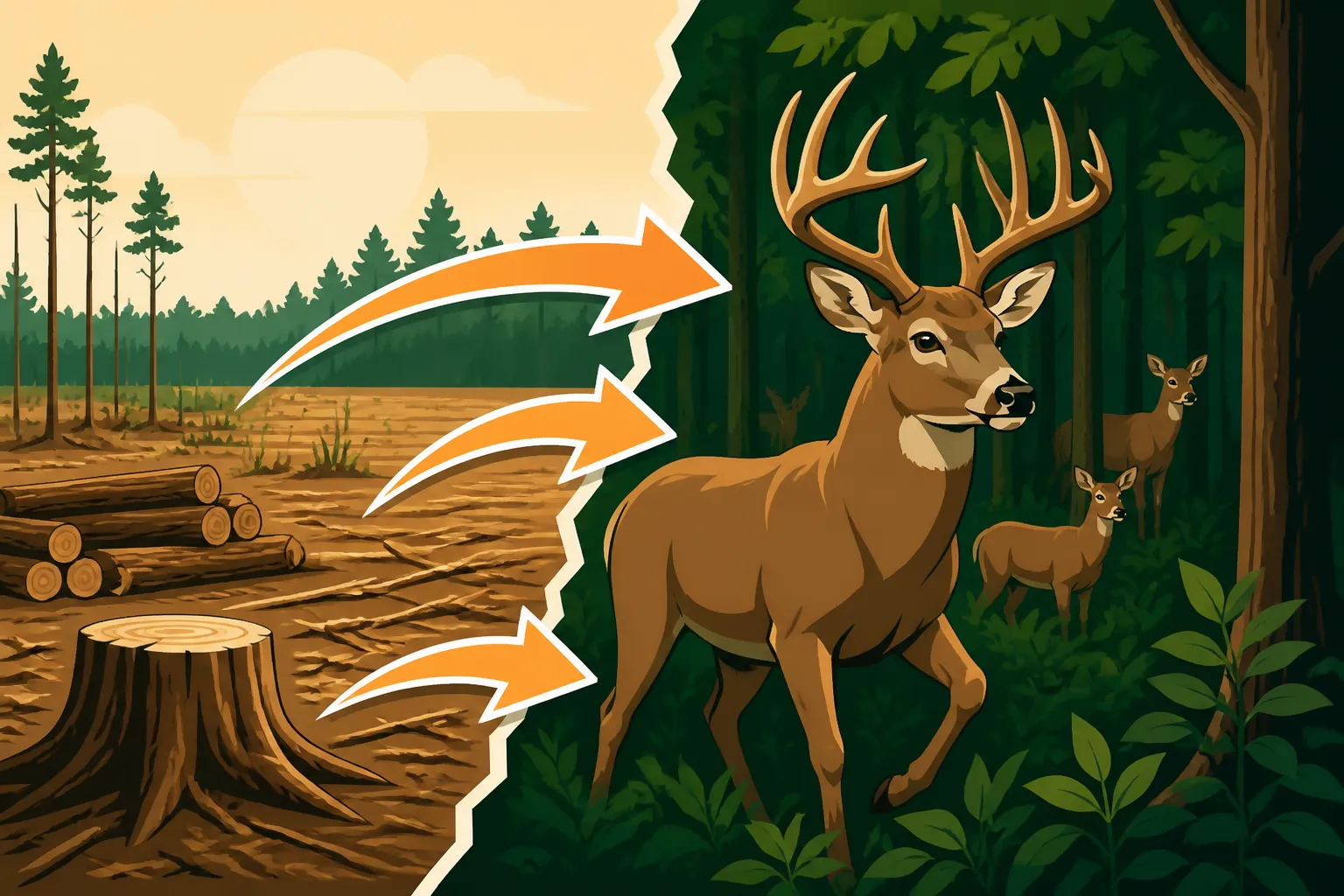
Timber Cuts and Where Deer Move After
It's a familiar gut punch for many Mississippi deer hunters: you've put in the time, scouted your spot, and found a honey hole with consistent deer sign. Then, you roll up one morning and find that your familiar woods have been transformed into a chaotic mess of downed timber and fresh tracks from machinery. Your heart sinks. Where did all the deer go? How in the world do you even begin to hunt this now? This guide is all about helping you understand how deer react to timber cuts and, more importantly, how you can adapt your strategy to find success in these altered landscapes.
Understanding the Immediate Impact of Timber Cuts on Deer
When the chainsaws start humming and the heavy machinery rolls in, it’s not just the trees that get moved. The entire ecosystem experiences a massive shockwave, and the local deer herd is at the very heart of it. Ignoring this initial disruption and hoping deer will just "deal with it" is a recipe for frustration.
Initial Disruption and Displacement
Think about it from a deer's perspective. One day, their world is a quiet, shaded sanctuary of familiar trails and bedding areas. The next, it's a cacophony of engines, grinding metal, and human voices. Their sense of security is shattered. The immediate effect is often a temporary displacement. Deer aren't going to stick around to watch the logging operation; they're going to seek the path of least resistance to safety. This usually means fleeing to the nearest dense cover, whether that's an adjacent stand of untouched timber, a thick briar patch along a creek bottom, or even just a particularly nasty, overlooked corner of a neighboring property. They're looking for an immediate escape hatch, a place where they can feel invisible again.
This initial movement can scatter deer in unpredictable ways. A big buck that you've been chasing all season might just pack up and move a mile away to a secluded block of timber he knows. Does with fawns will try to find the densest thicket they can to hide their young. It's a survival instinct, plain and simple. However, this doesn't mean they're gone forever, just that their patterns have been fundamentally altered. It's during this chaotic period that careful observation and smart scouting become absolutely crucial.
New Food Sources and Access Points
While the initial phase is all about disruption, the aftermath of a timber cut brings a surprising silver lining for deer: food. Once the heavy equipment pulls out and the dust settles, sunlight can finally reach the forest floor. This exposure triggers an explosion of new growth. Suddenly, the ground is covered in a smorgasbord of succulent forbs, tender saplings, and briars – all prime deer browse that was previously choked out by the mature canopy. Deer are opportunistic feeders, and they'll quickly key into these newly available food sources. This is especially true as the fresh growth starts to green up a few weeks or months after the cut.
Beyond food, timber operations often create new pathways and access points. Skidder trails, logging roads, and even the natural breakage from falling trees can create lanes through otherwise impenetrable cover. Deer, being creatures of efficiency, will often adopt these new trails as travel corridors. They'll use them to move between new bedding areas and feeding spots, or to access water sources that were previously harder to reach. Understanding these new "highways" and "byways" is just as important as knowing where the fresh food is popping up. These new routes can become pinch points and funnels that, with careful observation, offer excellent hunting opportunities. It's all about recognizing the dynamic nature of the woods and understanding that while one door closed, another one just opened.
Reading the Landscape: Identifying Key Areas After a Cut
Hunting timber cuts successfully isn't just about showing up; it's about understanding the subtle (and sometimes not-so-subtle) cues the deer leave behind in their altered environment. You've got to become a detective, piecing together how they're adapting to their new surroundings.
Identifying Sanctuary and Bedding Areas
When a significant portion of their habitat is disturbed, deer don't just disappear. They retreat to the nearest available sanctuary where they feel safe and hidden. This might be a block of uncut timber immediately adjacent to the cut, especially if it's thick with undergrowth. Creek bottoms, with their dense brush and natural topography, often become prime bedding spots because they offer both cover and escape routes. Sometimes, it's just a small, overlooked island of gnarly briars and downed logs that was too difficult for the logging crew to bother with. These untouched pockets become incredibly valuable to deer seeking refuge.
This is where your mapping tools, like onX Hunt or even detailed topo maps, become indispensable. Before you even set foot in the woods, use these resources to identify any areas of dense cover, natural draws, or unlogged timber that border the cut. Pay close attention to changes in elevation or areas marked as swamps or thickets. Deer will naturally gravitate to these spots. Once on the ground, scout the edges of these potential sanctuaries for heavy tracks, fresh droppings, and rubbed saplings, which indicate that deer are moving in and out. Remember, the thicker and nast nastier the cover, the more likely it is to hold a pressured deer. This is often where you'll find those mature bucks trying to escape the disturbance. Reading Aerial Photos for Hills Unit Deer can be a great way to start this process.
Tracking New Travel Patterns and Food Funnels
With their old travel routes disrupted, deer will quickly establish new patterns. These new pathways often run along the edges of the cut, utilizing the remaining timberline as cover, or even following the newly created logging roads and skid trails once they've grown a bit quieter. Look for fresh tracks, well-worn paths, and recent rubs and scrapes along these transitional zones. Deer are creatures of habit, and they'll establish the most efficient routes between their new bedding areas and the emerging food sources within the cut.
The timber cut itself, especially after initial regrowth, often becomes a massive food plot. As sunlight hits the ground, a variety of palatable plants for deer, such as young shoots, forbs, and briars, will begin to sprout. These areas effectively become "food funnels" that deer will travel to access. Pay attention to residual mast crops in the adjacent uncut timber as well. If the timber cut opened up sunlight to an oak flat, those acorns might suddenly be more accessible. By observing where deer are entering and exiting the cut, and which parts of the cut show the heaviest browsing pressure, you can pinpoint specific funnels and ambush points. Tools like GoHunt can help you research local forage types and their seasonal availability, which will inform your scouting even further. Don't forget to check for Scrape Lines Along a Logging Road which can indicate new travel corridors.
Adapting Your Hunting Strategy for Fresh Timber Cuts
Hunting a timber cut effectively requires a significant shift in mindset and tactics. What worked before the logging crew came through likely won't work now. You need to be flexible and analytical.
Early Season: Hunting the Edges and Fringes
In the immediate aftermath of a timber cut, especially during the early archery season, deer are still very wary and probably haven't settled into their new patterns completely. During this period, your best bet is to focus on the transition zones – the edges where the timber cut meets the untouched woods. Deer will often skirt the perimeter of the open area, using the standing timber for security while still being able to browse the fresh growth that spills out from the cut.
Setting up your stand or ground blind just inside the uncut timber, overlooking a well-used trail that parallels the cut, can be highly effective. Look for natural funnels where deer are forced into a smaller area as they move along these edges. This could be a narrow strip of timber between the cut and a field, or a point where a creek bends close to the cut. The key is to be patient and observant. Deer will often approach these edges cautiously, especially during daylight hours. Early mornings and late evenings are prime times, as deer feel safer moving under the cover of low light. Don't be afraid to walk a little farther and get deeper into the fringes; oftentimes, the areas that see less human pressure are where the most cautious deer will feel comfortable moving. Hunting a Clear-Cut Regrowth Edge is an excellent strategy to employ here.
Mid-Season: Utilizing Regrowth and New Cover
As the season progresses and the timber cut begins to "green up," it transforms from a desolate wasteland into a dense, nutritious haven. Young saplings, briars, and various forbs will sprout vigorously, offering both prime browse and incredible security cover. By mid-season, deer will often start to utilize the cut itself, not just its edges, particularly for bedding and feeding during the day. This dense regrowth provides excellent thermal cover during colder snaps and allows deer to move and feed without feeling exposed.
Your strategy here needs to shift from strictly edge hunting to identifying specific pockets of heavy regrowth within the cut that are drawing deer. Look for areas with the thickest, nastiest cover that also show heavy browsing. These spots can become core bedding areas. Accessing these areas requires stealth and understanding wind direction, as the swirling thermals in newly opened areas can be tricky. Ground blinds brushed in effectively can be deadly, allowing you to get deep into the cover where deer feel most secure. Don't shy away from hunting during the middle of the day, as deer may be bedded and browsing in these thick areas even at noon. This period can also be a good time to try Rattling and Grunting in Mississippi if you're targeting bucks, as they might be more willing to investigate disturbances in their new, secure areas.
Late Season: Food Source Focus and Remaining Cover
By late season, the nutritional value of some early-stage regrowth might diminish, but other plants might become more prominent. The key to late-season success in a timber cut often revolves around identifying the most persistent and calorie-rich food sources. This could be remaining acorns in the adjacent timber, or specific woody browse plants that hold their leaves and nutritional value longer into the winter. If the cut created openings that allowed new clover or other food plot crops to be planted on adjacent private land, those spots will be magnets.
In this colder period, thermal cover also becomes paramount. The thick regrowth within the cut, while excellent security cover, can also trap warm air, making it attractive for bedding on cold, windy days. Focus your efforts on the leeward sides of ridges or dense pockets of conifers (if present) within or immediately bordering the cut. Deer will conserve energy by staying put in the thickest, warmest available cover and only moving to feed during peak activity times. Pay close attention to any remaining "soft mast" (like persimmons) or hard mast (oaks) in the surrounding timber, as these can be crucial late-season draws. By this time, deer movements can be highly predictable, as they've settled into their winter patterns of feeding and bedding. Knowing Late-Season Food Sources for Mississippi Whitetails is paramount.
Different Types of Timber Cuts and Their Deer Impact
Not all timber cuts are created equal, and understanding the nuances of different logging operations can give you a significant advantage in predicting deer movement and planning your hunt. Each type creates a unique habitat mosaic, and deer will respond accordingly.
Clear-Cuts: Massive Disruption, Huge Long-Term Potential
A clear-cut is exactly what it sounds like: a complete removal of all trees from an area. This is the most dramatic form of timber harvest and, initially, the most disruptive for deer. When an area is clear-cut, deer are almost immediately displaced. Their accustomed cover and travel routes are obliterated, forcing them to quickly relocate to adjacent, untouched timber or dense escape cover. The initial period after a clear-cut is often characterized by a noticeable absence of deer within the cut itself, as they are seeking sanctuary elsewhere.
However, once the logging activity ceases and nature begins its reclamation process, clear-cuts become phenomenal deer habitat. The complete removal of the canopy allows maximum sunlight to reach the forest floor, stimulating an explosive growth of forbs, briars, and young woody plants. This creates an incredibly rich and diverse buffet of browse that deer absolutely relish. Over time, as these plants grow into dense thickets, the clear-cut evolves into superb bedding and security cover. While the first few months might be tough, within a year or two, a well-managed clear-cut can become a magnet for deer, especially young bucks and does. Hunting these areas means targeting the new growth and the transition zones where deer move from older timber into the dense, regenerating forest. These are often great places to find Finding Sign in Big Delta Timber if you put in the leg work.
Thinning Operations: Enhancing Habitat with Less Disruption
Thinning, also known as commercial thinning or selective thinning, involves removing a portion of the trees in a stand, usually the less desirable or overcrowded ones, to improve the growth and health of the remaining trees. Unlike clear-cuts, thinning operations cause less immediate displacement of deer because a significant amount of cover remains. The disturbance is localized and generally less intense.
The primary benefit of thinning for deer habitat is increased sunlight to the forest floor without total canopy removal. This encourages the growth of understory vegetation, much like a clear-cut, but in a more dispersed and less dramatic fashion. It can improve the quality and quantity of browse, making the entire stand more attractive to deer. Additionally, thinning can improve visibility for hunters while maintaining sufficient cover for deer to feel secure. Deer might adjust to these changes relatively quickly, often continuing to use the thinned areas, particularly if good escape cover is nearby. Hunting thinned areas requires careful scouting to identify newly opened travel corridors and areas of enhanced browse. You might find more success still-hunting or using ground blinds, as the remaining trees provide broken sightlines. Hunting Southeast Unit Pine Flats often involves navigating thinned pine plantations where deer utilize the new undergrowth.
Select Cuts: Mimicking Natural Disturbance for Balanced Habitat
Select cutting, or selection harvesting, is a method where individual trees or small groups of trees are removed based on specific criteria (e.g., maturity, species, health) across a larger area. This approach aims to create an uneven-aged stand, mimicking natural forest disturbance patterns and promoting continuous regeneration. It's often seen as a more environmentally friendly method that maintains forest structure.
For deer, select cuts offer a balanced benefit. The disruption is minimal compared to a clear-cut, as large portions of the forest remain intact. However, the openings created by removing individual trees allow sunlight to penetrate the canopy in a patchy fashion, stimulating new growth of browse and understory plants in those specific areas. This creates a diverse habitat with varied food sources and cover options. Deer can adapt easily to select cuts, often finding new pockets of browse and bedding areas within the altered landscape without needing to relocate entirely. Hunters will need to identify these smaller, regenerated pockets that offer food and cover. It's more about finding a series of smaller "hot spots" rather than one large, obvious change. This technique often works well in mature timber where you're seeking to draw deer into specific feeding areas.
| Type of Timber Cut | Disruption Level | Immediate Deer Reaction | Long-Term Habitat Value | Primary Hunting Strategy |
|---|---|---|---|---|
| Clear-Cut | High | Immediate displacement to adjacent cover | Excellent: abundant browse & bedding as it regrows (1-5 yrs post-cut) | Edge hunting initially, then focus on dense regrowth |
| Thinning | Moderate | Minor displacement, quick adaptation | Good: increased understory browse, improved visibility | Still-hunting, focus on new travel lanes & enhanced browse |
| Select Cut | Low | Minimal displacement, subtle shifts | Moderate: patchy new browse, maintains diverse structure | Focus on small, regenerated pockets & existing travel routes |
Navigating timber cuts can be challenging, but with the right mindset and a keen eye for how deer use the altered landscape, these areas can quickly become some of your most productive hunting spots. It's all about adapting, observing, and understanding that change, in the deer woods, often brings new opportunities.
Disclaimer
This article is for general informational purposes only and does not constitute professional advice. Laws, prices and regulations vary by location and change over time. Consult a qualified professional for guidance on your specific situation.